Anif Palace
A water palace used by bishops, kings, and film crews.

Gerd Eichmann · CC BY-SA 4.0
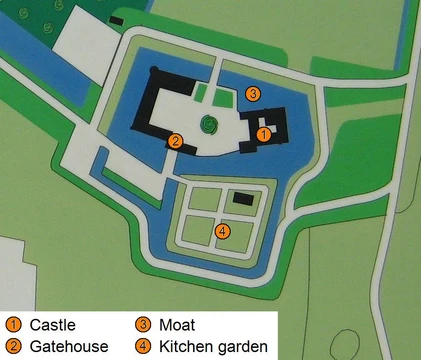
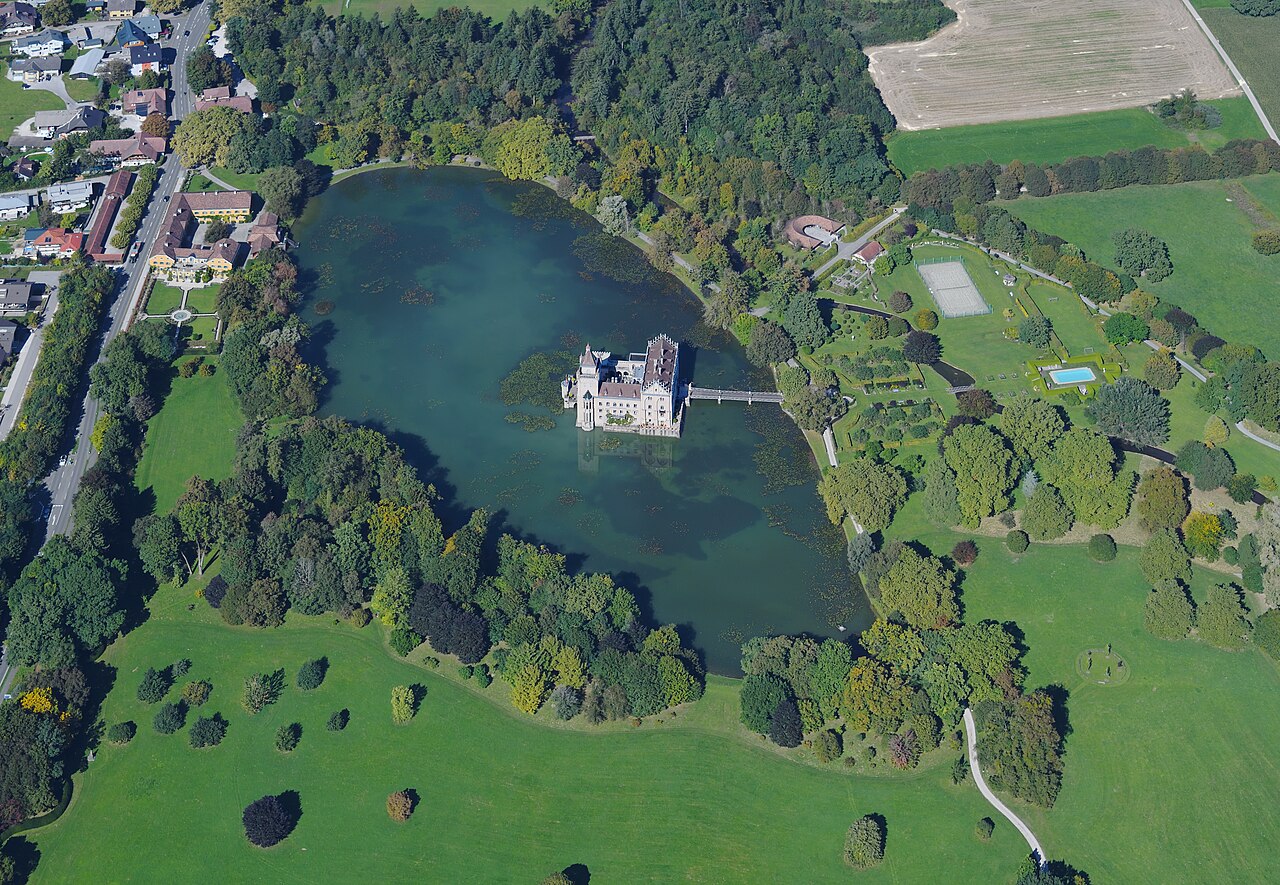
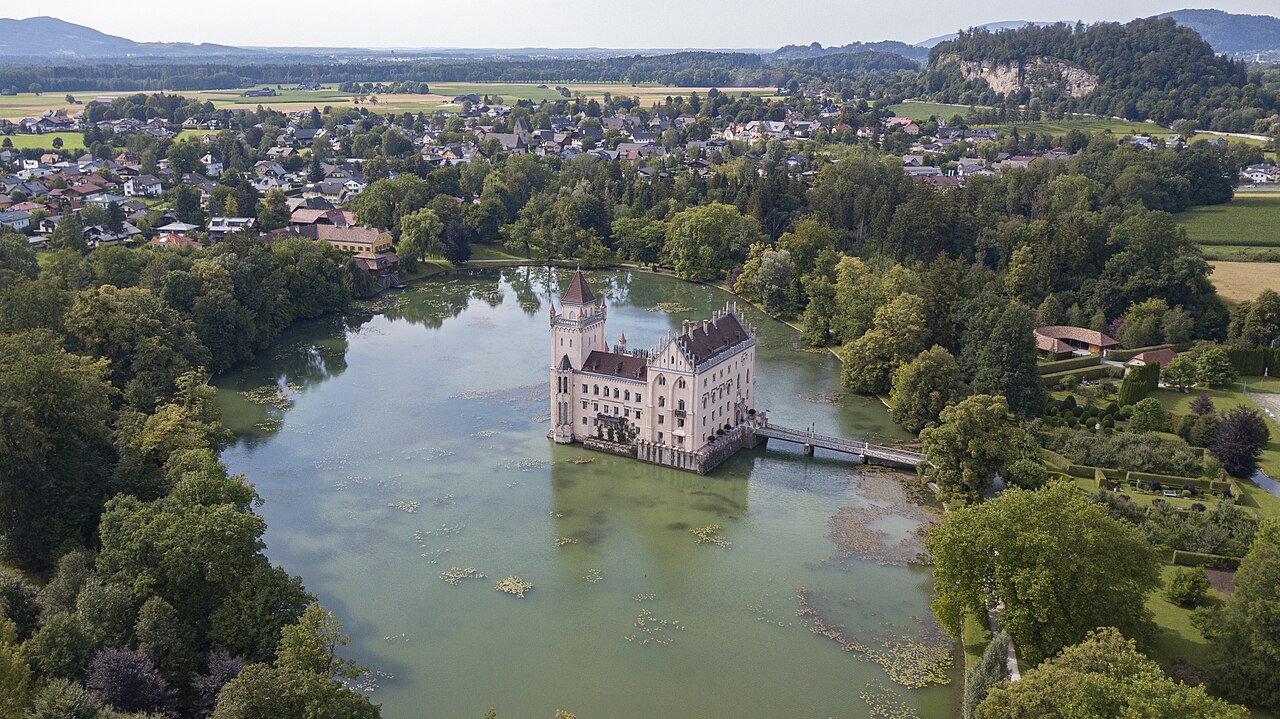
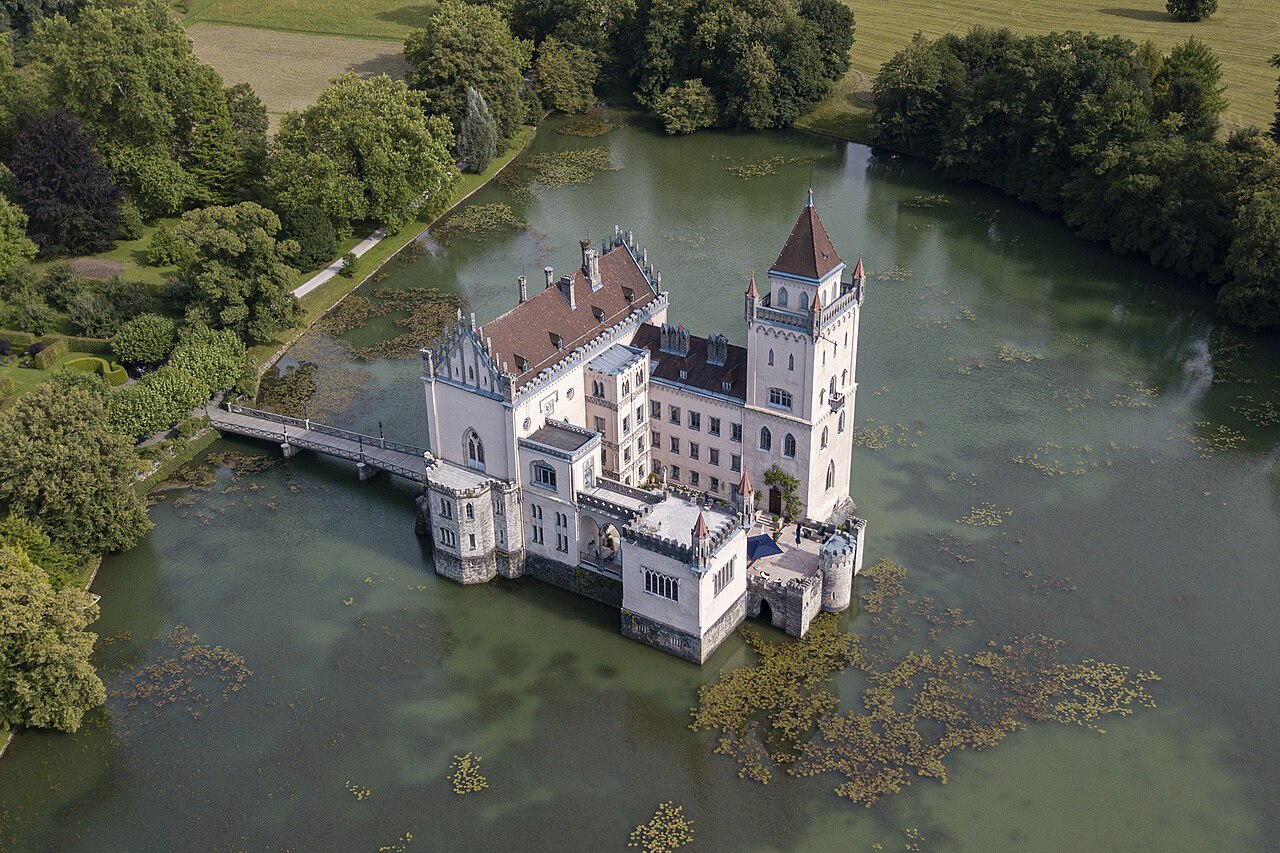
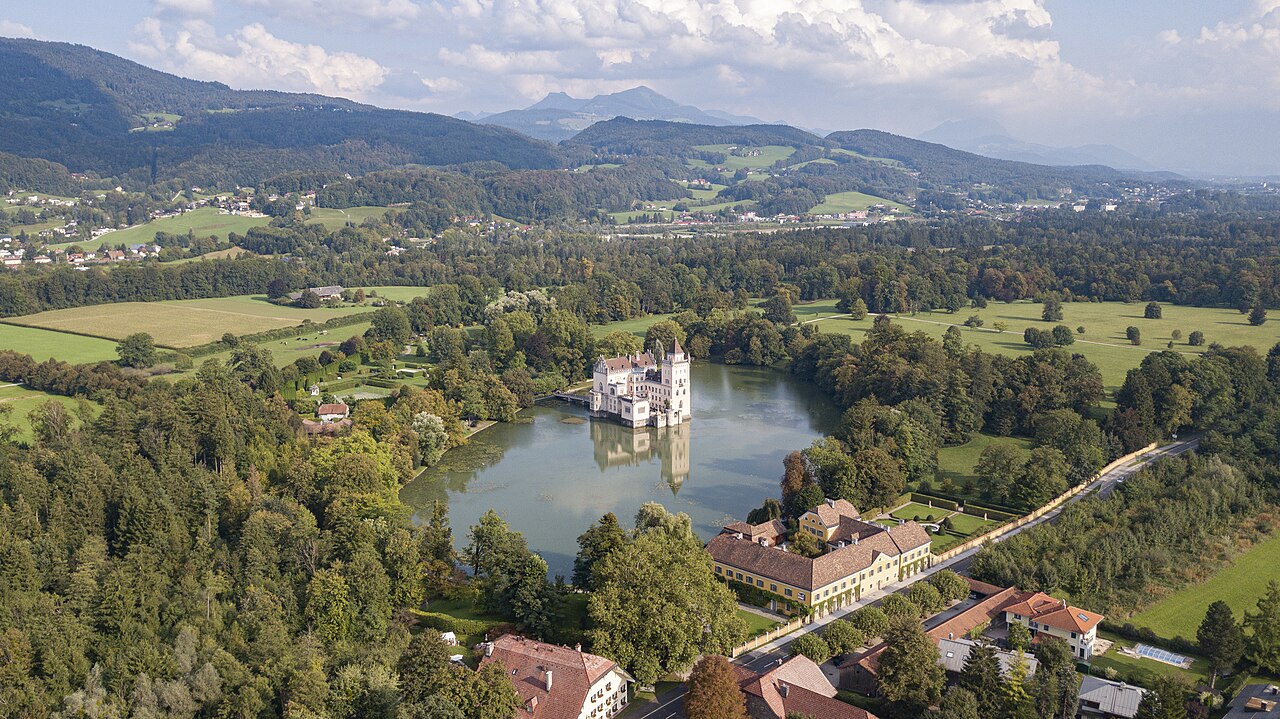
Anif Palace, also called the Water Palace Anif, sits beside a man-made pond in Anif, just south of Salzburg, Austria. Originally the residence of the bishops of Chiemsee, it later functioned as a court until the 1800s. The building is best known for appearing in films such as *The Sound of Music*, *The Great Race*, and *The Odessa File*.
The palace’s earliest known mention comes from a document around 1520, which refers to a structure called Oberweiher owned by bailiff Lienhart Praunecker. From 1530 onward, it was regularly granted as a fief by the Archbishop of Salzburg. After a 1693 restoration by Johann Ernst von Thun, it passed to the bishops of Chiemsee, who used it as a summer residence. At that time, it was a plain four-story dwelling connected by a two-story building to a chapel.
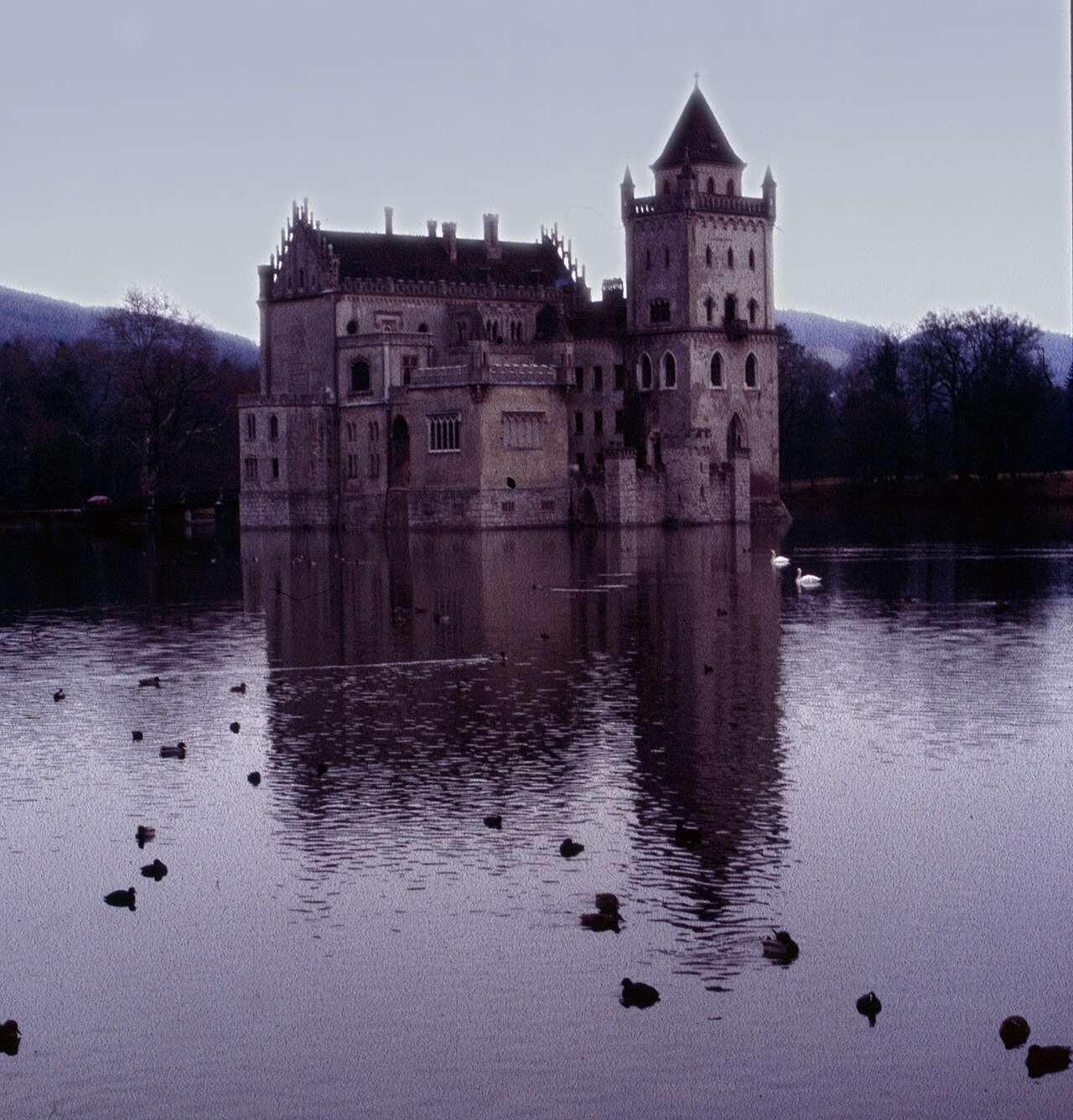
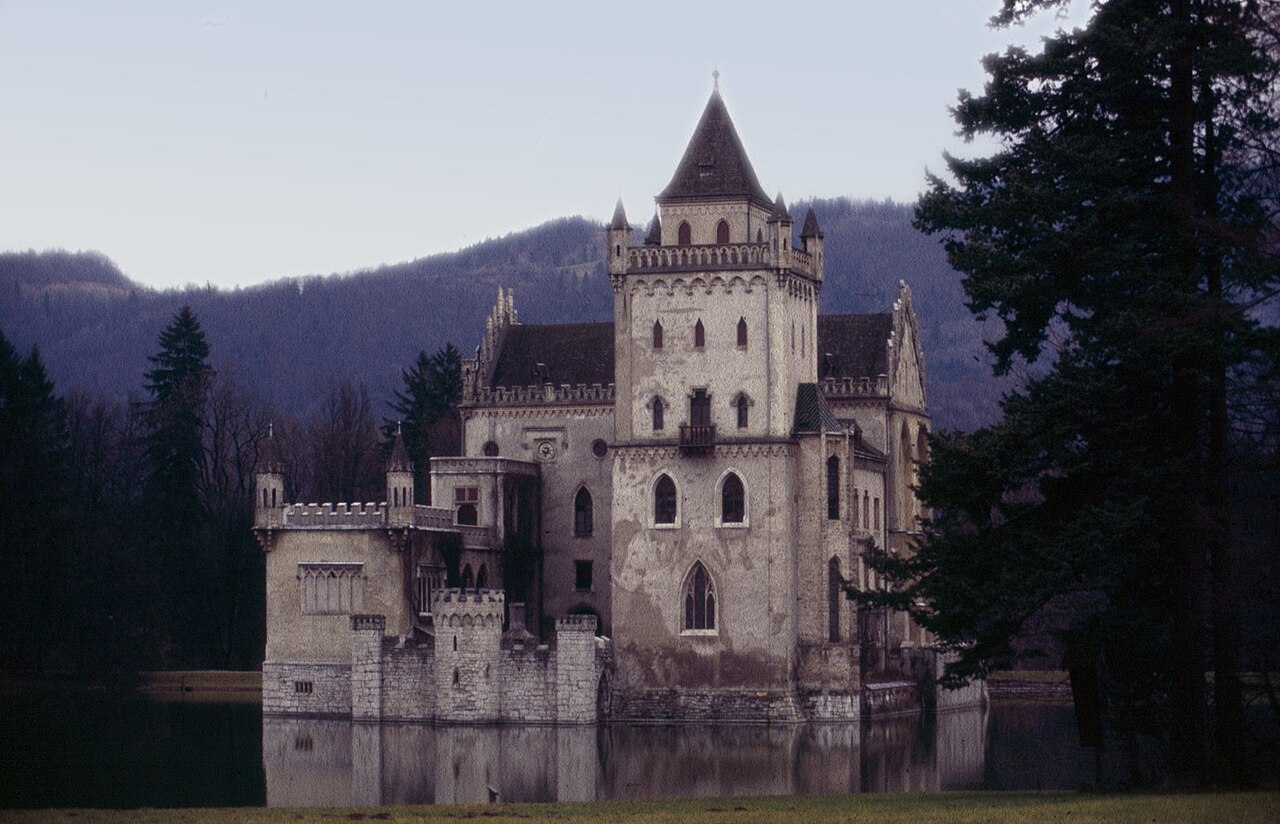
When Salzburg became part of Austria in 1816, the palace and its pond became public property. It was leased out with little change until 1837, when Alois Count Arco-Stepperg bought it. He remodeled it between 1838 and 1848 in the neo-Gothic romantic style seen today. After his death in 1898, the property went to his female relative Sophie, married to Count Ernst von Moy de Sons, whose family was of old French nobility.
In 1918, the palace drew public notice when King Ludwig III of Bavaria fled there with his family during the November Revolution. On 12–13 November 1918, he issued the Declaration of Anif, a de facto abdication that freed all Bavarian officials, soldiers, and officers from their oaths, as he could no longer govern. During World War II, German Wehrmacht units were housed there, followed by American forces in 1945.
In October 2001, the palace and its owner, Johannes Count von Moy de Sons, made headlines after it was revealed that some furniture—protected as part of the palace’s historic ensemble—had been offered for sale at Sotheby’s in Amsterdam. Several pieces were returned to Austria and are now partly displayed at the Museum Carolino Augusteum in Salzburg. The palace remains privately owned by the von Moy family, who carried out a major restoration between 1995 and 2000. No public tours are offered. The building also served as Baron von Stuppe’s residence in *The Great Race*, as Roschmann’s castle in *The Odessa File*, and, according to director Bryan Forbes, as Cinderella’s home for exterior shots in *The Slipper and the Rose*.
Quick Facts
- Native Name
- Schloss Anif
- Location Town
- Salzburg
- Location Country
- Austria
- Years Built
- c. 1530
- Owner
- von Moy family
Facts from the source article.
Lore & Background
The palace's origins cannot be exactly dated; a document from around 1520 shows a palace there called Oberweiher, owned by the dominion directory bailiff Lienhart Praunecker. From 1530 the water palace is mentioned regularly as a fief given by the respective Archbishop of Salzburg. It was given to the bishops of Chiemsee after a restoration by Johann Ernst von Thun in 1693, and from then on the bishops used it as a summer residence. It consisted simply of a plain four-story dwelling with a two-story building connecting it to a chapel.
Reader's Guide
Anif Palace holds significance as a rare surviving example of a water palace in Austria, with its neo-Gothic remodeling in the 19th century giving it a distinctive romanticized appearance. Its historical role as a summer residence for the bishops of Chiemsee and later as a refuge for King Ludwig III of Bavaria during the November Revolution adds political and ecclesiastical layers to its legacy. In the 20th century, the palace gained international fame through its use in major films, including The Sound of Music, The Great Race, and The Odessa File, as well as The Slipper and the Rose for exterior scenes. Despite its fame, the palace remains privately owned by the von Moy family, who restored it between 1995 and 2000, and public tours are not provided. A controversy in 2001 over the sale of historic furniture at Sotheby's highlighted ongoing challenges in preserving the palace's ensemble of protected artifacts, some of which are now displayed in the Museum Carolino Augusteum of Salzburg.
Did You Know?
- The palace was used in the movies The Sound of Music, The Great Race, and The Odessa File.
- In 1918, King Ludwig III of Bavaria fled to Anif Palace and issued the Declaration of Anif, refusing to abdicate.
- The palace was remodeled between 1838 and 1848 in the neo-Gothic style by Alois Count Arco-Stepperg.
- Part of the palace's historic furniture was offered for sale at Sotheby's in Amsterdam in 2001.
Ecclesiastical Roots and Early Identity
The origins of Anif Palace remain shrouded in some uncertainty, though a document from roughly 1520 references a structure called Oberweiher at the site, owned by a dominion directory bailiff named Lienhart Praunecker. From 1530 onward, the water palace appears consistently in records as a fief granted by the Archbishop of Salzburg. After a restoration carried out by Johann Ernst von Thun in 1693, the property was bestowed upon the bishops of Chiemsee, who adopted it as their summer retreat. The building at that time was remarkably modest—a straightforward four-story dwelling linked by a two-story connector to an adjacent chapel. This ecclesiastical association defined the palace's character for over a century, anchoring it firmly within the religious and administrative life of the Salzburg archbishopric. The artificial pond beside which it sits gave the structure its popular nickname, the Water Palace Anif, a name that persisted long after its clerical era ended and the building passed into secular hands.
Neo-Gothic Rebirth and the Arco-Stepperg Era
When Salzburg passed to Austrian control in 1806, the palace and its pond entered public ownership, and for decades the property languished in a state of neglect, leased out to various tenants with minimal investment in its upkeep. That changed in 1837, when Alois Count Arco-Stepperg purchased the estate. Over the following decade, from 1838 to 1848, he undertook a sweeping reconstruction that transformed the plain former bishops' residence into the neo-Gothic, romanticizing structure that visitors recognize today. The transformation was so thorough that the building's earlier, austere character was effectively erased. Upon the Count's death in 1891, the property passed to his closest female relative, Sophie, who brought it into the orbit of the old French noble family von Moy de Sons through her marriage to Count Ernst. This transfer set the stage for the palace's continued private stewardship into the modern era, a lineage that endures to this day.
The Declaration of Anif and Wartime Turbulence
Anif Palace's most dramatic historical moment arrived in November 1918, when King Ludwig III of Bavaria, his family, and his entourage fled to the palace to escape the upheaval of the November Revolution. From its walls, on the night of 12 to 13 November, Ludwig issued what became known as the Declaration of Anif. Rather than formally abdicating, he released all Bavarian government officials, soldiers, and officers from their oath of loyalty, acknowledging that he could no longer sustain the government. This act effectively ended the Wittelsbach monarchy in Bavaria, making the modest water palace an unlikely stage for a pivotal constitutional moment. The palace's wartime history continued during World War II, when German Wehrmacht units were quartered within its walls. By 1945, American forces had taken over the building, adding another layer of military occupation to its storied past and underscoring how the site had repeatedly become a refuge or stronghold in times of upheaval.
Silver Screen Fame and Modern Stewardship
Anif Palace has earned a second life as a cinematic backdrop, appearing in several well-known productions. It served as Baron von Stuppe's residence in The Great Race, starring Ross Martin, and doubled as Roschmann's castle in Frederick Forsyth's The Odessa File. Director Bryan Forbes also confirmed that the palace provided exterior scenes for The Slipper and the Rose, standing in for Cinderella's home. The Sound of Music also featured the location. Beyond the screen, the palace has drawn headlines for other reasons. In October 2001, it emerged that portions of its furniture—designated as a protected historic ensemble alongside the building—had been put up for auction at Sotheby's in Amsterdam. Some pieces were repatriated to Austria and now reside in Salzburg's Museum Carolino Augusteum. The estate remains in the hands of the von Moy family, who undertook a fundamental restoration between 1995 and 2000. Unlike many historic sites, Anif Palace does not offer public tours, preserving its private character.
Gallery
Frequently Asked Questions
What is Anif Palace?
Anif Palace is a water castle perched beside a man-made pond in the small town of Anif, just south of Salzburg, Austria. Over the centuries it has served as a bailiff's estate, a bishop's residence, and a royal court.
Where exactly is Anif Palace located?
The palace sits in Anif, a community on the southern edge of Salzburg, Austria, positioned right next to an artificial pond that gives it its 'water palace' character.
Who are the most notable people who lived at Anif Palace?
The building housed the bishops of Chiemsee and later King Ludwig III of Bavaria before passing into private ownership. Today it is owned by the von Moy family.
Which famous movies were filmed at Anif Palace?
Its striking pond-side setting earned the palace roles in several well-known productions, including The Sound of Music, The Great Race, and The Odessa File. It is often used as a stand-in for other European locations.
What architectural style does Anif Palace feature?
The structure was remodeled between 1838 and 1848 into a Neo-Gothic design, giving it the pointed-arch and ornamental look fans recognize today. The site itself traces back to a property called Oberweiher, mentioned in a document around 1520.
More in Water castles 1-24
Spotted an error? Know more?
Reader corrections go straight into our review queue. Suggest an edit · How this site is sourced