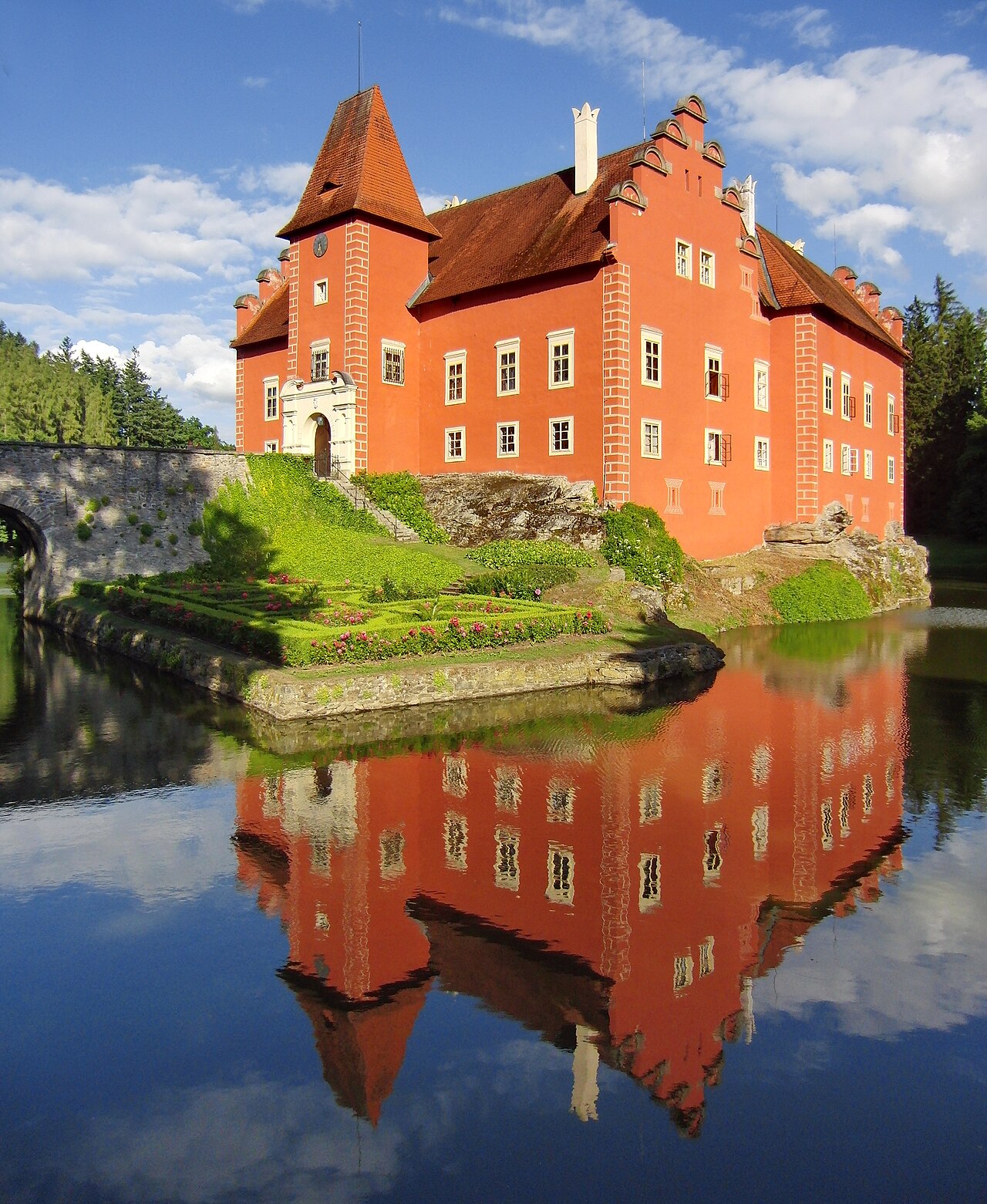
Červená Lhota Castle
Renaissance castle on a lake island in South Bohemia.

Rindi · CC BY-SA 4.0
Červená Lhota Castle is a Renaissance castle located in the South Bohemian Region of the Czech Republic, situated on a rocky island in a lake. Originally a Gothic fortress, it was rebuilt in the Renaissance style between 1542 and 1555 and later gained its distinctive red color from plaster applied in the late 16th century. The castle has passed through numerous noble families and is now a public tourist destination.
Quick Facts
- Location
- South Bohemian Region
- Nearest Town
- Pluhův Žďár
- Country
- the Czech Republic
- Built
- 1530
Facts from the source article.
Lore & Background
The castle's site originally held a Gothic fortress built on a rocky granite outcrop, which became an island after a stream was dammed to create a fishpond. The first written mention of the property dates to 1465, when the land records noted its division between the sons of Ctibor of Zásmuk. Around 1530, the fortress was sold to the Káb of Rybňan family, who initiated the Renaissance reconstruction between 1542 and 1555, renaming it Nová Lhota. In 1597, Vilém Růt of Dírná purchased the castle and had its exterior rendered with red plaster, giving it the name Červená Lhota.
After the Battle of White Mountain in 1620, the last of the Ruts, Bohuslav, was forced to leave Bohemia. The castle then passed through several owners, including Antonio Bruccio, who died without an heir in 1639, after which it served as an occasional cottage. In 1641, it was acquired by Vilém Slavat of Chlum and Košumberk, and later by the Windisch-Graetz family, whose financial mismanagement led to its sale in 1755 to the Barons of Gudenus. A fire in 1774 destroyed most of the agricultural buildings. Subsequent owners included Baron Ignác Stillfried, who hosted composer Carl Ditters von Dittersdorf, and the princely Schönburg-Hartenstein family, who held it until 1937. The stone bridge linking the castle to the banks was built in the early 19th century, not 1622.
Reader's Guide
Červená Lhota Castle is a significant regional tourist destination, attracting about 50,000 visitors annually. Its history illustrates the evolution from a medieval fortress to a Renaissance residence, with the red plaster applied in the late 16th century giving it its distinctive name. The castle's location on a rocky island in a fishpond, accessed by a stone bridge built in 1622, makes it a picturesque example of Czech castle architecture. The interiors contain historic furniture, tiled stoves, pictures, and porcelain, while the surrounding park features the Renaissance Chapel of the Holy Trinity. The castle's ownership by various noble families, including the Windisch-Graetz and Schönburg-Hartenstein lines, reflects the broader political and economic changes in Bohemia, such as the aftermath of the Battle of White Mountain and the eventual confiscation by the Czechoslovak state in 1946. After serving briefly as a children's clinic, it was opened to the public in 1949, preserving its heritage for modern visitors.
Did You Know?
- The castle's name 'Červená Lhota' means 'red Lhota,' derived from the red plaster on the castle walls.
- The original Gothic fortress was built on a rocky granite outcrop that became an island after a stream was dammed to create a fishpond.
- Composer Carl Ditters von Dittersdorf was accommodated at the castle from 1796 by Baron Ignác Stillfried.
Origins and the Gothic-to-Renaissance Transformation
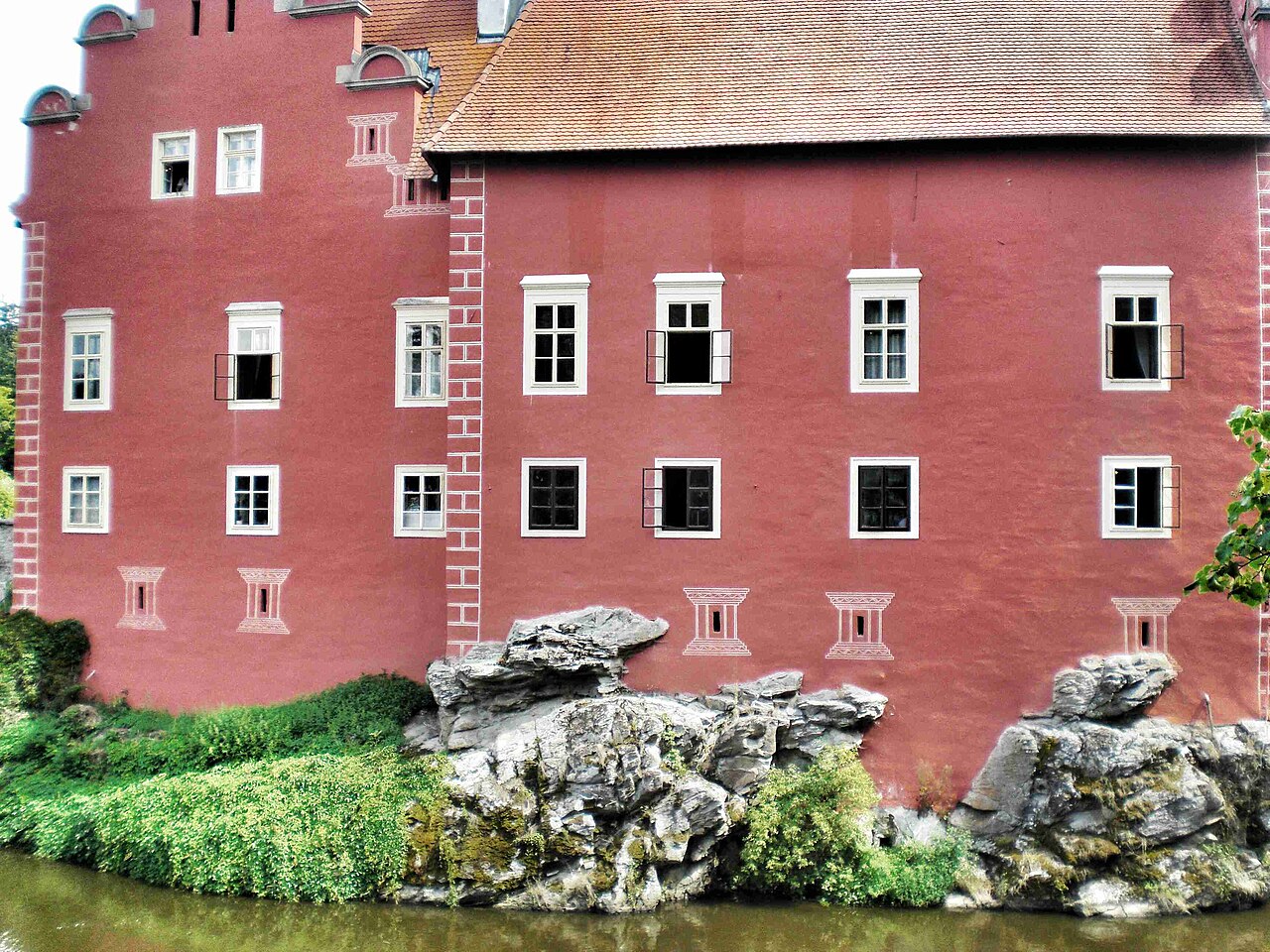
The site of today's castle likely hosted a fortress by the mid-14th century, perched on a rocky granite outcrop. The first documented reference appears in 1465 land records, noting the division of property belonging to the late Ctibor of Zásmuk between his sons Petr and Václav. The property changed hands several times before the knightly family of Káb of Rybňan acquired it around 1530. Under their stewardship, the original Gothic structure was rebuilt and given its fundamental Renaissance character between 1542 and 1555, earning the name Nová Lhota. A pivotal moment came in 1597 when Vilém Růt of Dírná purchased the estate and had the exterior coated in vivid red plaster, a cosmetic choice that permanently fixed the castle's identity as Červená Lhota. The resulting four-winged, two-story building with a central courtyard occupies the entire rock formation, extending its reach into the surrounding fishpond.
A Long Chain of Ownership and Political Upheaval
The castle's history reads like a catalogue of shifting fortunes. After the Růt family, the last member Bohuslav was forced to flee Bohemia as an Utraquist following the 1620 Battle of White Mountain. Antonio Bruccio then inhabited the castle until his childless death in 1639, after which it lost its residential function and served merely as a seasonal cottage. The aristocrat Vilém Slavat of Chlum and Košumberk acquired it in 1641, and it eventually passed to the Windisch-Graetz family. Bedřich Arnošt and his son Leopold's outdated economic practices drove the estate into severe debt, prompting the sale of the dominion. The Barons of Gudenus took ownership in 1755, and Franz de Paul launched new construction projects that were tragically interrupted by a devastating fire in 1774, which consumed most of the agricultural buildings. Baron Ignác Stillfried arrived in 1776, bringing a progressive outlook from Prussian Silesia. Through the 19th century, the estate passed through the hands of Jakub Veith and then the princely Schönburg-Hartenstein family, whose last member, Josef Alexander, died in 1937 and was interred in a newly constructed tomb.
An Island Fortress and Its Parkland Setting
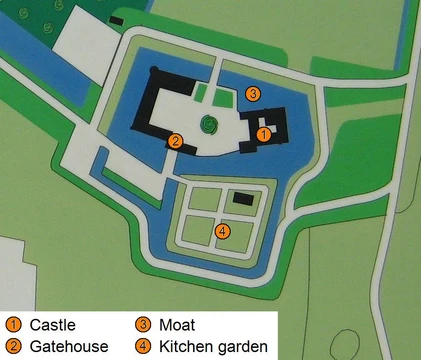
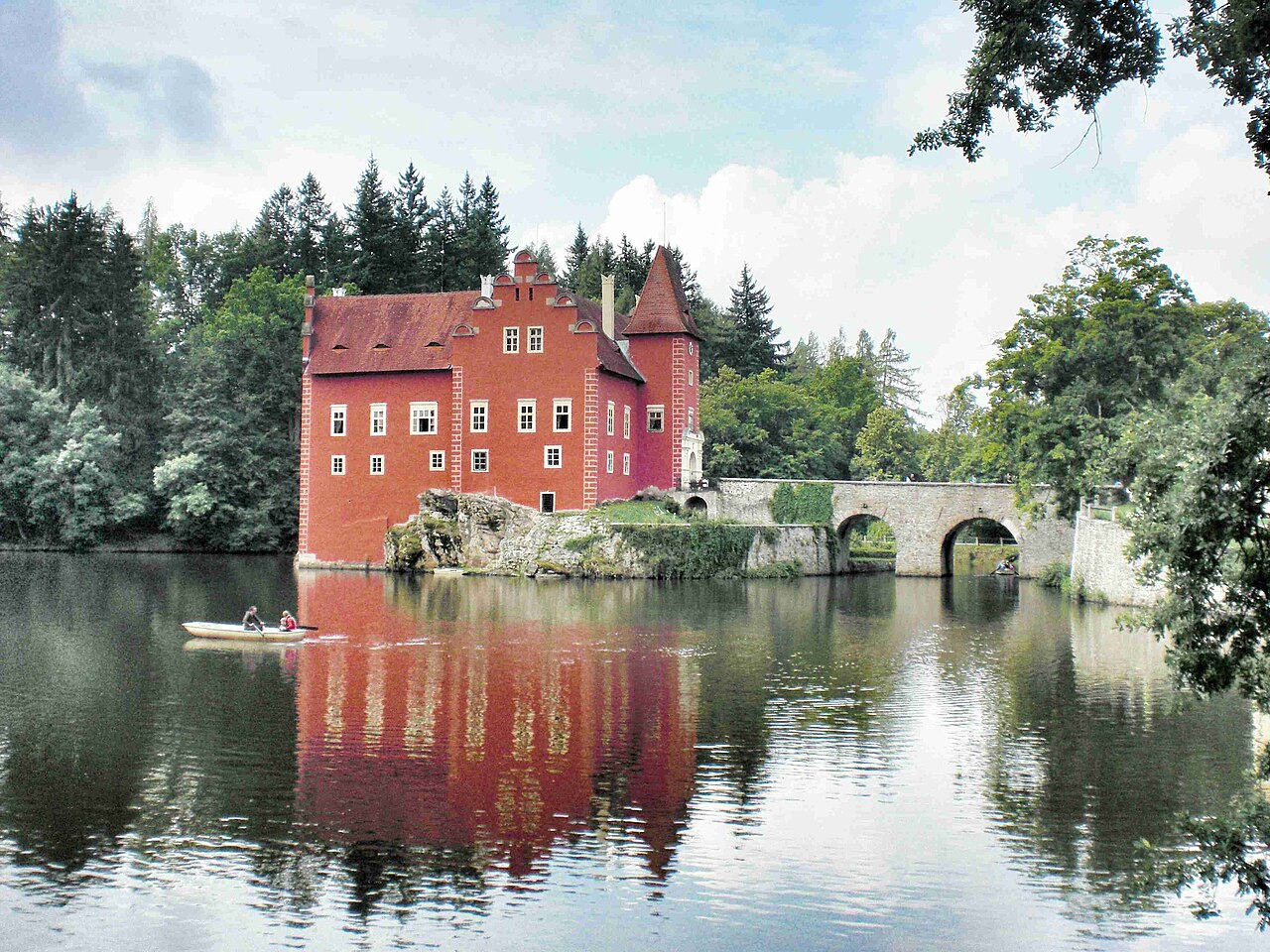
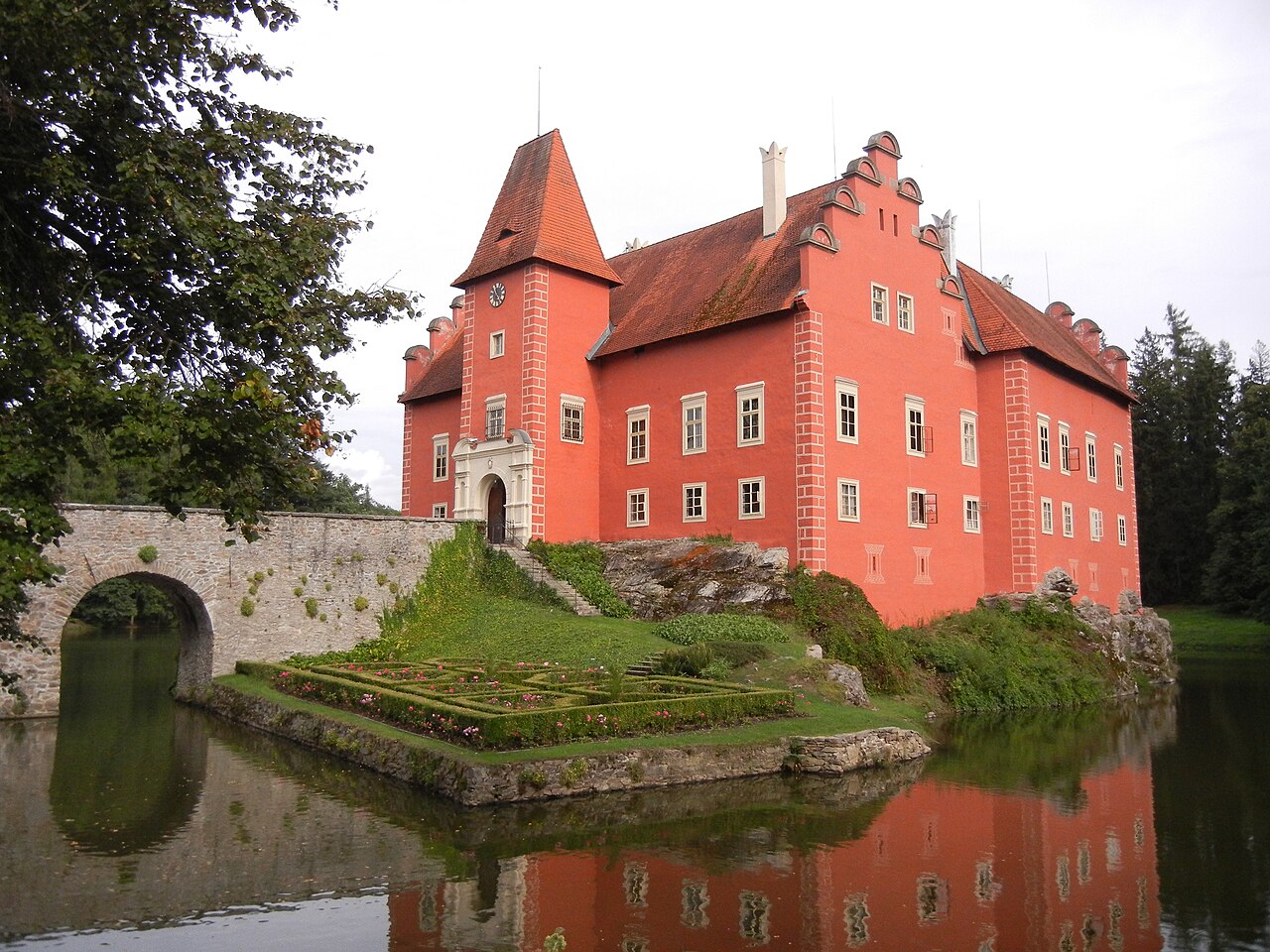
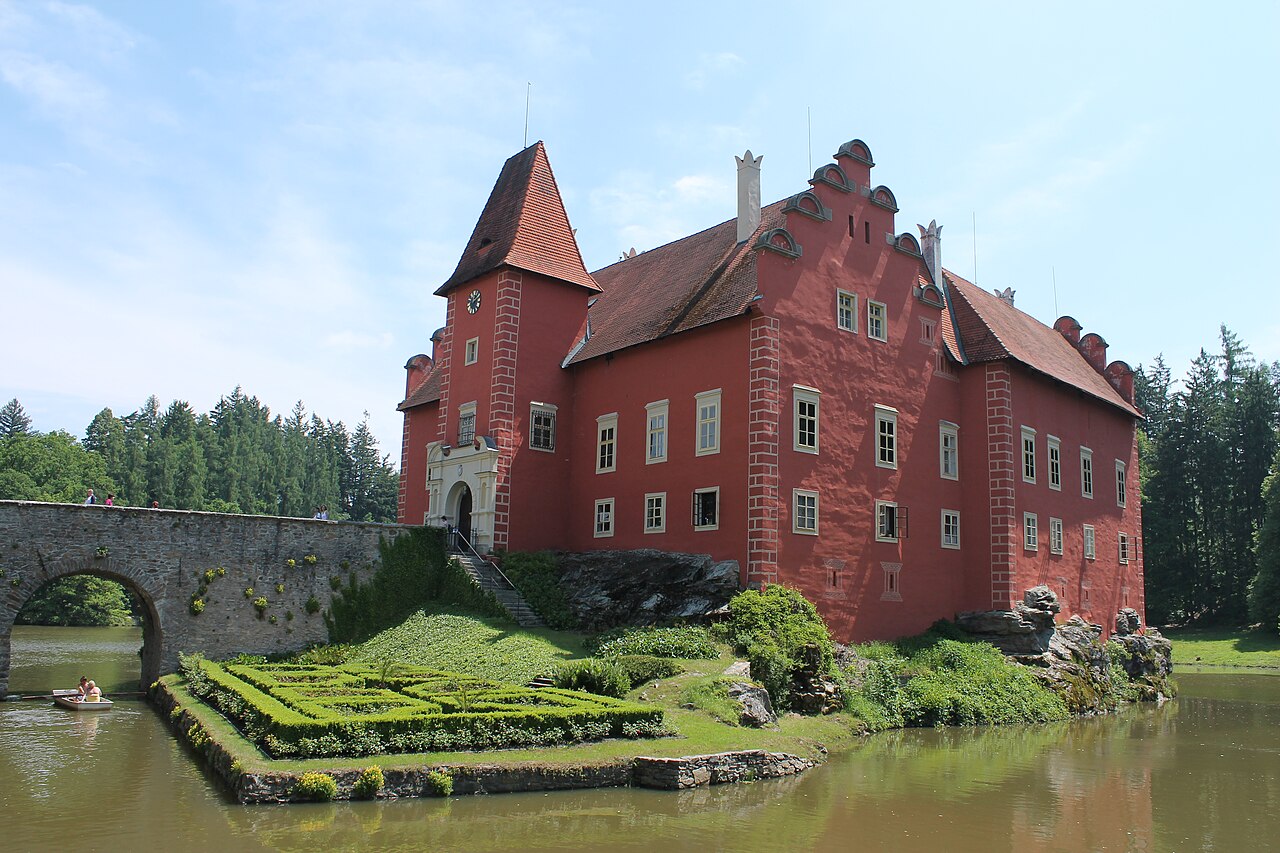
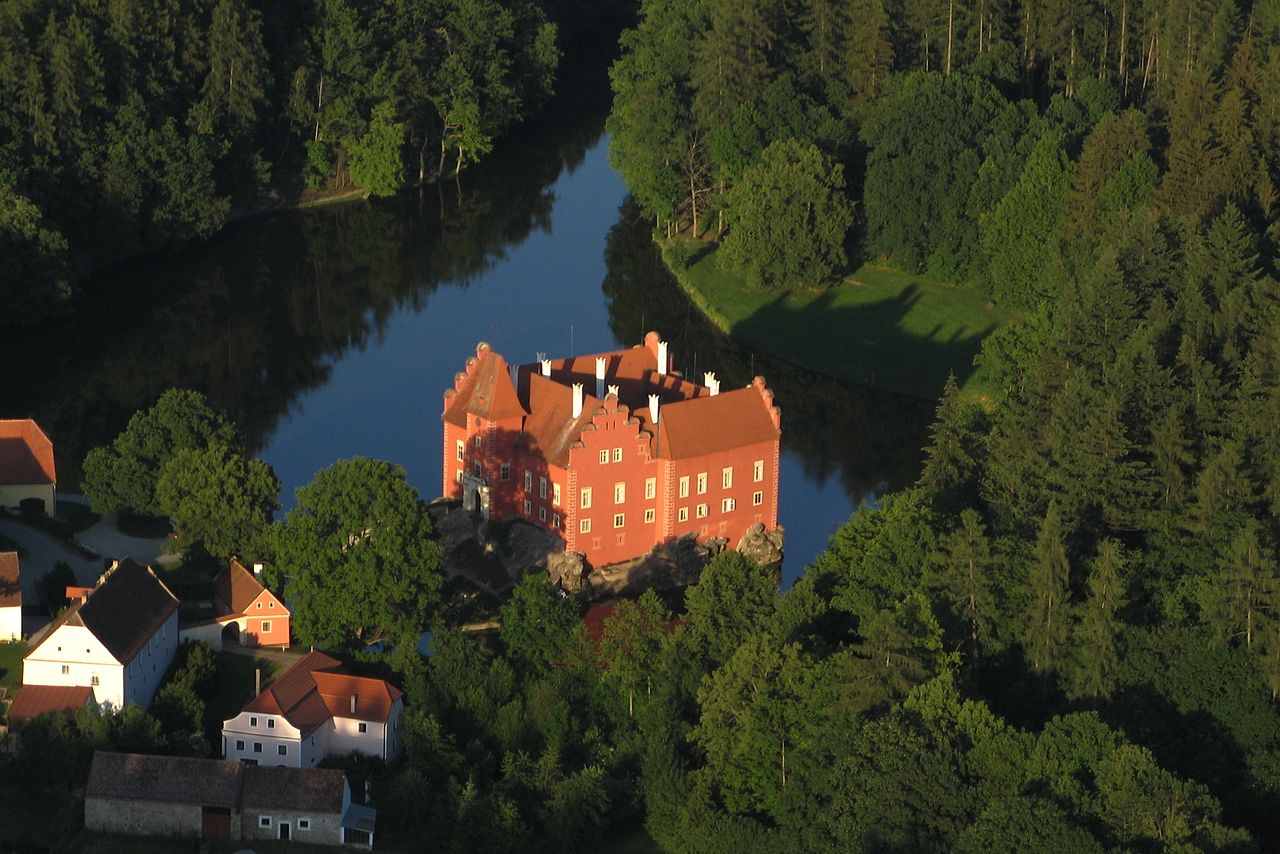
Červená Lhota occupies a singular setting: a rocky granite island in the middle of a fishpond, created by damming a stream and filling the water. The castle's four wings and two stories spread across the entire outcrop, jutting into the water. A stone bridge, erected in 1622 to replace an earlier drawbridge, now connects the island to the shore. The southern bank of the pond is draped in dense forest, providing a dark, natural frame behind the bright-red-roofed structure. On the northern side, a landscaped park unfolds, housing the Renaissance Chapel of the Holy Trinity. A marked circular walking path traces the perimeter of the fishpond, inviting visitors to circle the island on foot. Rowing boats are available for hire near the castle, offering a different vantage point over the water. The interiors preserve an extensive assemblage of historic furniture, tiled stoves, paintings, porcelain, and other decorative objects that speak to centuries of aristocratic habitation.
Cultural Patronage and a New Public Life
The castle's story extends beyond its walls into the world of music and public culture. In 1796, Baron Ignác Stillfried opened his home to the composer Carl Ditters von Dittersdorf, granting the musician a period of residence at the estate. After the Schönburg-Hartenstein line ended with Josef Alexander's death in 1937, the castle's aristocratic era closed. The newly formed Czechoslovak state confiscated the building in 1946, and a children's clinic was established within its rooms. The following year, the property was transferred to a National Culture Commission, and in 1949 the castle was formally opened to the public. Today it functions as a tourist destination of regional significance, drawing approximately 50,000 visitors annually. The estate's name itself carries a layered etymology: the village was originally simply Lhota, became Nová Lhota in the 16th century, then Nová Červená Lhota in the 17th century after the castle's red roof tiles, before settling on the shorter Červená Lhota that persists to this day.
Gallery
Frequently Asked Questions
What is Červená Lhota Castle?
It is a Renaissance-era castle built on a small rocky island in the middle of a lake in South Bohemia, Czech Republic. The structure began life as a Gothic fortress before being completely redesigned in the mid-16th century.
What gives Červená Lhota Castle its distinctive look?
The castle's deep red exterior comes from a layer of plaster applied in the late 1500s, which is the origin of its 'Red Lhota' name. Combined with its isolated position on a lake island, this makes it one of the most visually striking water castles in the region.
What is Červená Lhota Castle used for today?
After passing through the hands of numerous noble families over the centuries, the castle was opened to the public in 1949 and now operates as a tourist attraction. It welcomes roughly 50,000 visitors every year.
Why is Červená Lhota Castle historically important?
First documented in 1465, it is a rare surviving example of a Gothic stronghold that was fully reimagined as a Renaissance residence between 1542 and 1555. Its lake-island setting in South Bohemia also makes it a standout among Czech water castles.
Where exactly can you find Červená Lhota Castle?
The castle sits in the village of Červená Lhota, within the Pluhův Žďár municipality of the South Bohemian Region in the Czech Republic. It occupies a rocky island in a lake, reachable by a short crossing from the surrounding shore.
More in Water castles 1-24
Spotted an error? Know more?
Reader corrections go straight into our review queue. Suggest an edit · How this site is sourced