Trakai Island Castle
Island castle built by Kęstutis and Vytautas the Great.

Trakai Island Castle sits on an island in Lake Galvė, in the town of Trakai, Lithuania. It was a key stronghold of the Grand Duchy of Lithuania, valued for its strategic position. Grand Duke Kęstutis ordered the stone castle built in the 1300s, and his son Vytautas the Great finished the main work around 1409. Vytautas died there in 1430.
The castle went up in stages. In the first phase, during the late 14th century, Kęstutis built it on the largest of the three lake islands to expand and strengthen the nearby Trakai Peninsula Castle. He moved his main home and treasury there. The Teutonic Knights badly damaged it in 1377. After Kęstutis was killed, a power struggle between Jogaila and Vytautas led to sieges from both sides. Once they reconciled, the second phase began, lasting until 1409. This was the castle’s major expansion. During a truce with the Teutonic Order, the Order’s stonemason Radike oversaw some of the work, four years before the Battle of Grunwald.
In the second phase, two wings were added, and a six-storey keep, 35 meters high, rose on the southern side. The keep had movable gates that separated the palace from the rest of the castle. It served as a defensive structure, a chapel, and living quarters. It connected to the multi-storey Ducal Palace, which had an inner yard with wooden galleries running along the inner wall, allowing access to support facilities without entering the palace. The entire southern wing of the palace was the Ducal Hall, about 10 by 21 meters—only the Upper Palace in the Vilnius Castle Complex was larger. The main building material was red Gothic bricks, with stone blocks used only for foundations and upper parts of walls and towers. The castle was decorated with glazed roof tiles, burned bricks, and stained glass windows. Its overall style after this phase was Gothic with some Romanesque touches.
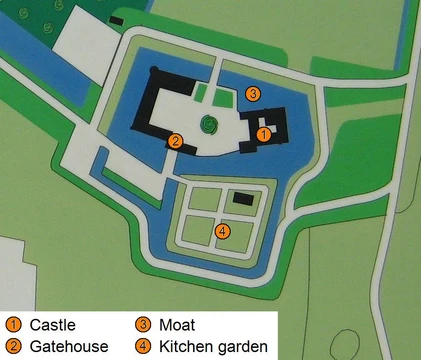
The third phase came in the early 1400s. Walls were thickened to 2.5 meters and raised with extra firing galleries. Three major defensive towers were built on the corners; the south-western one also served as a prison. The top floors housed soldiers and many cannons. A main gatehouse was added, also with movable gates, and reinforced with firing galleries. Near the inner walls, stables, kitchens, and other support buildings were constructed. At that time, Lake Galvė’s water level was several meters higher than today.
Quick Facts
- Native Name
- Trakų salos pilis
- Location
- Trakai, Lithuania
- Restored
- 1946-1961
- Built
- 14th century
- Architecture
- Brick Gothic
- Built For
- Grand Duke Kęstutis
- Owner
- Trakai History Museum
Facts from the source article.
Lore & Background
Trakai Island Castle was built in several phases. During the first phase, in the second half of the 14th century, Grand Duke Kęstutis ordered its construction on the largest of three lake islands. The castle suffered major devastation during an attack by the Teutonic knights in 1377. After Kęstutis's assassination, a power struggle between Jogaila and Vytautas the Great began, and the castle was besieged by both sides. After their reconciliation, the second phase of construction started and continued until 1409, supervised by the Order's stonemason Radike during a truce with the Teutonic Order.
Reader's Guide
Trakai Island Castle lost its military importance soon after the Battle of Grunwald, when the chief enemy of the Grand Duchy of Lithuania was defeated. It was transformed into a residence, decorated with frescos, and hosted foreign emissaries. Grand Duke Vytautas the Great died in the castle in 1430. During the 17th-century wars with Muscovy, the castle was damaged and fell into disrepair. In the 19th and early 20th centuries, restoration plans were made, and a major reconstruction project began in 1946, finishing in 1961, reconstructing the castle in a 15th-century style. The Trakai History Museum was established after the reconstruction. Today it is a major tourist attraction.
Did You Know?
- The castle was built on the largest of three lake islands in Lake Galvė.
- The keep was six storeys tall, measuring 35 metres (115 feet).
- During the 15th century, the water level of Lake Galvė was several metres higher than today.
- The castle was rebuilt in the 1950s–1960s by Lithuanian initiative despite resistance from Soviet authorities.
More in Water castles 1-24
Spotted an error? Know more?
Reader corrections go straight into our review queue. Suggest an edit · How this site is sourced