Olavinlinna
15th-century three-tower castle in Savonlinna, Finland.

Olavinlinna, also called St. Olaf's Castle (Swedish: Olofsborg), is a 15th-century fortress with three towers, situated on an island in the Kyrönsalmi strait within the town of Savonlinna, Finland. This strait links Lake Haukivesi and Lake Pihlajavesi. It holds the distinction of being the northernmost surviving medieval stone fortress and the best-preserved medieval castle from the former Swedish realm. The castle serves as a dramatic venue for the Savonlinna Opera Festival, which debuted in the summer of 1912.
The castle was established in 1475 by Erik Axelsson Tott, originally named Sankt Olofsborg, as a move to capitalize on the instability after Ivan III took over the Novgorod Republic. It was placed in Savonia to assert Swedish claims on the Russian side of the border set by the Treaty of Nöteborg. A letter from Tott in 1477 briefly notes that foreign builders, likely from Reval where city walls were being expanded, were brought to Olofsborg. This was the first Swedish castle designed with thick, round towers able to withstand cannon fire. The surrounding network of lakes and waterways was no accident, as it would severely hinder any Russian attack.
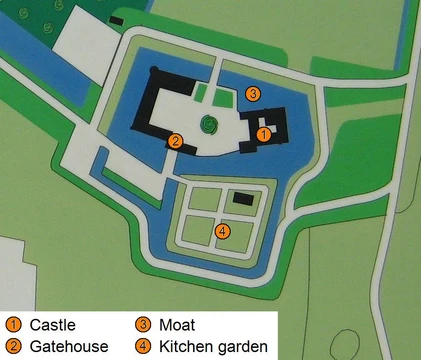
The three-towered keep was finished in 1485, and work on the outer curtain walls and two towers began right away, wrapping up in 1495. The castle is roughly a truncated rhomboid shape, with the keep on the western side of the island and the curtain walls and outer bailey to the east. One of the keep's towers, St. Erik's Tower, had a poor foundation and later collapsed. A bailey tower, the Thick Tower, exploded in 1791, and a bastion, the Thick Bastion, was built in its place. In the late 18th century, the castle was turned into a Vauban-style fortification with bastions.
Olofsborg withstood multiple Russian sieges during the First and Second Russo-Swedish wars. By the late 1500s, a lively trade had grown up under the castle's protection, leading to the founding of Savonlinna, which received its charter in 1639. Though never taken by force, the garrison surrendered twice: first to invading Russians on 28 July 1714, and again on 8 August 1743. The peace treaty ending that conflict, the Treaty of Åbo, ceded the castle and the whole region to Empress Elizabeth of Russia. During Russian rule, Alexander Suvorov personally inspected the fortress's rearmament.
Quick Facts
- Architectural Style
- Castle
- Location City
- Savonlinna
- Location Country
- Finland
- Construction Start Date
- 1475
Facts from the source article.
Lore & Background
The fortress was founded by Erik Axelsson Tott in 1475 under the name Sankt Olofsborg in an effort to profit from the political turmoil following Ivan III's conquest of the Novgorod Republic. It was sited in Savonia so as to lay claim to the Russian side of the border established by the Treaty of Nöteborg. One of Tott's letters from 1477 includes a passing mention of foreign builders invited to Olofsborg, probably from Reval, where the city fortifications were being extended. It was the first Swedish castle provided with a set of thickset circular towers that could withstand cannon fire. The three-towered keep was completed in 1485, and the construction of the outer curtain walls with two towers was initiated immediately, completed in 1495.
Reader's Guide
Olavinlinna withstood several sieges by the Russians during the First and Second Russian-Swedish wars. A brisk trade developed under the umbrella of the castle towards the end of the 16th century, giving birth to the town of Savonlinna, which was chartered in 1639. While the castle was never captured by force, its garrison agreed to terms of surrender twice: first to invading Russians on 28 July 1714 and the second time on 8 August 1743, with the latter conflict's peace treaty in form of the Treaty of Åbo leading to the castle and the entire region being ceded to Empress Elizabeth of Russia. During the Russian era Alexander Suvorov personally inspected rearmament of the fortress. Several devastating fires destroyed much of the castle's decor in the 19th century, all of its original furnishings were destroyed. The castle hosts several small exhibitions, including the Castle Museum and the Orthodox Museum. Olavinlinna is the initial model for Kropow Castle in the bande dessinée King Ottokar's Sceptre, an album in the series of Adventures of Tintin created by Hergé.
Did You Know?
- Olavinlinna is the northernmost medieval stone fortress still standing.
- The castle was the first Swedish castle with thickset circular towers that could withstand cannon fire.
- The Savonlinna Opera Festival was first held at the castle in the summer of 1912.
- The castle's garrison surrendered twice, in 1714 and 1743, but the castle was never captured by force.
More in Water castles 1-24
Spotted an error? Know more?
Reader corrections go straight into our review queue. Suggest an edit · How this site is sourced