Imabari Castle
One of Japan's three Mizujiro, or castles on the sea.

Imabari Castle is a Japanese castle located in Imabari, Ehime, Japan. It served as the center of Imabari Domain during the Edo Period under the Tokugawa shogunate and was ruled for most of its history by a branch of the Hisamatsu-Matsudaira clan. The castle is renowned as one of the three Mizujiro, or 'Castles on the sea,' in Japan, alongside Takamatsu Castle and Nakatsu Castle.
Quick Facts
- Native Name
- ja · 今治城
- Location
- Imabari, Ehime Prefecture, Japan
- Built
- 1602-1606
- Builder
- Tōdō Takatora
- In Use
- 1604-1873
- Demolished
- 1873
- Condition
- reconstructed
Facts from the source article.
Lore & Background
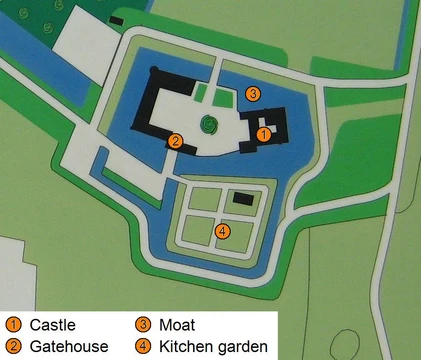
Imabari Castle was built by Tōdō Takatora, a general of Tokugawa Ieyasu, after the Battle of Sekigahara. Tōdō was installed as daimyō of the 200,000 koku Imabari Domain and tasked with controlling the narrows of the Seto Inland Sea. He initially resided at Kokufu Castle but decided to construct a new coastal castle due to the inconvenient location of the former. Construction began in 1602 and was completed in 1608. The castle featured three concentric enclosures, each surrounded by a water moat connected to the sea, and a five-story tenshu that was later dismantled under the 'One Castle per Province' edict, with materials possibly reused elsewhere—but the tenshu was not relocated intact.
In 1609, Tōdō Takatora was transferred to Tsu Domain. In 1635, a cadet branch of the Hisamatsu-Matsudaira clan, headed by Matsudaira Sadafusa (a grandson of Tokugawa Ieyasu), took over and ruled Imabari for the remainder of the Edo period. After the Meiji Restoration, most castle buildings were destroyed, and the land was sold to a local Shinto shrine. A fire in 1871 destroyed the last remaining yagura, which had been used as an armory.
The modern tenshu was reconstructed in reinforced concrete in 1980, and additional yagura were rebuilt in 1985 and 1990. In 2007, a large gate and five smaller yagura were reconstructed, and a statue of Tōdō Takatora was installed in the second enclosure.
Reader's Guide
Imabari Castle holds significance as a strategic coastal fortress designed to control maritime routes between Shikoku and Honshu. Its designation as one of Japan's three Mizujiro highlights its unique defensive use of seawater moats, which average 60 meters in width and were intended to neutralize arrows. The castle's high stone walls remain largely unchanged since the Edo period, and the iron-plated Kurogane Main Gate is a rare surviving style. Although the original tenshu no longer stands, the modern reconstruction houses exhibitions on weapons, armor, and castle photography, as well as a natural science museum. The castle's selection as one of Japan's Top 100 Castles in 2006 underscores its cultural and historical importance. Today, it serves as a local landmark and museum complex, offering visitors insight into feudal Japanese castle design and the region's maritime history.
Did You Know?
- Imabari Castle is one of only three Mizujiro, or 'Castles on the sea,' in Japan.
- The castle's seawater moat is typically 20–30 meters wide.
- The original five-story tenshu was dismantled under the 'One Castle per Province' edict, but it was not relocated intact.
- A fire in 1871 destroyed the last original yagura when gunpowder inside ignited and exploded.
More in Water castles 1-24
Spotted an error? Know more?
Reader corrections go straight into our review queue. Suggest an edit · How this site is sourced