
Giant's Causeway
Ancient volcanic basalt columns on Northern Ireland's coast.

Nolabob · CC BY-SA 4.0
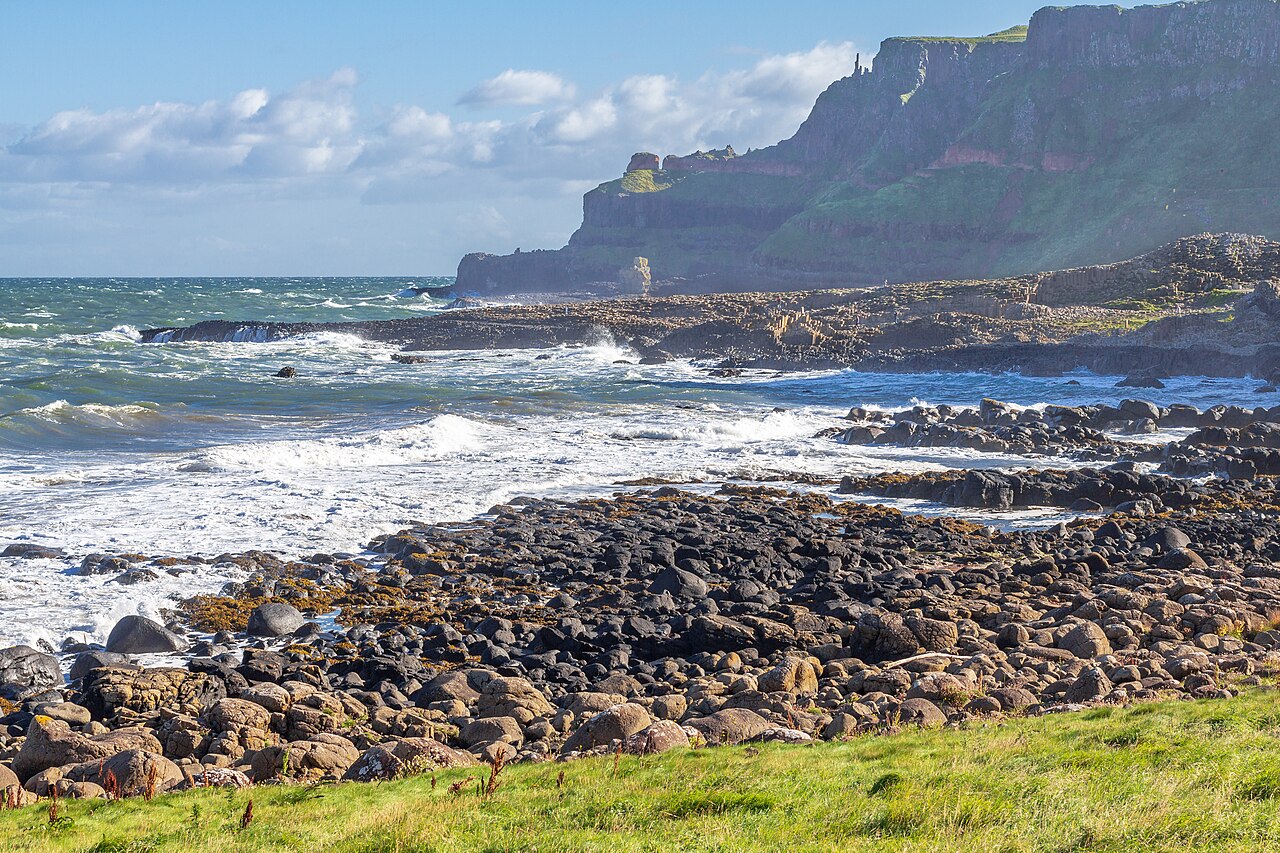
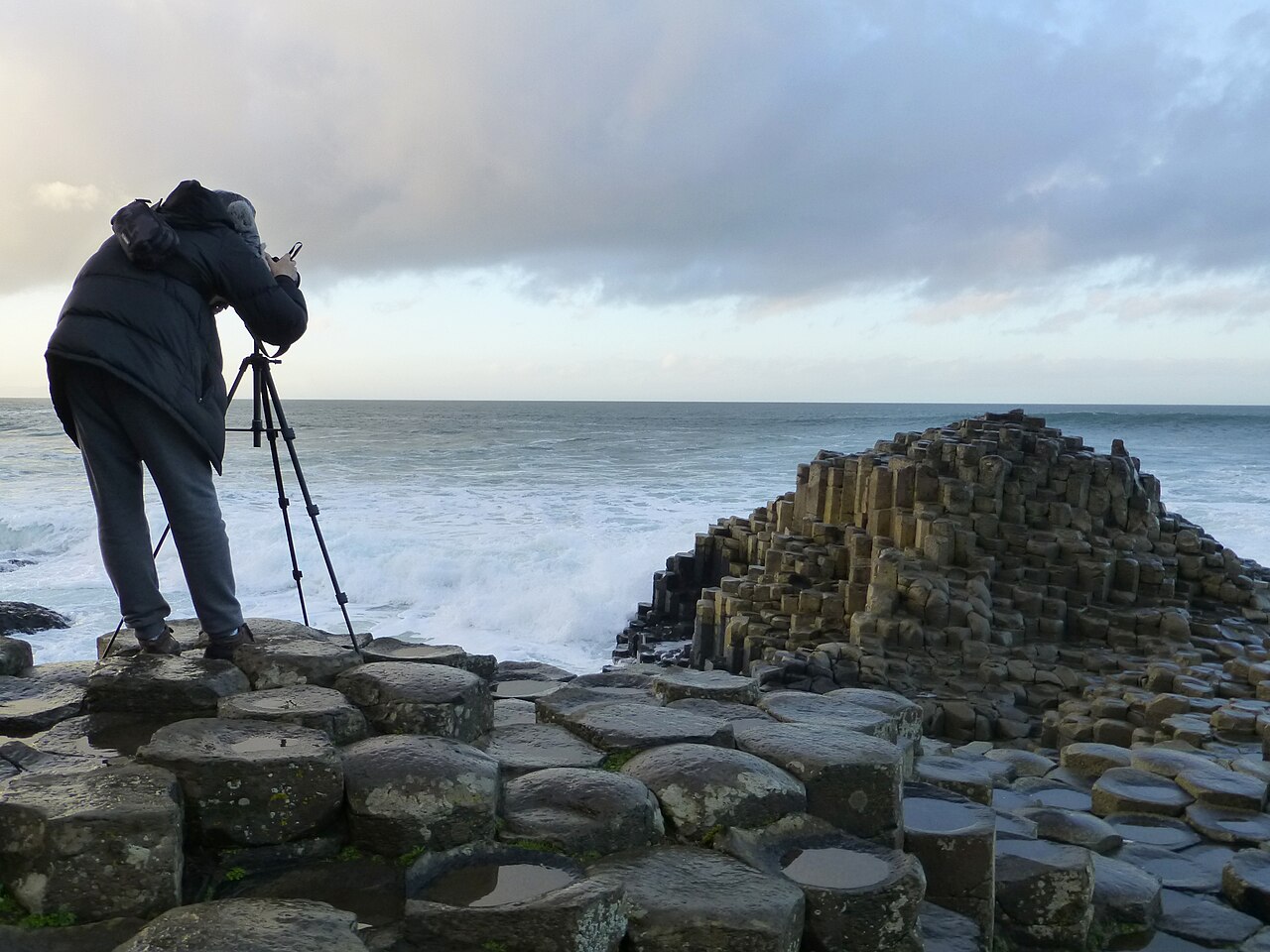
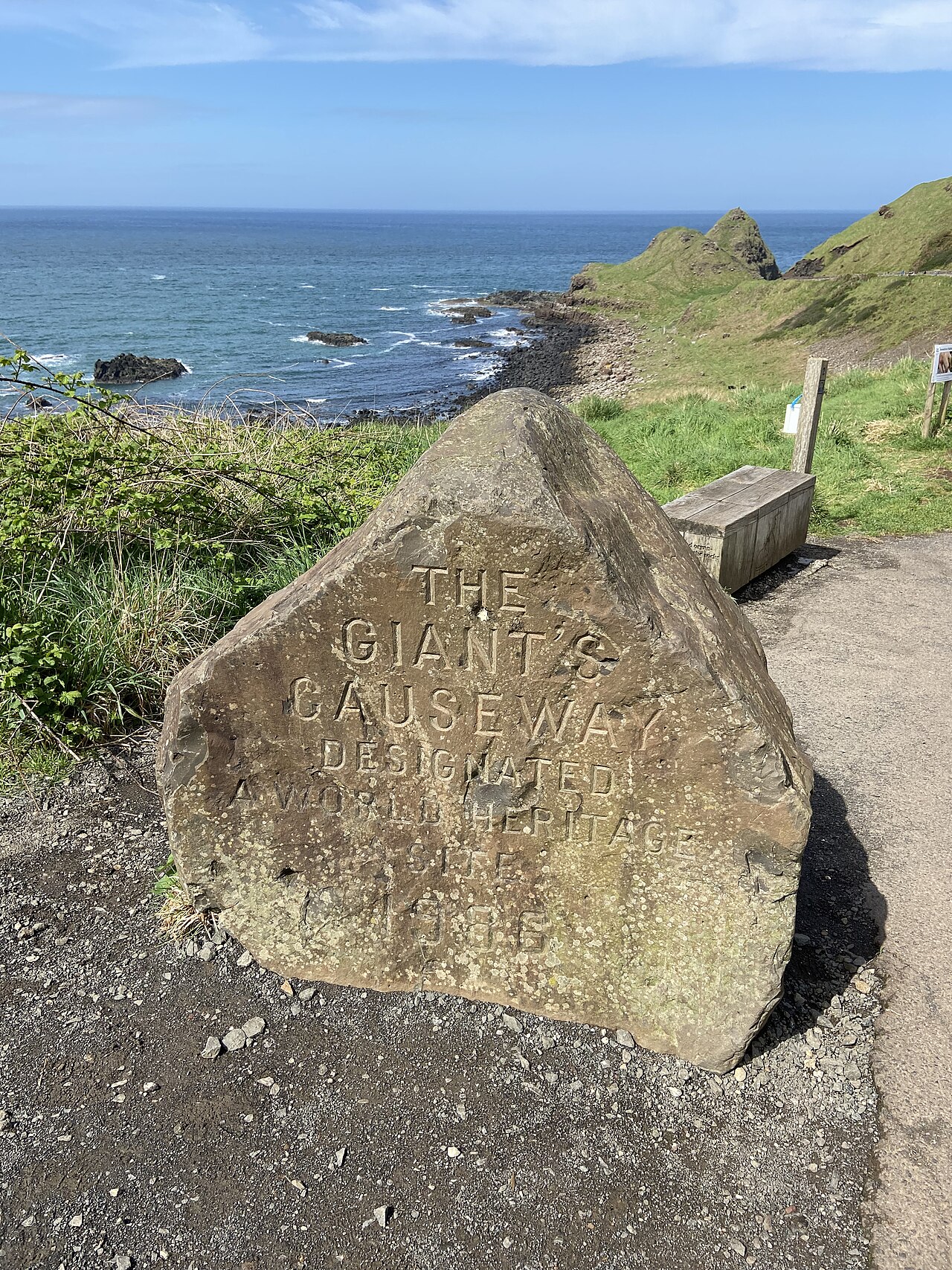
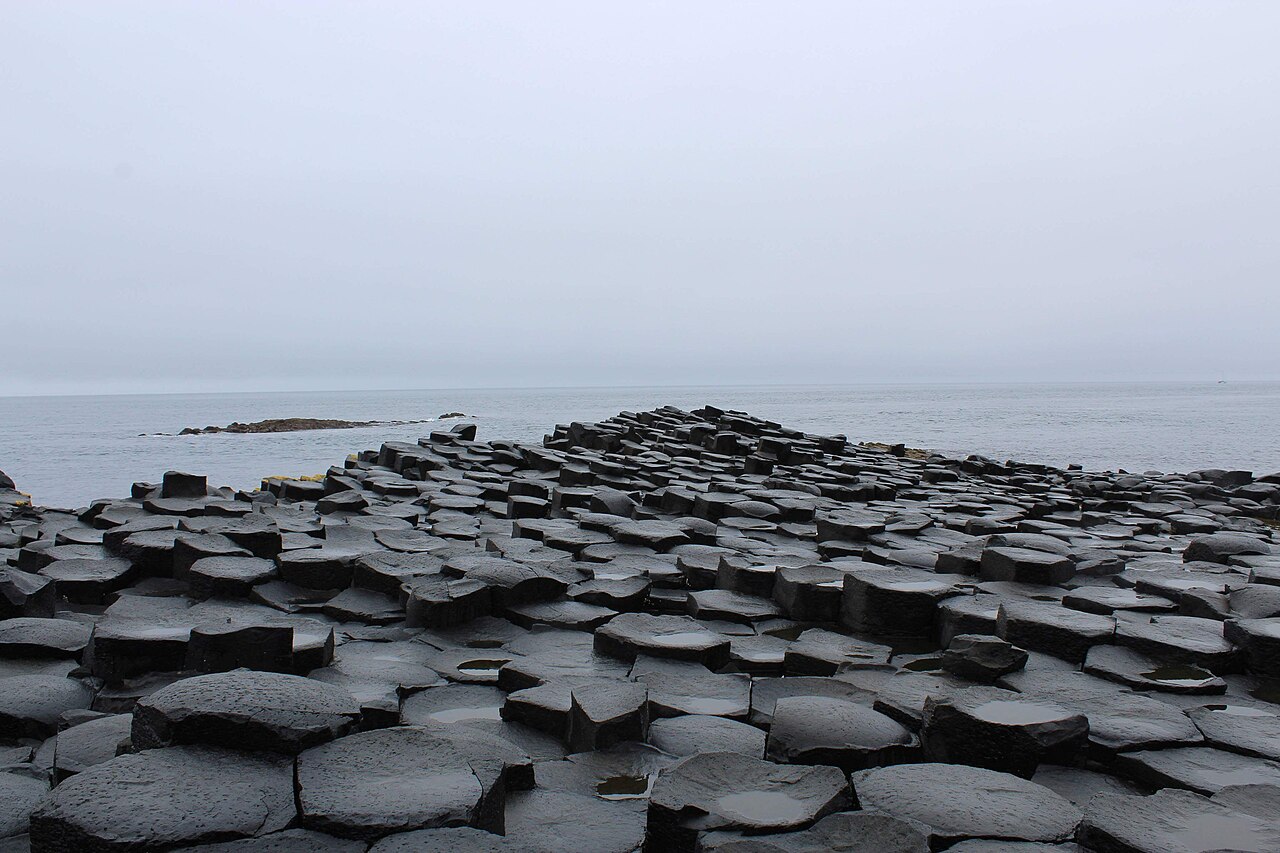
The Giant's Causeway is an area of approximately 40,000 interlocking basalt columns on the north coast of Northern Ireland, about three miles northeast of Bushmills. Formed by an ancient volcanic fissure eruption during the Paleogene period, it is part of the North Atlantic Igneous Province. It was declared a UNESCO World Heritage Site in 1986 and a national nature reserve in 1987.
Quick Facts
- Native Name
- Clochán an Aifir/Clochán na bhFomhórach
- Location
- County Antrim, Northern Ireland
Facts from the source article.
Lore & Background
According to legend, the columns are the remains of a causeway built by the Irish giant Fionn mac Cumhaill (Finn MacCool) after being challenged by the Scottish giant Benandonner. In one version, Fionn defeats Benandonner; in another, Fionn's wife disguises him as a baby, causing Benandonner to flee and destroy the causeway. The Irish name Clochán na bhFomhórach means 'stepping stones of the Fomhóraigh', a race of mythological beings sometimes described as giants.
Reader's Guide
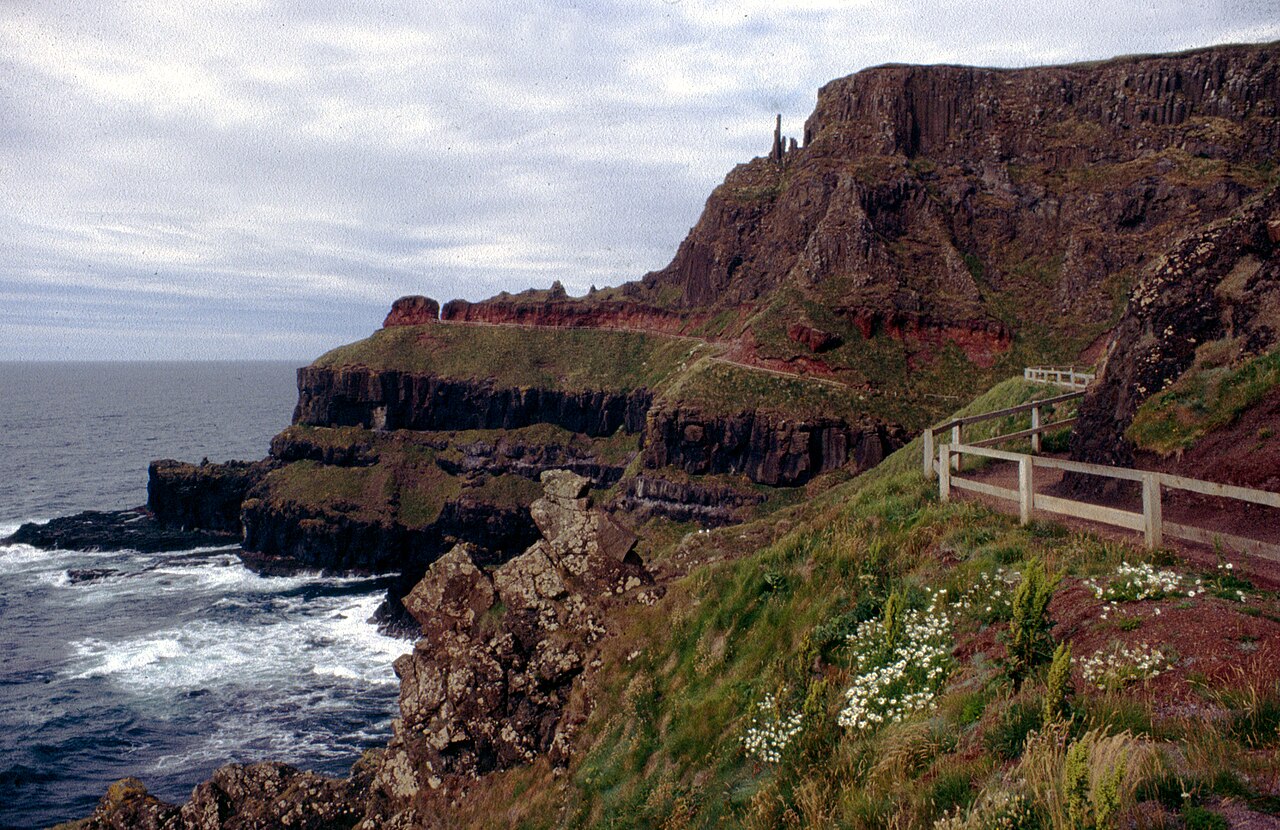
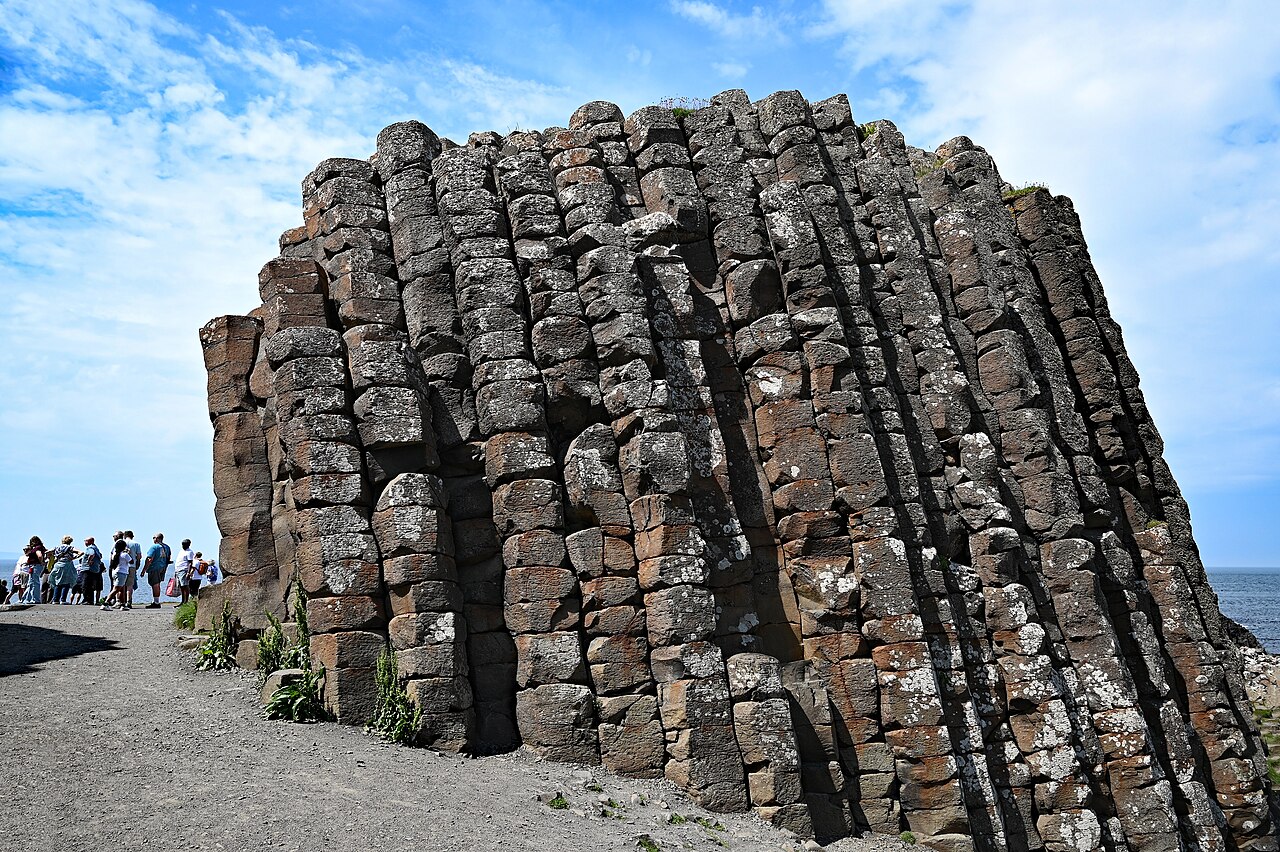
The Giant's Causeway is significant for its geological origin as a volcanic plateau formed during the Paleocene Epoch, when molten basalt cooled and contracted into hexagonal columns. It was key to the development of volcanology and was included by the International Union of Geological Sciences in its 2022 list of 100 geological heritage sites. The site has been a tourist attraction since the 19th century, especially after the opening of the Giant's Causeway Tramway. It is owned and managed largely by the National Trust, with access free of charge. The visitor centre, opened in 2012, includes exhibits that mention Young Earth Creationist views alongside the scientific explanation, though the Trust emphasizes the scientific origin. Notable features include the Organ, Giant's Boot, and Chimney Stacks. The area hosts seabirds like fulmar and guillemot, and plants such as sea spleenwort and frog orchid.
Did You Know?
- The columns are mostly hexagonal, but some have between four and eight sides.
- The solidified lava in the cliffs is up to 28 metres (92 ft) thick in places.
- Identical basalt columns exist at Fingal's Cave on the Scottish isle of Staffa.
- A stromatolite colony was reportedly found at the Giant's Causeway in October 2011.
Gallery
Frequently Asked Questions
What is Giant's Causeway?
It is a geological site on the north coast of Northern Ireland featuring roughly 40,000 interlocking basalt columns. The formation stretches along the shoreline in County Antrim, just a few miles northeast of Bushmills.
How was Giant's Causeway formed?
The columns are the result of an ancient volcanic fissure eruption during the Paleogene period, roughly 50 to 60 million years ago. As the molten basalt cooled and contracted, it fractured into the distinctive polygonal columns visible today.
How tall are the columns at Giant's Causeway?
The tallest columns reach approximately 12 metres (about 39 feet) in height. Most visitors encounter shorter columns at ground level, but the full vertical extent is exposed where the cliff face reveals the complete column structure.
When was Giant's Causeway designated a UNESCO World Heritage Site?
UNESCO granted the site its World Heritage status in 1986, recognising it as an outstanding example of columnar basalt formation. The following year, in 1987, it was also protected as a national nature reserve.
Where exactly can you visit Giant's Causeway?
The site sits on the north coast of County Antrim in Northern Ireland, roughly three miles northeast of the town of Bushmills. It forms part of the larger North Atlantic Igneous Province, a geological region extending across parts of the North Atlantic.
More in Unesco World Heritage Parks 1-19
Spotted an error? Know more?
Reader corrections go straight into our review queue. Suggest an edit · How this site is sourced