
Białowieża Forest
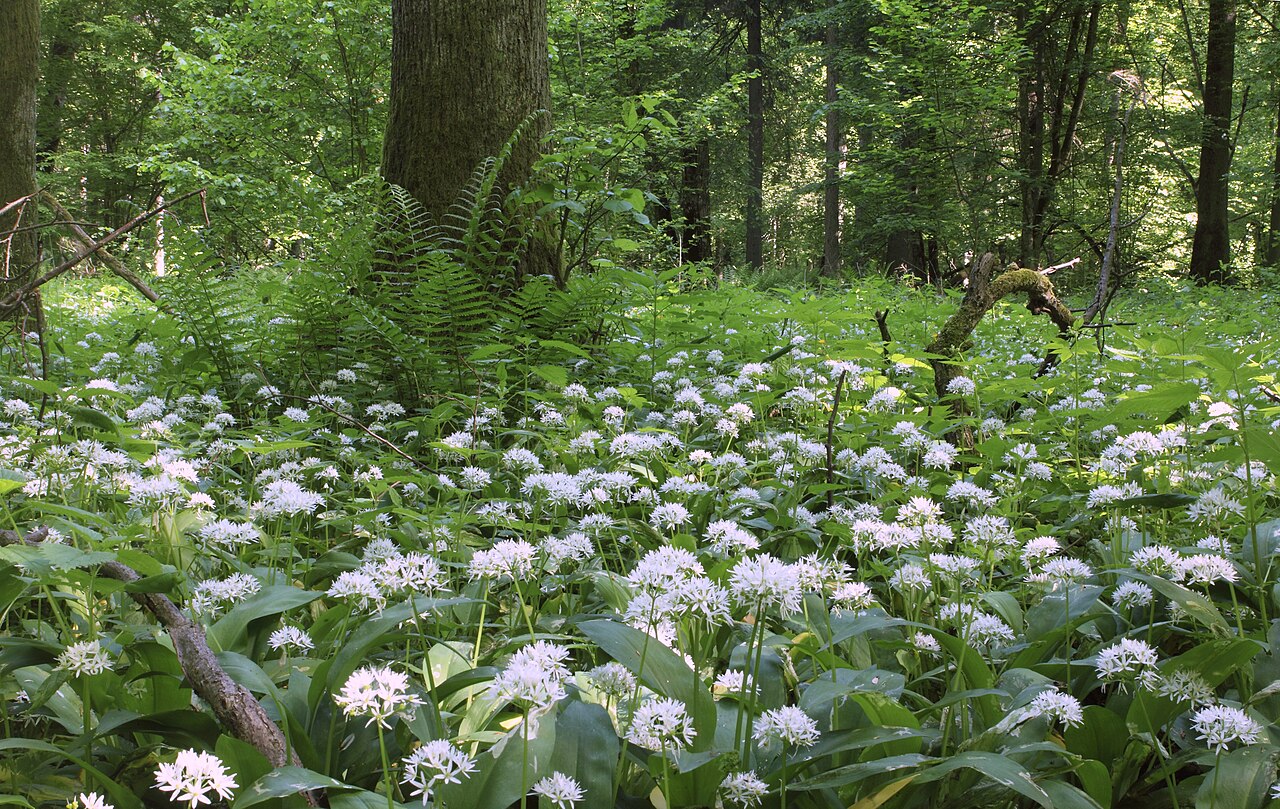
One of the last primeval forests of the European Plain.

Agnieszka Kwiecień ( Nova ) · CC BY 2.5
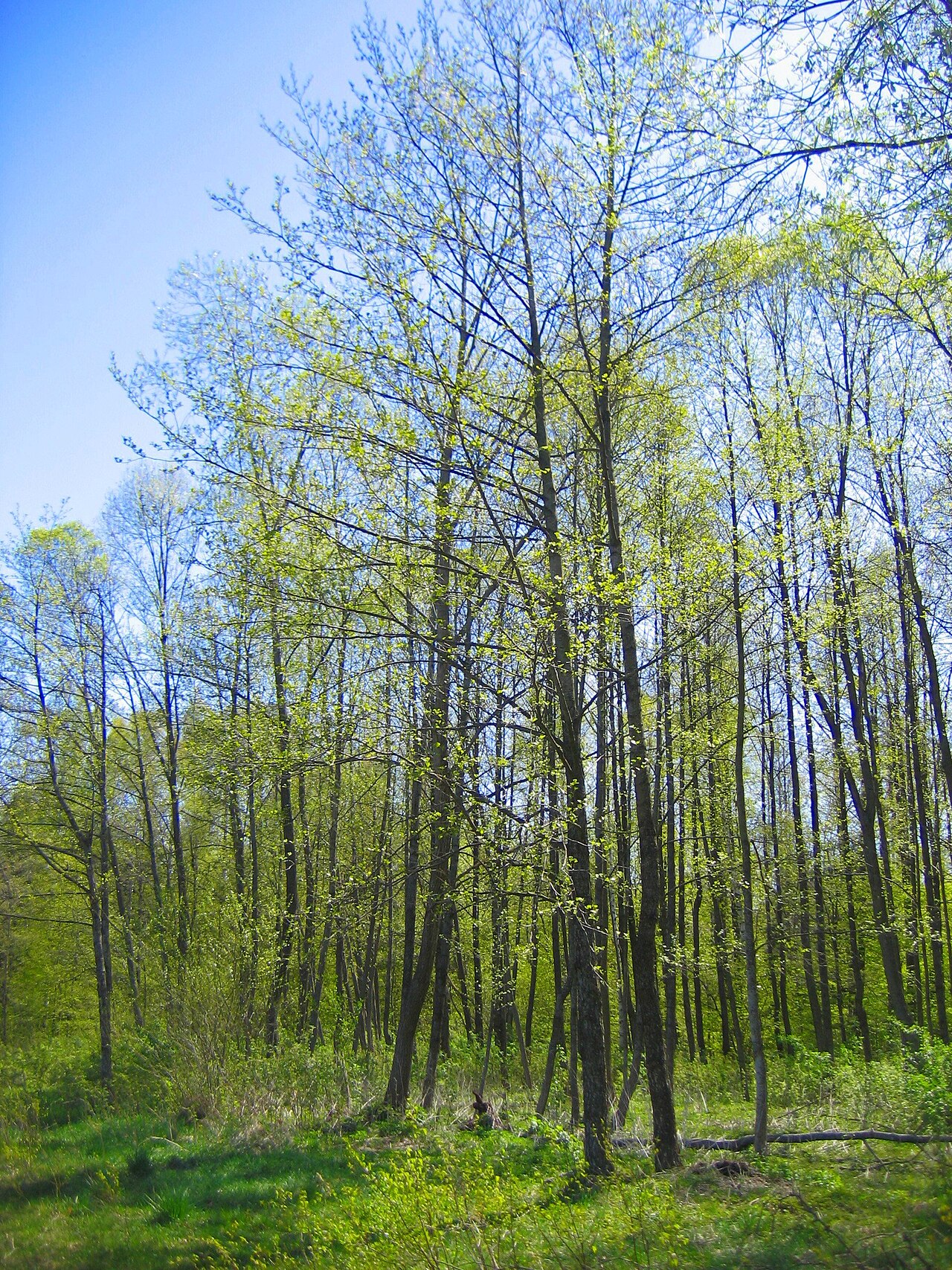
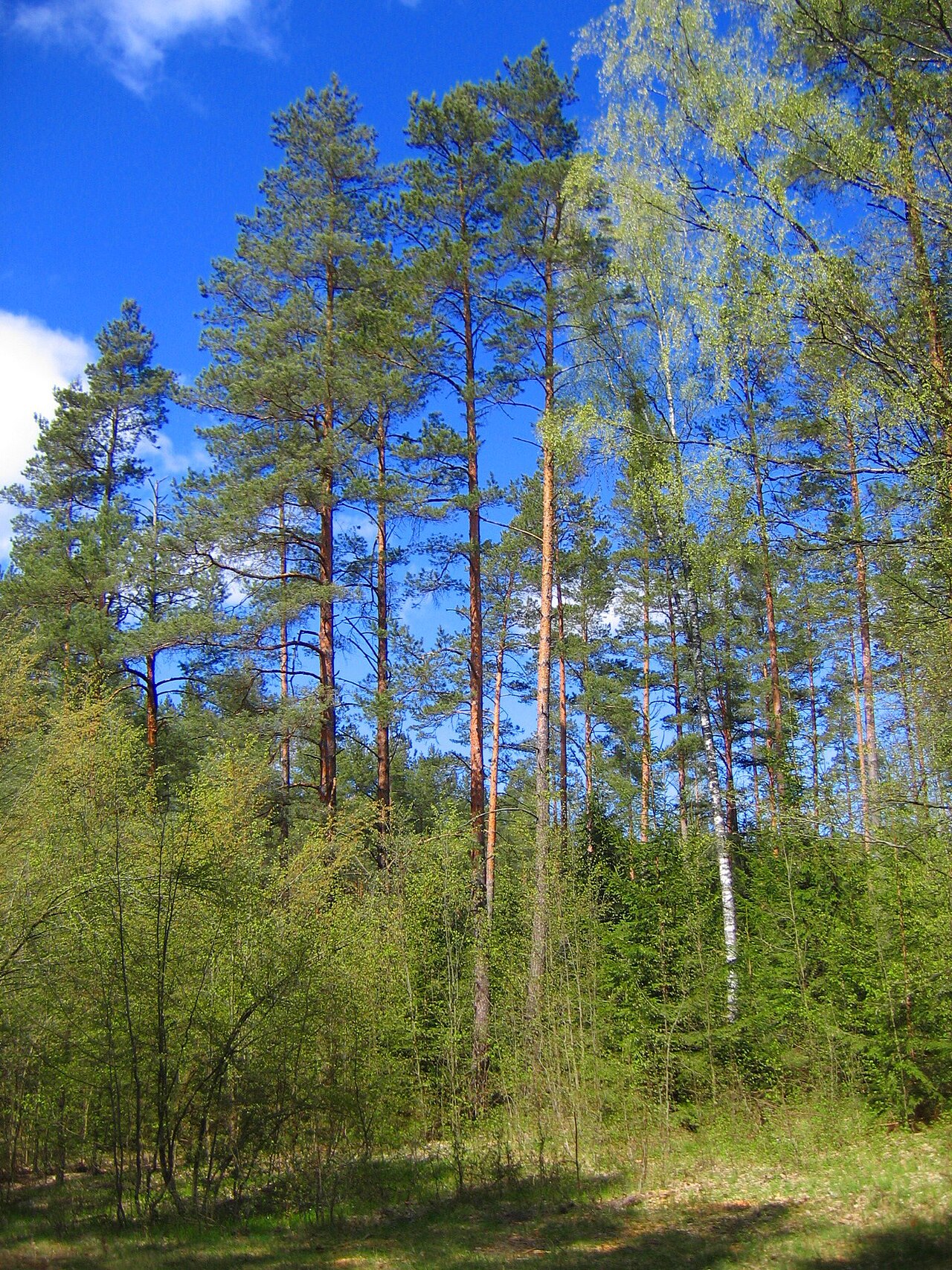
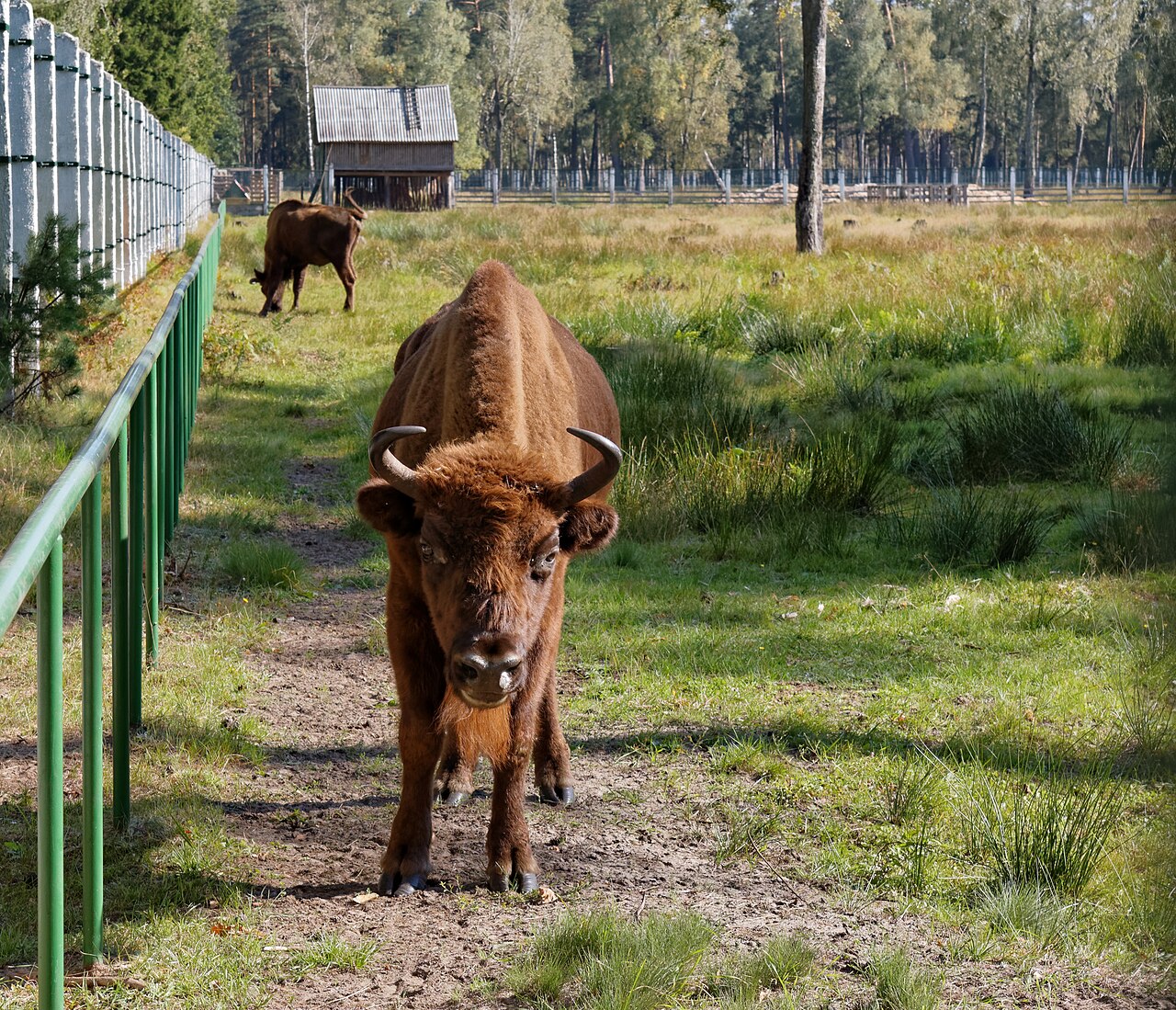
Białowieża Forest is a vast woodland complex that spans the border between Poland and Belarus and is recognized as a UNESCO World Heritage Site. It represents one of the final and most extensive fragments of the ancient primeval forest that once covered much of the European Plain. This forest is notable for sheltering over 800 European bison, the heaviest land animals on the continent. It also holds status as an EU Natura 2000 Special Area of Conservation.
The forest's name comes from the Polish village of Białowieża, located at its heart and likely one of the earliest settlements in the area. "Białowieża" translates to "White Tower" in Polish, a reference to a white tower or hunting lodge built there by King Sigismund I the Old or other rulers; the first documented mention of the name dates to 1413, during the reign of Władysław II Jagiełło. In Belarusian, the forest is called Biełaviežskaja pušča, though the official Russian name Belovezhskaya pushcha, from the Soviet era, is still used by Belarusian authorities and UNESCO.
On the Polish side, a portion of the forest is protected as Białowieża National Park, covering about 105 square kilometers. Within this area lies the Białowieża Glade, which features a complex of buildings originally owned by Russian tsars during the Partitions of Poland; today, it houses a hotel, restaurant, and parking lot. Guided tours of the park's strictly protected zones are available on foot, by bicycle, or by horse-drawn carriage. Each year, roughly 120,000 to 150,000 tourists visit the Polish section, including about 10,000 from abroad. Attractions include birdwatching with local experts, observing rare birds like the pygmy owl, watching bison in the wild, and enjoying sleigh or carriage rides with a bonfire. The village of Białowieża itself is situated within the forest.
The Belarusian part of the World Heritage site covers 823 square kilometers, with an additional 1,309 square kilometers designated as a buffer zone. Most of this area falls within Belavezhskaya Pushcha National Park, which spans 1,501 square kilometers. The park's core strictly protected area makes up 39% of its territory, while a regulated-use zone accounts for 25%, and tourist and economic zones together cover 36%.
Quick Facts
- Location
- Podlaskie Voivodeship, Poland / Grodno and Brest oblasts, Belarus
- Nearest City
- Hajnówka, Poland
- Established
- 11 August 1932
- Governing Body
- Ministries of Environment of Poland and Belarus
Facts from the source article.
Lore & Background
The Białowieża Forest takes its name from the Polish village of Białowieża, meaning 'White Tower' in Polish, stemming from a white tower or hunting lodge built by King Sigismund I the Old or other rulers; the first documented mention of the name dates to 1413, during the reign of Władysław II Jagiełło. The forest was part of the Grand Duchy of Lithuania and later came under Russian control after the Third Partition of Poland in 1795. Protection of bison dates to at least 1518, and by 1553 King Sigismund II Augustus instituted the death penalty for poaching a bison. The forest was inventoried in the 1840s, covering 1,285 km², with pine dominating two-thirds of the area.
Reader's Guide
Białowieża Forest is significant as one of the last and largest remnants of the primeval forest that once covered the European Plain. It serves as a critical refuge for the European bison, the continent's heaviest land animal, with a population exceeding 800. The forest's dual designation as a UNESCO World Heritage Site and an EU Natura 2000 Special Area of Conservation underscores its global ecological importance. The Polish side includes Białowieża National Park, attracting 120,000–150,000 tourists annually, while the Belarusian portion features Belavezhskaya Pushcha National Park with a zoo and a New Year's museum. The forest's history reflects centuries of shifting governance, from Lithuanian and Polish royal hunting grounds to Russian imperial control, with ongoing conservation efforts. The border crossing for hikers and cyclists highlights its role as a transboundary natural asset. Its legacy includes early bison protection laws and hybrid breeding experiments, contributing to modern wildlife management.
Did You Know?
- The forest is home to more than 800 European bison, Europe's heaviest land animal.
- The name Białowieża means 'White Tower' in Polish, from a white wooden hunting-manor built by Władysław II Jagiełło.
- In 1553, King Sigismund I instituted the death penalty for poaching a bison.
- Between 1847 and 1859, Polish agronomist Leopold Walicki created fifteen hybrids of bison and cattle, including the only known fertile male hybrid from the first generation.
Ecological Significance and Conservation Status
Białowieża Forest stands as one of the final surviving fragments of the vast primeval woodland that once blanketed the entire European Plain, making it an irreplaceable ecological asset. Its protection has been formalized through multiple overlapping international designations: UNESCO World Heritage status, EU Natura 2000 Special Area of Conservation listing, and separate Biosphere Reserve grants for the Polish side in 1976 and the Belarusian side in 1993. The combined World Heritage area encompasses 141,885 hectares. The forest shelters more than 800 European bison, the heaviest land animals on the continent, alongside a rich assemblage of native fauna. On the Belarusian side, the strictly protected core accounts for 39 percent of the national park area, while regulated-use zones cover a further 25 percent. A 2014 World Heritage Committee decision broadened the site's official designation to "Białowieża Forest, Belarus, Poland," underscoring its transnational character and the shared stewardship both nations now bear.
Royal Origins and Centuries of Forest Governance
The forest's very name traces back to a white wooden hunting manor erected by Władysław II Jagiełło, Grand Duke of Lithuania and later King of Poland, who favored the woodland for his hunting excursions while it belonged to the Grand Duchy of Lithuania. The Polish word Białowieża translates to "White Tower," so the full Puszcza Białowieska means "forest of the white tower." Legal protection of the bison population has deep roots: as early as 1518, nobles received hunting rights that explicitly excluded bison, and in 1553 King Sigismund I imposed the death penalty for poaching the animal. A 1557 charter created a dedicated board to oversee woodland usage. In 1639, King Władysław IV issued a landmark decree liberating all serfs residing in the forest in exchange for their service as royal foresters, freeing them from taxes in return for stewardship. The woodland was partitioned into triangular districts called straże, centered on Białowieża village, growing to thirteen such areas by the late eighteenth century.
Cross-Border Geography and Dual Administration
The international boundary between Poland and Belarus cuts directly through the heart of the forest, creating a rare transnational wilderness. On the Polish side, the Białowieża National Park covers roughly 105 square kilometers within the Podlachia historical region, situated about 62 kilometers southeast of Białystok. The Belarusian portion, falling within the Brest and Grodno Oblasts roughly 70 kilometers north of Brest, is considerably larger: the national park spans 1,501 square kilometers with an additional 1,309-square-kilometer buffer zone, and by 2025 the Belarusian Biosphere Reserve stretched to 213,200 hectares. Naming conventions reflect the region's layered history: Polish speakers use Białowieża, Belarusian authorities prefer Biełaviežskaja pušča, yet both the Belarusian government and UNESCO still employ the pre-1991 Russian form Belovezhskaya pushcha. Despite the political divide, a border crossing exists specifically for hikers and cyclists, allowing visitors to traverse the forest on foot or by bicycle across two sovereign nations.
Visitor Experience and Living Heritage
The Polish side of the forest welcomes between 120,000 and 150,000 visitors each year, roughly 10,000 of whom come from abroad. Guided excursions into the strictly protected zones can be taken on foot, by bicycle, or in a horse-drawn carriage, and are available throughout the year. Popular activities include birdwatching with local ornithologists, observing pygmy owls, watching bison roam their natural habitat, and enjoying sledge rides or carriage tours that end around a bonfire. The Białowieża Glade preserves a complex of buildings once owned by the Russian tsars during the Partitions of Poland; today it houses a hotel, restaurant, and car park. On the Belarusian side, the headquarters at Kamieniuki feature laboratory facilities and a zoo where reintroduced European bison, returned to the park in 1929, semi-wild konik horses, wild boar, and Eurasian elk can be seen in enclosures modeled on their natural surroundings. A New Year's museum dedicated to Ded Moroz, the East Slavic equivalent of Father Christmas, adds a cultural dimension to the visitor experience.
Gallery
Frequently Asked Questions
What is Białowieża Forest?
Białowieża Forest is a vast woodland complex straddling the Poland–Belarus border, named after a small Polish village at its core. It is one of the last surviving stretches of primeval forest on the European Plain and carries UNESCO World Heritage status.
Where exactly is Białowieża Forest located?
The forest spans the international border between Poland and Belarus, with protected land on both sides. The Polish portion is Białowieża National Park at roughly 105 km², while the Belarusian side forms the far larger Belavezhskaya Pushcha National Park covering about 1,501 km².
Why did UNESCO designate Białowieża Forest as a World Heritage Site?
UNESCO recognized the forest because it preserves one of the final and most extensive remnants of the ancient primeval woodland that once blanketed the European Plain. Its ecological significance is further highlighted by hosting over 800 European bison, the heaviest land mammals on the continent.
What is the most famous animal associated with Białowieża Forest?
The European bison is the forest's most iconic resident, with more than 800 individuals living within its borders. These massive animals make the area one of the key strongholds for the species across Europe.
How large is the Białowieża Forest World Heritage Site?
The full World Heritage designation covers 141,885 hectares of woodland across both countries. The boundary was extended in June 2014 to encompass the broader Belarusian territory, and the site also holds EU Natura 2000 Special Area of Conservation status.
More in Unesco World Heritage Parks 1-19
Spotted an error? Know more?
Reader corrections go straight into our review queue. Suggest an edit · How this site is sourced