
Dolomites
Mountain range in northeastern Italy, a UNESCO World Heritage Site.

Bops92 · CC BY-SA 4.0
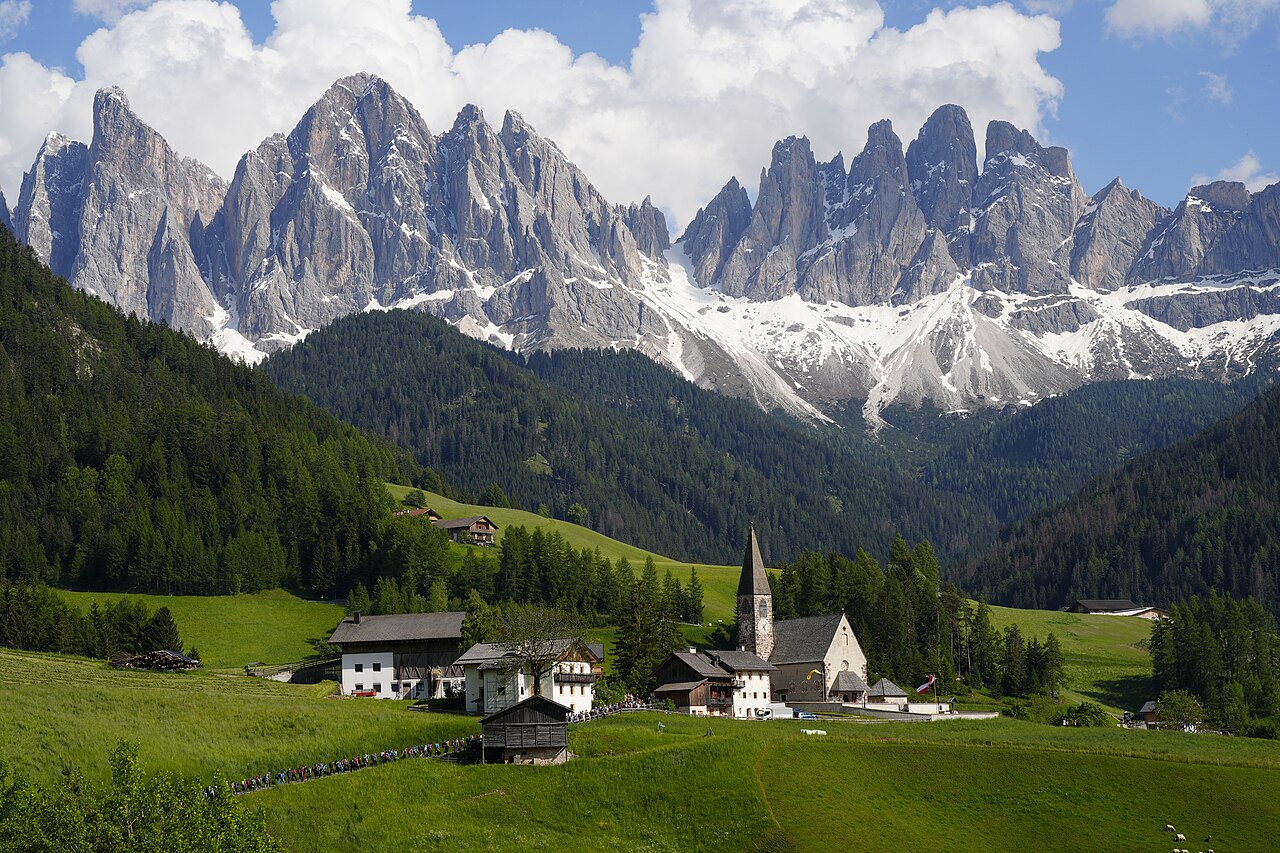
The Dolomites, also known as the Pale Mountains, are a mountain range in northeastern Italy, forming part of the Southern Limestone Alps. They extend from the river Adige in the west to the Piave Valley in the east, and are bordered by the Puster Valley to the north and the Valbelluna and Piave Valley to the south. The range spans the regions of Veneto, Trentino-Alto Adige/Südtirol, and Friuli-Venezia Giulia, covering areas in the provinces of Belluno, Vicenza, Trentino, South Tyrol, Udine, and Pordenone. On 26 June 2009, the Dolomites were declared a UNESCO World Heritage Site.
Quick Facts
- Other Name
- it · Dolomiti / lld · Dolomites / de · Dolomiten
- Country
- Italy Italy
- Parent
- Alps
- Geology
- Sedimentary rocks (dolomite) · volcanic rocks
- Age
- Mostly Triassic
- Orogeny
- Alpine orogeny
- Highest
- Marmolada
- Elevation M
- 3343
Facts from the source article.
Lore & Background
The Dolomites take their name from the carbonate rock dolomite, which was named after the 18th-century French mineralogist Déodat Gratet de Dolomieu, who first described the mineral. The prior local vernacular name Monti Pallidi came from the mountains' reddish to purple hues viewed at sunset from the carbonates' reflection of alpenglow. For millennia, hunters and gatherers had advanced into the highest rocky regions and probably climbed some peaks. In 1857, Irishman John Ball was the first known person to climb Monte Pelmo. Paul Grohmann later climbed numerous peaks such as the Antelao, Marmolada, Tofana, Monte Cristallo, and the Boè. The first ascent of the Civetta was made by Simeone De Silvestro in 1855, and the first documented ascent by a tourist party was in 1867 led by Francis Fox Tuckett with guides. Michael Innerkofler was one of the climbers of the Tre Cime di Lavaredo. Later important local mountaineers included Angelo Dibona and Giovanni Piaz.
Reader's Guide
The Dolomites are significant for their distinctive geology, being composed largely of the carbonate rock dolomite, and for their recognition as a UNESCO World Heritage Site in 2009. The range includes the Dolomiti Bellunesi National Park and the Adamello-Brenta UNESCO Global Geopark. During the First World War, the front line between the Italian and Austro-Hungarian armies ran through the Dolomites, where both sides used mines extensively. Open-air war museums exist at Cinque Torri, Monte Piana, and Mount Lagazuoi. Many visitors climb the vie ferrate, protected paths created during the war. The region is renowned for skiing, mountain climbing, hiking, cycling, BASE jumping, paragliding, and hang gliding. Free climbing has been a tradition since 1887, when 17-year-old Georg Winkler soloed the first ascent of the pinnacle of the Vajolet Towers. The Maratona dles Dolomites, an annual single-day road bicycle race covering seven mountain passes, occurs in the first week of July. Long-distance footpaths called alte vie traverse the Dolomites, numbered 1 to 10, taking about a week to walk and served by numerous rifugi. Radiocarbon dating in the Alta Badia region has demonstrated a connection between landslide activity and climate change.
Did You Know?
- The Dolomites are named after the carbonate rock dolomite, which was named after the French mineralogist Déodat Gratet de Dolomieu.
- The Maratona dles Dolomites is an annual single-day road bicycle race covering seven mountain passes, held in the first week of July.
Geology, Naming & World Heritage Status
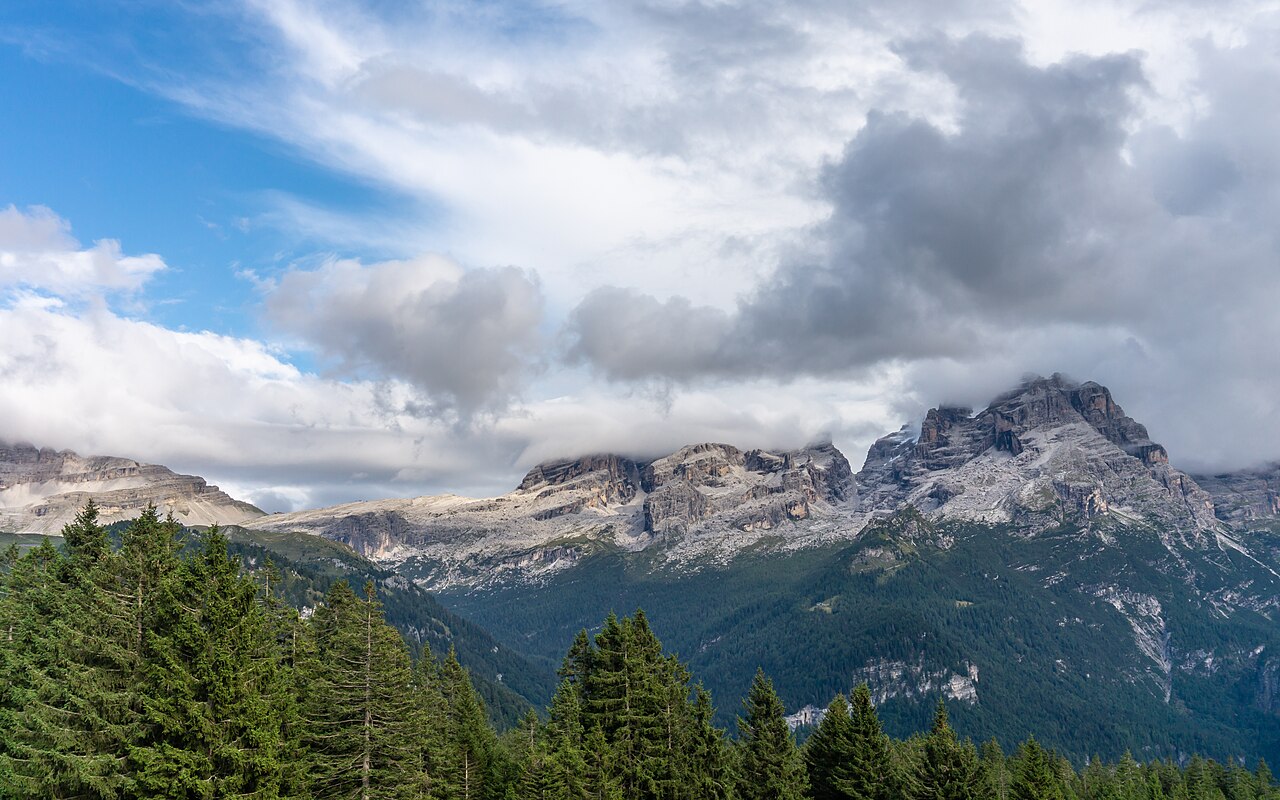
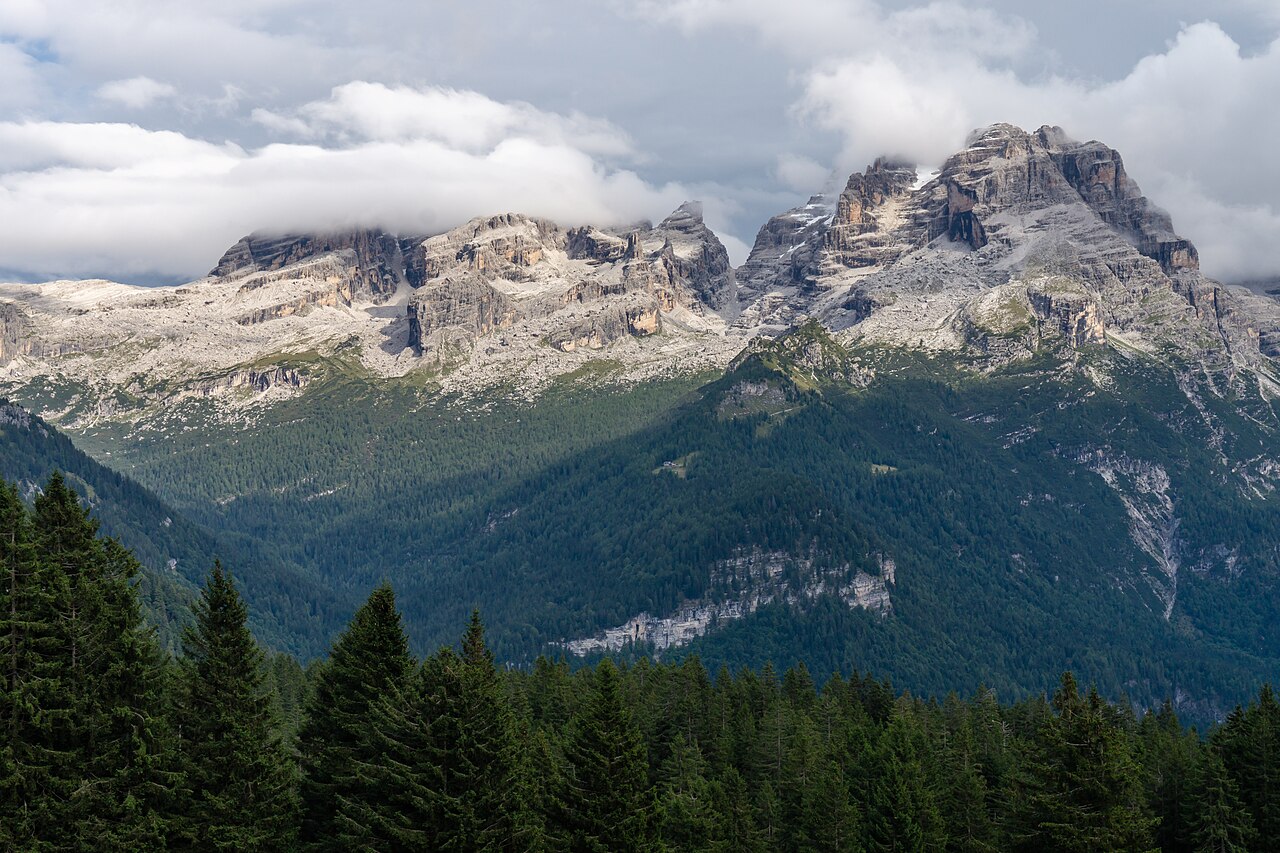
The Dolomites derive their name from the carbonate mineral dolomite, itself named in honor of Déodat Gratet de Dolomieu, an 18th-century French mineralogist (1750–1801) who was the first scientist to formally describe the rock. Before this scientific naming took hold, local inhabitants had long called the range Monti Pallidi, or Pale Mountains, a reference to the striking reddish and purple tones the carbonate faces display at sunset as they catch and reflect alpenglow. Geologically, the range forms part of the Southern Limestone Alps, stretching from the Adige River in the west to the Piave Valley in the east, bounded by the Puster and Sugana Valleys. Similar carbonate formations appear further afield as the Dolomiti d'Oltrepiave, the Dolomiti di Brenta, and the smaller Piccole Dolomiti. In recognition of their outstanding natural value, the Dolomites were inscribed as a UNESCO World Heritage Site on 26 June 2009, and they also fall within the Adamello-Brenta UNESCO Global Geopark. A dedicated Geological Museum of the Dolomites operates in Predazzo, in the Fiemme Valley, preserving and interpreting the region's unique rock heritage.
Pioneers of the Vertical World
Long before organized alpinism, foragers and hunters had pushed into the highest rocky terrain of the Dolomites, and some may even have summited individual peaks. The first documented climbs in the modern era came in the 1790s, when the Jesuit priest Franz von Wulfen, based in Klagenfurt, reached the summits of the Lungkofel and the Dürrenstein. A major milestone arrived in 1857, when the Irishman John Ball became the first known individual to stand atop Monte Pelmo. Paul Grohmann followed with a remarkable string of ascents, conquering the Antelao, Marmolada, Tofana, Monte Cristallo, and the Boè. Around 1860, the Agordin mountaineer Simone de Silvestro achieved the first ascent of the Civetta, while Michael Innerkofler was among the early climbers of the Tre Cime di Lavaredo. Angelo Dibona and Giovanni Piaz later became celebrated for numerous first ascents across the range. The tradition of free climbing in the Dolomites traces back to 1887, when the seventeen-year-old Georg Winkler soloed the first ascent of the Vajolet Towers pinnacle, setting a standard that continues to inspire climbers to this day.
The White War and Its Enduring Scars
During the First World War, the border between the Italian and Austro-Hungarian armies cut directly through the Dolomites, turning the dramatic peaks into a brutal battlefield often called the White War. Both belligerents employed extensive mining operations beneath the rock faces, and the conflict left a landscape scarred by tunnels, fortifications, and shattered stone. Today, open-air war museums at Cinque Torri, Monte Piana, and Mount Lagazuoi preserve the remnants of that fighting for visitors to explore. Perhaps the most enduring legacy of the war is the network of vie ferrate, protected climbing paths bolted through rock walls that soldiers originally constructed for movement between positions. These routes have since become a defining feature of Dolomite mountaineering. On Mount Pasubio, the Strada delle 52 Gallerie stands as a haunting reminder: a military mule road carved through the mountain with fifty-two tunnels, built to transport supplies and troops through the high passes. The region also holds the memory of White Friday in 1916, one of the war's most devastating episodes, and the broader Italian front that consumed so many lives in these alpine heights.
A Playground for Every Season
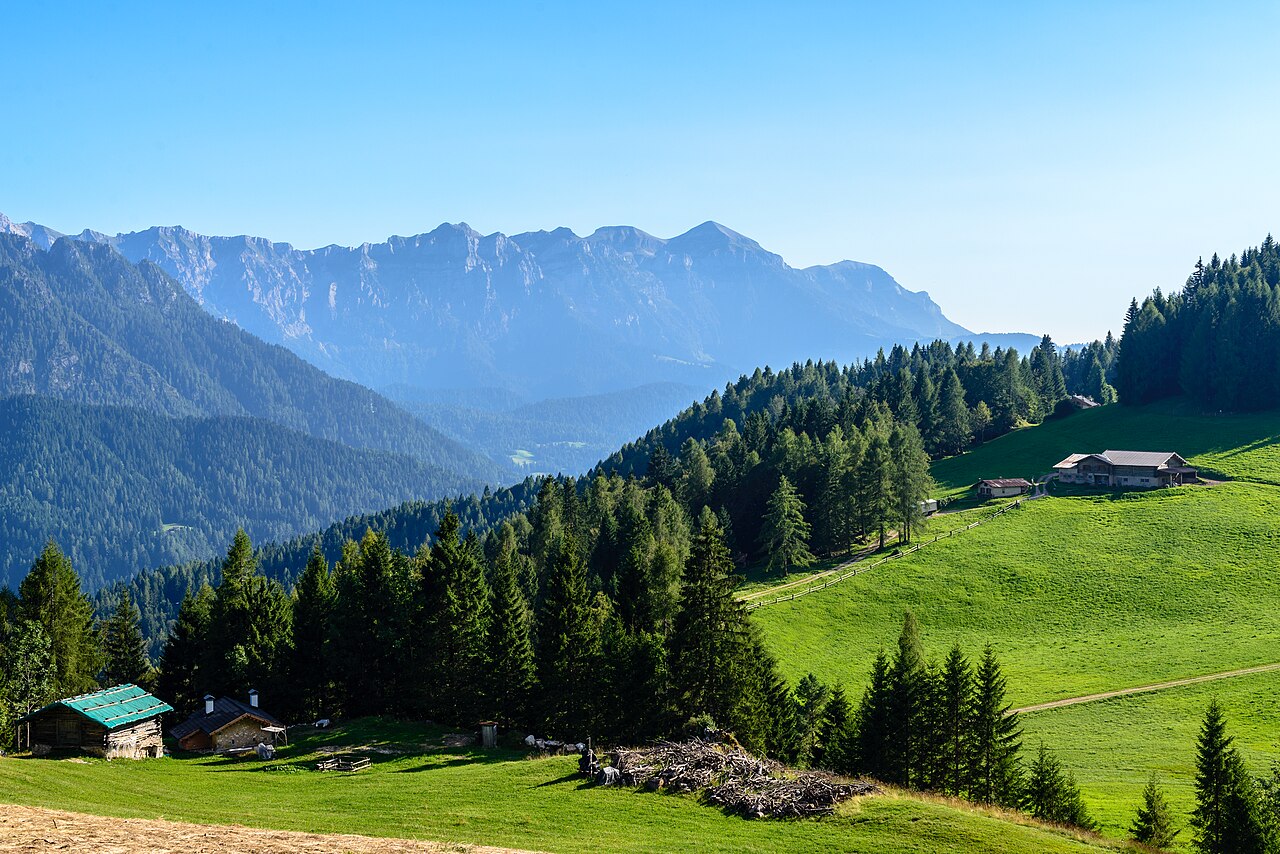
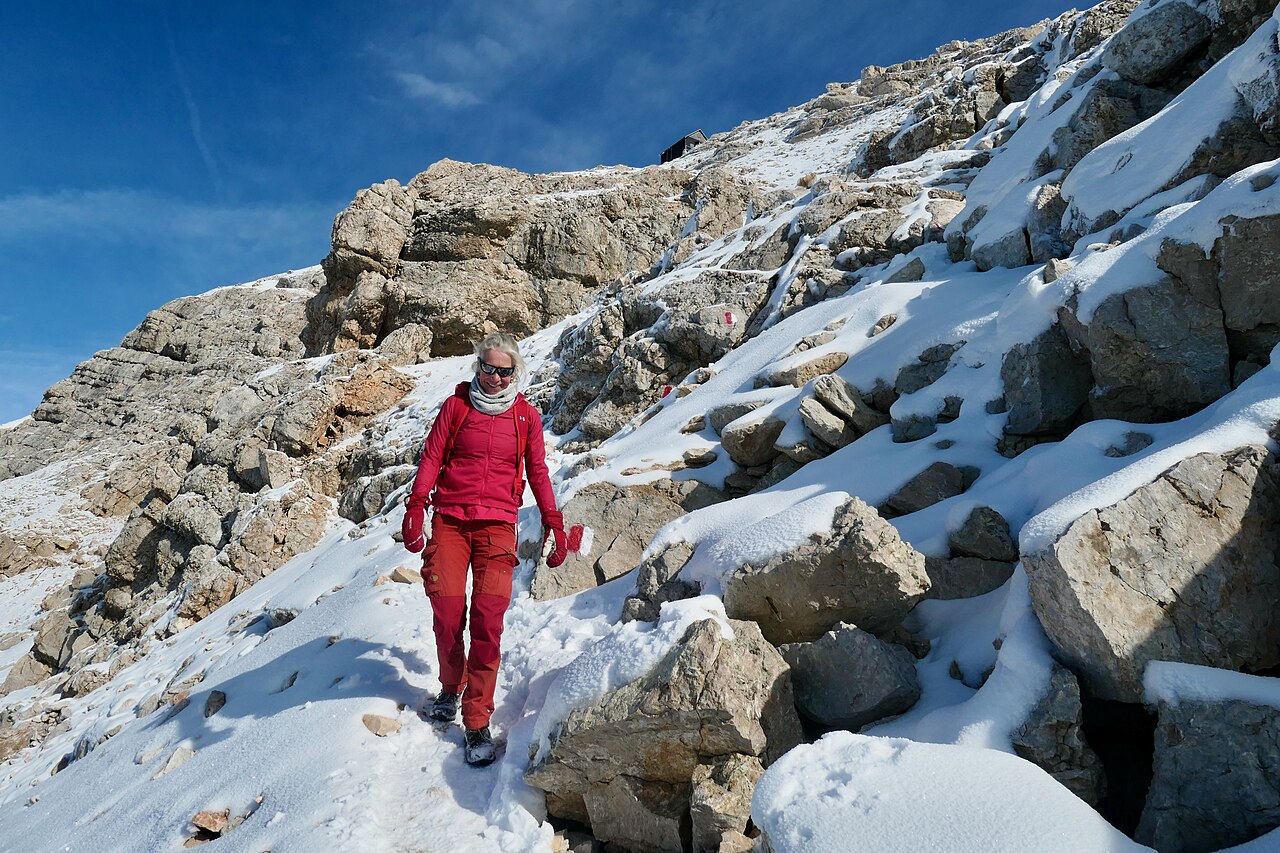
The Dolomites have long served as a magnet for outdoor enthusiasts across multiple seasons. In winter, the range is renowned for skiing, with key centers including Rocca Pietore alongside the Marmolada Glacier on the Trentino-Veneto border, the small towns of Alleghe, Falcade, and Auronzo, Cortina d'Ampezzo, and the villages of Arabba, Urtijëi, and San Martino di Castrozza, as well as the entire Fassa, Gardena, and Badia valleys. Summer and the shoulder seasons bring paragliding, hang gliding, cycling, and BASE jumping to the high-altitude terrain. Hikers can follow the alte vie, ten numbered high paths that traverse the range over roughly a week, with numerous rifugi providing shelter along the way. Cyclists converge each year in the first week of July for the Maratona dles Dolomites, a single-day road race that threads through seven mountain passes. The Altopiano di Asiago area offers the Calà del Sasso, a staircase of 4,444 steps recognized as the world's longest open to the public, while the Dolomiti Bellunesi National Park and other regional parks protect much of this extraordinary landscape.
Gallery
Frequently Asked Questions
What exactly are the Dolomites?
The Dolomites are a limestone mountain range in northeastern Italy that stretches across three regions—Veneto, Trentino-Alto Adige/Südtirol, and Friuli-Venezia Giulia. They form part of the Southern Limestone Alps and are celebrated for their dramatic, pale-colored peaks.
Why do people call the Dolomites the "Pale Mountains"?
The local Italian name "Monti Pallidi" refers to the distinctive light, almost alabaster hue of the carbonate rock that builds the range. That same rock type—dolomite—gives the mountains their English name, after the French mineralogist Déodat Gratet de Dolomieu.
What is the highest peak in the Dolomites?
Marmolada holds the title of the range's tallest summit. It sits in the eastern portion of the massif and is a well-known destination for both hikers and climbers.
When did the Dolomites become a UNESCO World Heritage Site?
UNESCO officially inscribed the Dolomites on its World Heritage List on 26 June 2009. The designation recognized the range's outstanding geological value and its remarkable aesthetic beauty.
What makes the Dolomites different from other Alpine ranges?
Unlike the granite peaks you see further west in the Alps, the Dolomites are built almost entirely from carbonate dolomite rock, which gives them their signature pale, sculptural appearance. That unique geology and visual distinctiveness set them apart from neighboring ranges.
More in Unesco World Heritage Parks 1-19
Spotted an error? Know more?
Reader corrections go straight into our review queue. Suggest an edit · How this site is sourced