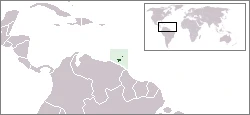
Mauby
Caribbean tree bark beverage with sweet-bitter taste and folk medicinal use.

Mauby—also called madi, maví, mobi, mabi, or maubi—is a Caribbean drink made from tree bark. It is produced using sugar and the bark or fruit of certain *Colubrina* species, particularly *Colubrina elliptica* and *Colubrina arborescens*, small trees native to the northern Caribbean and south Florida. Most recipes add other ingredients, with aniseed being a common spice. Historically, mauby was a fermented beverage made in small batches, but today it is mostly sold as a commercial, non-fermented soft drink.
The drink is often bought as a pre-made syrup and mixed with still or sparkling water to taste, though many people prepare it at home or buy it from local producers or street vendors. First-time drinkers may be surprised by an initial laxative effect. Its flavor starts sweet, similar to root beer or sarsaparilla, then shifts to a long-lasting but not astringent bitter aftertaste.
The name varies by region: mauby in Barbados and Trinidad and Tobago, mavi in Puerto Rico, and mabi in Haiti and the Dominican Republic. Generally, it is mauby in the English Caribbean, mavi in the Spanish Caribbean, and mabi in the French Caribbean. In Puerto Rico, a fermented version that foams is called *mavi champán* (champagne mauby).
Before colonial times, Caribbean natives used mauby bark in social rituals. The bark was also employed in folk medicine to treat arthritis and high cholesterol, and as an aphrodisiac. The modern non-alcoholic drink evolved from a fermented alcoholic beverage made by the Taíno and Carib peoples. European settlers adopted it, and the drink was shaped by indigenous, African, and European influences. Enslaved Africans contributed their knowledge of plants and fermentation techniques. In 1657, English colonist Richard Ligon wrote that Barbadian women made a drink called *mobie* from sweet potatoes, but sugar plantations soon provided ample sugar to combine with the bark. Over time, the drink evolved to use tree bark as the primary ingredient, with the exact origins of this transition not clearly attributed to any single group. Though the British eventually replaced it with imported alcohol, Africans continued producing mauby.
Haiti and the Dominican Republic are two of the largest exporters of mauby bark. The drink is sometimes fermented using a portion of a previous batch, and sometimes consumed unfermented.
- field
- Beverage / Folk medicine
- region
- Caribbean (Barbados, Trinidad and Tobago, Puerto Rico, Haiti, Dominican Republic, Saint Vincent and the Grenadines)
- known_for
- Tree bark-based drink with a sweet initial taste and prolonged bitter aftertaste; traditionally fermented, now often a commercial soft drink
- ingredients
- Sugar, bark and/or fruit of Colubrina species (Colubrina elliptica, Colubrina arborescens), often with spices such as aniseed
- traditional_form
- Fermented beverage made in small batches
- modern_form
- Commercial non-fermented soft drink, often sold as syrup or carbonated
Quick Facts
- Origin
- Developed from a mixture of indigenous Taíno and Carib people, African, and European influences
- Region
- Caribbean, West Indies
- Introduced
- 18th century
- Flavour
- Woody and herbal with a sharp, sweet and bitter aftertaste
- Ingredients
- Mauby bark (Colubrina elliptica and Colubrina arborescens tree), cinnamon sticks, cloves, aniseed or star anise (Illicium verum), dried orange peel, water, and brown sugarStewart · 2013 · p=305
Facts from the source article.
Lore & Background
Since before colonial times, mauby bark has been consumed by Caribbean natives for numerous social rituals. The bark is used in folk medicine among Caribbean indigenous to treat ailments such as arthritis and high cholesterol, as well as for an aphrodisiac. The current non-alcoholic drink originated from the indigenous Taíno and Carib fermented alcoholic beverage, where it was adopted by European settlers in the Caribbean and shaped from a mixture of indigenous, African, and European influences. The tree bark was already part of the traditions of the indigenous, and enslaved Africans' knowledge of plants and their fermentation techniques were further added in shaping the current drink.
English colonist and writer Richard Ligon wrote in his memoir in 1657 that Barbados women made mobbie from red sweet potatoes, although sugar plantations within the colony provided a huge supply to combine with the bark. A fermented version of mauby was developed using tree bark instead of sweet potato by British colonists in Barbados in the 1700s and 1800s, as a replacement for alcoholic beverages from England. Although this was soon replaced by alcohol among the British, the Africans continued to produce the drink, even after the British began to replace it with their alcohol from home.
In Puerto Rico, mauby is made by mixing an older batch with a new batch; the bark and leaves are boiled with ginger, avocado leaves, brown sugar and other spices, with ginger having a significant role in the fermentation process. The drink is then placed in a tightly sealed bottle and left out in the sun for 6–8 hours before being placed in a dark cool place left to ferment up to a week.
Reader's Guide
Mauby represents a living fusion of indigenous Taíno and Carib traditions, African fermentation knowledge, and European colonial influences, making it a significant cultural marker across the Caribbean. Its evolution from a fermented ritual beverage to a commercial soft drink illustrates broader shifts in Caribbean foodways, yet homemade and street-vendor versions persist, preserving traditional methods. The drink's dual nature—both a folk remedy for arthritis, high cholesterol, and as an aphrodisiac, and a refreshing beverage—highlights its versatility. Commercial variants like Mauby Fizzz (produced by PepsiCo in Trinidad and Tobago) and Hairoun Mauby (by St. Vincent Brewery Limited) show its modern global reach, while Haiti and the Dominican Republic remain major exporters of the bark and leaves. The drink's characteristic initial sweetness followed by a prolonged bitter aftertaste, and its occasional laxative effect on first-time drinkers, are distinctive sensory and physiological traits. Mauby's persistence across centuries, from pre-colonial social rituals to contemporary carbonated versions, underscores its enduring role in Caribbean identity and daily life.
Did You Know?
- Mauby is known by variations of its name: mauby in Barbados and Trinidad and Tobago, mavi in Puerto Rico, and mabi in Haiti and the Dominican Republic.
- In Puerto Rico, the drink is also called mavi champán (champagne mauby) because the fermented version causes it to foam.
- The mauby has been known to cause an initial laxative reaction unexpected to many first-time drinkers.
- Grupo Taino LLC of the Dominican Republic markets two commercial versions of mabi: Seybano (lighter, from tree bark extract) and Cacheo (darker, from bark and fruit extract with spices).
Frequently Asked Questions
What is Mauby and where does it come from?
Mauby is a traditional Caribbean drink made from the bark or fruit of Colubrina trees, sweetened with sugar and often flavored with aniseed. It is most closely associated with Trinidad and Tobago, though the name also appears as madi, maví, mobi, or mabi across the region.
What does Mauby actually taste like?
You get a distinctly sweet, syrupy hit on the first sip, followed by a long, sharp bitter aftertaste that lingers far longer than most soft drinks. That sweet-then-bitter contrast is what makes it so polarizing for first-timers.
Is Mauby alcoholic?
Historically it was a small-batch fermented beverage, so yes, it contained alcohol. The version most people buy today, however, is a non-fermented commercial soft drink, usually sold as a concentrated syrup you top up with still or sparkling water.
Which tree is Mauby made from?
It uses the bark or fruit of Colubrina species, specifically Colubrina elliptica and Colubrina arborescens—small trees native to the northern Caribbean and southern Florida. These are relatively obscure species, not the kind you'd spot lining a street.
Can I find Mauby outside of Trinidad and Tobago?
Yes, it shows up in Barbados, Puerto Rico, Haiti, the Dominican Republic, and Saint Vincent and the Grenadines as well. It's a broader Caribbean folk tradition, though Trinidad and Tobago is where it's most strongly tied to national identity.
More in Trinidad and Tobago cuisine 1-24
Spotted an error? Know more?
This is a living reference — every entry is fact-audited, and reader corrections feed straight into our audit queue. Suggest an edit · See this site's audit record