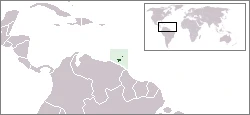
Doubles (food)
Trinidadian street food of curried chickpeas on two fried flatbreads.

Kalamazadkhan · CC BY-SA 4.0
Doubles is a street food from Trinidad and Tobago with roots in Indo-Trinidadian cooking. The dish features curried chickpeas sandwiched between two fried flatbreads. While most often eaten at breakfast, it also appears as a lunch or late-night snack and is a well-known remedy for hangovers.
The dish was invented in 1936 in Princes Town by Emamool "Mamoodeen" Deen and his wife Raheeman Rasulan Deen. Deen originally sold curried chickpeas on a single fried flatbread with chutneys. When customers started asking him to double the bread in their orders, the name "doubles" stuck. Some believe the dish was inspired by the North Indian dish chole bhature (or channa bhatura), which combines channa masala with bhature—a fried bread made from all-purpose flour, known as "maida" in Hindi.
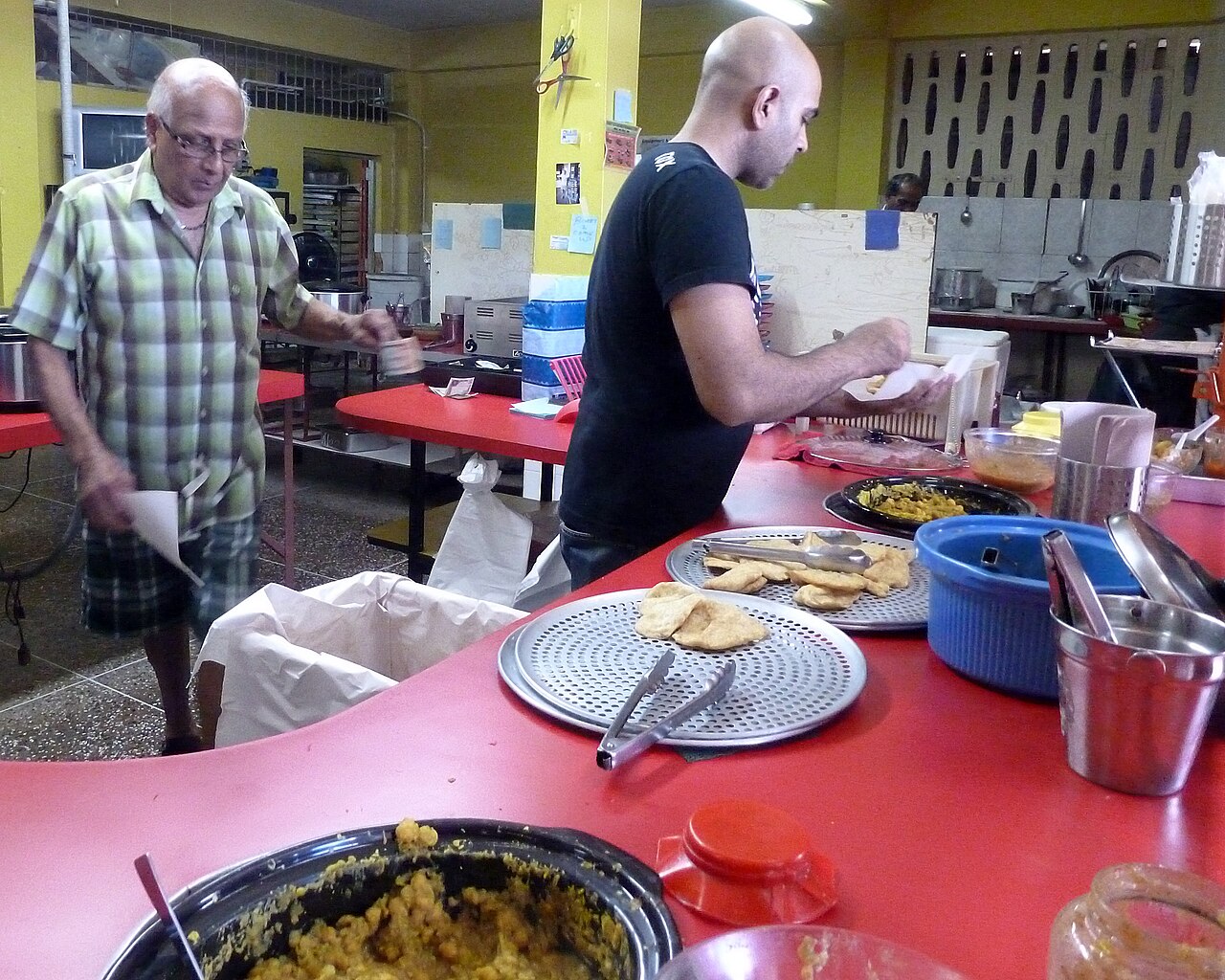
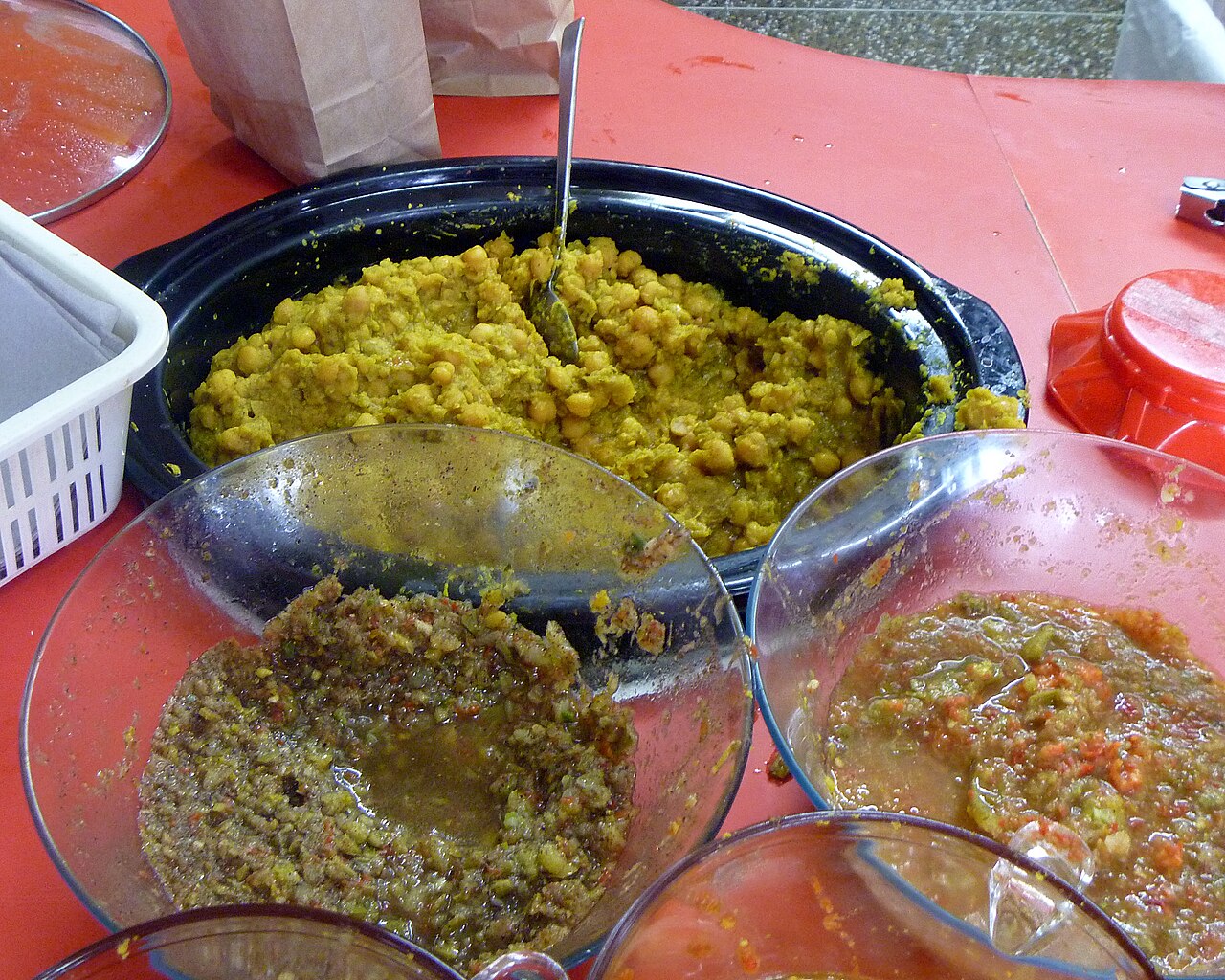
To make the curry, onions, garlic, and curry powder or plain turmeric are briefly fried. Boiled and drained chickpeas are then added with water and spices, mainly cumin, and cooked until tender. The dough is shaped into flattened circles and deep-fried. Doubles can be served spicy, sweet, or savory, with condiments such as spicy pepper sauce, kuchela, green mango, culantro, cucumber, coconut, and tamarind chutneys.
Because of Trinidad’s diversity, doubles is seen as a food that helps define and maintain cultural identity, and it is considered an authentic staple of Trinidadian cuisine. For Trinidadians living abroad in major cities, it serves as a comfort food. Its consumption is said to create a deep psychological imprint, making it culturally important for how it captures Trinidadian identity in a simple, unique snack. Trinidadian-Canadian filmmaker Ian Harnarine has made two films—the 2011 short *Doubles with Slight Pepper* and the 2023 feature *Doubles*—that explore the role of doubles as a symbol of Trinidadian culture among expatriates.
- origin
- Trinidad and Tobago
- created_by
- Emamool 'Mamoodeen' Deen and Raheeman Rasulan Deen
- year_created
- 1936
- place_of_origin
- Princes Town
- type
- Street food
- main_ingredients
- Curried chickpeas, fried flatbreads
Quick Facts
- Country
- Trinidad and Tobago
- Region
- Caribbean, United States, Canada, United Kingdom
- Creator
- Emamool Deen
- Served
- Hot
- Main Ingredient
- Curry chickpea and bara
- Other
- Served with various chutneys, kuchela, and pepper sauce
Facts from the source article.
Lore & Background
Doubles was created in 1936 in Princes Town by Emamool 'Mamoodeen' Deen and his wife Raheeman Rasulan Deen. Deen originally sold curried chickpeas over a single fried flatbread with chutneys. When customers began asking him to double the bara in their orders, the name 'doubles' was coined. It has been speculated that the dish was inspired by a northern Indian dish called chole bhature (or channa bhatura), which combines channa masala with bhature, a fried bread made with all-purpose flour (maida).
Reader's Guide
Doubles is credited with the ability to 'define and maintain symbolic boundaries of identification' within the diversity of Trinidad, and is considered an authentic standard of Trinidadian cuisine. It serves as a comfort food for displaced Trinidadians in major cities across the globe, and its consumption has been credited with developing a 'deep psychological imprinting' among them, encapsulating Trinidadian identity into a simple and unique snack. Trinidadian-Canadian filmmaker Ian Harnarine has released two films—the 2011 short film Doubles with Slight Pepper and the 2023 feature expansion Doubles—that centre in part on the significance of doubles as a signifier of Trinidadian culture among Trinidadian expatriates.
Did You Know?
- Doubles was created in 1936 by Emamool 'Mamoodeen' Deen and his wife Raheeman Rasulan Deen in Princes Town.
- The name 'doubles' came from customers asking Deen to double the bara in their orders.
- It is speculated that doubles was inspired by the northern Indian dish chole bhature.
- Doubles is considered a comfort food for displaced Trinidadians and has been credited with developing deep psychological imprinting.
Anatomy of the Dish
Doubles is a deceptively simple yet deeply satisfying preparation that sits at the heart of Indo-Trinidadian and Tobagonian cooking. At its core, the dish involves two baras—flat pieces of fried dough—paired with a portion of curried channa, which is chickpeas cooked in a spiced curry. The interplay between the fried dough and the soft, savory warmth of the curried legumes gives the plate its characteristic textural contrast. What elevates doubles beyond a mere pairing of two components is the generous array of toppings and condiments that diners layer on top. Pepper sauce, grated kuchela, tamarind, mango, pommecythere, cucumber, and bandhaniya chutney all find their way onto the plate, allowing each eater to build a personalized flavor profile. The result is a dish that feels both humble and richly layered, a small plate that carries the full complexity of the islands' culinary tradition in every bite.
Roots in a Multicultural Kitchen
Doubles does not exist in a culinary vacuum. The broader Trinidad and Tobago food landscape is shaped by an extraordinary convergence of influences: Indian-South Asian, West African, Creole, European, North American, Chinese, Amerindian, Latin American, and Levantine traditions all leave their mark on the national table. Within this rich mosaic, doubles occupies a distinctly Indo-Trinidadian and Tobagonian niche, drawing on South Asian techniques of frying dough and currying legumes while adapting them to the tropical ingredients and flavor preferences of the Caribbean. It shares a family resemblance with other Indo-Caribbean street staples such as aloo pie, pholourie, saheena, baiganee, bara, and kachori, all of which circulate through the same vendor culture. Yet doubles stands apart in its particular pairing of two baras with curried channa, a combination that has become so emblematic of the islands' identity that it is recognized as one of the most popular breakfast foods on the islands, a daily ritual that transcends any single meal.
From Dawn to Dusk in Daily Rhythm
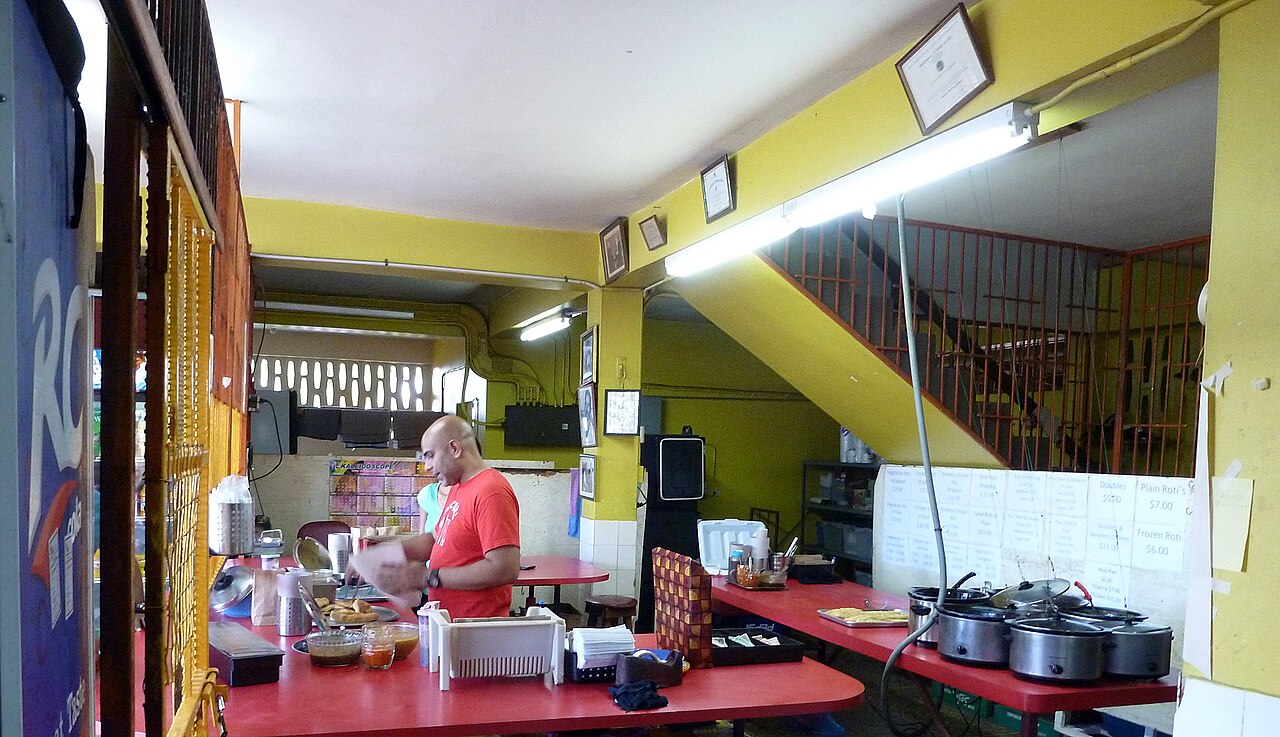
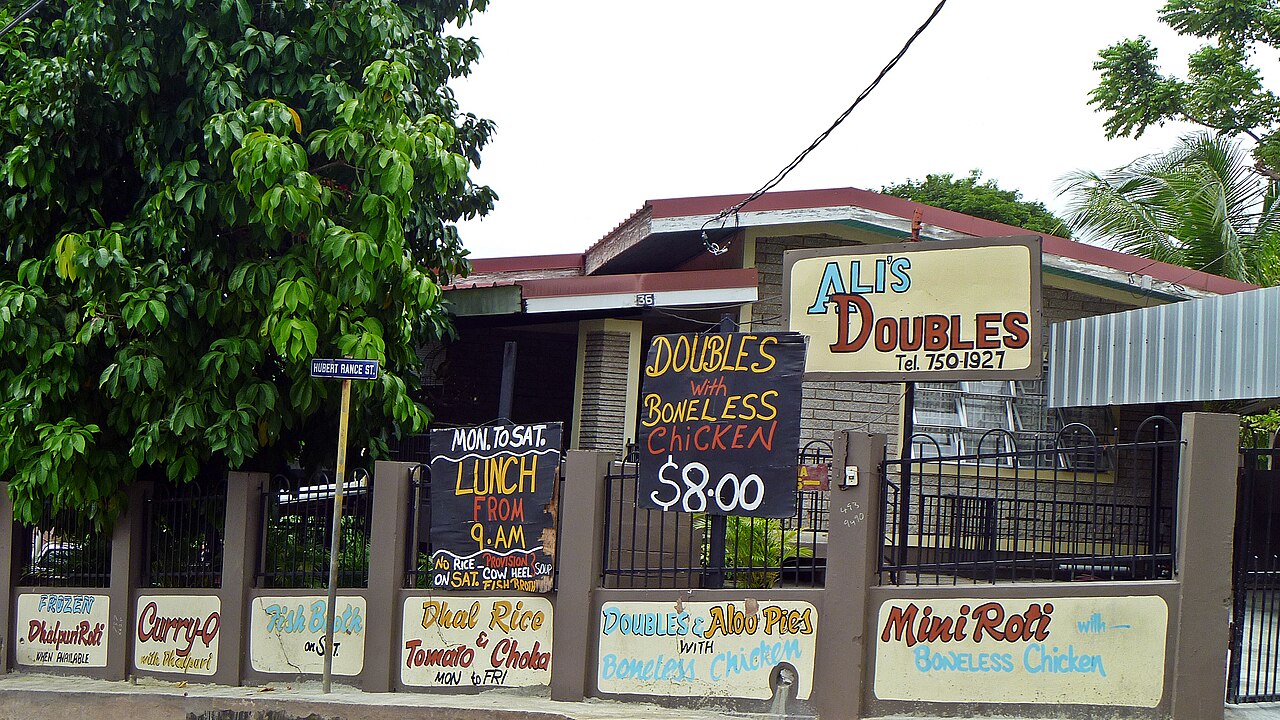
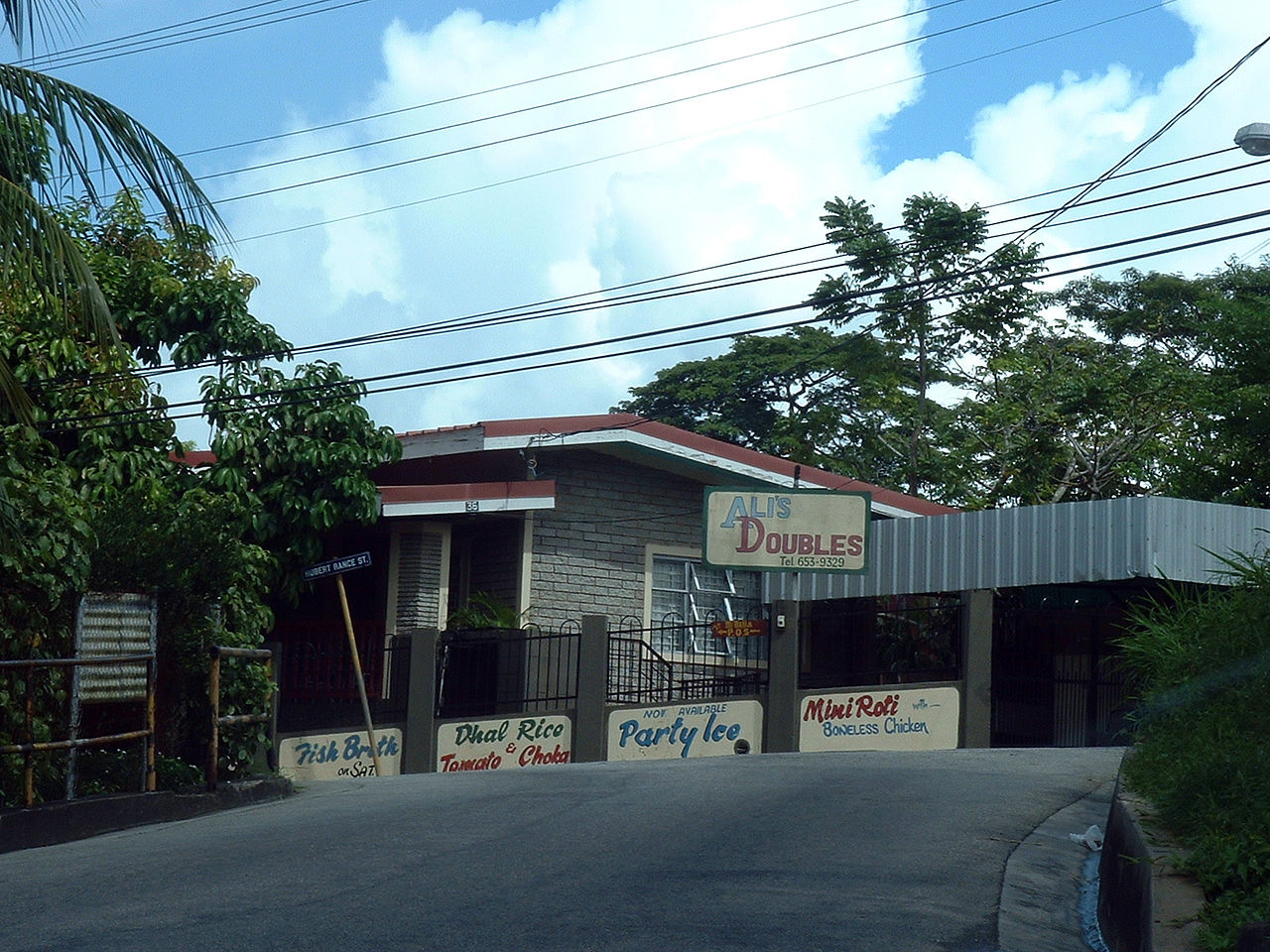
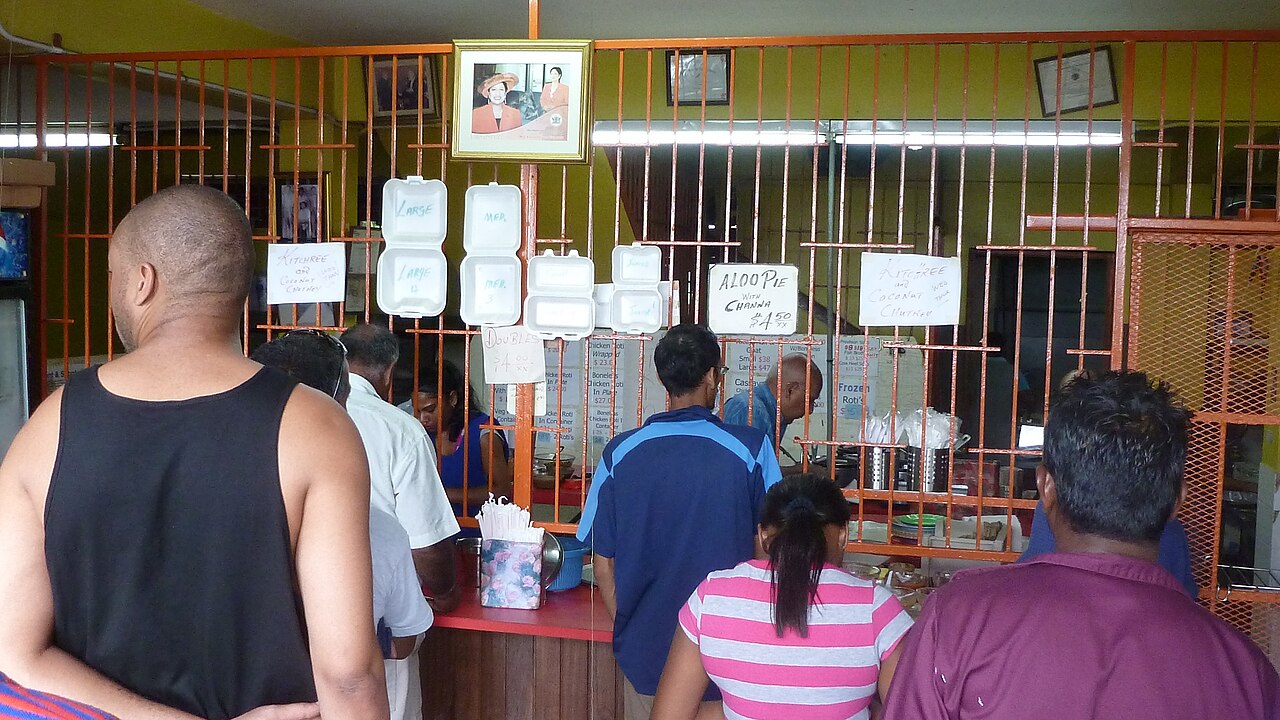
While doubles is most widely recognized as a breakfast staple across Trinidad and Tobago, its presence in the daily food rhythm extends far beyond the morning hours. Islanders commonly reach for doubles at virtually any point in the day, treating it as a versatile meal that fits into lunch breaks, afternoon hunger, or an evening snack. This all-day accessibility is reinforced by its status as a popular street food, with vendors preparing and selling doubles throughout the country. The dish's availability on the street means that a quick, satisfying meal is never far from hand, and its simple composition makes it easy to prepare in a home kitchen as well. In this way, doubles occupies a unique position in the national food culture: it is simultaneously a home-cooked breakfast tradition and a commercial street-food offering, bridging the domestic and the public. For many Trinidadians and Tobagonians, the act of grabbing a plate of doubles from a roadside stall is as ordinary and essential as any other daily routine, a small but meaningful thread in the fabric of everyday island life.
The Condiment Cabinet: Building Flavor
No discussion of doubles is complete without attention to the condiments and accompaniments that transform the basic dish into a complex, multi-layered eating experience. The standard lineup includes pepper sauce—often built around Scotch bonnet peppers, minced or chopped, and sometimes finished with lime or lemon—alongside grated kuchela, a spicy preparation typically made from mango but occasionally from pommecythère. Chutneys play an equally central role, with varieties featuring chaltar, mango, tamarind, cucumber, pommecythère, bandhaniya, dhaniya, tomato, and coconut all appearing on the table. These chutneys are described as being most commonly paired with doubles, aloo pie, saheena, baiganee, kachori, and pholourie, suggesting a shared family of dishes that rely on the same aromatic, tangy, and spicy accompaniments. The murtanie, a coarsely chopped spicy medley of Scotch bonnet peppers, carrots, karaili, and other spices, offers yet another dimension of heat and texture. Together, these condiments turn a plate of fried dough and curried chickpeas into a deeply personal, flavor-rich experience that shifts with every topping choice.
Gallery
Frequently Asked Questions
Who created Doubles?
The dish was invented in 1936 by Emamool "Mamoodeen" Deen and his wife Raheeman Rasulan Deen, who ran a street-food stall in Princes Town. Deen originally served curried chickpeas on a single fried flatbread with chutneys, and the couple's humble cart became the origin point for what would become a national favorite.
What is Doubles made of?
Doubles is a simple street food consisting of spiced, curried chickpeas nestled between two pieces of fried flatbread, usually served alongside chutneys. Its roots lie in Indo-Trinidadian home cooking, and it is most commonly enjoyed as a breakfast but also shows up as a lunch or late-night snack.
How did Doubles get its name?
Customers at Deen's stall kept asking him to add a second piece of flatbread to their order, effectively "doubling" the bread. The request became so routine that the dish was simply called "doubles," a name that has stuck ever since.
When and where was Doubles invented?
Doubles was created in 1936 in Princes Town, Trinidad and Tobago, by the Deen family. It has remained a recognizable fixture of local street food ever since, spreading well beyond its original town.
Why is Doubles important to Trinidadian food culture?
Beyond its everyday role as a breakfast or snack, Doubles is widely regarded across the islands as a trusted hangover remedy. As a dish born from Indo-Trinidadian cooking traditions, it also serves as a small but vivid example of the cultural blending that defines the broader Trinidadian culinary identity.
More in Trinidad and Tobago cuisine 1-24
Spotted an error? Know more?
This is a living reference — every entry is fact-audited, and reader corrections feed straight into our audit queue. Suggest an edit · See this site's audit record