Bake and shark
Traditional Trinidadian street food of fried flatbread and shark.

Grueslayer · CC BY-SA 4.0
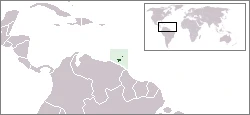
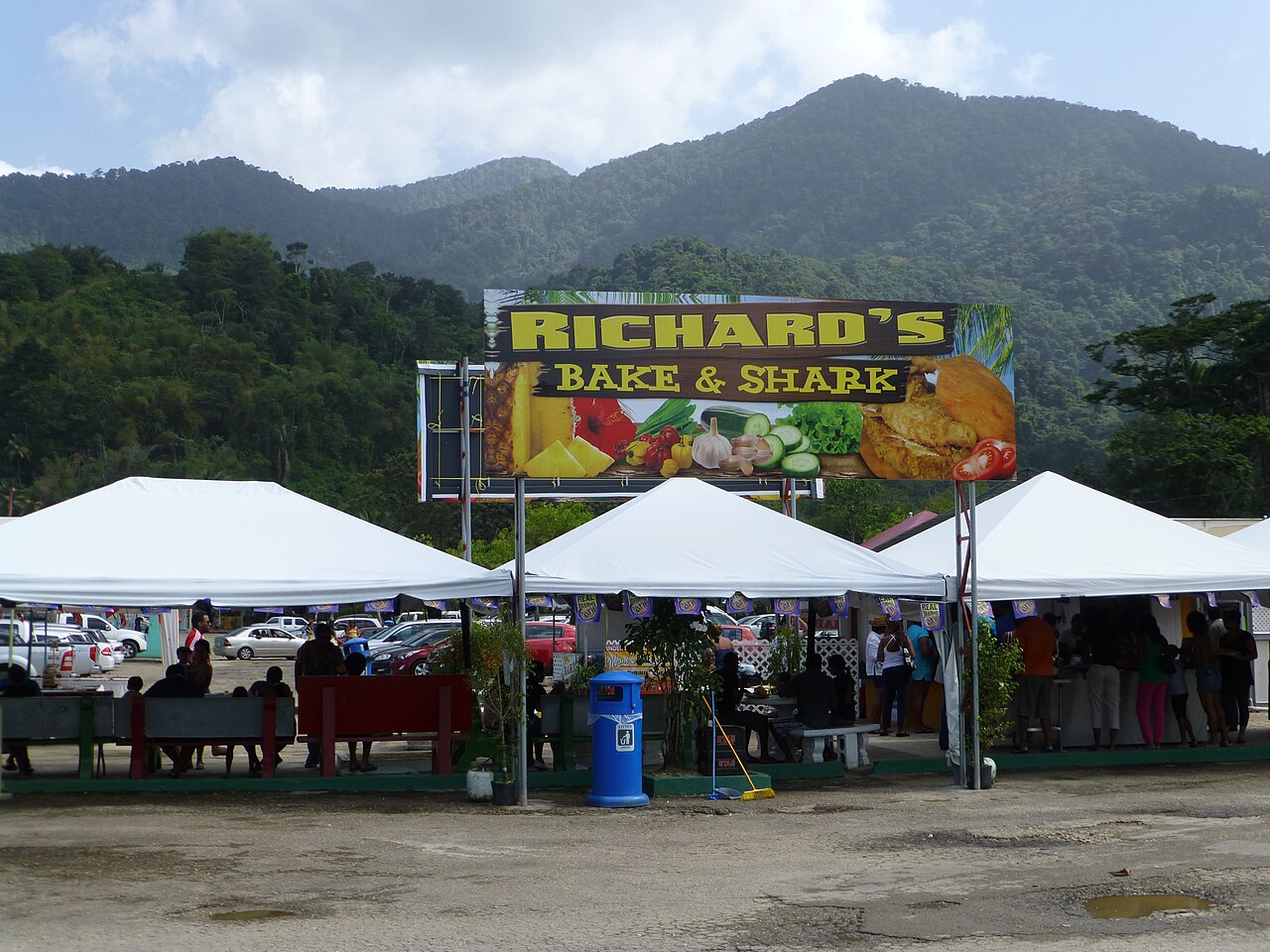
Bake and shark is a traditional fast food dish of Trinidadian cuisine. It is a classic street food dish sold at numerous food stalls and cookshops throughout Trinidad and Tobago, and is widely associated with Maracas beach on the Northern coast.
- field
- Cuisine
- nationality
- Trinidadian and Tobagonian
- known_for
- Traditional fast food dish of fried flatbread and shark meat
Lore & Background
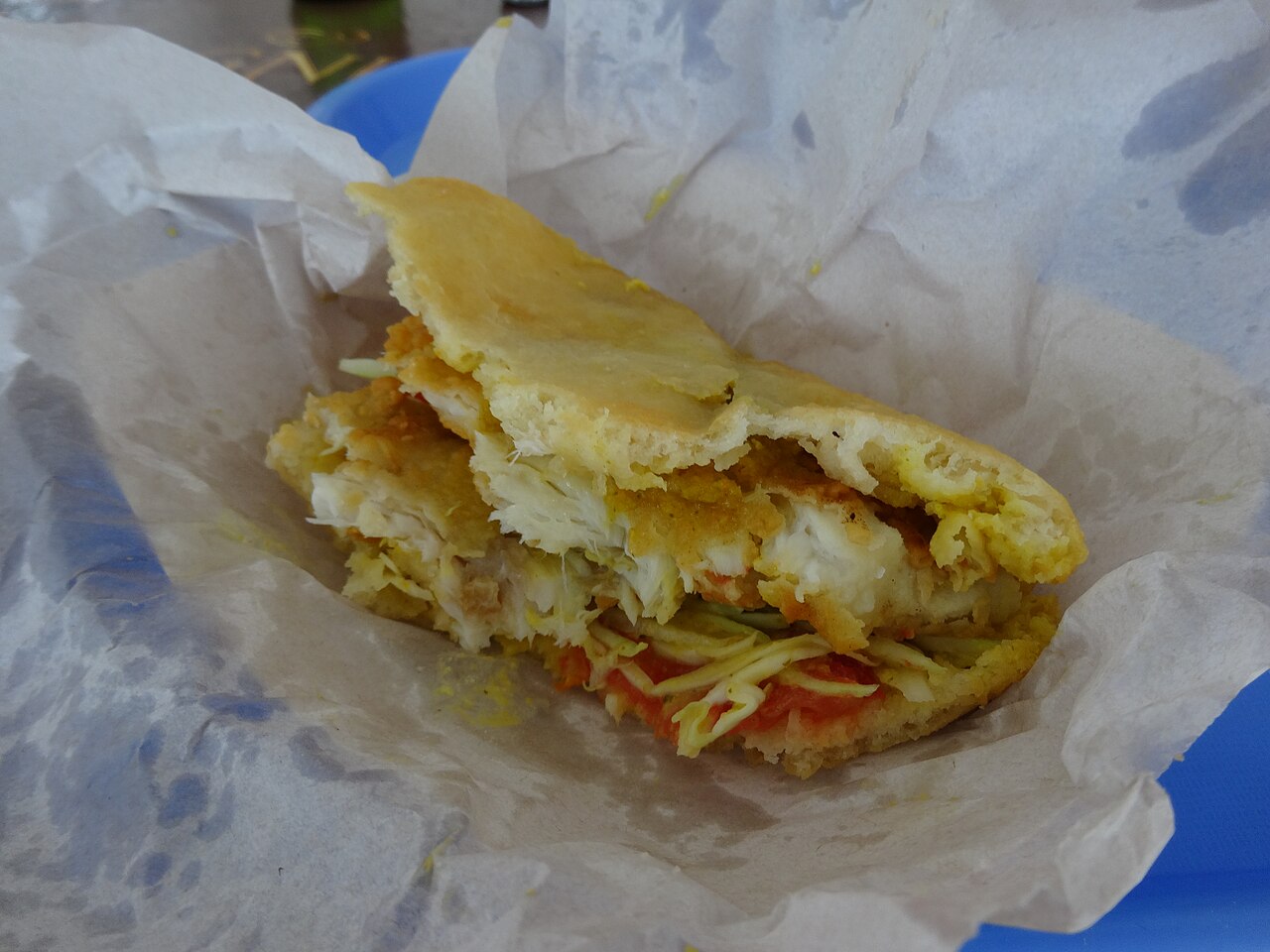
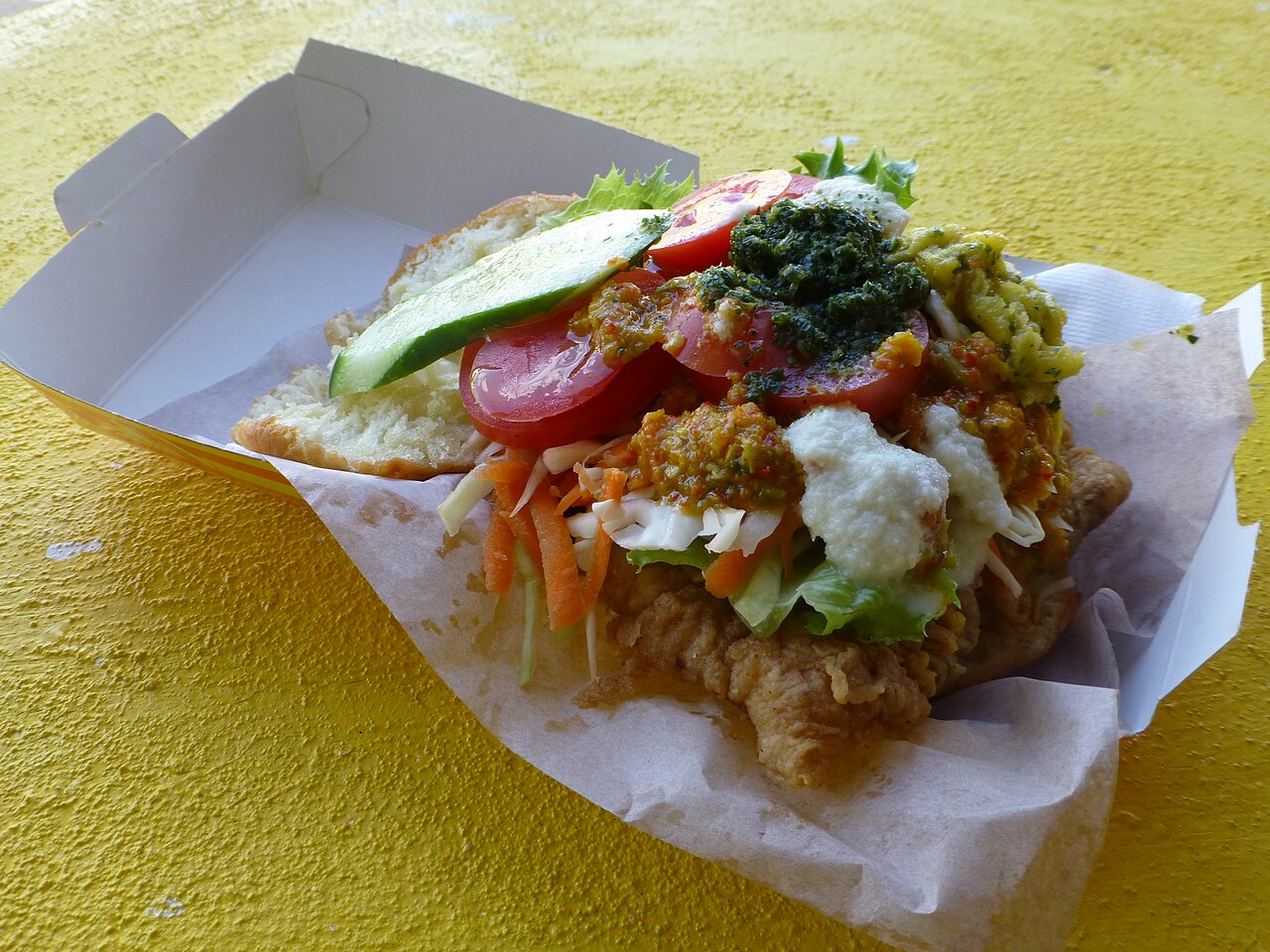
Bake and shark consists of a fried flatbread called 'bake' filled with fried pieces of shark meat and various other ingredients and sauces. Before frying, the shark meat is either seasoned with a herb blend and breaded, or marinated in a mix of lemon juice, onion, garlic, thyme and Capsicum chinense. Popular additional ingredients include lettuce, coleslaw, tomatoes or pineapple, and liquid condiments commonly used are mustard, ketchup, garlic sauce, chili sauce or a sauce made from culantro.
Reader's Guide
Bake and shark holds significance as a classic street food dish of Trinidadian cuisine, deeply associated with Maracas beach on the Northern coast of Trinidad, where numerous bake and shark stands operate and the needed shark is caught in the offshore surf. However, environmental problems have arisen: as apex predators, sharks are important for the ocean ecosystem, and overfishing has endangered many shark species. This has caused economic problems as the demand for shark meat in Trinidad cannot be covered any more. Often catfish and ray are used as substitutes and are declared incorrectly. In return, bake and shark stalls sometimes advertise for using shark meat instead of cheaper alternatives. The dish thus reflects both cultural tradition and contemporary ecological challenges.
Did You Know?
- Bake and shark is a traditional fast food dish of Trinidadian cuisine.
- It is widely associated with Maracas beach on the Northern coast of Trinidad.
- Shark meat is either seasoned with a herb blend and breaded, or marinated in lemon juice, onion, garlic, thyme and Capsicum chinense.
- Due to overfishing, catfish and ray are often used as substitutes and declared incorrectly.
A Staple of Trinidadian Street Culture
Bake and shark occupies a central place in the culinary identity of Trinidad and Tobago, functioning as a traditional fast food that has become inseparable from the island's street food scene. Rather than being confined to a single restaurant or region, the dish is prepared and sold at countless food stalls and cookshops scattered across both islands, making it accessible to locals and visitors alike. Its most iconic home, however, is Maracas beach on the Northern coast, where a dense cluster of dedicated bake and shark stands lines the shore. The connection to this particular location is not merely commercial; the shark for the dish is sourced directly from the offshore surf, tying the preparation to the surrounding marine environment. This geographic specificity gives the dish a sense of place and tradition that elevates it beyond a simple snack, embedding it in the daily rhythms of beach life and local commerce.
The Craft of Preparation
The construction of bake and shark is a layered process that begins with the flatbread itself, a fried dough known locally as the "bake," which serves as the vessel for everything else. The shark meat undergoes one of two preparatory paths before it is fried: it can be seasoned with a blend of herbs and coated in breading, or it can be marinated in a mixture of lemon juice, onion, garlic, thyme, and Capsicum chinense, a hot pepper that lends a distinctive heat. Once fried, the shark pieces are nestled into the warm flatbread alongside an array of fresh and prepared accompaniments. Common additions include crisp lettuce, creamy coleslaw, sliced tomatoes, and chunks of pineapple, each contributing a different textural or flavor note. The dish is then finished with a selection of liquid condiments—mustard, ketchup, garlic sauce, chili sauce, or a sauce derived from culantro—allowing the eater to build a personalized balance of tang, heat, and richness in every bite.
Ecological and Economic Strain
Sharks occupy the top of the marine food chain, and their presence is critical to maintaining the balance of ocean ecosystems. In Trinidad, the sustained demand for shark meat in bake and shark has contributed to overfishing pressures that have pushed numerous shark species toward endangerment. This depletion creates a dual crisis: an ethical one, rooted in the loss of apex predators and the broader ecological damage their absence causes, and a practical economic one, as the local supply of shark can no longer meet the volume required by the many stalls and cookshops that depend on it. The inability to source sufficient shark meat has forced the industry to confront a fundamental question about the future of a dish that is deeply embedded in national food culture. The pressure to keep serving the dish while the raw material becomes scarcer and more expensive has set in motion a chain of substitutions and market adjustments that ripple through the entire street food economy.
Authenticity, Substitution, and Market Tension
As genuine shark meat has become harder to obtain, a parallel market of substitutes has emerged. Catfish and ray are the most common replacements used in bake and shark preparations, yet they are frequently mislabeled or declared incorrectly to customers who expect the traditional ingredient. This practice creates a tension between commercial necessity and consumer trust, as diners may unknowingly be served a different species of fish. In response, some bake and shark stalls have begun to explicitly advertise that they use authentic shark meat rather than these cheaper alternatives, positioning their product as a mark of quality and commitment to the original recipe. This marketing distinction highlights how the dish's identity has become entangled with questions of authenticity and transparency. What was once a straightforward street food transaction has evolved into a negotiation over provenance, where the source of the protein is as much a selling point as the preparation itself, and where the environmental scarcity of the ingredient has reshaped how the dish is marketed and perceived.
Gallery
Frequently Asked Questions
What is Bake and shark?
Bake and shark is a traditional fast food dish from Trinidadian cuisine that pairs a fried flatbread with seasoned shark meat. It is one of the most recognizable street food items on the island.
Where is Bake and shark most commonly found?
It is sold at food stalls and cookshops throughout Trinidad and Tobago, but it is especially associated with Maracas beach on the northern coast.
What are the main components of Bake and shark?
The dish is built around two elements: a fried flatbread (the 'bake') and a serving of prepared shark meat, kept deliberately simple as a quick, hearty meal.
Is Bake and shark a home-cooked dish or a street food?
It is primarily a street food offering, typically bought from roadside vendors and cookshops rather than prepared in a home kitchen.
Why is Bake and shark considered iconic in Trinidad and Tobago?
It represents a beloved, affordable fast food tradition that locals and visitors alike seek out, often as a casual meal while exploring the island's beaches.
More in Trinidad and Tobago cuisine 1-24
Spotted an error? Know more?
This is a living reference — every entry is fact-audited, and reader corrections feed straight into our audit queue. Suggest an edit · See this site's audit record