Chicken curry
A South Asian stewed chicken dish with regional variations worldwide.

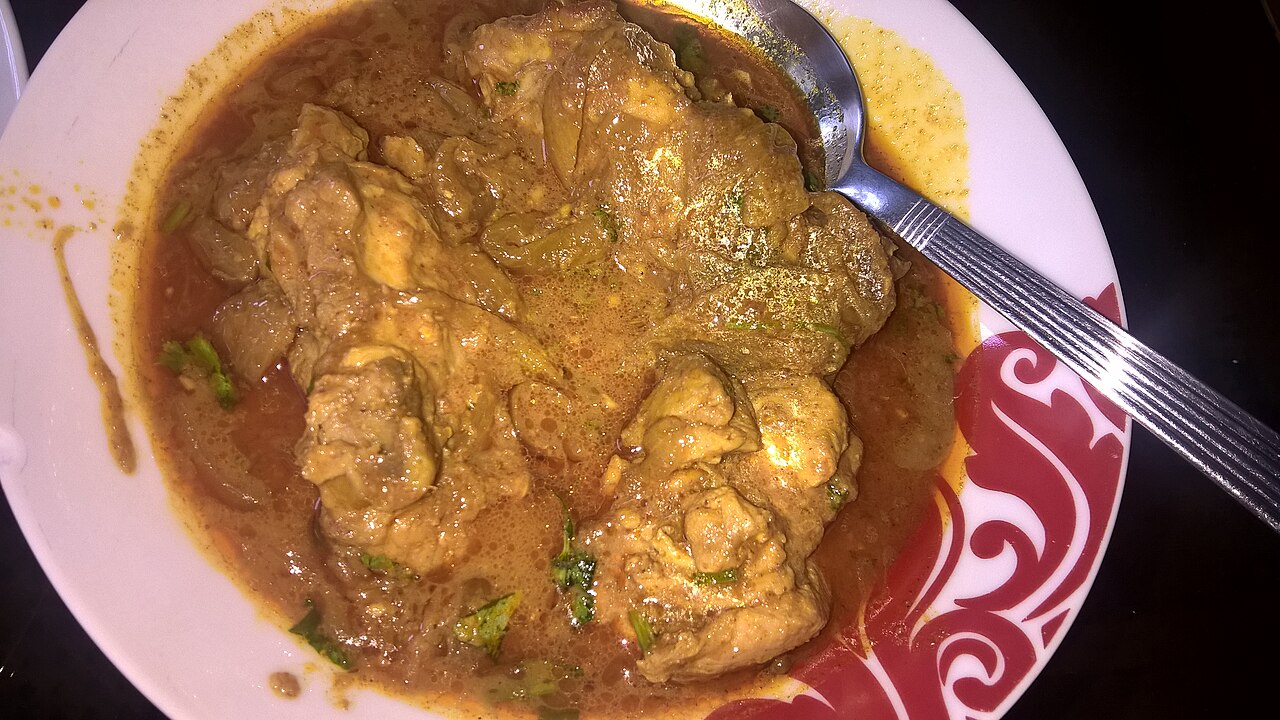
Alpha from Melbourne, Australia · CC BY-SA 2.0
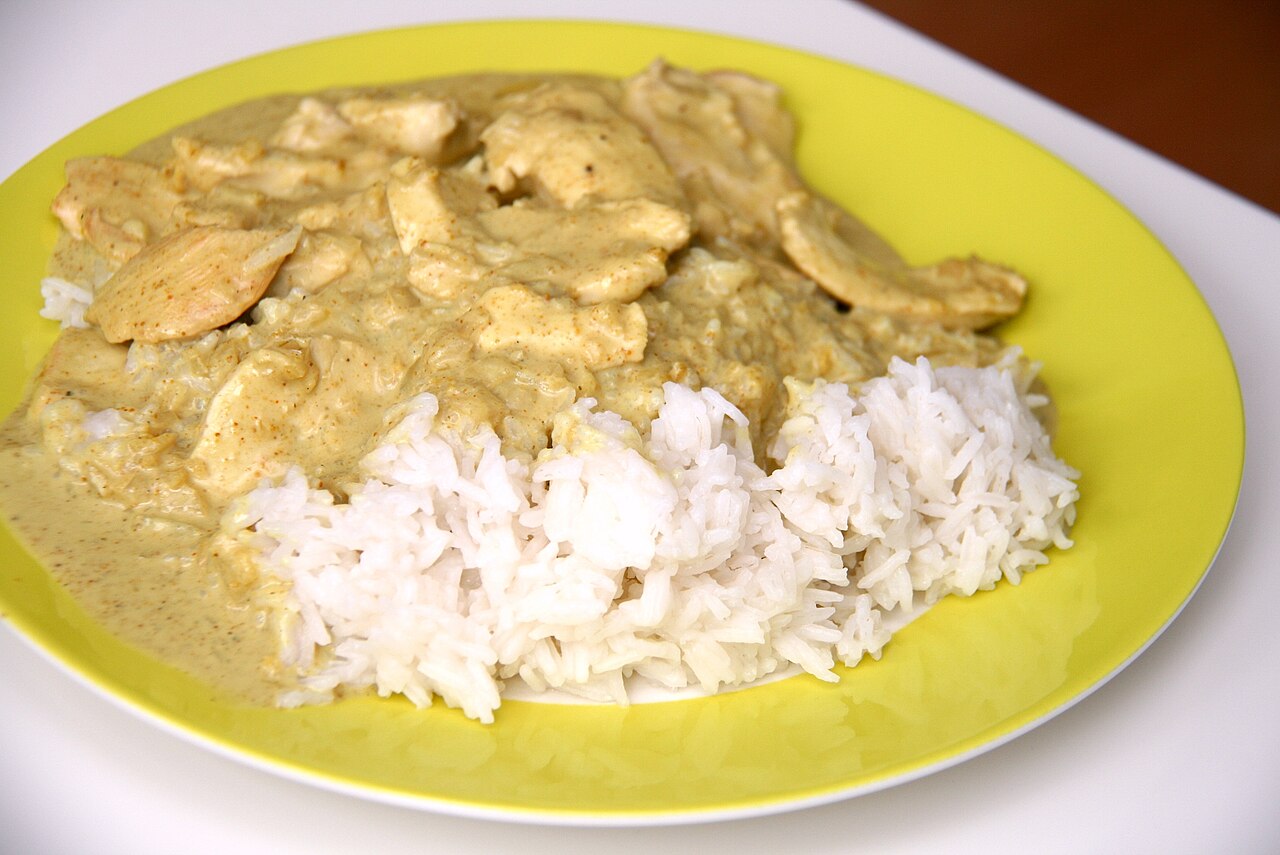
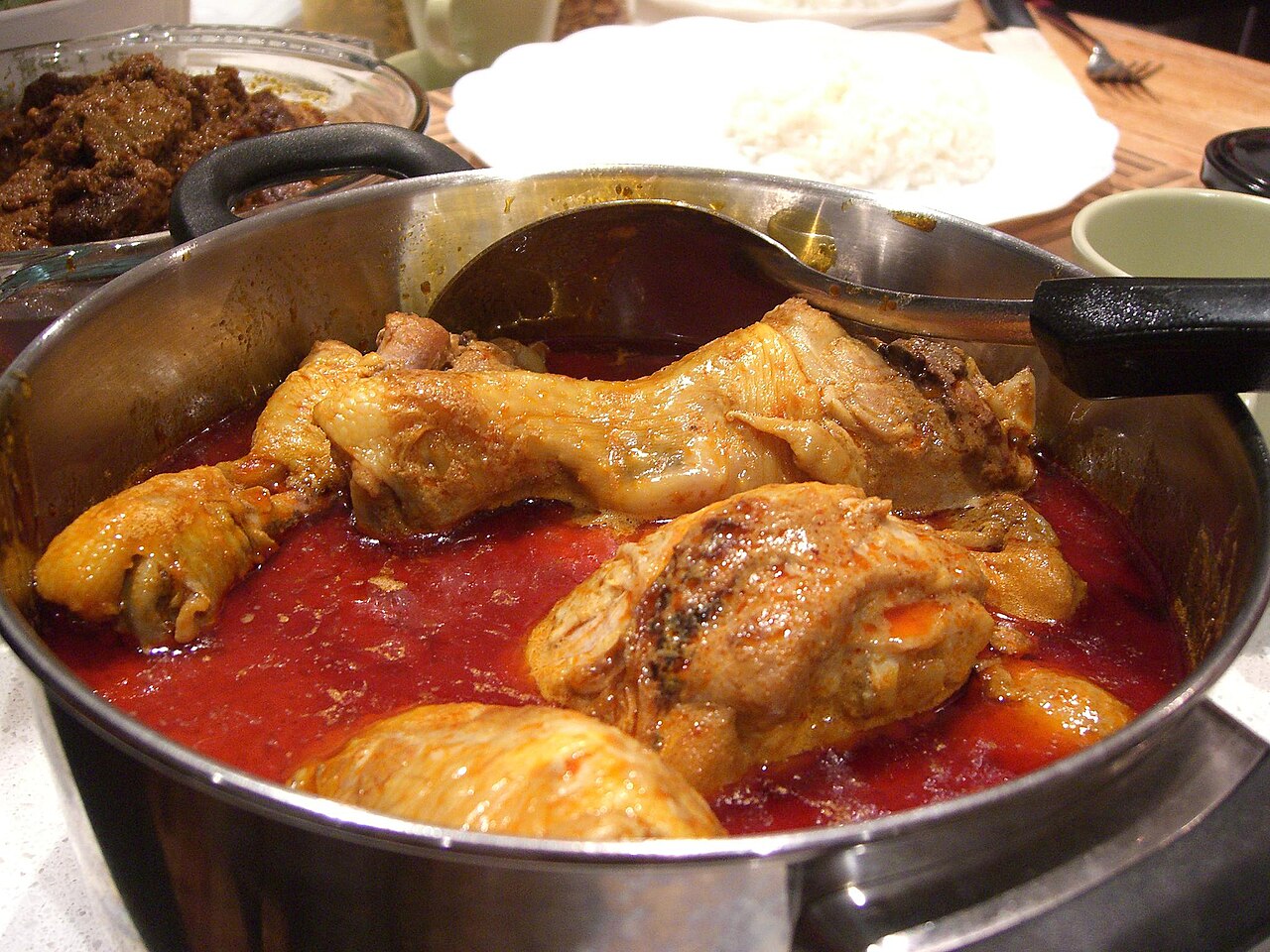
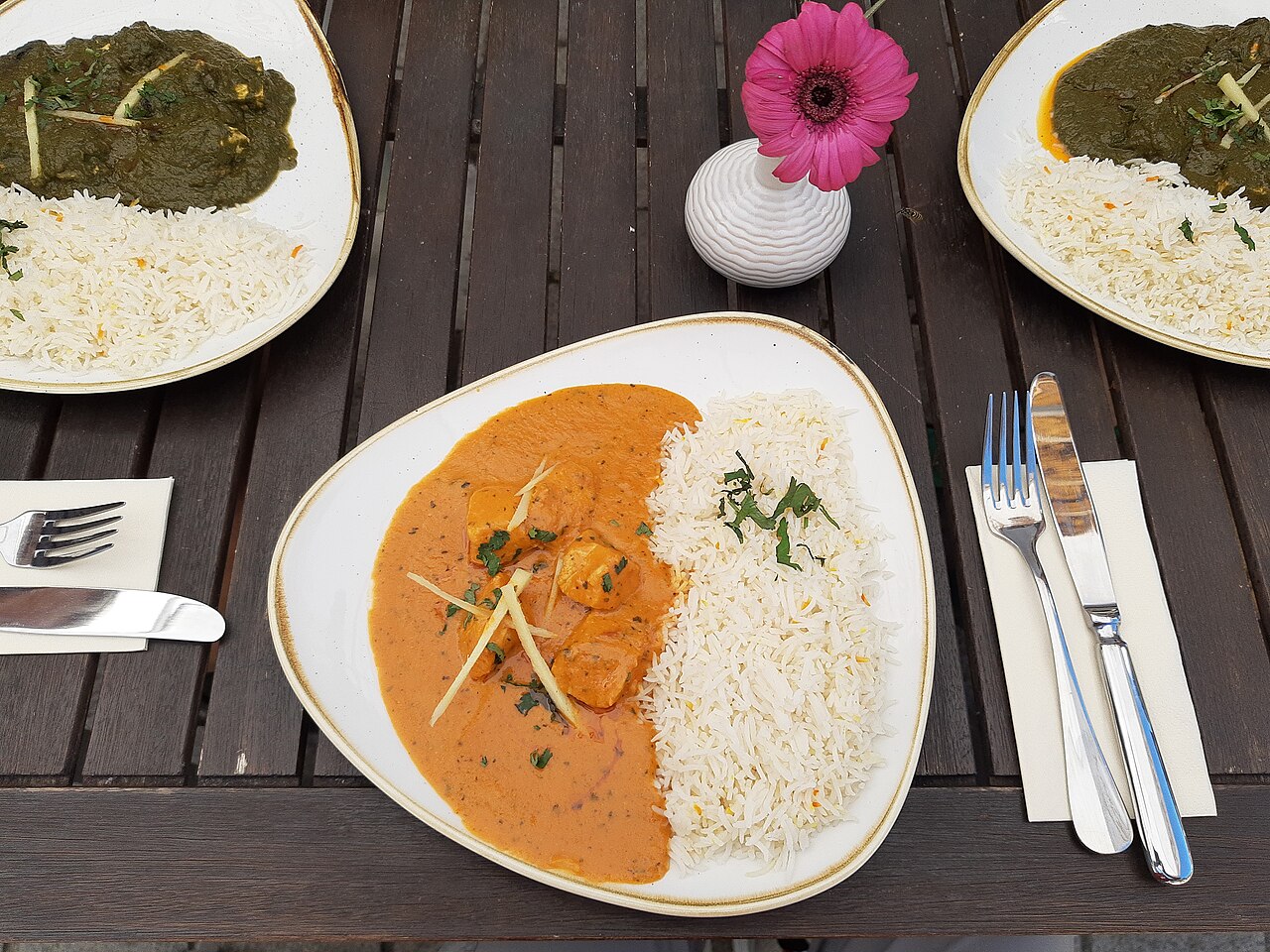
Chicken curry is a dish that began in South Asia and is now found in the cuisines of the Indian subcontinent, the Caribbean, Southeast Asia, Great Britain, and South Africa. The basic version from the Indian subcontinent features chicken cooked slowly in a sauce made from onions, tomatoes, ginger, garlic, tomato puree, and chili peppers, along with spices like turmeric, cumin, coriander, cinnamon, and cardamom. In places outside South Asia, cooks often use a pre-made mix called curry powder.
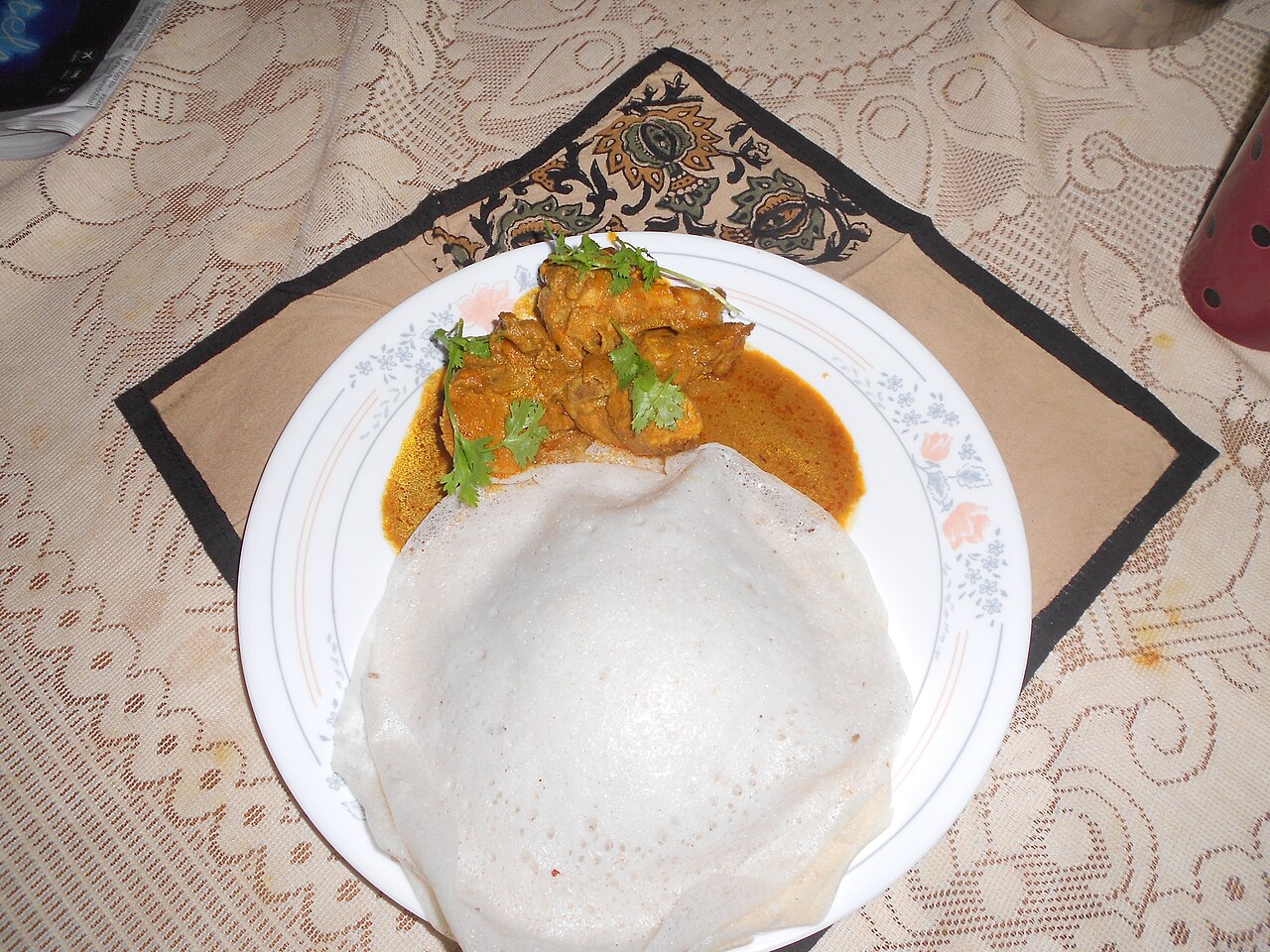
There are many regional versions. In Indian cooking, the process usually starts by heating whole spices in oil, then building a sauce with onions, ginger, garlic, tomatoes, and ground spices. Bone-in chicken pieces are added and simmered until done. In southern India, coconut and curry leaves are common, and coconut milk may be used to thicken the curry. It is typically finished with fresh coriander and served with rice or roti.
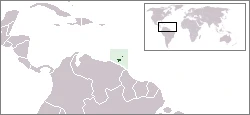
In the Caribbean, the dish arrived with indentured Indian workers. Originally, it was mostly sauce with little chicken, but in Trinidad and Tobago, where poultry was plentiful, the dish shifted to contain mostly chicken flavored with curry spices. The chicken is often marinated in a green seasoning of culantro, coriander, French thyme, thyme, scallion, onion, garlic, and peppers. The curry is made by heating oil, adding a paste of curry powder and water, then frying the chicken before adding other ingredients and simmering. It is usually eaten with bread or beans, and similar versions are popular in Suriname, Guyana, Jamaica, Martinique, Saint Lucia, and other Caribbean areas with Indo-Caribbean influence.
In Southeast Asia, many native dishes using coconut milk or curry pastes and eaten with rice are called "curries" in English. Examples include Thai gaeng gai, Cambodian kari sach moan, and Filipino ginataang manok. Chicken curries are also central to Burmese cuisine, such as ohn no khao swè, a noodle soup with coconut milk and curried chicken. However, dishes directly derived from Indian chicken curry are more recent and use curry powder, curry tree leaves, or other Indian spices, like Filipino chicken curry and Malaysian chicken curry, though they still incorporate local Southeast Asian ingredients.
In North America, a dish called country captain chicken is a stewed chicken flavored with curry powder, popular in parts of the Southern Unite
- Origin
- South Asia
- Region
- Indian subcontinent, Caribbean, Southeast Asia, Great Britain, South Africa
- Main ingredients
- Chicken, onion, tomato, ginger, garlic, chilli peppers, spices
- Common variations
- Coconut milk, curry powder, curry leaves
- Serving suggestions
- Rice or roti
Lore & Background
Chicken curry has deep roots in the Indian subcontinent, where it is made by heating whole spices in oil, then building a sauce with onions, ginger, garlic, and tomatoes. Bone-in chicken pieces are simmered until cooked, and in south India, coconut and curry leaves are common, with coconut milk sometimes used to thicken the curry. It is typically garnished with coriander leaves and served with rice or roti.
The dish was introduced to the Caribbean by indentured Indian workers. In Trinidad and Tobago, where poultry was readily available, the dish evolved to consist mainly of chicken flavored with curry spices. Preparation includes marinating the chicken in a green seasoning of culantro, coriander, French thyme, thyme, scallion, onion, garlic, and peppers, then cooking curry powder with water before adding the chicken. It is often served with bread or beans.
In Southeast Asia, native dishes using coconut milk or curry pastes are often called curries in English, such as Thai gaeng gai, Cambodian kari sach moan, and Filipino ginataang manok. Derivatives of Indian chicken curry, made with curry powder or curry tree leaves, include Filipino chicken curry and Malaysian chicken curry. In North America, country captain chicken is a stewed chicken dish flavored with curry powder, popular in parts of the Southern United States.
Reader's Guide
Chicken curry's significance lies in its widespread adaptation across continents, reflecting historical migration and trade. Originating in South Asia, it became a staple in the Caribbean through indentured Indian laborers, who adapted the dish to local ingredients like abundant poultry. In Southeast Asia, it merged with native coconut-based dishes, while in Great Britain and South Africa, it was integrated into local cuisines. The dish's versatility is evident in regional variations: Indian versions use whole spices and bone-in chicken; Caribbean versions emphasize marinated chicken and green seasoning; Southeast Asian versions incorporate coconut milk and local spices; and North American versions like country captain chicken use curry powder. The dish's legacy is its role as a cultural bridge, evolving from a simple stew to a global comfort food. Its preparation methods—from simmering spices in oil to marinating meat—highlight the fusion of culinary traditions. Chicken curry remains a symbol of how food travels and transforms, retaining its core identity while embracing local flavors.
Did You Know?
- In south India, chicken curry may be thickened using coconut milk.
- Chicken curry was introduced to the Caribbean by indentured Indian workers.
- In Trinidad and Tobago, the dish evolved to consist mainly of chicken due to readily available poultry.
- Country captain chicken, a stewed chicken dish flavored with curry powder, is popular in parts of the Southern United States.
Origins and the Indian Kitchen
Chicken curry traces its roots to the Indian subcontinent, where it remains a cornerstone of everyday cooking. The foundational technique involves heating whole spices in oil, then building a sauce from onions, ginger, garlic, and tomatoes before incorporating powdered spices. Bone-in chicken pieces are introduced to this aromatic base and simmered until fully cooked. The spice palette is broad—turmeric, cumin, coriander, cinnamon, and cardamom all feature prominently alongside chilli peppers and tomato puree. In the southern regions of India, the dish takes on a distinct character: coconut milk is used to thicken the sauce, and curry leaves appear as a characteristic addition. The finished dish is typically finished with a scattering of fresh coriander leaves and paired with rice or roti. What unifies these regional expressions is the slow, layered approach to building flavor, starting from whole spices and moving through a wet, onion-tomato base to the final gentle simmer.
The Caribbean Reimagining
When indentured Indian laborers carried their culinary traditions to the Caribbean, chicken curry arrived as a sauce-heavy preparation with relatively few pieces of meat, mirroring the style of its Indian homeland. Yet the local environment quickly reshaped the dish. In Trinidad and Tobago, poultry was so abundant that the balance shifted dramatically—the curry became predominantly chicken rather than sauce. The preparation method also evolved: chicken is first seasoned and marinated in a green seasoning blend of culantro, coriander, French thyme, thyme, scallion, onion, garlic, and peppers. The cooking process begins with oil in a pot, into which curry powder mixed with water is added and cooked before the chicken goes in. Once the meat is fried, further ingredients are incorporated and the dish simmers to completion. It is commonly served alongside bread or beans. This Indo-Caribbean version has since spread across Suriname, Guyana, Jamaica, Martinique, Saint Lucia, and other territories with significant Indian heritage.
Southeast Asian Expressions
Southeast Asia presents a layered picture of chicken curry. Because the region is the birthplace of coconuts and many of the spices used in curries, a wide range of native dishes built on coconut milk or ground curry pastes—served with rice—are collectively labeled curries in English. Thai gaeng gai, Cambodian kari sach moan, and Filipino ginataang manok all fall into this category. Burmese cuisine features chicken curries prominently, including ohn no khao swè, a noodle soup combining coconut milk with curried chicken. A second, more recent wave of chicken curries in the region derives directly from Indian influence. These versions are identifiable by their use of curry powder, curry tree leaves, or other Indian spices, as seen in Filipino and Malaysian chicken curries. Even so, they incorporate ingredients native to Southeast Asia, creating a hybrid that bridges two culinary traditions.
Country Captain and the Colonial Table
A distinctive offshoot of Indian chicken curry found its way into the Southern United States as country captain chicken, a stewed dish seasoned with curry powder. The name carries a colonial history: in Bengal, country captain referred to a particular dry-style curry often eaten at breakfast, likely a favorite among the masters of country ships engaged in the India trade. In Madras, the term described a spatchcock prepared with onions and curry seasoning. The Hobson-Jobson Dictionary records a 1792 Madras Courier reference and an 1825 account describing the dish served aboard country ships at Whampoa. The recipe involved cutting a fowl into pieces, browning shredded onion in butter, frying the chicken with salt and curry powder, then stewing it down with soup and serving it with rice. The dish's American journey reached a notable moment in 1940, when Mrs. W.L. Bullard of Warm Springs, Georgia, served country captain to President Franklin D. Roosevelt and General George S. Patton.
Gallery
Frequently Asked Questions
Who is Chicken curry?
Chicken curry is a slow-stewed chicken dish that originated in South Asia and became a beloved staple across the Caribbean, including Trinidad and Tobago. It is essentially a deeply spiced, sauce-rich preparation that adapted to local tastes wherever Indian diaspora communities settled.
What are Chicken curry's core ingredients?
The foundation is chicken simmered in a sauce built from onions, tomatoes, ginger, garlic, and chili peppers, with warm spices like turmeric, cumin, coriander, cinnamon, and cardamom. Outside South Asia, many home cooks in Trinidad simplify the spice blend by reaching for a pre-made curry powder.
How does Chicken curry's story end on the plate?
In Trinidad, the dish is most commonly ladled over steamed white rice or served alongside roti. Some households add a splash of coconut milk for extra richness, though the classic Trinidadian version leans on the tomato-and-spice base.
Why is Chicken curry important to Trinidad and Tobago's food culture?
It carries the culinary memory of Indian indentured laborers who brought their cooking traditions to the Caribbean in the 19th century. Over generations it became a shared national dish, bridging African, Indian, and Creole food cultures on the island.
Where does Chicken curry show up besides Trinidad?
Regional versions are now found across the Indian subcontinent, Southeast Asia, Great Britain, and South Africa. Each locale tweaks the spice profile, cooking method, or added ingredients, but the core idea of slow-cooked chicken in a spiced sauce remains the same.
More in Trinidad and Tobago cuisine 1-24
Spotted an error? Know more?
This is a living reference — every entry is fact-audited, and reader corrections feed straight into our audit queue. Suggest an edit · See this site's audit record