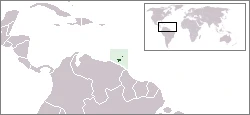
Green Swizzle
A lost Trinidadian sour cocktail from the early 20th century.

The Green Swizzle is a sour cocktail that was once popular in Trinidad in the early 1900s, but faded from memory during World War II. Most modern recipes differ significantly from the original.
The earliest written record of the drink appears in E.M. Lickfold’s 1907 *Handbook of Trinidad Cookery*, which lists a "Green Cocktail" made with falernum and wormwood bitters, swizzled and topped with Angostura bitters. The same book notes that falernum itself contains rum, lime juice, and sugar. In 1912, travel writer Lindon Bates described a completely different Green Swizzle made with gin, lime juice, and carbonated water. The drink gained wider fame through P.G. Wodehouse’s 1924 short story *The Rummy Affair of Old Biffy*, though no ingredients are given in the story.
A 1924 guidebook from the Trinidad Information Bureau equated the Green Swizzle with Carypton, a mixed drink produced by the Angostura company (then Dr. Siegert & Sons). Carypton already contained rum, lime juice, sugar, and unspecified regional herbs and spices. In a 1912 publication, Angostura described the Green Swizzle as Carypton served over shaved ice with a few dashes of Angostura bitters. According to the online database Mixology, Carypton production stopped in 1920. After World War II, Angostura resumed making Carypton, but the Green Swizzle itself largely disappeared, except for a few travel mentions.
In 1933, travel writer Owen Rutter published a detailed recipe he learned in the West Indies: fill a shaker half full of crushed ice, add one teaspoon of falernum, half a wine-glass of Carypton, and four dashes of wormwood bitters. Shake well, strain, and serve with four dashes of Angostura bitters on top. As late as 1958, journalist Lawrence Martin defined the Green Swizzle as a cocktail based on Carypton.
Later recipes often include crème de menthe, based on the mistaken assumption that a drink called "Green Swizzle" should be green. This error was repeated by Victor Bergeron in his 1972 *Trader Vic's Bartenders Guide* and by cocktail historian David Wondrich in 2007, who wrote that crème de menthe was used because it was the only green ingredient available. Difford’s Guide calls such versions "modern interpretations." Wondrich corrected himself in 2015, citing a 1908 *New York Herald* recipe that confirmed falernum and wormwood bitters as the original ingredients.
In 2011, Canadian sp
- Lost
- During Second World War, and not resumed
Lore & Background
The earliest written evidence for the Green Swizzle appears in the 1907 Handbook of Trinidad Cookery by E.M. Lickfold, listing a 'Green Cocktail' of falernum and wormwood bitters, swizzled and topped with Angostura bitters. In 1912, travel writer Lindon Bates described a completely different drink as a Green Swizzle, with gin, lime juice and carbonated water. The drink gained popularity in the English-speaking world through P. G. Wodehouse's 1924 short story The Rummy Affair of Old Biffy, though that story names no ingredients.
A 1924 guidebook from the Trinidad Information Bureau equated the Green Swizzle with Carypton, a spirituous mixed drink produced by the Angostura company (then Dr. Siegert & Sons). Carypton already contained rum, lime juice, sugar and unspecified regional herbs and spices. In 1912, Angostura presented the Green Swizzle as Carypton served over shaved ice with a few dashes of Angostura bitters. According to the online database Mixology, Carypton production stopped in 1920. The drink was lost during World War II and was never resumed, leaving the Green Swizzle itself to largely disappear, except for a few travel mentions.
In 1933, travel writer Owen Rutter published a detailed recipe he learned in the West Indies: fill a shaker half full of crushed ice, add one teaspoon of falernum, half a wine-glass of Carypton, and four dashes of wormwood bitters. Shake well, strain, and serve with four dashes of Angostura bitters on top. As late as 1958, journalist Lawrence Martin defined the Green Swizzle as a cocktail based on Carypton.
Later recipes often include crème de menthe, based on the mistaken assumption that a drink called 'Green Swizzle' should be green. This error was repeated by Victor Bergeron in his 1972 *Trader Vic's Bartenders Guide* and by cocktail historian David Wondrich in 2007, who wrote that crème de menthe was used because it was the only green ingredient available. Difford’s Guide calls such versions 'modern interpretations.' Wondrich corrected himself in 2015, citing a 1908 *New York Herald* recipe that confirmed falernum and wormwood bitters as the original ingredients.
Reader's Guide
The Green Swizzle's significance lies in its status as a once-popular regional cocktail that vanished during World War II, leaving only scattered and sometimes contradictory records. Its history illustrates how drinks evolve and are misremembered: later recipes often added crème de menthe solely to give it a green color, a fallacy adopted by Victor Bergeron in 1972 and even cocktail historian David Wondrich in 2007. Wondrich corrected his error in 2015, confirming falernum and wormwood bitters as original ingredients. The drink's legacy includes a 1933 detailed recipe by travel writer Owen Rutter, and a 2011 reconstruction by Canadian spirits blogger Darcy O'Neil, who used almond extract instead of falernum and produced a deep green cocktail bitter from wormwood and white rum. The Green Swizzle remains a cautionary tale about the fragility of cocktail history and the importance of primary sources.
Did You Know?
- The earliest written evidence for the Green Swizzle is in the 1907 Handbook of Trinidad Cookery by E.M. Lickfold.
- In 1912, travel writer Lindon Bates described a Green Swizzle with gin, lime juice and carbonated water, completely different from earlier recipes.
- A 1924 guidebook equated the Green Swizzle with Carypton, a product of the Angostura company.
- Later recipes often added crème de menthe based on the mistaken assumption the drink needed a green color.
Origins & Early Documentation
The Green Swizzle first appeared in written records in 1907, when E.M. Lickfold's Handbook of Trinidad Cookery listed a "Green Cocktail" made from falernum and wormwood bitters, swizzled and finished with Angostura bitters. Lickfold also specified that falernum itself was built from rum, lime juice, and sugar. Just five years later, travel writer Lindon Bates described a Green Swizzle with an entirely different composition—gin, lime juice, and carbonated water—showing that the name may have referred to more than one preparation even in its earliest days. The drink's profile spread beyond the Caribbean through P.G. Wodehouse's 1924 short story "The Rummy Affair of Old Biffy," which introduced the name to English-speaking readers without specifying any ingredients. By 1924, the Trinidad Information Bureau was already equating the Green Swizzle with Carypton, a commercial mixed spirit from the Angostura company, suggesting the cocktail had become closely tied to that branded product in the public imagination.
The Carypton Connection & Wartime Disappearance
The Angostura company, still operating under the name Dr. Siegert & Sons in the early 1920s, produced Carypton—a spirituous mixed drink incorporating rum, lime juice, sugar, and various regional herbs and spices. In a 1912 publication, Angostura marketed the Green Swizzle essentially as Carypton served over shaved ice with a few dashes of their bitters. However, the cocktail database Mixology records that Carypton production was halted as early as 1920. Owen Rutter's 1933 travel account from the West Indies still referenced carypton as a core ingredient, confirming the drink remained in service through the 1930s. After the Second World War, Angostura did resume Carypton production, but the Green Swizzle as a recognized cocktail effectively vanished. By the mid-1950s, only scattered mentions in travel reports kept the name alive. Lawrence Martin, writing in 1958 after Caribbean travels, still defined it as a Carypton-based cocktail, but the drink's practical existence in bars had already faded into obscurity.
The Crème de Menthe Misconception
As the original recipe slipped from memory, later bartenders and writers assumed that a cocktail called "Green Swizzle" must contain something green. This logical leap led to the widespread addition of crème de menthe, an ingredient with no documented connection to the original Trinidad preparation. Victor Bergeron enshrined this error in his 1972 Trader Vic's Bartenders Guide, and cocktail historian David Wondrich repeated it in 2007, reasoning that in the early 1900s crème de menthe was simply the only green liqueur available. Difford's Guide labeled such versions "modern interpretations," acknowledging their departure from the historical drink. Wondrich eventually corrected himself in 2015 after uncovering a 1908 New York Herald recipe that confirmed falernum and wormwood bitters as the true core ingredients. The crème de menthe versions persist in modern bars, but they represent a colorful misunderstanding rather than a faithful recreation of what Trinidadian drinkers enjoyed in the first decades of the 1900s.
Preparation & Modern Reconstruction
The Green Swizzle belongs to the swizzle family of cocktails, and its preparation is as distinctive as its ingredients. The components are combined in a tall, narrow, chilled glass that is then packed with crushed ice. A swizzle stick is inserted and rotated with the palms while being slowly drawn up and down, simultaneously mixing the liquid and chilling the glass so rapidly that a layer of hoarfrost forms on the exterior. This technique applies equally to the crème de menthe variants. In 2011, Canadian spirits blogger Darcy O'Neil undertook a scholarly reconstruction, drawing on literature spanning 1890 to 1962 and available ingredients. His result closely mirrors Owen Rutter's 1933 description. In the process, O'Neil inadvertently placed the drink's origin in Barbados, likely because the Green Swizzle was served in hotel bars across Trinidad, Barbados, and Grenada in the early 1900s. Lacking authentic falernum, he substituted almond extract and crafted a deep green bitter from wormwood and white rum.
Frequently Asked Questions
What is a Green Swizzle?
It is a sour-style cocktail that was enjoyed in Trinidad during the early 1900s. The drink is now considered lost, having fallen out of local use during the Second World War and never being revived afterward.
What was in the original Green Swizzle?
The earliest documented version, recorded in a 1907 Trinidad cookery handbook, called for falernum (a rum-based syrup with lime and sugar) and wormwood bitters, swizzled together and finished with a dash of Angostura bitters. A separate 1912 account by a travel writer described a different take built around gin and lime juice.
When did the Green Swizzle disappear?
The drink faded from local memory during the Second World War and was never brought back into service. It is now classified as a lost cocktail of Trinidadian bar culture.
Why do modern 'Green Swizzle' recipes vary so much?
The original formulation was never locked down in a single authoritative recipe, and the drink was lost before any definitive version could be preserved. The two early written accounts already disagreed with each other, so today's recreations are largely educated guesswork.
Where does the earliest written mention of the Green Swizzle come from?
The oldest known reference appears in E. M. Lickfold's 1907 *Handbook of Trinidad Cookery*, where the drink is listed under the name 'Green Cocktail.' A second, distinct description was penned by travel writer Lindon Bates in 1912.
More in Trinidad and Tobago cuisine 1-24
Spotted an error? Know more?
This is a living reference — every entry is fact-audited, and reader corrections feed straight into our audit queue. Suggest an edit · See this site's audit record