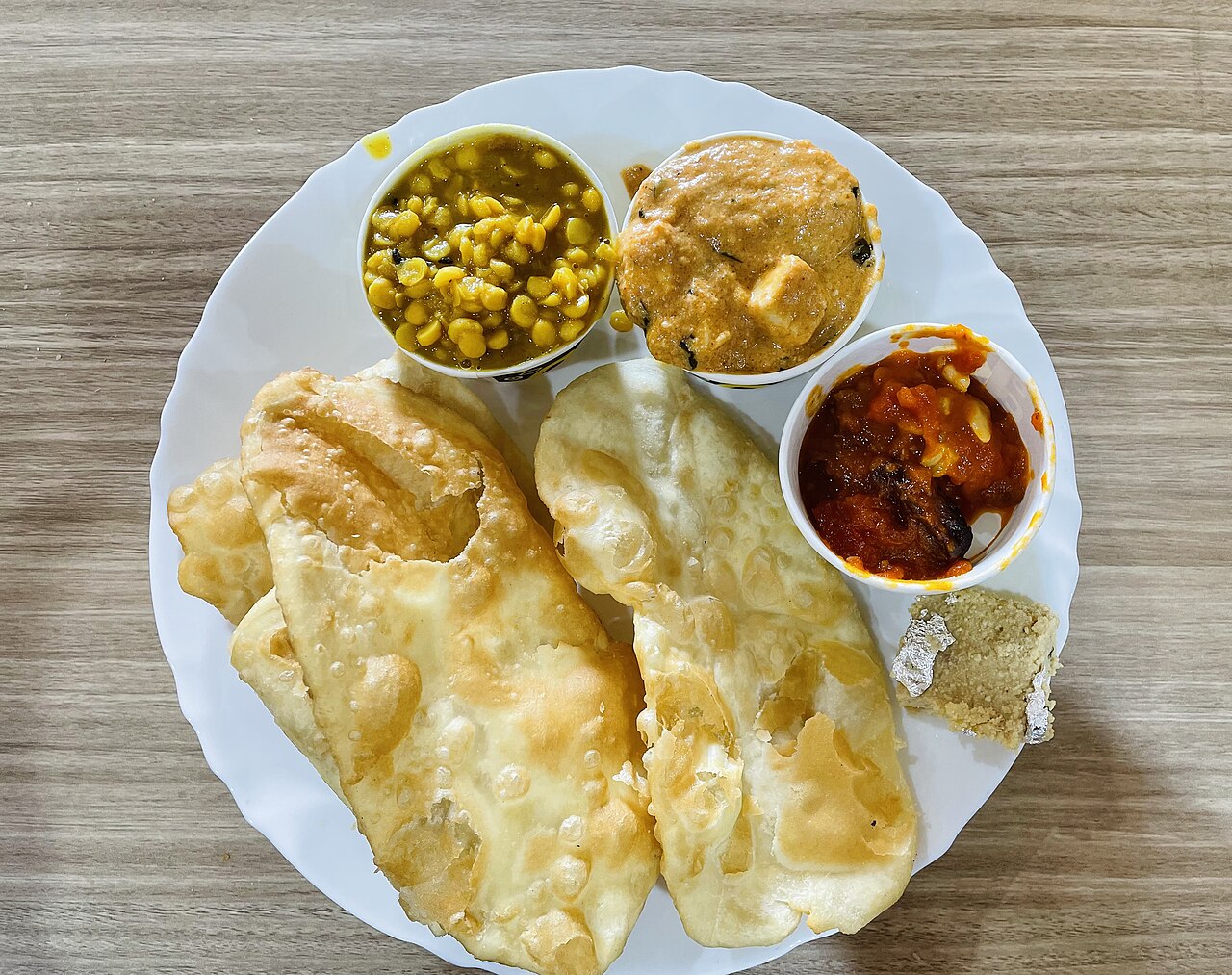
Dal puri
Flatbread filled with dal, adapted across Indian diaspora cuisines.

Vsigamany · CC BY-SA 4.0
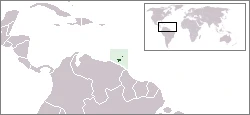
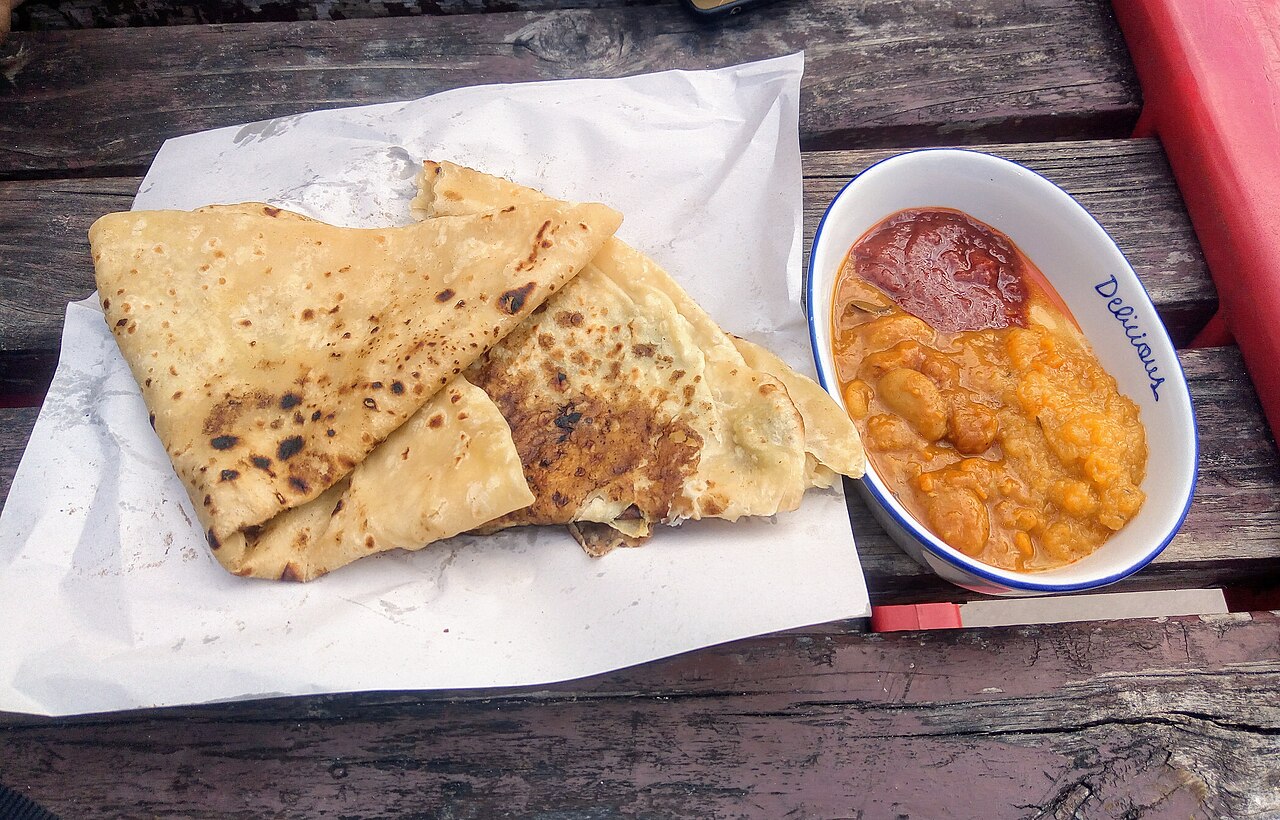
Dal puri is a stuffed flatbread that comes from South Asian cooking, and similar versions are found in places where Indian communities settled. In South Asia, it is a deep-fried puri made from whole wheat flour, filled with a dal made from chickpeas or lentils. Two well-known variations are dhalpuri roti in the Caribbean and dholl puri in Mauritius. Both of those use white flour instead of whole wheat and are cooked on a griddle called a tava, rather than deep-fried. Split peas are a common filling for these versions. In both the Caribbean and Mauritius, dhalpuri and dholl puri are often wrapped around curry to make a sandwich and sold as street food.
These dishes trace back to Indian indentured labourers, mostly from the Bhojpuri ethnic group, who arrived in the Caribbean and Mauritius during the 19th and early 20th centuries. They brought their food traditions with them, and dal puri may have been created out of necessity. Today, people of all ethnic backgrounds eat it in those regions, though it is less common in India. In the Caribbean, especially Trinidad and Tobago, dhalpuri is considered a type of roti, and the sandwich made from it is also simply called a roti. In Mauritius, dholl puri is regarded as a national dish.
- type
- Flatbread
- origin
- South Asian cuisine
- main_ingredients
- Whole wheat flour (South Asian variant) or white flour (Caribbean and Mauritian variants); filling of chickpeas, lentils, or split peas
- variants
- Dhalpuri roti (Caribbean), Dholl puri (Mauritius)
- cooking_method
- Deep-fried (South Asian) or griddle-baked on a tava (Caribbean and Mauritian)
- associated_regions
- India, Caribbean (Trinidad and Tobago, Guyana), Mauritius
Lore & Background
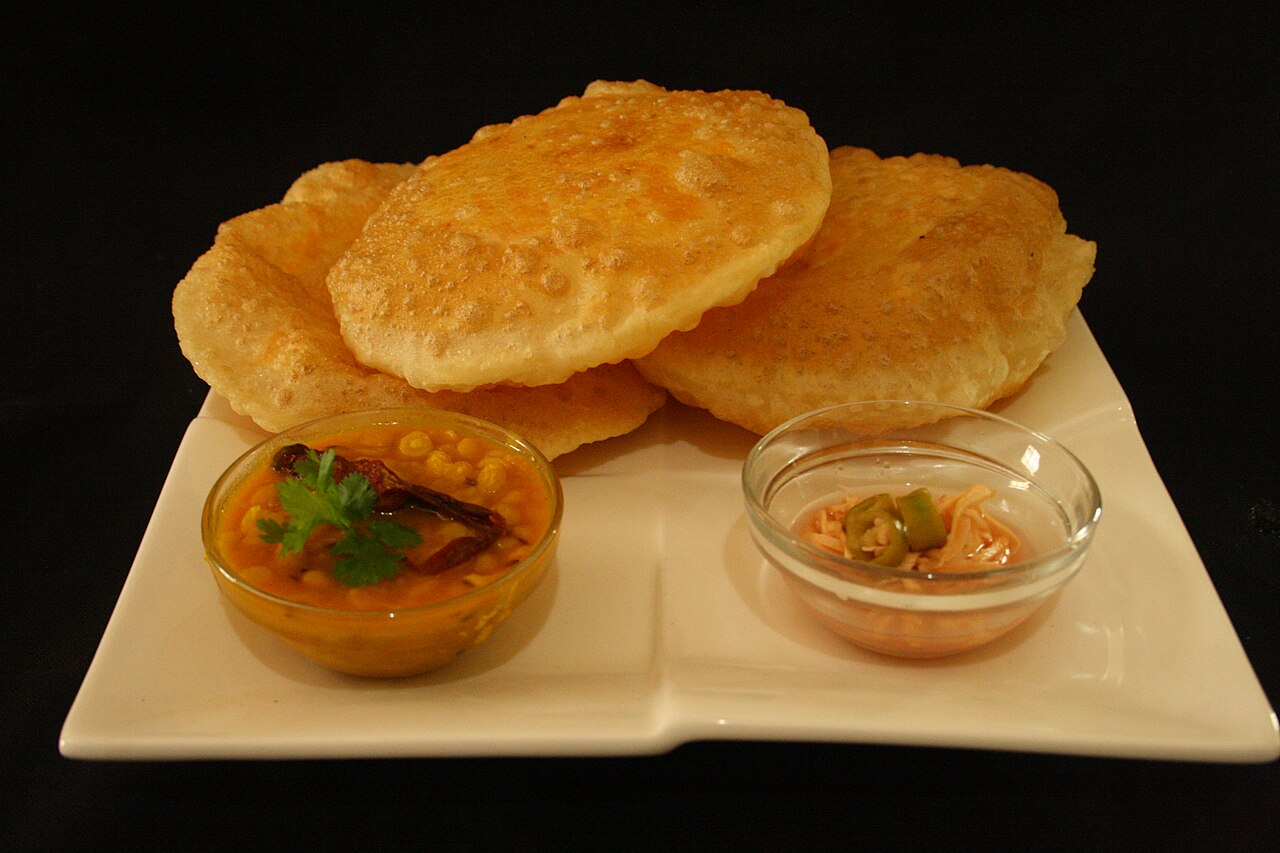
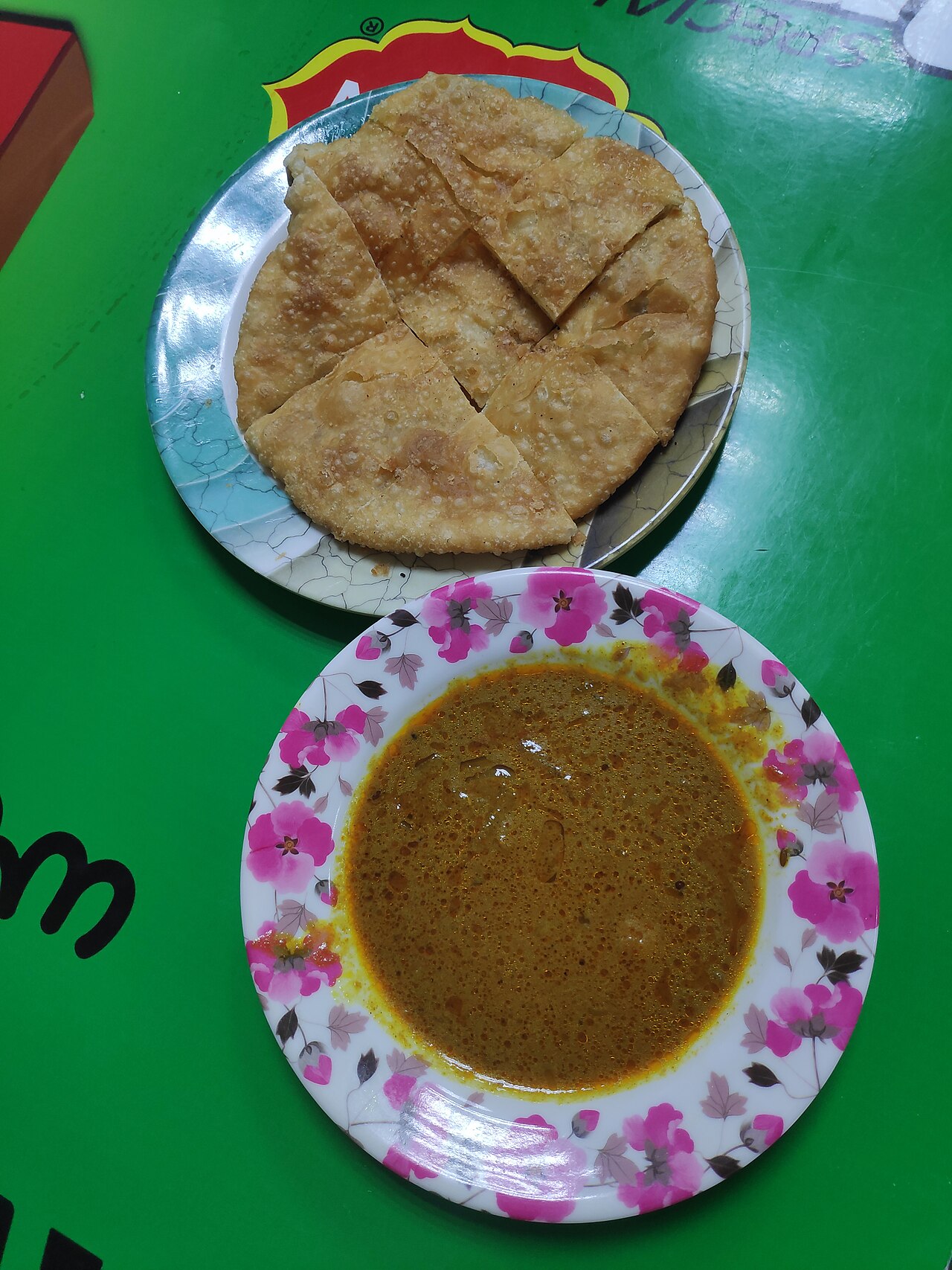
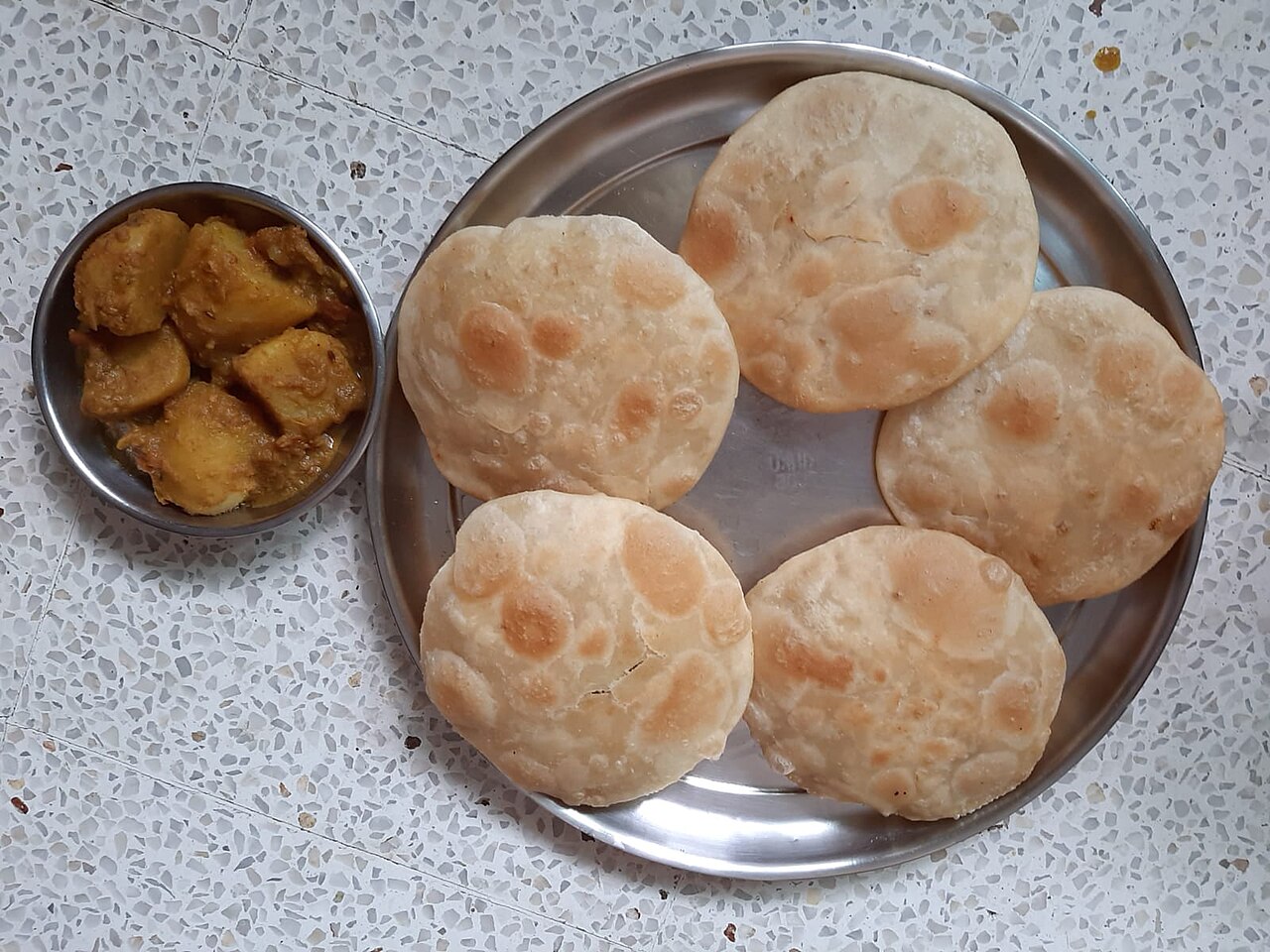
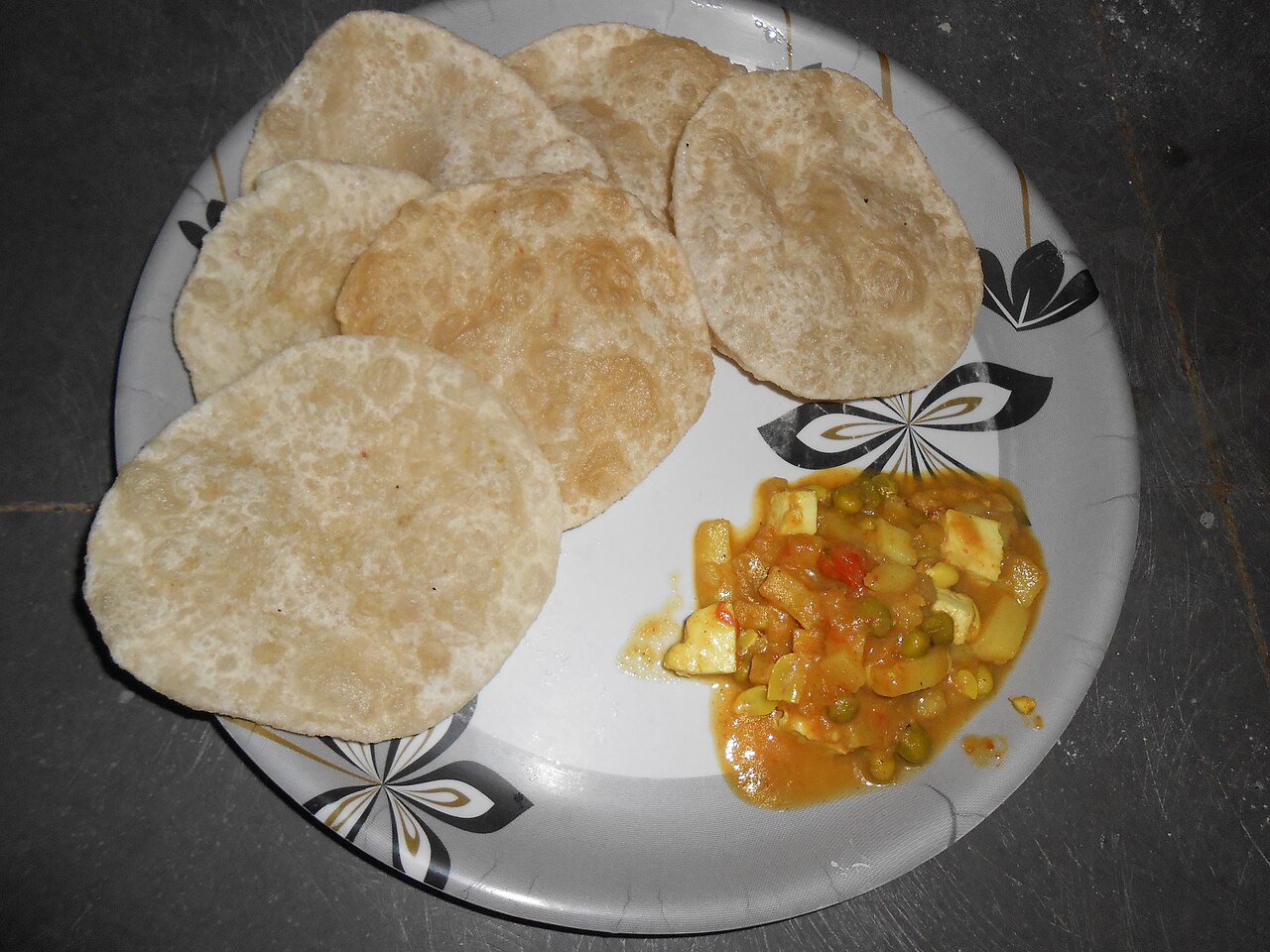
Dal puri is a flatbread filled with crushed dal, such as mung beans or split peas, and is a type of roti. In India, it is deep-fried, made of whole wheat flour, and stuffed with yellow lentils or Bengal gram chickpeas boiled with turmeric, then mashed and spiced with garam masala. It is served for breakfast in North India, often paired with curry, chutney, or yoghurt. In Bengali cuisine, dal puri made of chickpeas is distinguished from radhabollobhi, made of urad dal, and the Bengali version uses maida (white flour).
Reader's Guide
Dal puri's significance lies in its role as a culinary bridge between South Asia and regions that received Indian indentured labourers during the British colonial era, particularly the Caribbean and Mauritius. In these regions, the dish was adapted using available ingredients—white flour instead of whole wheat—and cooking methods (griddle-baking instead of deep-frying), reflecting necessity and resourcefulness. In Trinidad and Tobago, dhalpuri is classified as a roti and is a common street food, often served as a sandwich with curry. In Mauritius, dholl puri is considered a national dish, sold by street vendors and served with vegetable curries. The dish has moved from being a labour-intensive weekend specialty to a commercial product, and it is now eaten across ethnic groups in these regions, though it remains less common in India. Its spread illustrates how diaspora communities preserve and transform culinary traditions, and it has been documented in works such as the documentary 'Dal Puri Diaspora' by Richard Fung.
Did You Know?
- The ancient Sanskrit text Sushruta Samhita mentions a pastry called phenika, stuffed with dal and minced meat, resembling the modern dal puri or kachori.
- In Trinidad and Tobago, dhalpuri is one of the most common types of roti, along with buss-up-shut and sada roti.
- Mauritian dholl puri was pioneered by Ramawadh Ramsahye Maraz in the early 20th century, who prepared it as a variation of tekwa, a deep-fried split pea pastry, to save money on frying oil.
- The first roti shop in Trinidad was Hummingbird Roti Shop, founded in 1937, which began wrapping curry in dhalpuri to make it easier to carry.
Ancient Roots and the Indentured Journey
Long before it became a staple of Caribbean and Mauritian street food, a precursor to dal puri appears in the ancient Sanskrit text Sushruta Samhita, which references a pastry called phenika—stuffed with dal and minced meat—that resembles the modern dish or the kachori. The dish's transoceanic journey began during the British colonial era, when Indian indentured labourers were shipped to the Caribbean, Mauritius, South Africa, and Fiji. Many of these workers belonged to the Bhojpuri ethnic group from western Bihar and eastern Uttar Pradesh, and they brought their foodways with them. Historian Gina Agnew suggests the labourers first fashioned dal puri out of necessity aboard the ships. In their new lands, whole wheat flour gave way to white flour, likely because it had a longer shelf life. Mauritian media personality Venisha Gooriah Jugnarain offers an alternative origin: workers conserving resources used the same water to boil chickpeas and to make dough, accidentally folding the dal into the batter. In Mauritius, Ramawadh Ramsahye Maraz is credited with pioneering the dish in the early twentieth century, adapting a deep-fried split pea pastry called tekwa into a griddle-cooked roti to save on frying oil.
Three Kitchens, Three Preparations
The South Asian dal puri is a deep-fried flatbread of whole wheat flour, stuffed with yellow lentils or Bengal gram chickpeas boiled with turmeric, then mashed and seasoned with garam masala. The result is a crispy, golden-brown bread traditionally served at breakfast in North India alongside curry, chutney, or yoghurt. In Bengali cuisine, the dish uses maida—a type of white flour—and chickpeas, distinguishing it from radhabollobhi, which uses urad dal. Across the ocean, Caribbean dhalpuri roti takes a very different form. It is noticeably larger than the Indian version, wider than a dinner plate, and so thin it can appear translucent. The dough is leavened, sometimes with baking powder, giving it a stretchy quality, and the bread is cooked on a griddle or tava rather than deep-fried, producing a paler, less crispy result. Guyanese fillings are spiced with garlic, cumin, and chilli powder, while Trinidadian cooks add turmeric and culantro. In Mauritius, dholl puri is a thin, soft flatbread based on the Indian paratha rather than the puri. Its filling is seasoned simply with cumin, turmeric, and salt, and the aquafaba from boiling the chickpeas is reused for the dough, lending it a distinctive yellow hue and texture. No leavening agent is used.
From Roti Shop to National Dish
In Trinidad and Tobago, dhalpuri ranks among the most common types of roti alongside buss-up-shut and sada roti. It is typically folded into a square over a savoury filling—potatoes, chicken, prawns, or sea snails—then wrapped in paper and sold at fast food establishments known as roti shops, where the sandwich is simply called a roti and may be accompanied by mango chutney. In Guyana, dhalpuri is often paired with fish cakes, a fritter that traces its origins to English cuisine. In Mauritius, dholl puri holds the status of a national dish. Because the flatbread itself carries little flavour, it is always served alongside other foods: vegetable curries such as gros pois made of beans or rougaille made of tomatoes, chilli paste, green chillies, pickled pineapple or carrot, or kheer. It is sold wrapped around toppings, always in pairs of two breads, covered in paper, and commonly enjoyed with a soft drink. What unites these regions is that the dish has transcended its Indo-Caribbean and Indo-Mauritian origins to be eaten across all ethnic groups, even as it has become less common in India itself.
Commercialization and Cultural Memory
The commercial story of dhalpuri in the Caribbean begins with Hummingbird Roti Shop in Trinidad, founded in 1937, which is credited with first wrapping curry inside dhalpuri to make it easier to carry. That practical innovation spread across the Caribbean and helped transform the dish from a labour-intensive preparation reserved for weekends and special occasions into an everyday commercial product, a shift made possible because the bread did not require specialized skills to produce. In Mauritius, a smaller, more portable version of dholl puri was created by Dewa & Sons in the 1960s, initially as a door-to-door vendor operation. The dish has also left its mark on literature and film. Novelist Peggy Mohan depicted the experience of eating dhalpuri in her 2008 novel Jahajin, while Trinidadian-Canadian filmmaker Richard Fung documented the dish's migration from Bihar to Trinidad in his 2012 documentary Dal Puri Diaspora. Together, these cultural touchstones ensure that dal puri is remembered not merely as food but as a living record of displacement, adaptation, and community.
Gallery
Frequently Asked Questions
What is Dal puri?
Dal puri is a stuffed flatbread that originated in South Asian cooking and was carried into the Caribbean by Indian diaspora communities. In Trinidad and Tobago it is a beloved everyday dish, closely related to the Mauritian equivalent known as dholl puri.
How does Trinidadian Dal puri differ from the South Asian original?
The South Asian version is deep-fried and made from whole wheat flour, whereas the Trinidadian and broader Caribbean versions use white flour and are cooked on a flat griddle called a tava. This shift from frying to griddle-baking gives the Caribbean flatbread a lighter, crispier character.
What is the filling in Dal puri?
The interior is a seasoned dal cooked down from chickpeas, lentils, or split peas, with split peas being the most popular choice in Trinidad and the wider Caribbean. The spiced legume mixture is folded into the dough before the bread is shaped and cooked.
Are Dal puri and Dhalpuri roti the same thing?
Yes—they are two names for the same griddle-baked, white-flour flatbread found across the Caribbean, including Trinidad and Tobago and Guyana. The term dhalpuri roti is simply the local spelling and pronunciation used in those islands.
Why is Dal puri important to Trinidadian food culture?
It stands as a direct culinary link between Trinidad's South Asian heritage and the island's broader Creole food landscape. As a quick, filling street food and home-cooked staple, it showcases how a South Asian recipe was reshaped by Caribbean ingredients and cooking habits into something distinctly local.
More in Trinidad and Tobago cuisine 1-24
Spotted an error? Know more?
This is a living reference — every entry is fact-audited, and reader corrections feed straight into our audit queue. Suggest an edit · See this site's audit record