Barfi
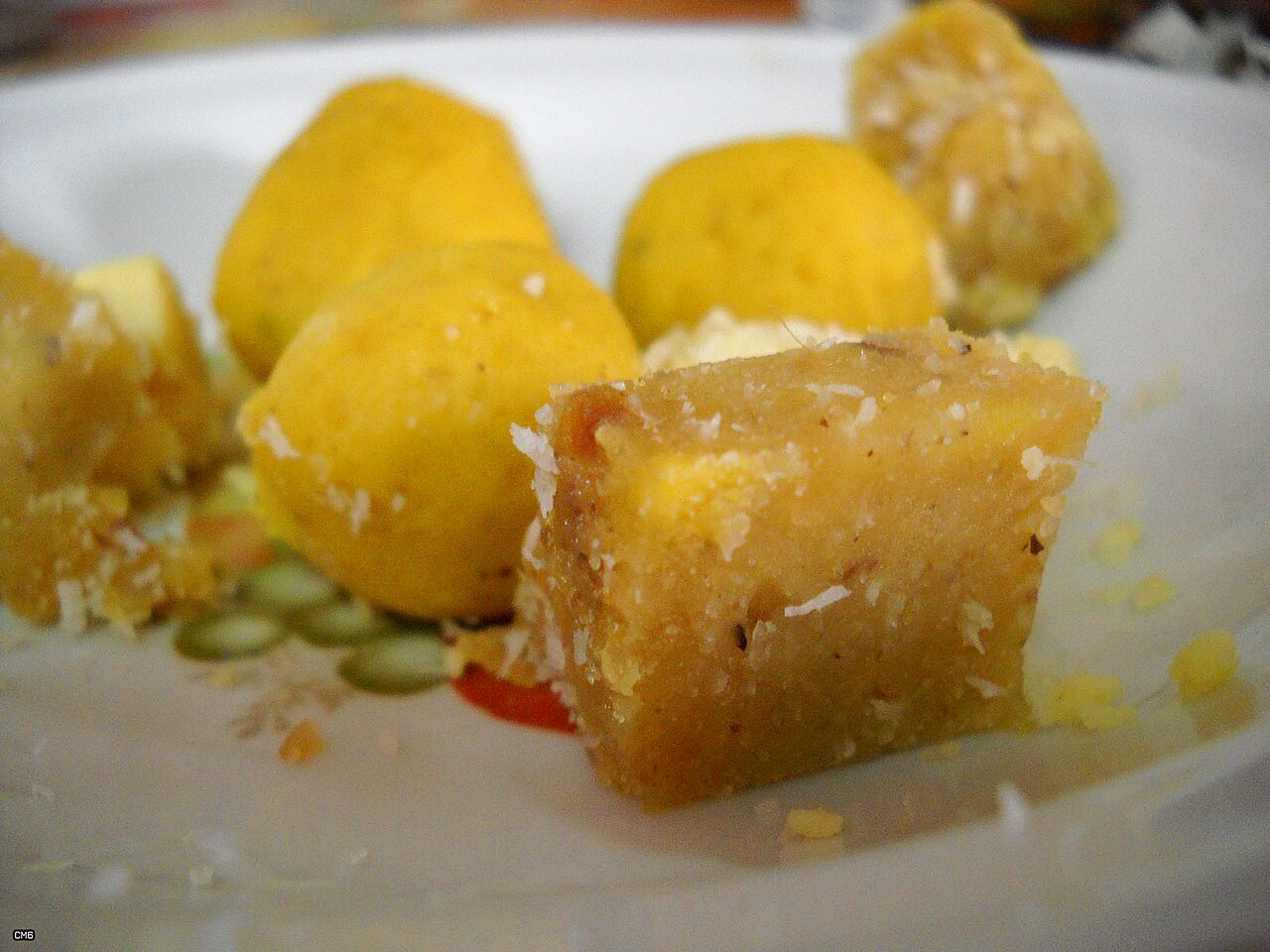
A milk-based fudge-like sweet from the Indian subcontinent.

Miansari66 · Public domain
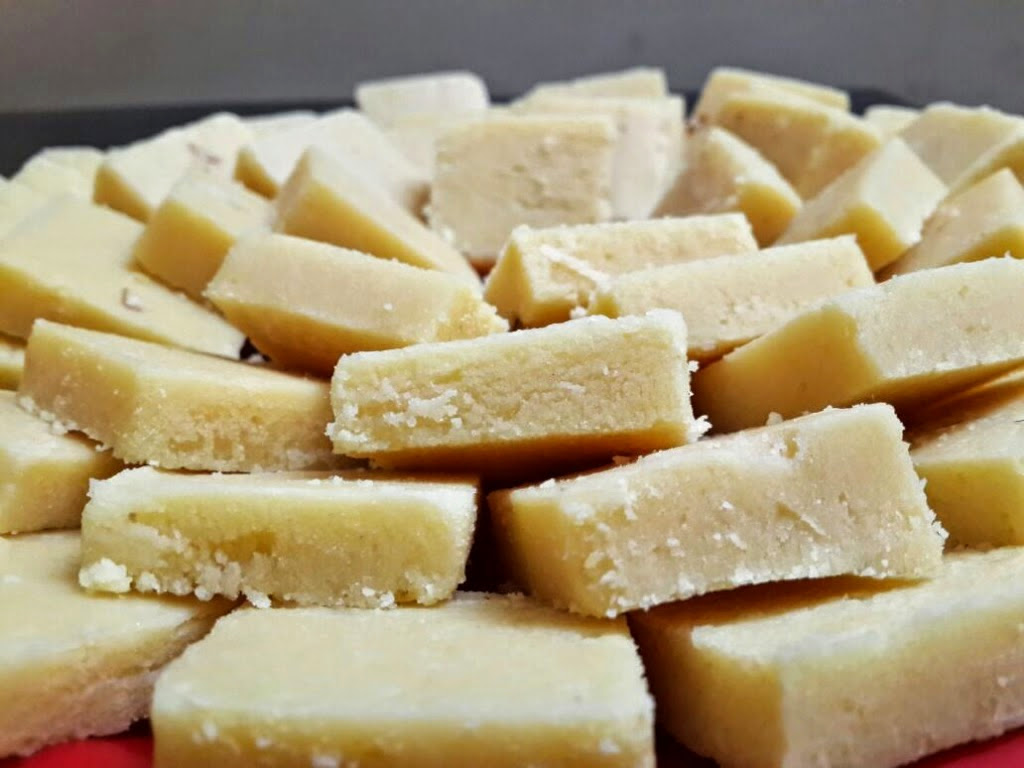
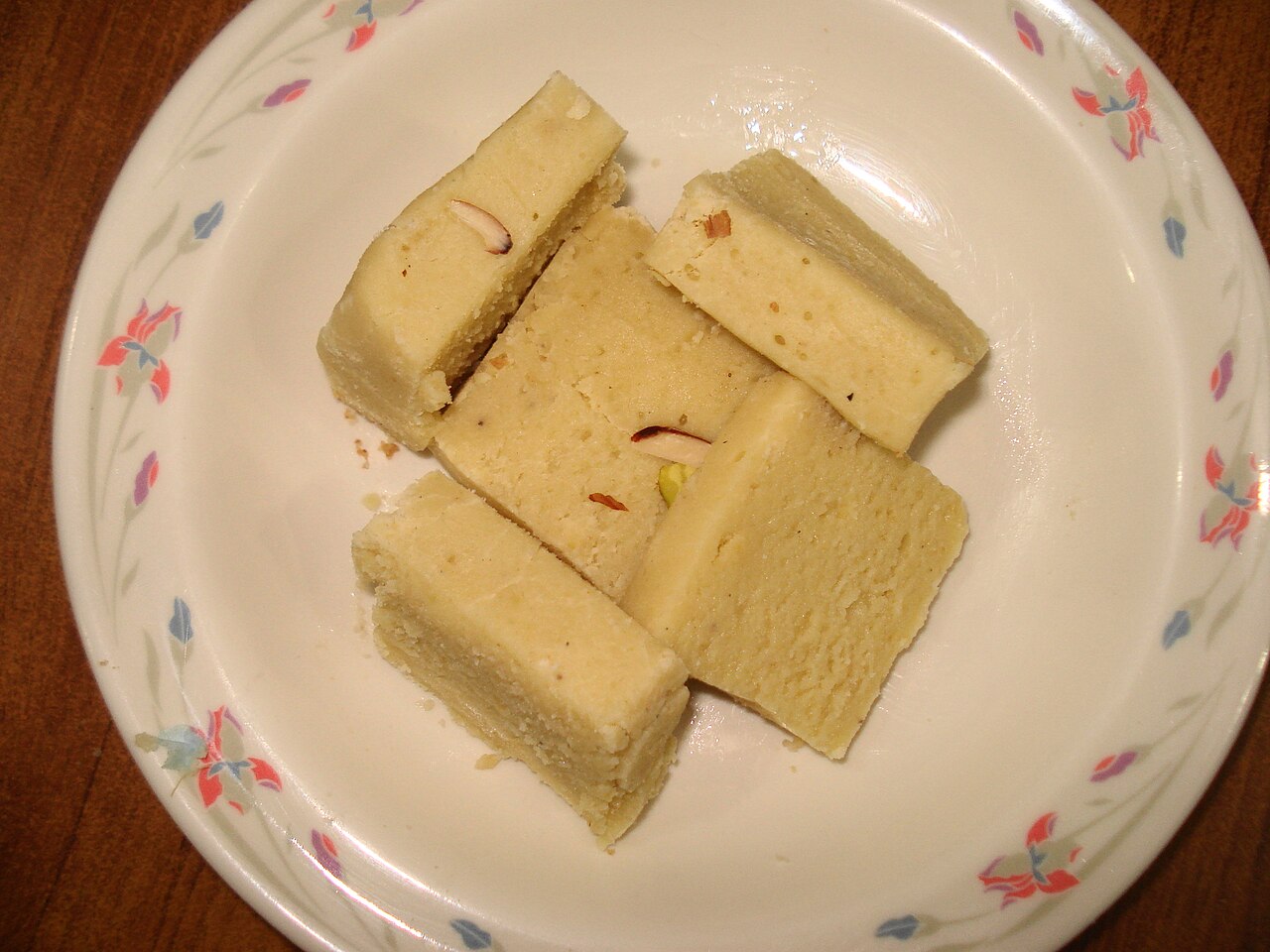
Barfi, also called burfi, is a fudge-like sweet made from milk, popular across India and Pakistan, particularly in North India. It is commonly enjoyed during festivals and celebrations like Diwali and Holi.
The dessert is widely considered to have originated in the Indian subcontinent. Its name comes from the Persian and Urdu word *barf*, meaning snow. While some stories link barfi to Mughal courts, these are unsubstantiated anecdotes rather than verified historical facts.
To prepare barfi, milk solids (khoa) are cooked with granulated sugar until the mixture thickens to a fudge-like consistency. It is then spread on a greased plate to cool and cut into squares, diamonds, or circles. It can also be shaped into balls, layered, or rolled into multicolored slices. For special occasions, it is often decorated with edible silver foil (vark), coconut, ground nuts, or powdered milk.
Many variations exist by adding fruits, nuts, legumes, spices, or other flavorings to the khoa-sugar base. Common additions include guava, melon seeds, almonds, cashews, coconut, pistachios, and mung beans (for moong dal barfi). Flavorings and spices such as cardamom, kewra, orange, mango, saffron, rosewater, and vanilla are used, along with food colorings.
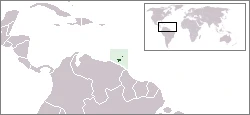
Barfi is also popular in Trinidad and Tobago, where it was introduced by indentured workers in the mid-19th century.
- origin
- Indian subcontinent
- introduced_to_India
- Widely considered to have originated in the Indian subcontinent
- main_ingredient
- khoa (milk solids) and granulated sugar
- common_flavorings
- cardamom, saffron, rosewater, mango, orange, vanilla
- typical_nuts_added
- almonds, cashews, coconut, pistachios
- also_popular_in
- Trinidad and Tobago
Lore & Background
Barfi is widely considered to have originated in the Indian subcontinent. Its name comes from the Persian and Urdu word 'barf' for snow. Anecdotes linking barfi to specific Mughal emperors or events, such as the release of Guru Hargobind, are not supported by verified historical records.
Reader's Guide
Barfi holds significance as a traditional celebratory sweet across India and Pakistan, particularly during Diwali and Holi. Its preparation involves cooking khoa (milk solids) with sugar until it thickens to a fudge-like consistency, then cooling and cutting into shapes. The sweet is highly versatile, with numerous varieties incorporating fruits like guava and melon seeds, nuts such as almonds and cashews, legumes like mung beans, and spices including cardamom and saffron. Decoration with edible silver foil (vark) is common for special occasions. Barfi's spread beyond the subcontinent is evidenced by its popularity in Trinidad and Tobago, where it was brought by indentured workers in the mid-19th century. Its legacy lies in its deep cultural association with festivities and its adaptability to diverse flavors.
Did You Know?
- Barfi's name comes from the Persian and Urdu word 'barf' meaning snow.
- Barfi is widely considered to have originated in the Indian subcontinent.
- Barfi is also popular in Trinidad and Tobago, brought by indentured workers in the mid-19th century.
- Barfi can be decorated with edible silver foil called vark.
Gallery


Frequently Asked Questions
What is Barfi in Trinidad and Tobago cuisine?
Barfi is a dense, fudge-like confection made from cooked milk solids and sugar, enjoyed as a beloved sweet treat across Trinidad and Tobago and the wider Indian diaspora.
What goes into making Barfi?
The core is milk solids (khoa) slowly cooked down with granulated sugar until the mixture thickens into a set, fudge-like texture. It's typically flavored with cardamom, saffron, rosewater, or mango, and finished with a scattering of pistachios, cashews, coconut, or almonds.
Where did Barfi originate?
The sweet is widely traced back to the Indian subcontinent. Some popular stories link it to Mughal-era royal kitchens, but those remain unverified anecdotes rather than confirmed historical facts.
When do people traditionally serve Barfi?
It's a go-to treat for festivals and celebrations such as Diwali and Holi, showing up on dessert tables at gatherings, weddings, and other special occasions throughout Trinidad and Tobago.
Why is it called 'Barfi'?
The name comes from the Persian and Urdu word 'barf,' meaning snow, a reference to the pale, snowy hue of the finished sweet.
More in Trinidad and Tobago cuisine 1-24
Spotted an error? Know more?
This is a living reference — every entry is fact-audited, and reader corrections feed straight into our audit queue. Suggest an edit · See this site's audit record