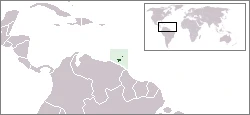
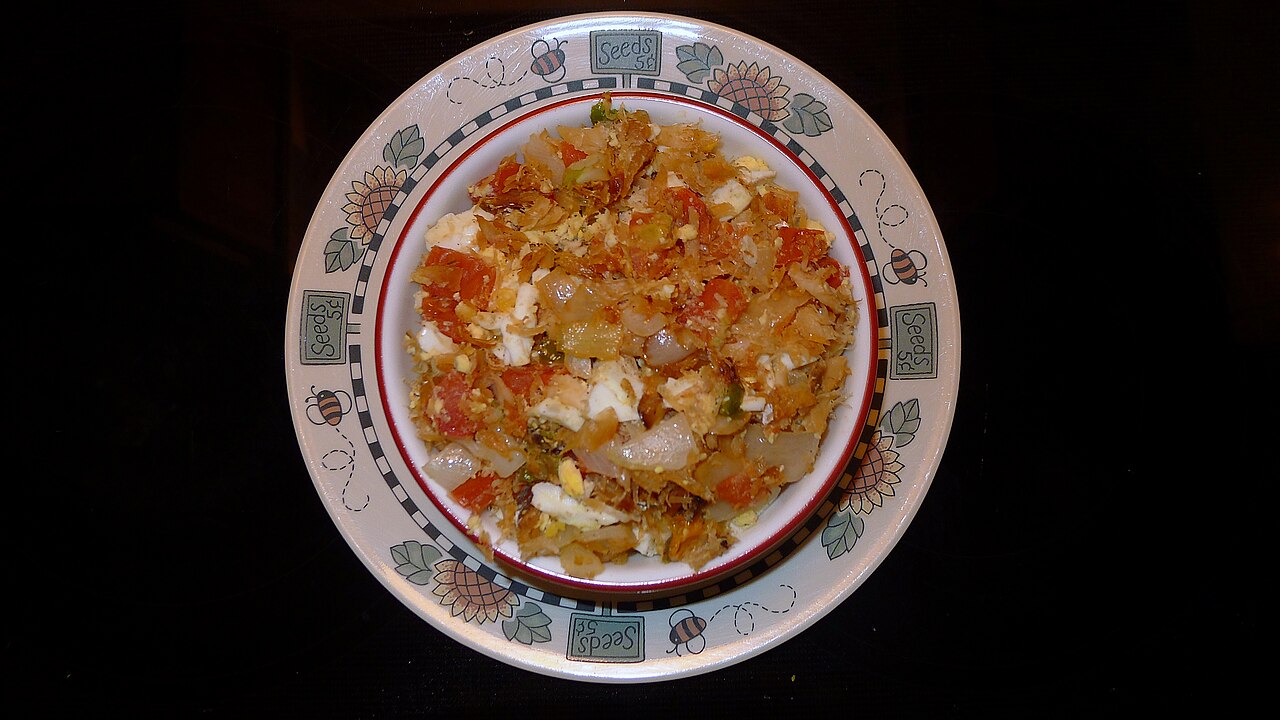
Buljol
A cold, spicy salted cod salad from Trinidad and Tobago.

Kalamazadkhan · CC BY-SA 4.0
Buljol is a cold salad from Trinidad and Tobago, made with chopped salted cod, tomatoes, and chilies. Its name traces back to French, combining *brulé* (burnt) and *gueule* (muzzle). In 19th-century Trinidadian patois, this became *bu'n jaw*, eventually evolving into *buljol*. Despite the name, the dish is served cold; the reference is to its heat from the hot pepper, not its temperature.
During colonial times, buljol was considered a poor man's food. Today, it is commonly eaten for breakfast, often with toast or fried bake. From Trinidad, its use spread to other Caribbean islands and to Trinidadian communities in Canada, Great Britain, and the United States.
To prepare it, the skin and bones of salted cod are removed, then the fish is cooked or repeatedly soaked in fresh water to draw out salt. The cod is shredded and mixed with chopped tomatoes and chilies. Additional ingredients vary by taste, often including onions, bell peppers, and olive oil, as well as garlic, hard-boiled eggs, lemon juice, lettuce, white wine, or various herbs. Sometimes pollock or hake replaces the codfish.
- origin
- Trinidad and Tobago
- type
- Salad dish
- main_ingredient
- Salted cod (or pollock/hake), tomatoes, chilies
- etymology
- French brulé + gueule via Trinidadian patois
- historical_context
- 18th-century Spanish cédula de población (1783) promoted French settlement in Trinidad
- modern_use
- Breakfast ingredient, eaten with toast or fried bake
Lore & Background
In colonial times buljol was considered a poor man's food, but nowadays it is used as a breakfast ingredient, being eaten with toast or fried bake. From Trinidad the use of buljol has spread to other Caribbean islands and Trinidadian communities in English-speaking countries such as Canada, Great Britain and the United States. The skin and bones of the salted cod are removed, then it is cooked or repeatedly soused with cooking water to remove as much of the salt as possible. The fish is then shredded and mixed with chopped tomatoes and chilies. Additional ingredients are added to taste with onions, bell peppers and olive oil being prevalent, but also garlic, hard-boiled eggs, lemon juice, lettuce, white wine and various herbs are used. Instead of codfish sometimes pollock or hake are used.
Reader's Guide
Buljol represents a culinary adaptation that reflects Trinidad's colonial history. The dish's name, derived from French words via local patois, illustrates the linguistic and cultural blending that occurred after the 1783 Spanish cédula de población, which encouraged French planters to settle in Trinidad. Originally a poor man's food, buljol has evolved into a breakfast staple, often served with toast or fried bake. Its spread to Trinidadian communities in Canada, Great Britain, and the United States demonstrates its role as a cultural touchstone for the diaspora. The preparation method—desalting and shredding cod, then mixing with tomatoes, chilies, and optional ingredients—shows resourcefulness in transforming preserved fish into a flavorful cold salad. The dish's spiciness, not its temperature, inspired its name, highlighting the importance of hot pepper in Caribbean cuisine. Buljol's flexibility, allowing substitutions like pollock or hake, and its inclusion of varied additions such as garlic, eggs, or wine, make it a versatile dish that continues to be adapted while retaining its core identity.
Did You Know?
- The name 'buljol' comes from the French words 'brulé' (burnt) and 'gueule' (muzzle), changed through 19th-century Trinidadian patois.
- Despite its name suggesting heat, buljol is served cold; the name refers to its spiciness from hot peppers.
- In colonial times buljol was considered a poor man's food, but it is now a breakfast ingredient eaten with toast or fried bake.
- The 1783 Spanish cédula de población promoted French settlement in Trinidad, influencing the dish's French-derived name.
Gallery
Frequently Asked Questions
What is Buljol?
Buljol is a cold, spicy salad dish that originated in Trinidad and Tobago. It is built around chopped salted cod (or sometimes pollock or hake), fresh tomatoes, and chilies.
Where does the name 'Buljol' come from?
The name traces back to the French words brulé (burnt) and gueule (muzzle), which blended in 19th-century Trinidadian patois as 'bu'n jaw' before settling into today's spelling. The 'burnt' element refers to the chili heat in the dish, not its temperature.
Is Buljol actually hot or served cold?
Despite the fiery-sounding name, buljol is always served cold as a salad. The 'burnt' reference in its etymology points to the spiciness of the chilies, not to any warmth in the dish itself.
What are the main ingredients in Buljol?
The core components are chopped salted cod (with pollock or hake as common substitutes), diced tomatoes, and chilies. It is a straightforward, no-frills preparation that lets those few ingredients shine.
How is Buljol typically eaten in Trinidad and Tobago?
Today it is most commonly enjoyed as a breakfast dish, spread on toast or paired with fried bake. During the colonial era it was regarded as a humble, working-class meal before becoming an everyday staple across the island.
More in Trinidad and Tobago cuisine 1-24
Spotted an error? Know more?
This is a living reference — every entry is fact-audited, and reader corrections feed straight into our audit queue. Suggest an edit · See this site's audit record