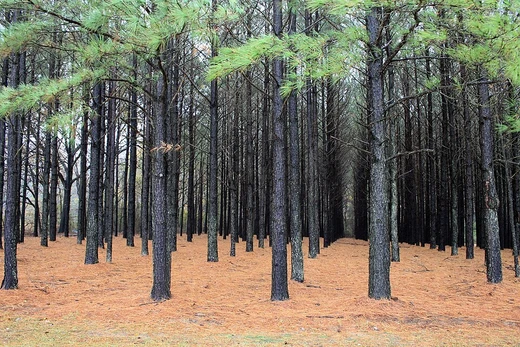
Douglas fir
Tallest tree in the pine family, native to western North America.

Chris Light · CC BY-SA 4.0
The Douglas fir (Pseudotsuga menziesii) is a conifer species in the pine family, Pinaceae, and is the tallest tree in that family. Native to western North America, it is also known as Douglas-fir, Douglas spruce, Oregon pine, and Columbian pine. Despite its common names, it is not a true fir, spruce, pine, or hemlock; the genus name Pseudotsuga means 'false hemlock.' The species typically includes two varieties: coast Douglas-fir and Rocky Mountain Douglas-fir; the Mexican Douglas-fir is often treated as a separate species or subspecies.
Quick Facts
- Genus
- Pseudotsuga
- Species
- menziesii
Facts from the source article.
Lore & Background
The Douglas fir was first documented by Scottish physician and naturalist Archibald Menzies on Vancouver Island in 1791. The common name honors Scottish botanist David Douglas, who later reported the species' extraordinary nature and potential. The specific epithet menziesii commemorates Menzies, a fellow naturalist. The tree has many colloquial names, including Oregon pine, Columbian pine, and false hemlock. In Coast Salish languages, it is called lá:yelhp (Halkomelem) or čəbidac (Lushootseed).
Reader's Guide
The Douglas fir is ecologically and economically significant. It is the dominant tree west of the Cascade Mountains in the Pacific Northwest, forming pure stands and mixed forests with species such as western hemlock, Sitka spruce, and coast redwood. Its thick, corky bark makes it highly fire-resistant. The seeds are a critical food source for small mammals like moles, shrews, and chipmunks, and the tree provides primary habitat for the red tree vole and the spotted owl. The species has been introduced for forestry in Europe, Argentina, Chile, and New Zealand, where it is also considered invasive. Its massive genome was sequenced in 2017, revealing specialized photosynthetic genes. Historical specimens exceeding 120 m in height, such as the Lynn Valley Tree and the Nooksack Giant, would have made it the tallest tree species on Earth.
Did You Know?
- The Douglas fir is not a true fir, spruce, pine, or hemlock; its genus name Pseudotsuga means 'false hemlock'.
- Historical coast Douglas-firs exceeded 120 m (390 ft) in height, including the Lynn Valley Tree and the Nooksack Giant.
- The thick bark of mature Douglas firs can grow up to 36 cm (14 in) thick, making it one of the most fire-resistant trees in the Pacific Northwest.
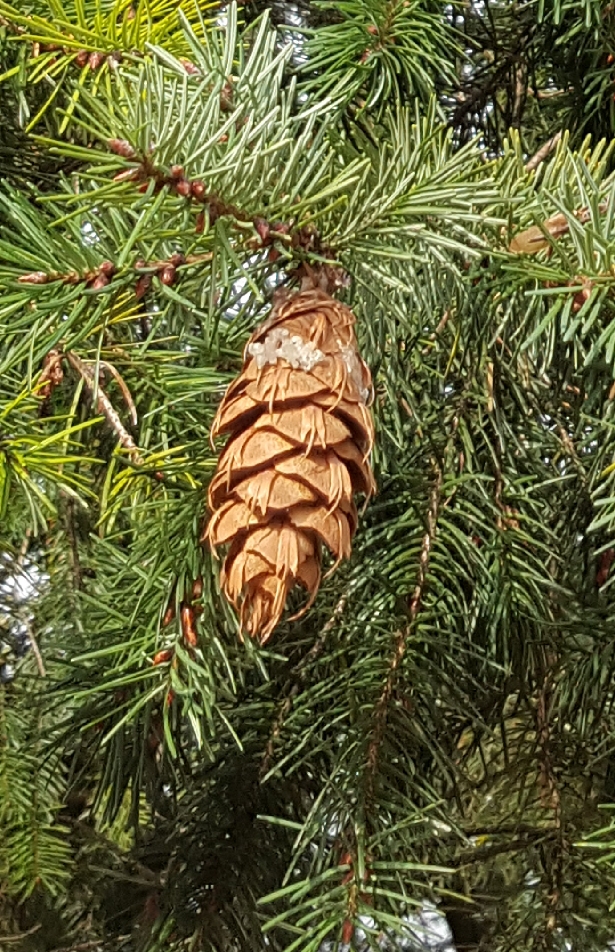
- The female cones have distinctive three-pointed bracts that resemble the back half of a mouse.
A Name That Misleads: Taxonomy and Naming History
The Douglas fir carries a name that misleads nearly everyone who encounters it. Despite being called a fir, a spruce, or a pine in various regions, it belongs to none of those genera. Its scientific genus, Pseudotsuga, literally translates to "false hemlock," a nod to its superficial resemblance to Tsuga species. The common name honors David Douglas, a Scottish botanist who first reported on the species' remarkable qualities, while the specific epithet menziesii commemorates Archibald Menzies, a Scottish physician who documented the tree on Vancouver Island in 1791. The naming confusion has spawned a long list of colloquial alternatives—Oregon pine, British Columbian pine, Puget Sound pine, Douglas spruce, false hemlock, red fir, and red pine—each of which risks conflation with entirely different species. To reduce ambiguity, many botanists write the name with a hyphen as "Douglas-fir." Indigenous Coast Salish peoples have their own designations: lá:yelhp in Halkomelem and čəbidac in Lushootseed.
Giants of the Canopy: Size, Form, and Distinctive Features
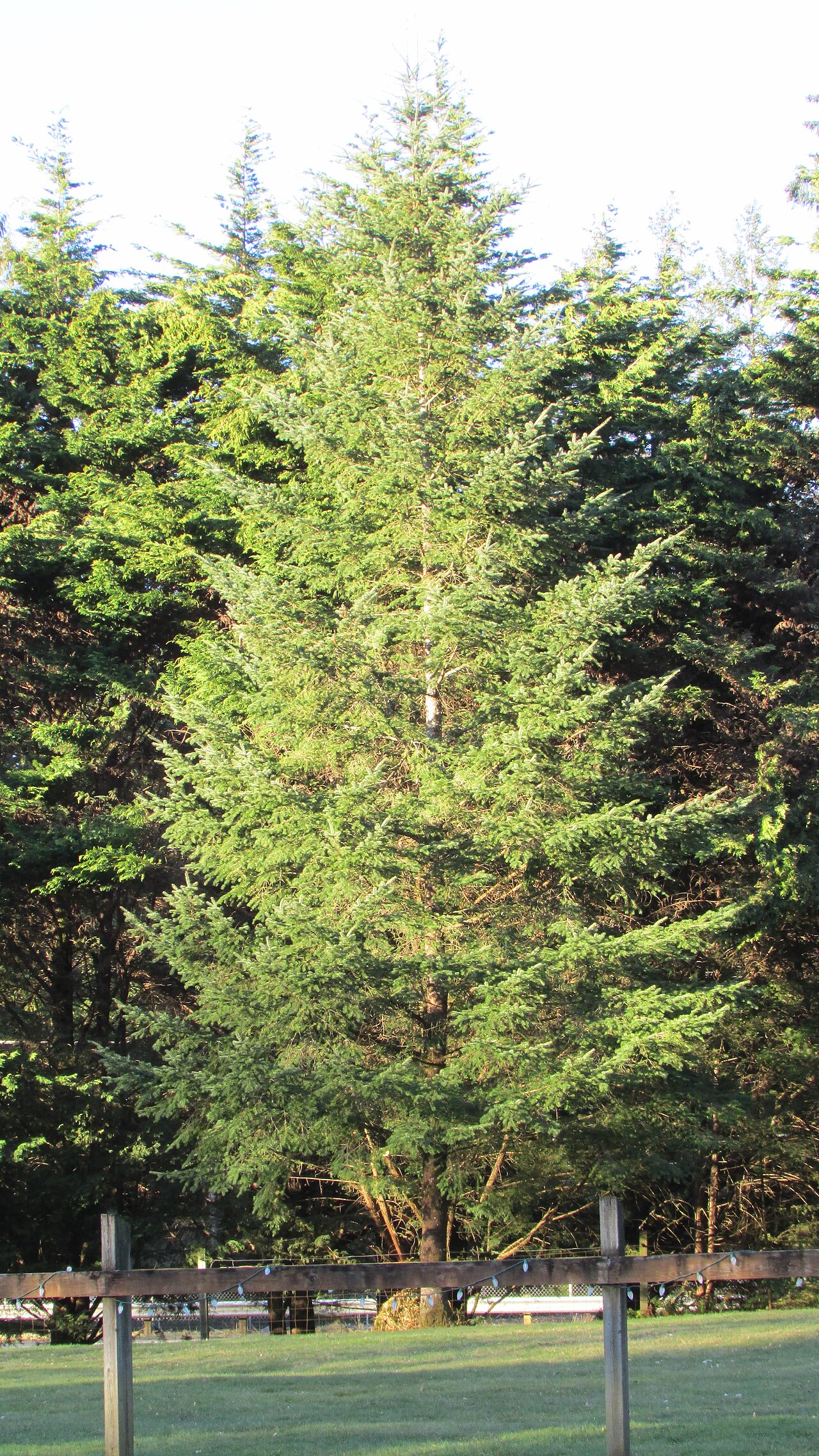
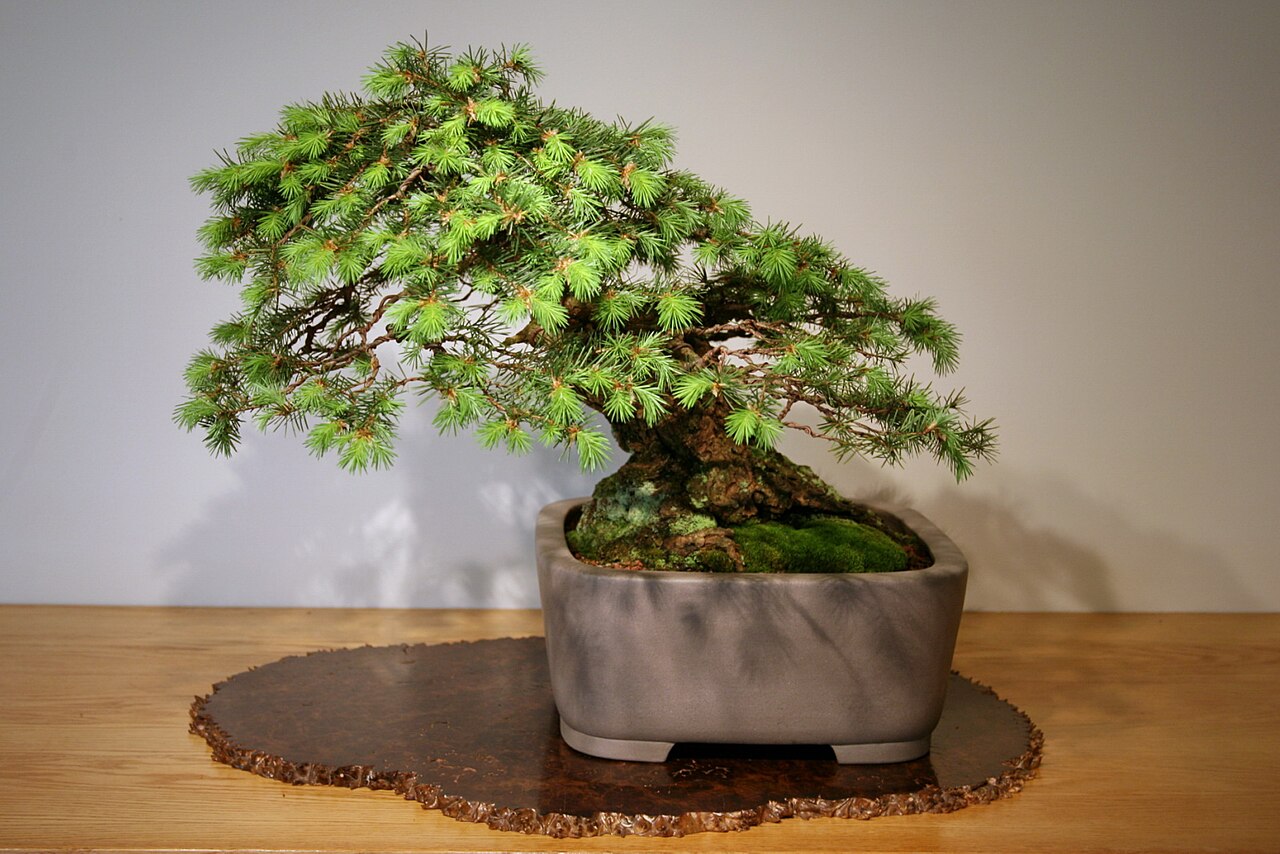
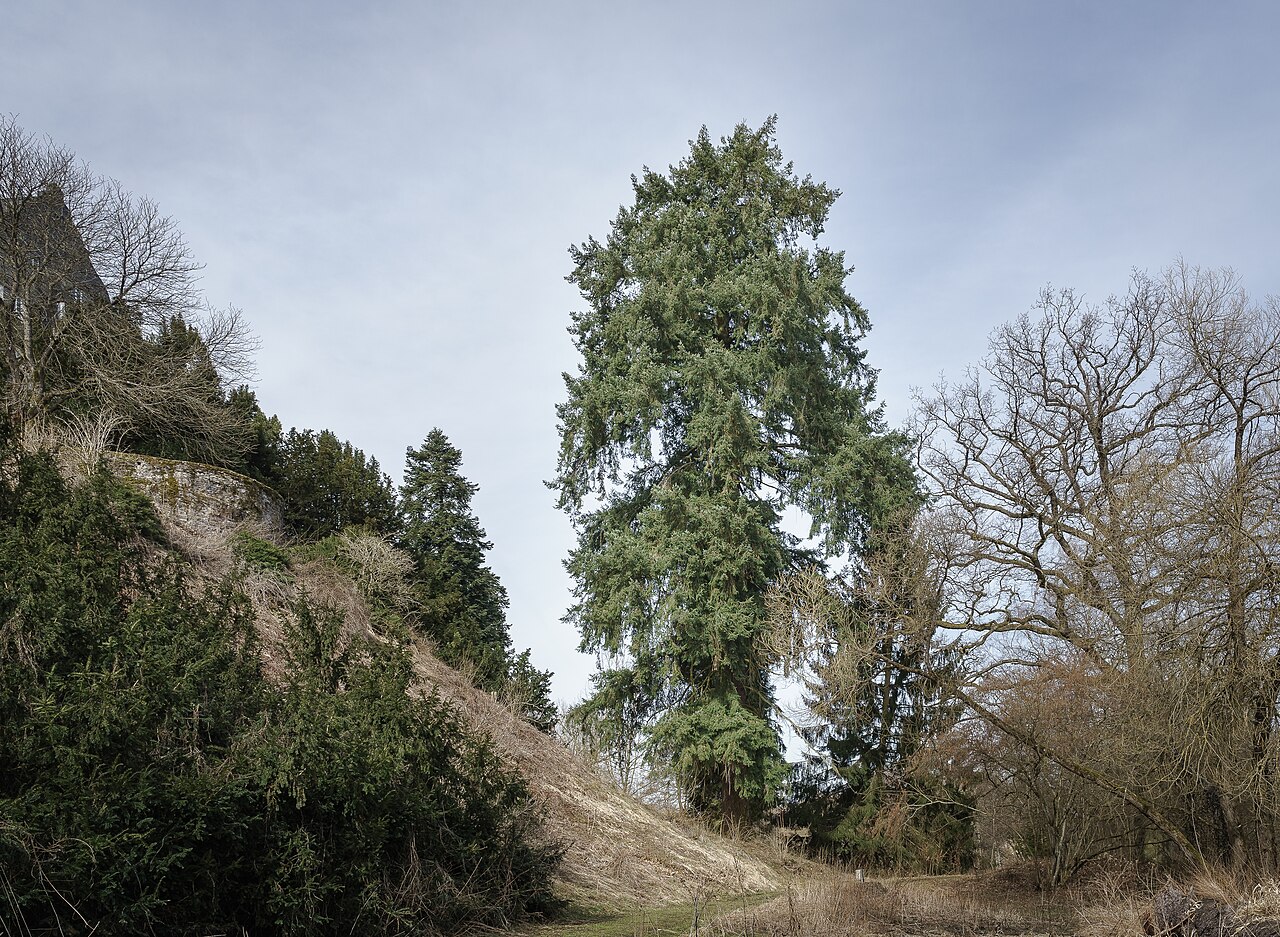
Douglas firs span a remarkable size range, from medium-sized trees to giants reaching 100 metres, with historical records of coast specimens exceeding 120 metres—heights that would make them the tallest tree species on Earth if still living. The Lynn Valley Tree and the Nooksack Giant are named examples of such extraordinary individuals. Trunk diameters commonly hit 2.4 metres, though some approach 5 metres. The foliage consists of flat, soft needles 1.5 to 4 centimetres long that wrap completely around branches, a useful field identification trait. In dense stands, lower branches die off, pushing the crown as high as 34 metres above the ground. The bark tells a story of age: thin, smooth, and gray on young trees with resin blisters, then thickening to a corky 36 centimetres with deep vertical fissures on mature specimens over 80 years old. The female cones are perhaps the most distinctive feature—pendulous, 6 to 10 centimetres long, with three-pointed bracts protruding above each scale, often described as resembling the hindquarters of a mouse with two feet and a tail.
From the Pacific Coast to Oaxaca: Range and Global Spread
The species occupies three distinct varieties across western North America. Coast Douglas-fir stretches from west-central British Columbia down through the Cascades to Central California, reaching as far south as the Purisima Hills in Santa Barbara County and the Yosemite region of the Sierra Nevada. It grows from sea level to elevations exceeding 2,100 metres in some inland locations. Rocky Mountain Douglas-fir occupies the interior, intergrading with the coast variety in the Cascades and extending southeast to the Mexican border. Mexican Douglas-fir ranges as far south as Oaxaca. Fossil evidence, including wood and pollen, places Pseudotsuga in Miocene and Pliocene deposits across Europe. The species has also been naturalised in Europe, Argentina, and Chile—where it is called Pino Oregón. In New Zealand, introduced in the twentieth century for its timber, it now occupies a dual role: one of the most common plantation lumber species alongside Radiata pine, yet simultaneously classified as an invasive wilding conifer subject to active control measures.
Centuries of Growth and the Science of Survival
Coast Douglas-firs are among the longest-lived conifers in North America, with the largest individuals regularly surpassing 500 years and the oldest known specimens exceeding 1,300 years. Rocky Mountain varieties are somewhat shorter-lived, typically not passing 400 years. The species shows considerable morphological plasticity in response to its environment: on drier sites, coast varieties develop deeper taproots, while Rocky Mountain Douglas-fir adapts to conditions ranging from interior temperate rainforest in British Columbia to drier, higher-elevation habitats. The thick, layered bark of mature trees—up to 36 centimetres thick with deep fissures—makes the Douglas-fir one of the most fire-resistant native trees in the Pacific Northwest. In 2017, the PineRefSeq consortium completed a genome sequence of the species, revealing a specialized photosynthetic apparatus within its light-harvesting complex of genes. One of the last remaining old-growth conifer stands, the Mattole Watershed in California, remains under threat from logging, underscoring the species' ecological and cultural significance.
Gallery
Frequently Asked Questions
What is Douglas fir, exactly?
Douglas fir is a conifer in the pine family (Pinaceae) native to western North America. Despite the name, it belongs to the genus Pseudotsuga, which translates to 'false hemlock,' so it is not a true fir, spruce, pine, or hemlock at all.
How tall and big can Douglas fir get?
Historical specimens have surpassed 120 metres (about 390 feet), making it the tallest member of the entire pine family. Its trunk can reach nearly 5 metres (16 feet) in diameter.
Where does Douglas fir naturally grow?
It is indigenous to western North America, where it appears in two main varieties: coast Douglas-fir and Rocky Mountain Douglas-fir. A third form, the Mexican Douglas-fir, is sometimes treated as a separate species or subspecies.
Why is it called 'Douglas fir' if it isn't a real fir?
The common name stuck even though the genus Pseudotsuga literally means 'false hemlock,' placing it taxonomically apart from true firs, spruces, and pines. It has also been called Douglas spruce, Oregon pine, and Columbian pine, all of which are equally a misnomer.
How long can a Douglas fir live?
Coast-variety individuals have been documented surviving beyond 1,300 years, making it one of the longest-lived conifers in North America.
More in Trees & Timber 1-19
Spotted an error? Know more?
Reader corrections go straight into our review queue. Suggest an edit · How this site is sourced