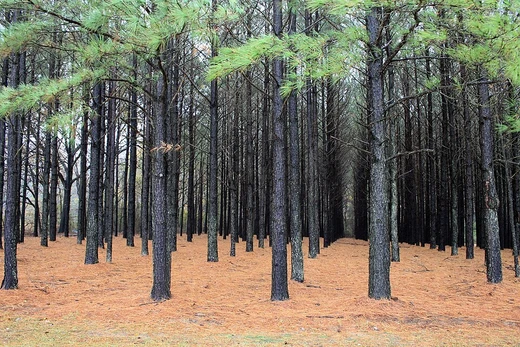
Corylus maxima
A Eurasian hazel species producing edible nuts in tubular husks.

Hladac · CC BY-SA 4.0
Corylus maxima, called the filbert, is a hazel species from the birch family. It grows naturally in southeastern Europe and southwestern Asia, from the Balkans to Ordu in Turkey.
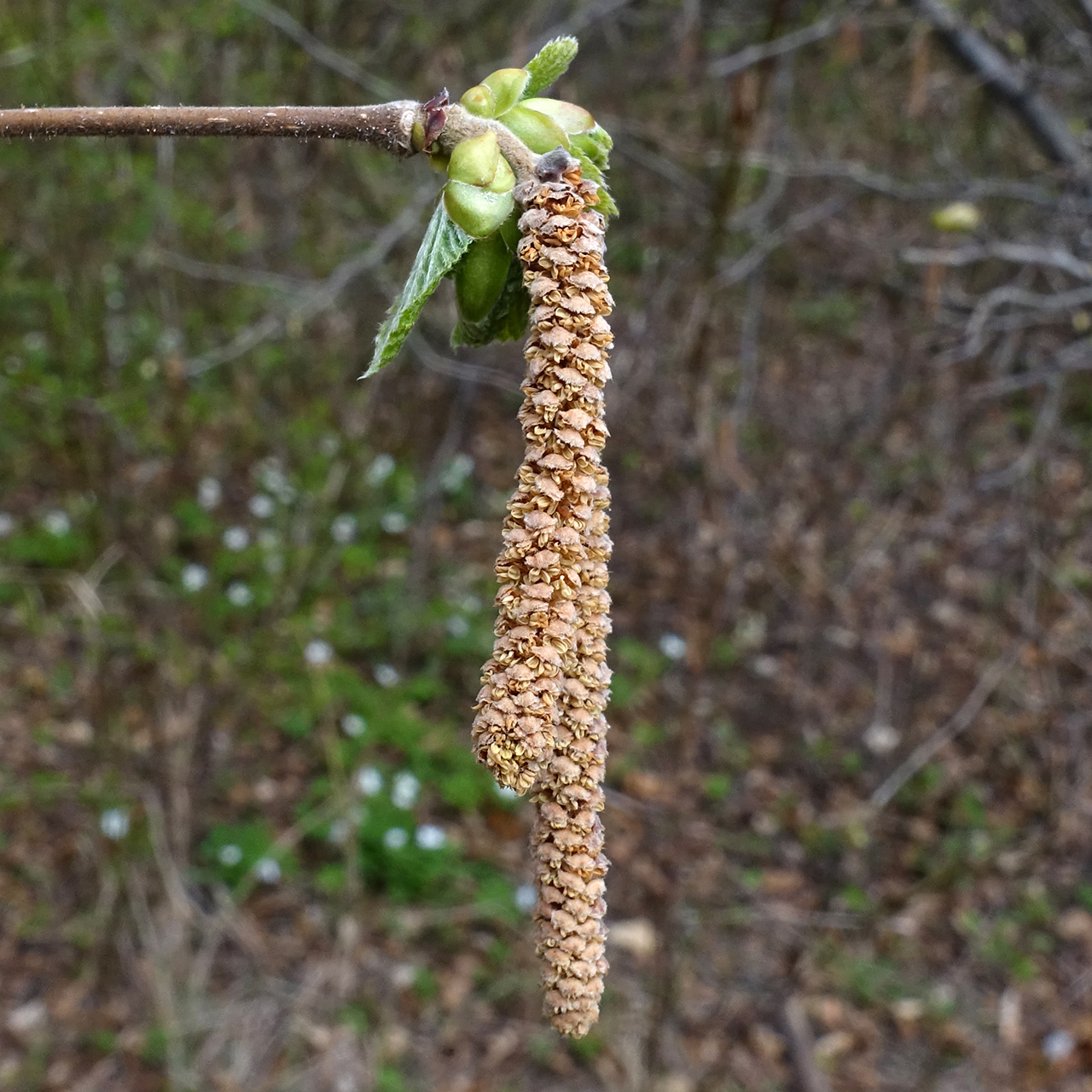
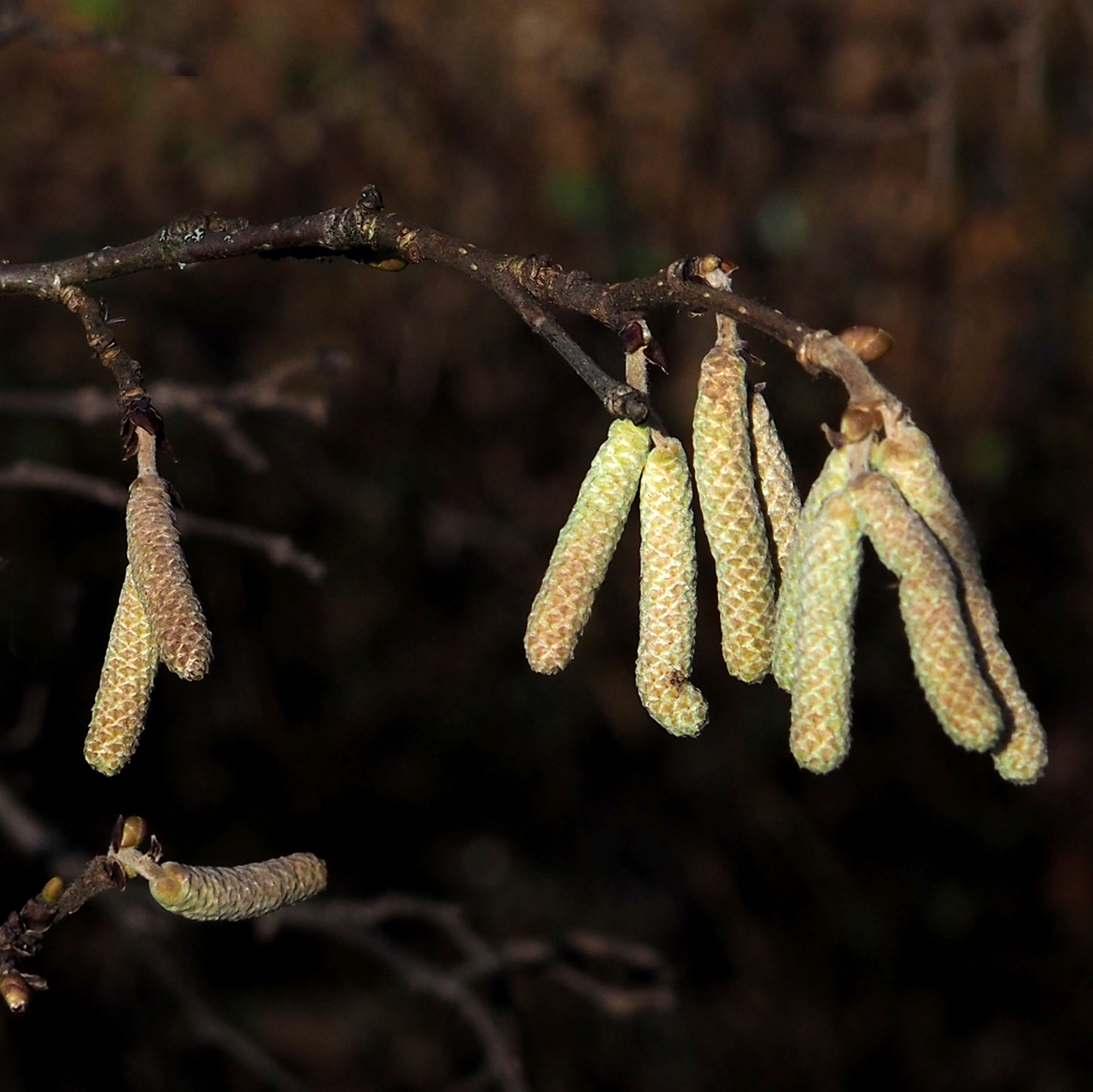
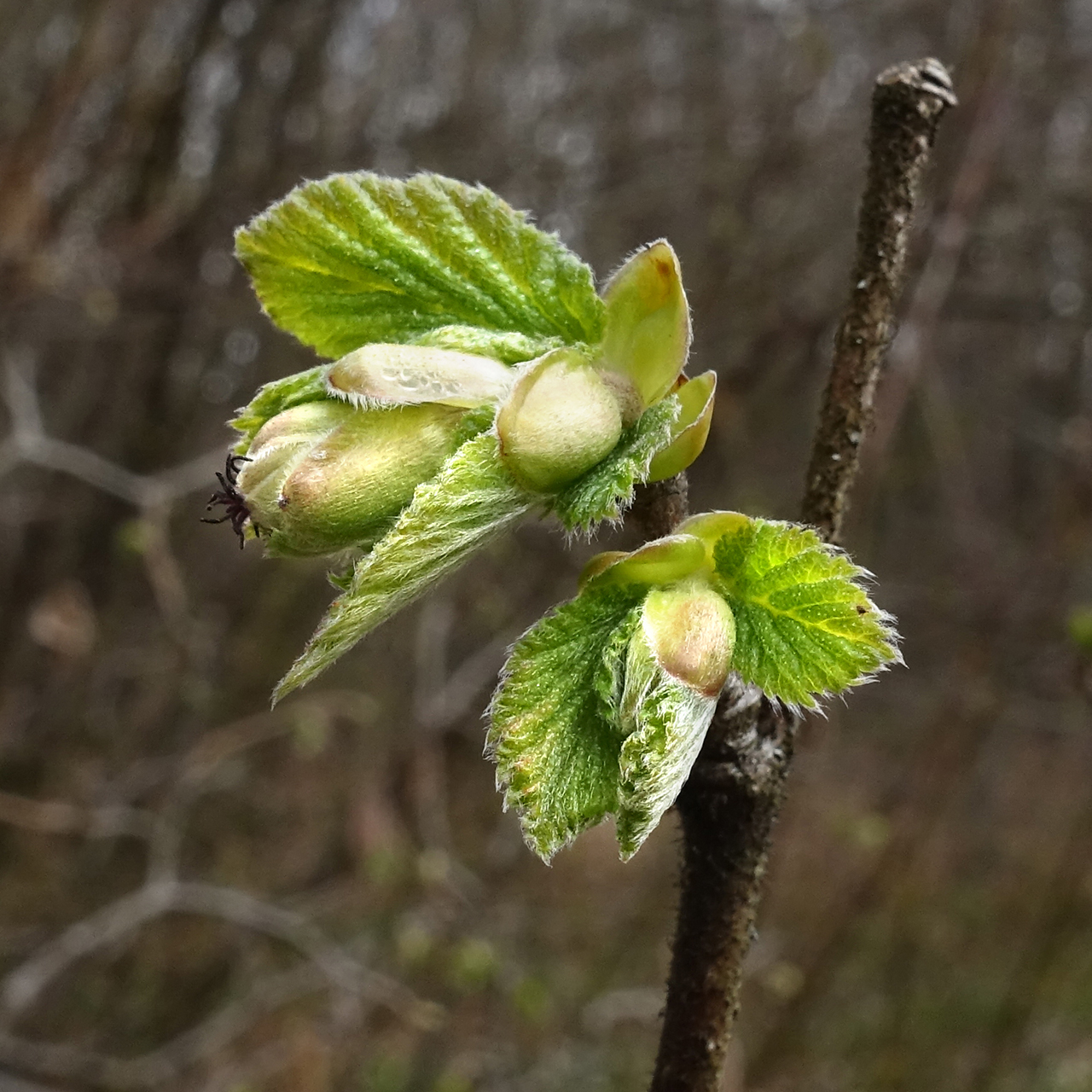
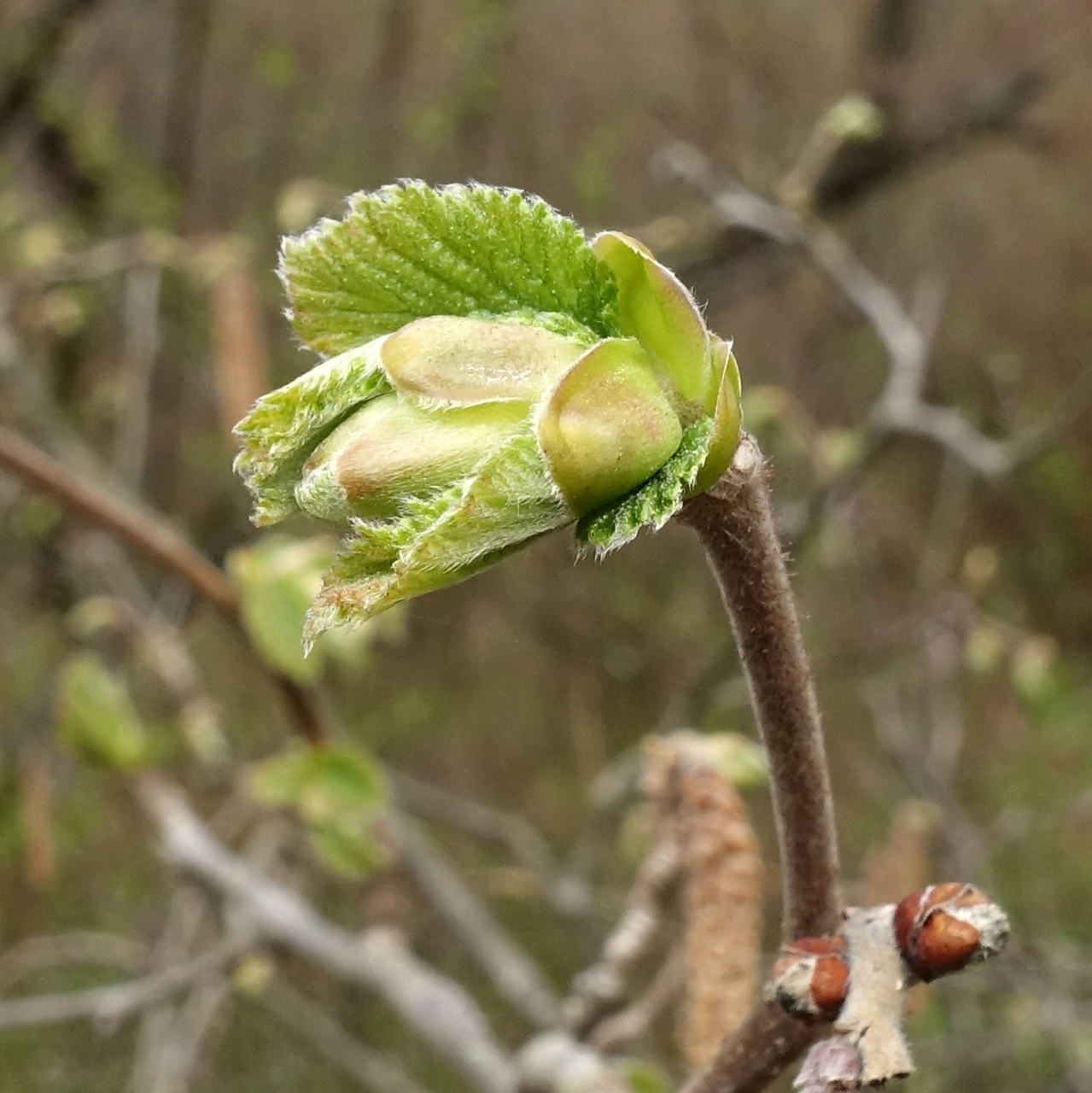
This deciduous shrub reaches 6–10 meters tall, with stems up to 20 centimeters thick. Its rounded leaves are 5–12 cm long and 4–10 cm wide, with coarsely double-serrated edges. The flowers are wind-pollinated catkins that appear in late winter. Male catkins are pale yellow and 5–10 cm long, while female catkins are bright red and only 1–3 mm long. The nuts grow in clusters of one to five, each nut 1.5–2.5 cm long and fully enclosed in a tubular husk 3–5 cm long.
The filbert closely resembles the common hazel (Corylus avellana), but its nut is more completely covered by the tubular husk. This same feature appears in North America's beaked hazel (C. cornuta) and eastern Asia's Asian beaked hazel (C. sieboldiana).
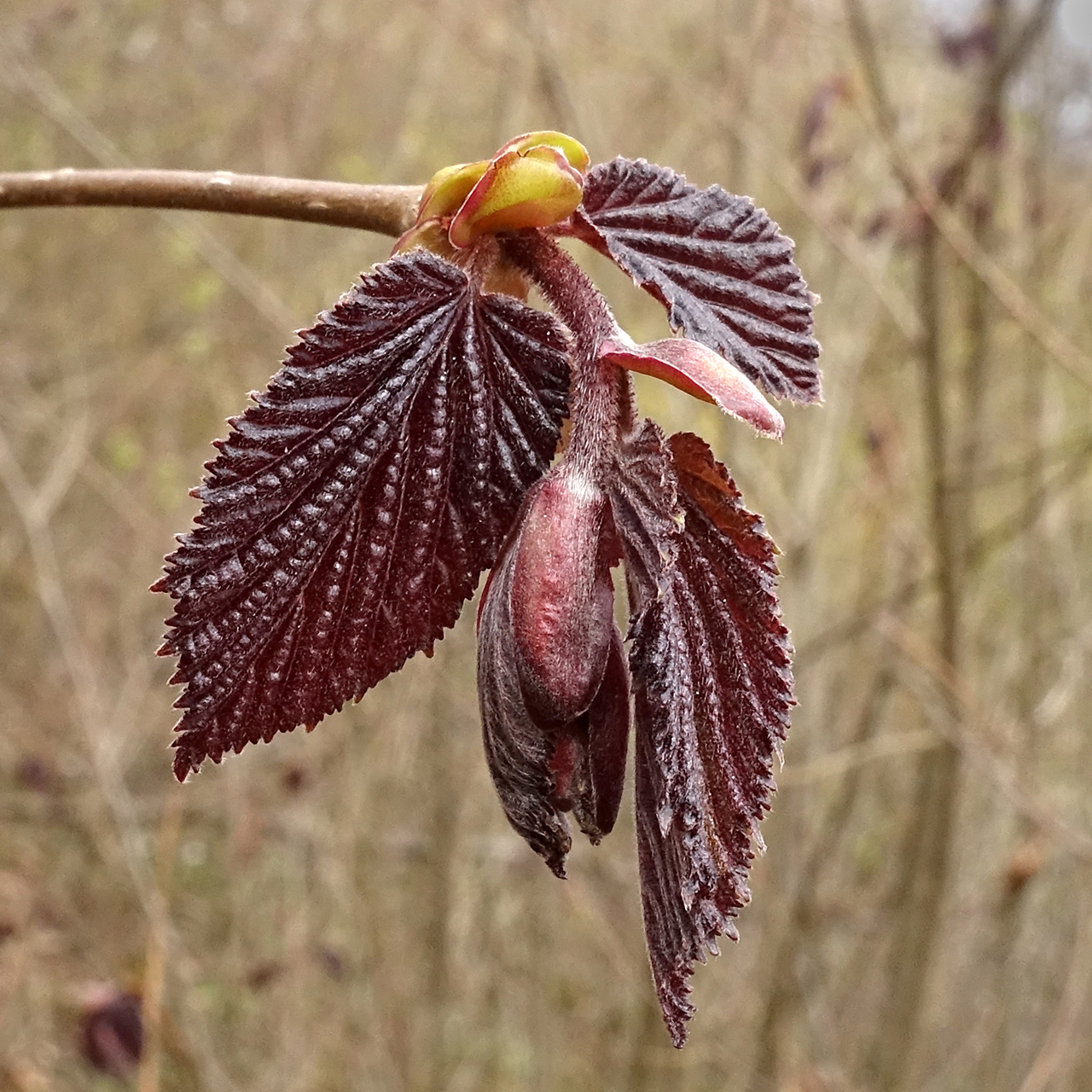
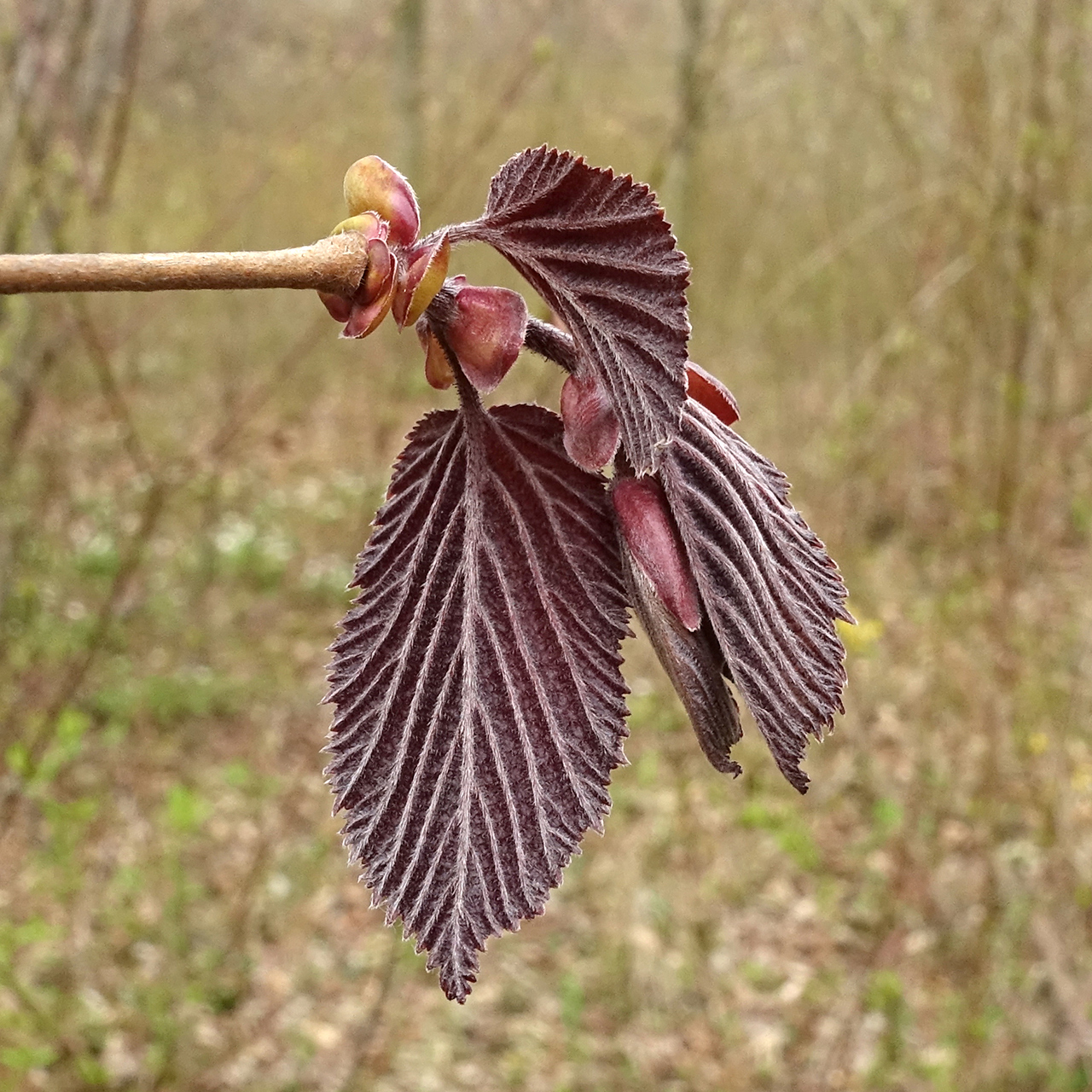
The edible nut tastes very similar to the hazelnut (cobnut). In the United States, filberts are mainly used as large filler—along with peanuts as small filler—in most mixed-nut containers. They are sometimes grown in orchards for their nuts, though much less often than common hazel. The purple-leaved cultivar 'Purpurea' is a popular ornamental shrub in gardens.
In Oregon, "filbert" is the local term for commercial hazelnuts in general. This usage has declined partly because Oregon growers rebranded their product for global markets and to avoid confusion. The name "filbert" may come from Norman French, possibly linked to Saint Philibert, whose feast day (20 August, old style) falls when the nuts ripen.
Quick Facts
- Genus
- Corylus
- Species
- maxima
Facts from the source article.
Lore & Background
Corylus maxima is a deciduous shrub growing 6–10 meters tall, with stems up to 20 centimeters thick. Its rounded leaves are 5–12 cm long and 4–10 cm broad, with coarsely double-serrated margins. The flowers are wind-pollinated catkins: male catkins are pale yellow and 5–10 cm long, while female catkins are bright red and only 1–3 mm long. The fruit is a nut produced in clusters of 1–5, each nut 1.5–2.5 cm long and fully enclosed in a tubular involucre (husk) 3–5 cm long.
Reader's Guide
Corylus maxima is significant as a source of edible nuts, very similar to the hazelnut (cobnut). In the United States, its main use is as large filler in mixed nuts, alongside peanuts as small filler. It is sometimes grown in orchards for nuts, though much less often than the common hazel (Corylus avellana). The purple-leaved cultivar 'Purpurea' is a popular ornamental shrub in gardens. The species is distinguished from the common hazel by having the nut more fully enclosed by the tubular involucre, a feature shared with the beaked hazel of North America and the Asian beaked hazel. In Oregon, the term 'filbert' is used for commercial hazelnuts in general, though this usage has faded partly due to growers' branding efforts to appeal to global markets. The etymology of 'filbert' may trace to Norman French, possibly linked to Saint Philibert's feast day (20 August old style), when the nuts were mature.
Taxonomic Position & Morphological Distinctiveness
Corylus maxima, widely known as the filbert, occupies a defined niche within the hazel genus. Native to southeastern Europe and southwest Asia, it is classified within the birch family Betulaceae, although some taxonomists prefer to segregate hazels and their close relatives into a separate family, Corylaceae. Morphologically, the filbert belongs to a group of multiple-stemmed, suckering shrubs capable of reaching heights of up to twelve metres. What distinguishes it from its congeners is the architecture of its fruit envelope: the involucre stretches to at least twice the length of the enclosed nut, producing a pronounced beak-like projection. This contrasts sharply with species such as the American hazel or common hazel, whose husks roughly match the kernel in length, and with the spiny-involucred tree species that grow as single-stemmed specimens up to thirty-five metres tall. The genus as a whole encompasses roughly fourteen to eighteen accepted species, with ongoing taxonomic disagreement over which eastern Asian taxa should be recognised.
Reproductive Strategy & Pollen Ecology
The filbert reproduces through a monoecious flowering system, bearing both male and female structures on the same individual. These flowers emerge very early in spring, well before any leaf development. The male catkins are pale yellow and stretch between five and twelve centimetres in length; in the closely related common hazel, each catkin carries one hundred fifty to two hundred individual flowers. Collectively, these structures generate pollen volumes reaching as high as four thousand nine hundred thirty-three grains per square metre. The female flowers, by contrast, are diminutive and largely concealed within buds, with only their bright-red styles—measuring just one to three millimetres—visible to the eye. Under six hundred times magnification, hazel pollen reveals a distinctive granular exine surface punctuated by three conspicuous pores, a diagnostic feature useful for identification. Practically, this early-season pollen is a well-known trigger for allergic reactions during late winter and early spring, affecting many individuals across temperate regions.
Cultivar Development & Nut Production
While the common hazel dominates commercial nut cultivation, Corylus maxima holds the second position in agricultural importance for its edible kernels. The filbert's nuts measure between one and two and a half centimetres in length and one to two centimetres in diameter, encased in that characteristic long beaked husk. Kernel yield varies considerably across cultivars, ranging from thirty-three point two to forty-nine point five percent of total fruit weight, with the highest proportions observed in varieties cultivated in proximity to the Mediterranean Sea. Beyond food production, the filbert has been shaped by human selection into ornamental forms. The cultivar Corylus maxima 'Purpurea' is grown in gardens specifically for its striking purple foliage, joining other decorative selections such as corkscrew-stemmed and weeping forms derived from the common hazel. These ornamental uses, combined with the species' role in hedges and garden plantings, underscore its dual identity as both a productive crop and an aesthetic landscape element.
Ecological Web & Agricultural Vulnerability
The filbert sits at the centre of a dense web of ecological interactions. At least twenty-one fungal species maintain mutualistic relationships with hazel trees, including rare lichens of the genus Graphidion that depend on the genus for survival. In the United Kingdom, five moth species have specialised to feed exclusively on hazel, and the larvae of various Lepidoptera species, such as Eriocrania chrysolepidella, rely on hazel foliage as their sole food source. Among vertebrates, red deer, dormice, and red squirrels all consume hazelnuts as part of their diets. However, the genus also faces significant agricultural threats. The aphid Myzocallis coryli, a European species that uses hazel as its exclusive host plant, was introduced to the United States and subsequently caused major damage to hazel farms in Oregon. This vulnerability highlights how a single specialised pest can disrupt the economic value of a species that has been cultivated for millennia across its native range.
Gallery
Frequently Asked Questions
What is Corylus maxima?
Corylus maxima, commonly called the filbert, is a deciduous hazel species in the birch family that grows as a multi-stemmed shrub reaching 6 to 10 meters tall with stems up to 20 centimeters thick.
Where is Corylus maxima native?
Its natural range stretches across southeastern Europe and southwestern Asia, from the Balkan Peninsula through to the Ordu region in Turkey.
What do Corylus maxima's flowers look like?
In late winter the shrub sheds wind-pollinated catkins: pale-yellow male catkins 5–10 cm long and tiny bright-red female catkins only 1–3 mm long.
What are the edible nuts of Corylus maxima like?
The filbert bears clusters of one to five nuts, each 1.5–2.5 cm long, wrapped in tubular husks and closely resembling the familiar hazelnut in both size and flavor.
Is there a notable ornamental form of Corylus maxima?
Yes—the 'Purpurea' cultivar is widely planted in gardens for its striking purple foliage, making it a popular landscape choice distinct from the standard green-leaved type.
More in Trees & Timber 1-19
Spotted an error? Know more?
Reader corrections go straight into our review queue. Suggest an edit · How this site is sourced