Cryptomeria
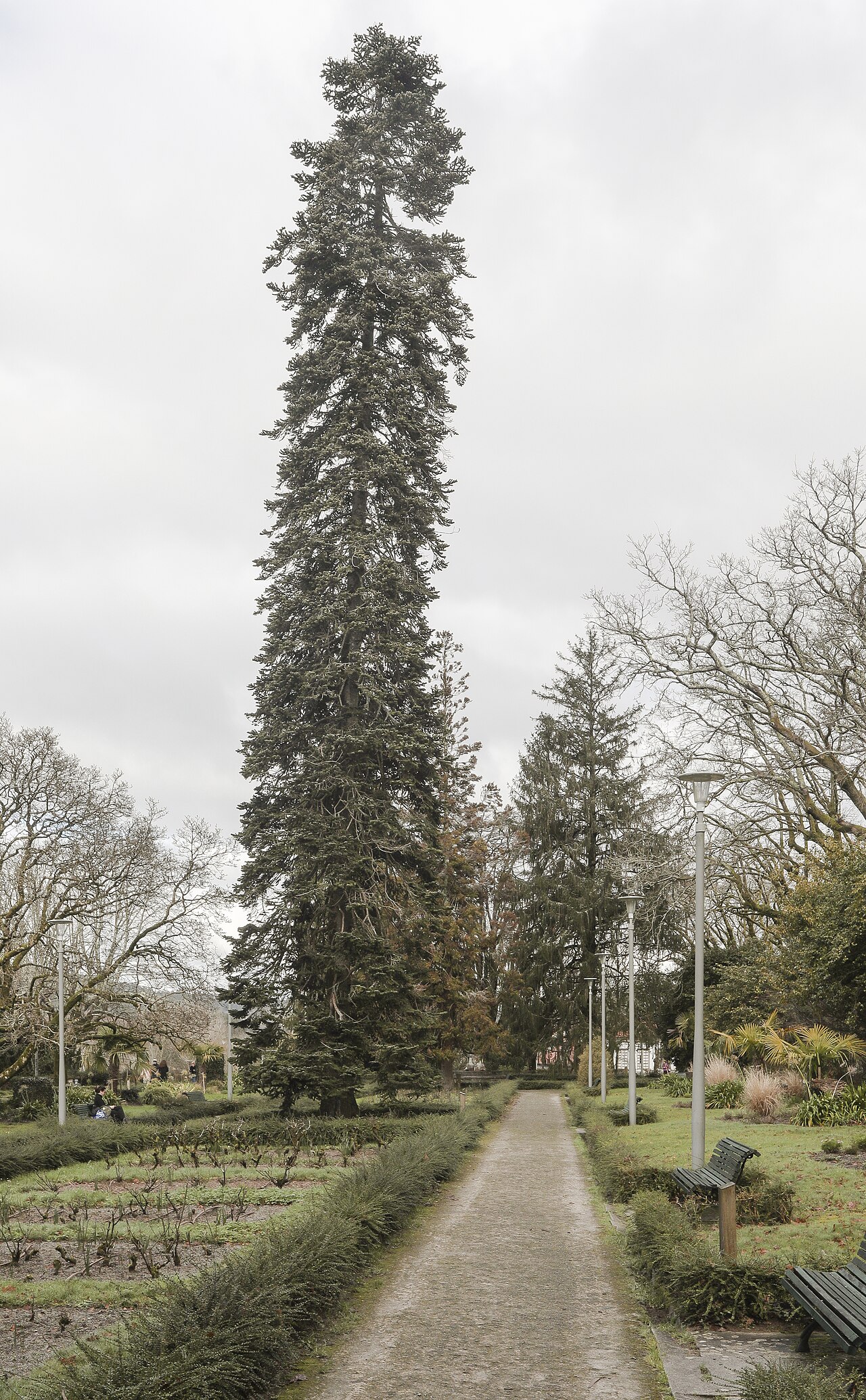
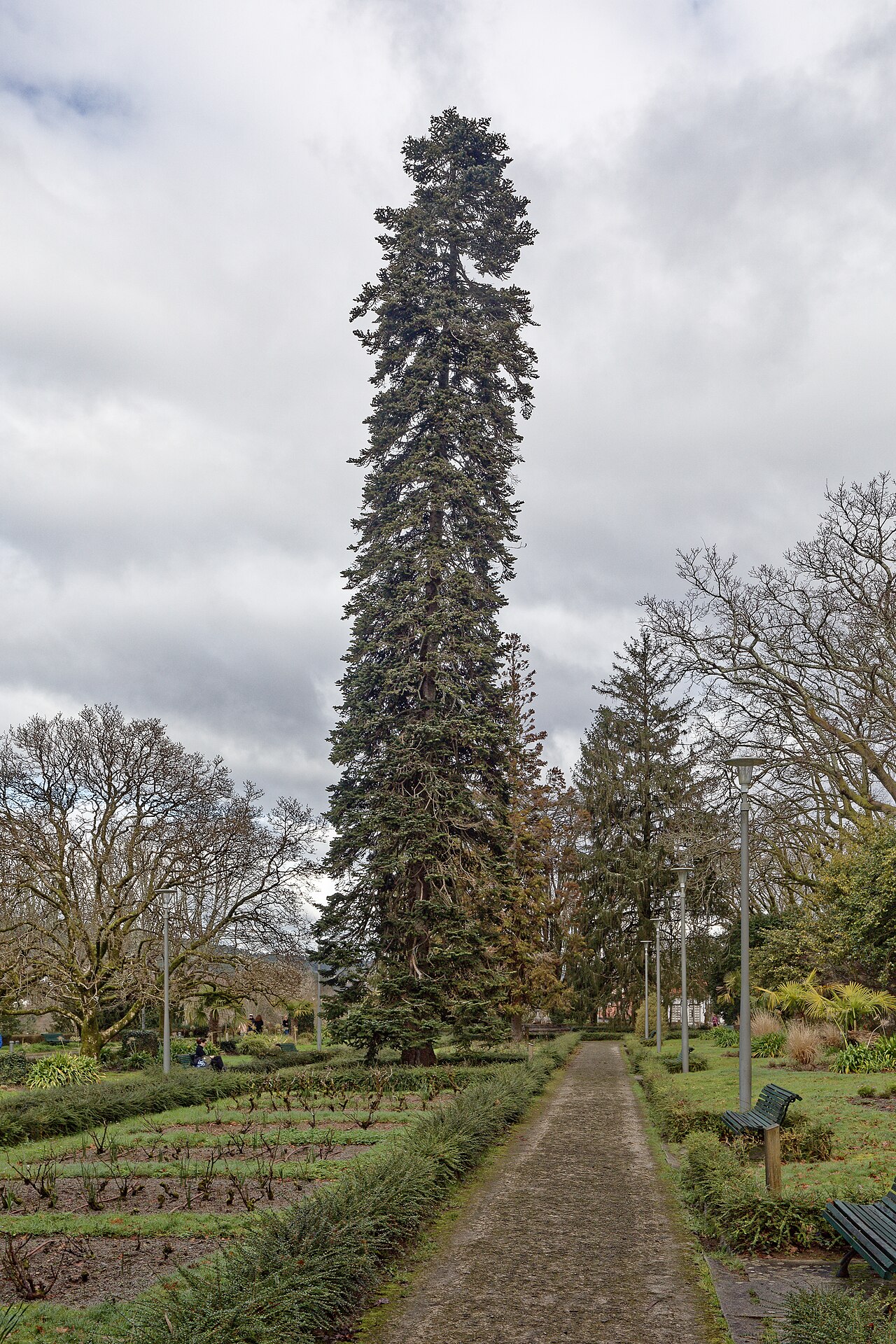
The hidden treasure of Japan: Cryptomeria japonica, the majestic Japanese cedar.

Luis Miguel Bugallo Sánchez · CC BY-SA 4.0
Cryptomeria (literally "hidden parts") is a monotypic genus of conifer in the cypress family Cupressaceae. It includes only one species, Cryptomeria japonica (syn. Cupressus japonica L.f.). It is considered to be endemic to Japan, where it is known as sugi. The tree is also called Japanese cedar or Japanese redwood in English. It has been extensively introduced, and cultivated for wood production on the Azores and elsewhere.
Quick Facts
- Genus
- Cryptomeria
- Species
- japonica
Facts from the source article.
Lore & Background
Prior to 1916, the sylvics expert E.H. Wilson measured a sugi at the village called "Sugi", Tosa Prefecture, Shikoku Island, Japan, which measured 50 m in height, and 25 m in girth at breast height. Sugi is commonly planted around temples and shrines, with many hugely impressive trees planted centuries ago. Sargent (1894; The Forest Flora of Japan) recorded the instance of a daimyō (feudal lord) who was too poor to donate a stone lantern at the funeral of the shōgun Tokugawa Ieyasu (1543–1616) at Nikkō Tōshō-gū, but requested instead to be allowed to plant an avenue of sugi, so that "future visitors might be protected from the heat of the sun." The offer was accepted; the Cedar Avenue of Nikkō, which still exists, is over 65 km long, and "has not its equal in stately grandeur." A large cryptomeria tree located on Yakushima, a UNESCO World Heritage Site, in Japan, is the oldest and largest among the old-growth cryptomeria trees on the island, and is estimated to be between 2,170 and 7,200 years old.
Reader's Guide
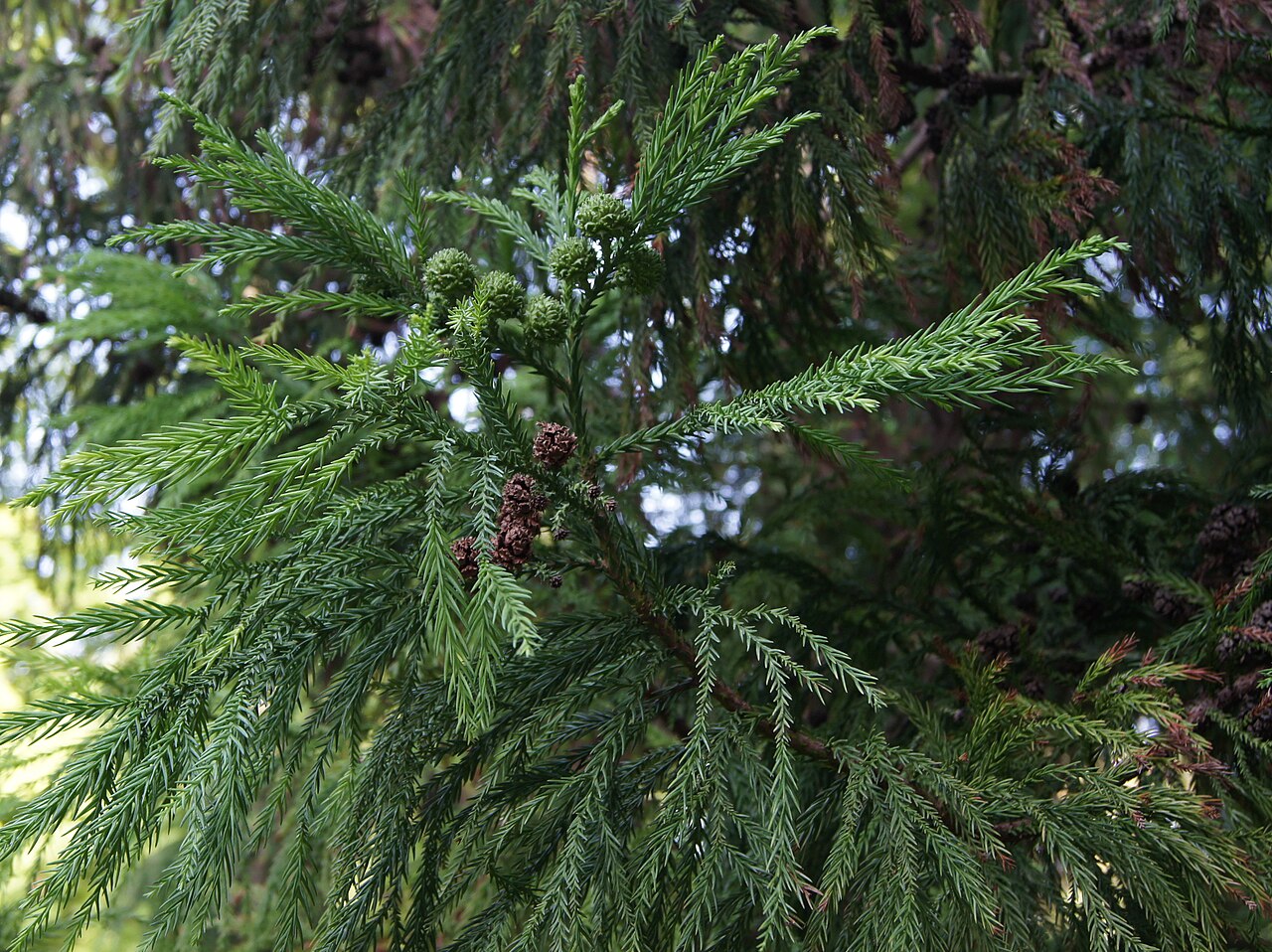
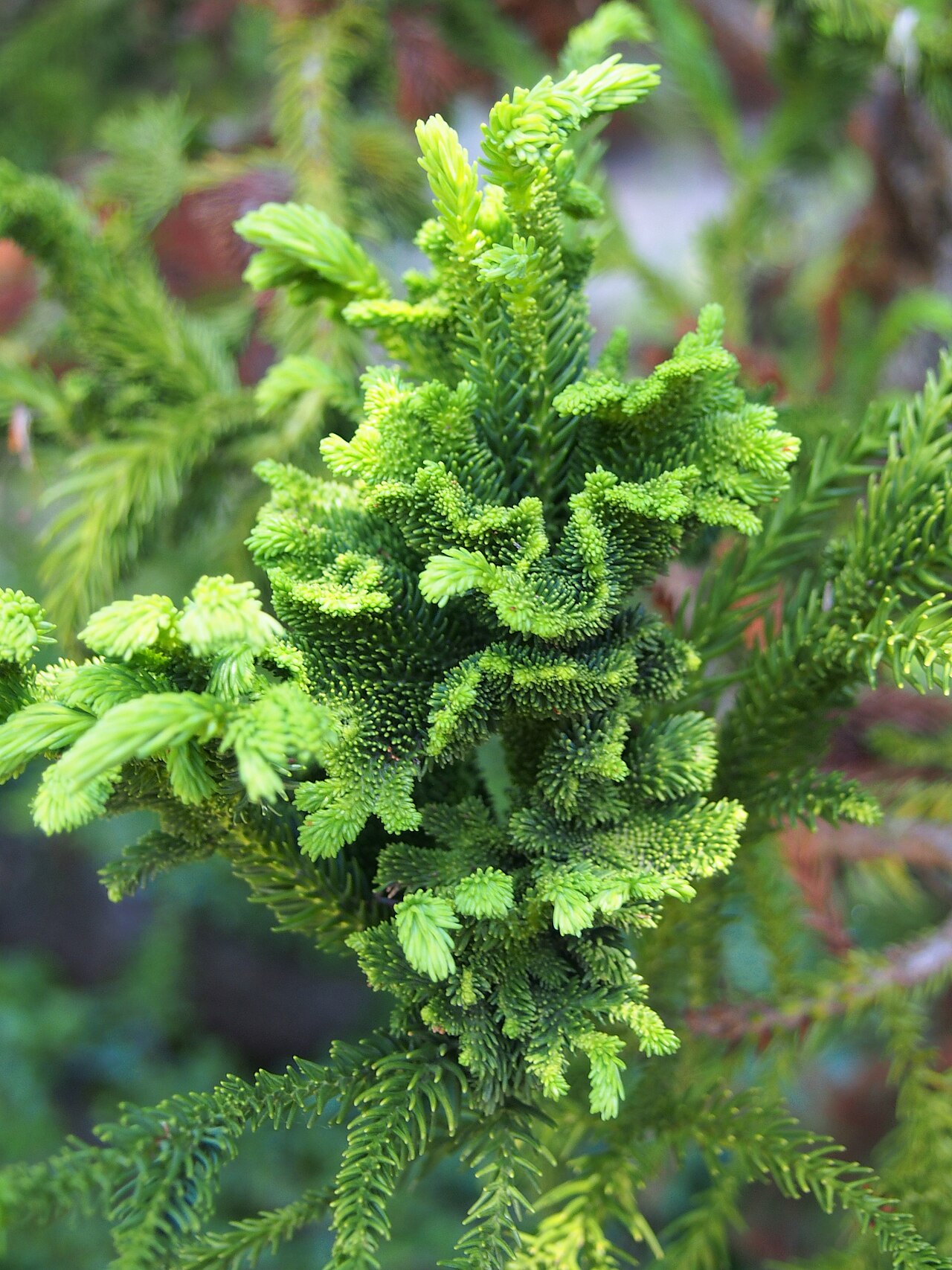
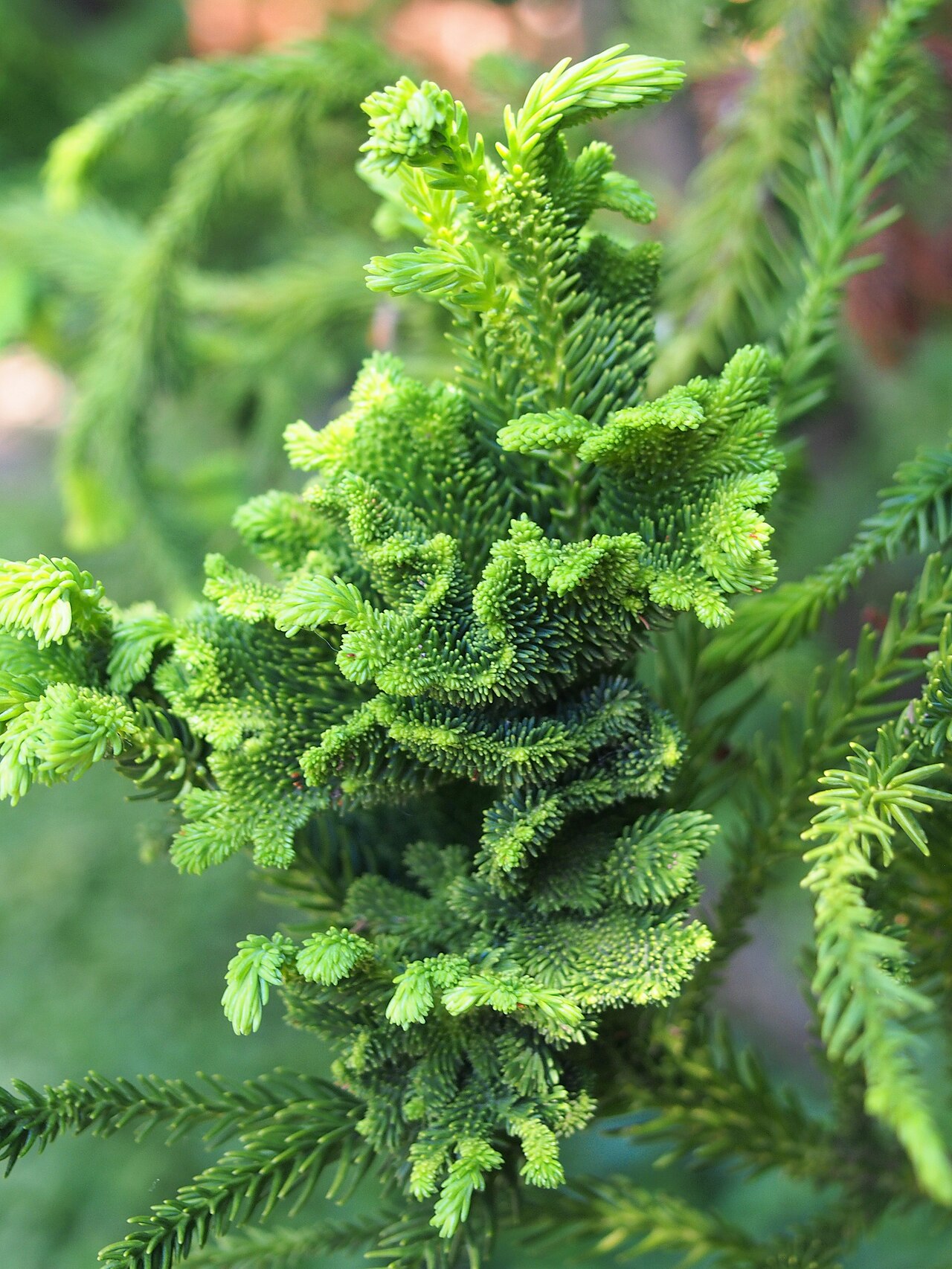
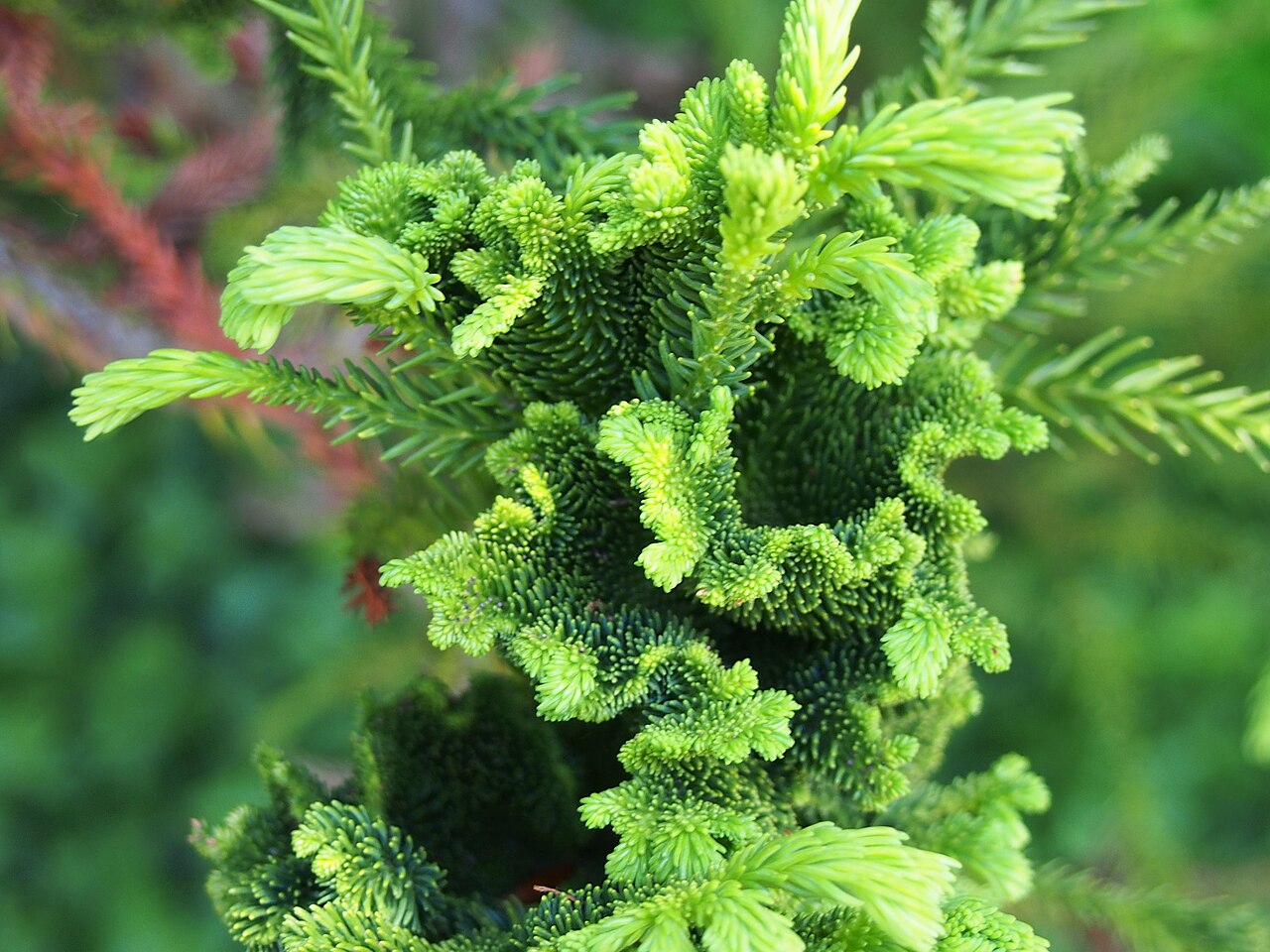
Cryptomeria is a very large evergreen tree, reaching up to 60 m tall and 4 m trunk diameter, with red-brown bark which peels in vertical strips. The leaves are arranged spirally, needle-like, 0.5 - 1 cm long; and the seed cones globular, 1 - 2 cm diameter with about 20–40 scales. It is superficially similar to the related giant sequoia (Sequoiadendron giganteum), from which it can be differentiated by the longer leaves (under 0.5 cm in the giant sequoia) and smaller cones (4 – 6 cm in the giant sequoia), and the harder bark on the trunk (thick, soft and spongy in giant sequoia). Cryptomeria grows in forests on deep, well-drained soils subject to warm, moist conditions, and it is fast-growing under these conditions. It is intolerant of poor soils and cold, drier climates. Cryptomeria japonica timber is extremely fragrant, weather and insect resistant, soft, and with a low density. The timber is used for the making of staves, tubs, casks, furniture and other indoor applications. Easy to saw and season, it is favoured for light construction, boxes, veneers and plywood. Wood that has been buried turns dark green and is much valued. Resin from the tree contains cryptopimaric and phenolic acid. The wood is pleasantly scented, reddish-pink in colour, lightweight but strong, waterproof and resistant to decay. It is favoured in Japan for all types of construction work as well as interior panelling, etc. In Darjeeling district and Sikkim in India, where it is one of the most widely growing trees, C. japonica is called Dhuppi and is favoured for its light wood, extensively used in house building. In dry air conditions, the initial density of Japanese cedar timber has been determined to be about 300–420 kg/m3. It displays a Young's modulus of 8017 MPa, 753 MPa and 275 MPa in the longitudinal, radial and tangential direction in relation to the wood fibers. Cryptomeria japonica is extensively used in forestry plantations in Japan, China and the Azores islands, and is widely cultivated as an ornamental tree in other temperate areas, including Britain, Europe, North America and eastern Himalaya regions of Nepal and India. The cultivar 'Elegans' is notable for retaining juvenile foliage throughout its life, instead of developing normal adult foliage when one year old. It makes a small, shrubby tree 5 - 10 m tall.
Did You Know?
- Cryptomeria is a monotypic genus, meaning it contains only one species: Cryptomeria japonica.
- The tree is considered endemic to Japan, though it has been cultivated in China for so long that it is frequently thought to be native there.
- Sugi pollen is a major cause of hay fever in Japan.
- The earliest fossil record of Cryptomeria includes species from the Late Eocene of Kamchatka, Russia.
- Cryptomeria japonica timber is lightweight, waterproof, and resistant to decay.
A Singular Giant of the Conifer World
Cryptomeria stands as a monotypic genus within the cypress family Cupressaceae, meaning it contains exactly one living species: Cryptomeria japonica, known in Japanese as Sugi and in English as Japanese cedar or Japanese redwood. The genus name itself, translating to 'hidden parts,' hints at its botanical character. Native exclusively to Japan, this conifer can grow to extraordinary dimensions—up to 60 metres in height with a trunk diameter reaching 4 metres. Its red-brown bark sheds in long vertical strips, while its spirally arranged needle-like leaves measure just 0.5 to 1 centimetre in length. The globular seed cones, bearing between 20 and 40 scales, are modest at 1 to 2 centimetres across. To distinguish it from the superficially similar giant sequoia, one must note the sugi's longer needles, smaller cones, and harder bark. Before 1916, the sylvics expert E.H. Wilson recorded a specimen in Tosa Prefecture on Shikoku Island that stood 50 metres tall with a breast-height girth of 25 metres, a testament to the species' potential for monumental growth.
A Wood of Fragrance and Utility
The timber of Cryptomeria japonica is prized across multiple cultures for its remarkable combination of properties. The wood is soft, lightweight with an initial density of roughly 300 to 420 kilograms per cubic metre, yet it displays a Young's modulus of 8017 MPa along the grain direction, indicating considerable structural strength. It is naturally fragrant, reddish-pink in hue, waterproof, and resistant to both decay and insect attack. These qualities make it ideal for staves, tubs, casks, furniture, veneers, plywood, and light construction work. In Japan, it is the preferred material for all manner of building and interior panelling, and the coppicing technique known as daisugi is employed to harvest logs in a sustainable cycle. In Darjeeling and Sikkim, where it is one of the most widely planted trees, locals call it Dhuppi and rely on its light weight for house construction. Buried wood takes on a dark green colouration and is especially valued. The resin contains cryptopimaric and phenolic acid compounds, adding another dimension to the tree's chemical profile.
A Deep Fossil Legacy
The fossil record of Cryptomeria stretches back to the Late Eocene, revealing a lineage with a remarkably wide former geographic range. The earliest known representatives include †Cryptomeria kamtschatica from Kamchatka, Russia, and †Cryptomeria protojaponica and †Cryptomeria sichotensis from the Oligocene of Primorye, all identified through vegetative organs. Fossil leafy shoots of †Cryptomeria yunnanensis appear in Rupelian strata of the Lühe Basin in Yunnan, China. Through the Neogene, the genus is well documented across Europe and Japan as seed cones, leafy shoots, and wood. †Cryptomeria rhenana spans from the early Late Miocene of Germany through the Pliocene of Italy, while †Cryptomeria anglica ranges from the Late Miocene of Spain and Iceland to the early Pliocene of Derbyshire, England. The living species C. japonica itself has been identified in Late Miocene deposits of Georgia, Pliocene strata of Abkhazia and Honshu, and Pleistocene layers of Kyushu, tracing a continuous presence in its native range for millions of years.
Sacred Groves and Garden Cultivars
In Japan, Sugi occupies a deeply spiritual place, commonly planted around temples and shrines, where many specimens date back centuries and have grown into towering, awe-inspiring presences. Beyond its sacred role, the species has been cultivated for so long in China that it is often mistakenly assumed to be native there, though genetic analysis of the nearly 1,000-year-old population on Tianmu Mountain confirms an introduced origin. In the Azores, introduced in the mid-nineteenth century for timber, it now covers over 12,698 hectares, constituting 60 percent of the archipelago's production forest and roughly a fifth of total land area. In ornamental horticulture, Cryptomeria offers a rich palette of forms. The cultivar 'Elegans' retains its juvenile foliage indefinitely, producing a compact shrubby tree of 5 to 10 metres. Dwarf selections such as 'Tansu,' 'Koshyi,' 'Little Diamond,' 'Yokohama,' and 'Kilmacurragh' are staples of rock gardens and bonsai practice. Eight cultivars have earned the Royal Horticultural Society's Award of Garden Merit, confirmed in 2017, attesting to the species' enduring appeal in cultivated landscapes worldwide.
Gallery
Frequently Asked Questions
What is Cryptomeria?
Cryptomeria japonica is a single-species conifer in the cypress family (Cupressaceae) and the sole living member of its genus. It is commonly known as Sugi, Japanese cedar, or Japanese redwood.
Where is Cryptomeria native?
The species is endemic to Japan, where it has grown wild for millennia under the name Sugi. Outside Japan it has been widely introduced as a timber crop and ornamental planting across temperate regions.
How large can a Cryptomeria tree get?
Under optimal conditions the tree can reach approximately 60 metres (200 ft) tall with a trunk diameter of up to 4 metres (13 ft).
Why is Cryptomeria called Japanese redwood?
The nickname is simply one of its common English names, alongside Japanese cedar and the Japanese term Sugi. Despite the comparison, it is not related to true redwoods (Sequoia) but belongs to the cypress family.
What is Cryptomeria's main economic role?
The species is cultivated on a large scale for its timber, with notable plantations established in places such as the Azores. It is also a popular ornamental tree in parks and gardens throughout temperate climates.
More in Trees & Timber 1-19
Spotted an error? Know more?
Reader corrections go straight into our review queue. Suggest an edit · How this site is sourced