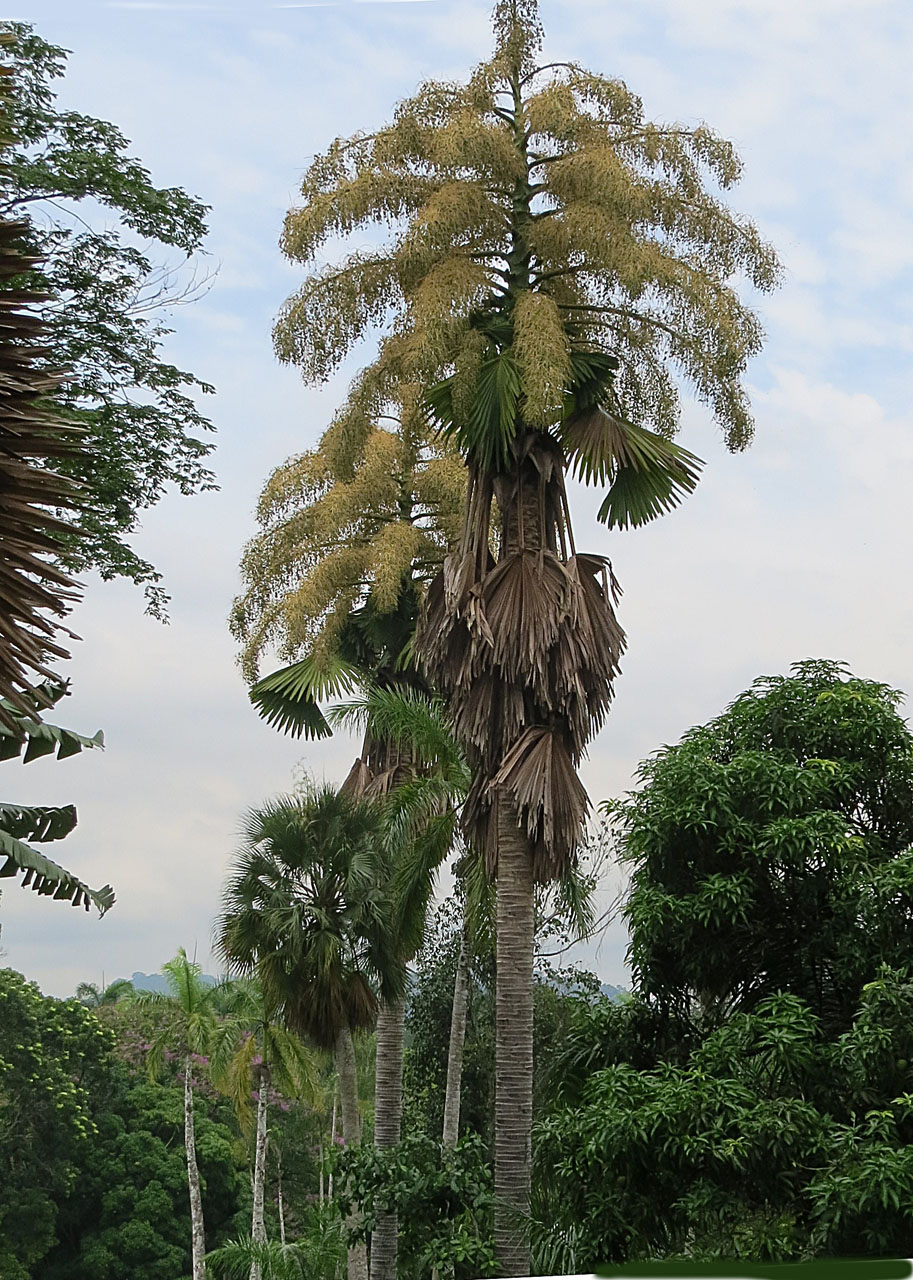
Corypha umbraculifera
Palm with the world's largest inflorescence; dies after fruiting.

Ji-Elle · CC BY-SA 3.0
Corypha umbraculifera, commonly known as the talipot palm, is a species of palm native to eastern and southern India and Sri Lanka. It is one of the five accepted species in the genus Corypha and is notable for bearing the largest inflorescence of any plant. The palm is also cultivated in Cambodia, Myanmar, Thailand, Mauritius, the Andaman Islands, and sparsely in China.
Quick Facts
- Genus
- Corypha
- Species
- umbraculifera
Facts from the source article.
Lore & Background
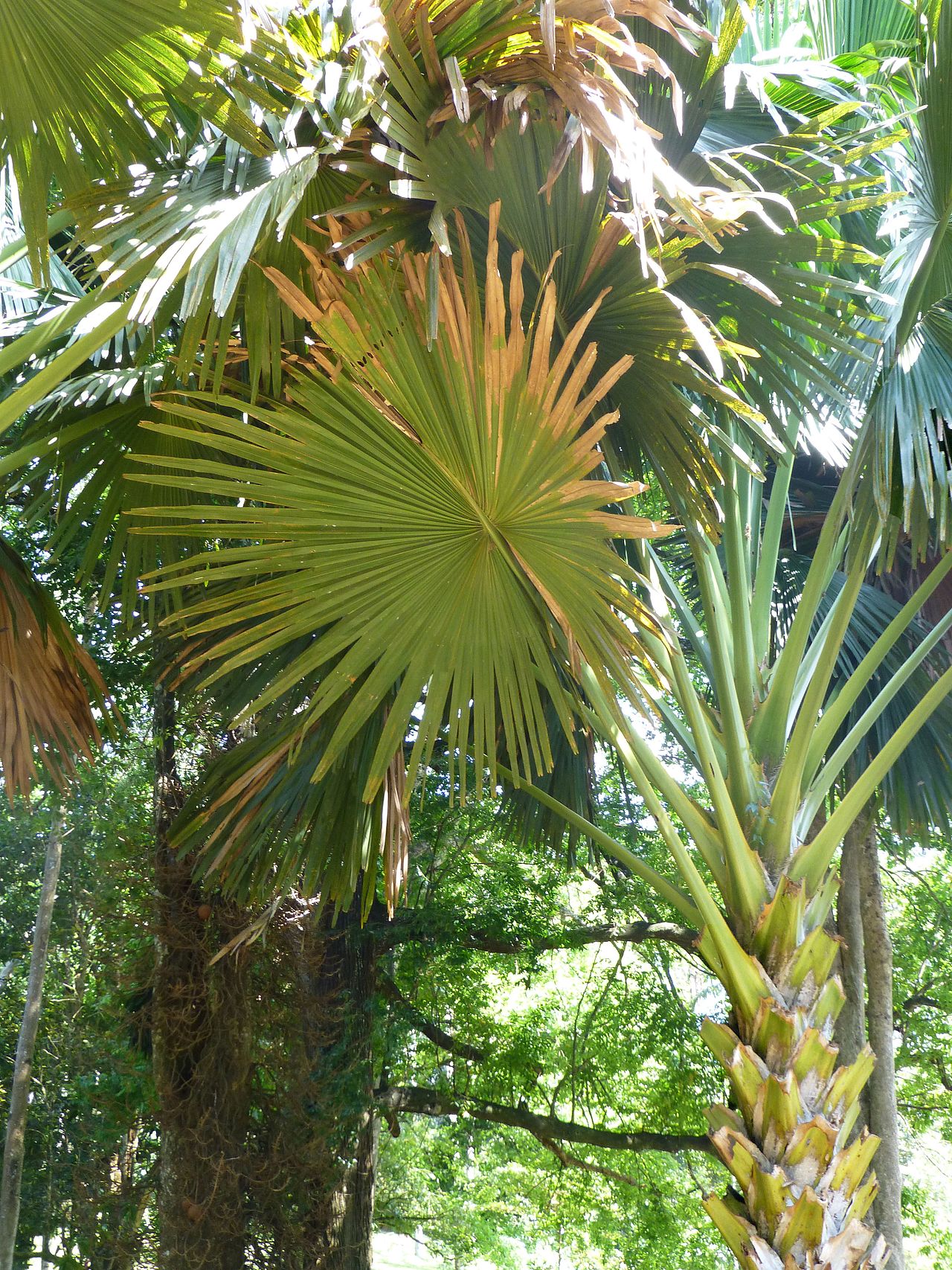
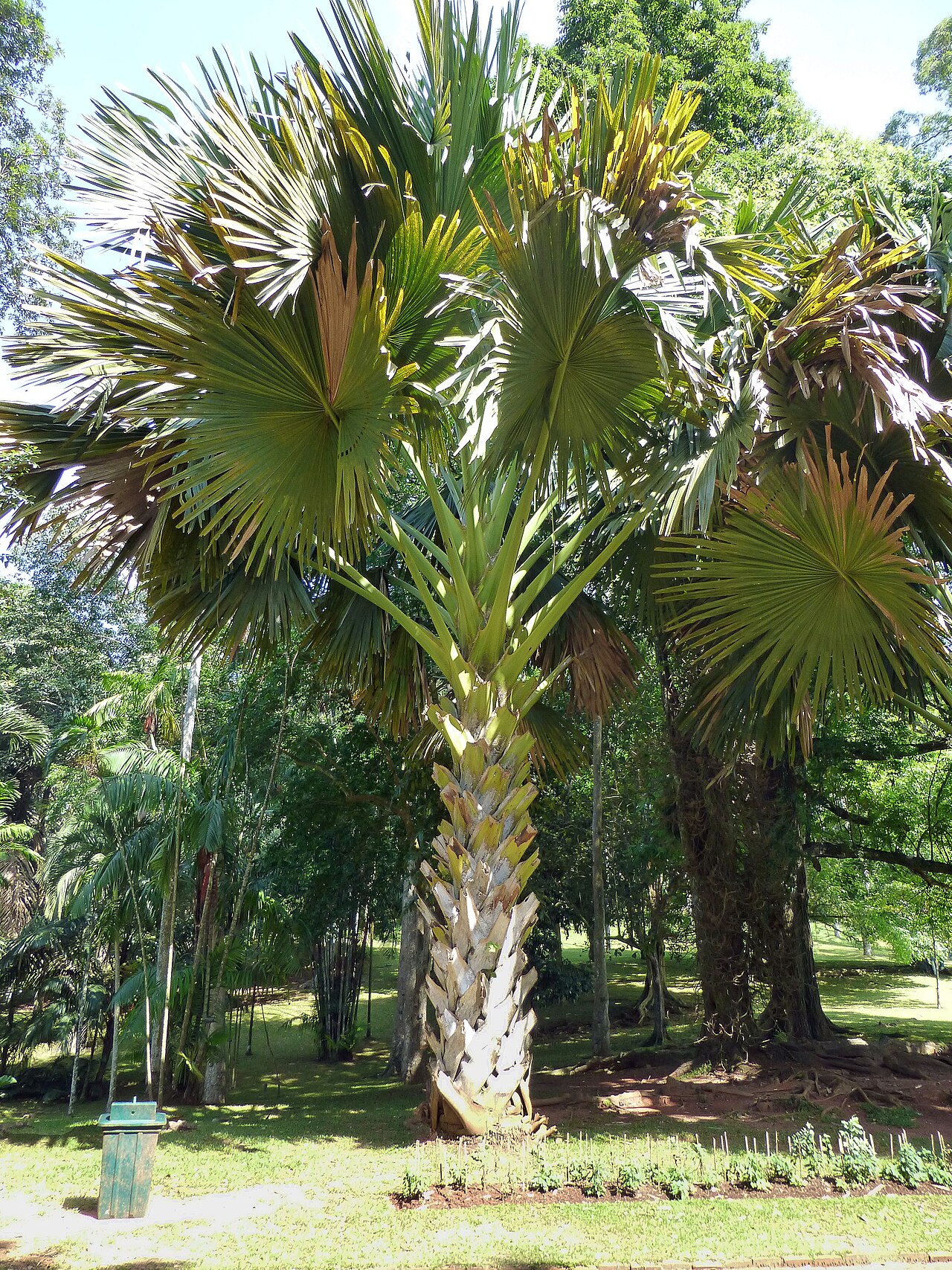
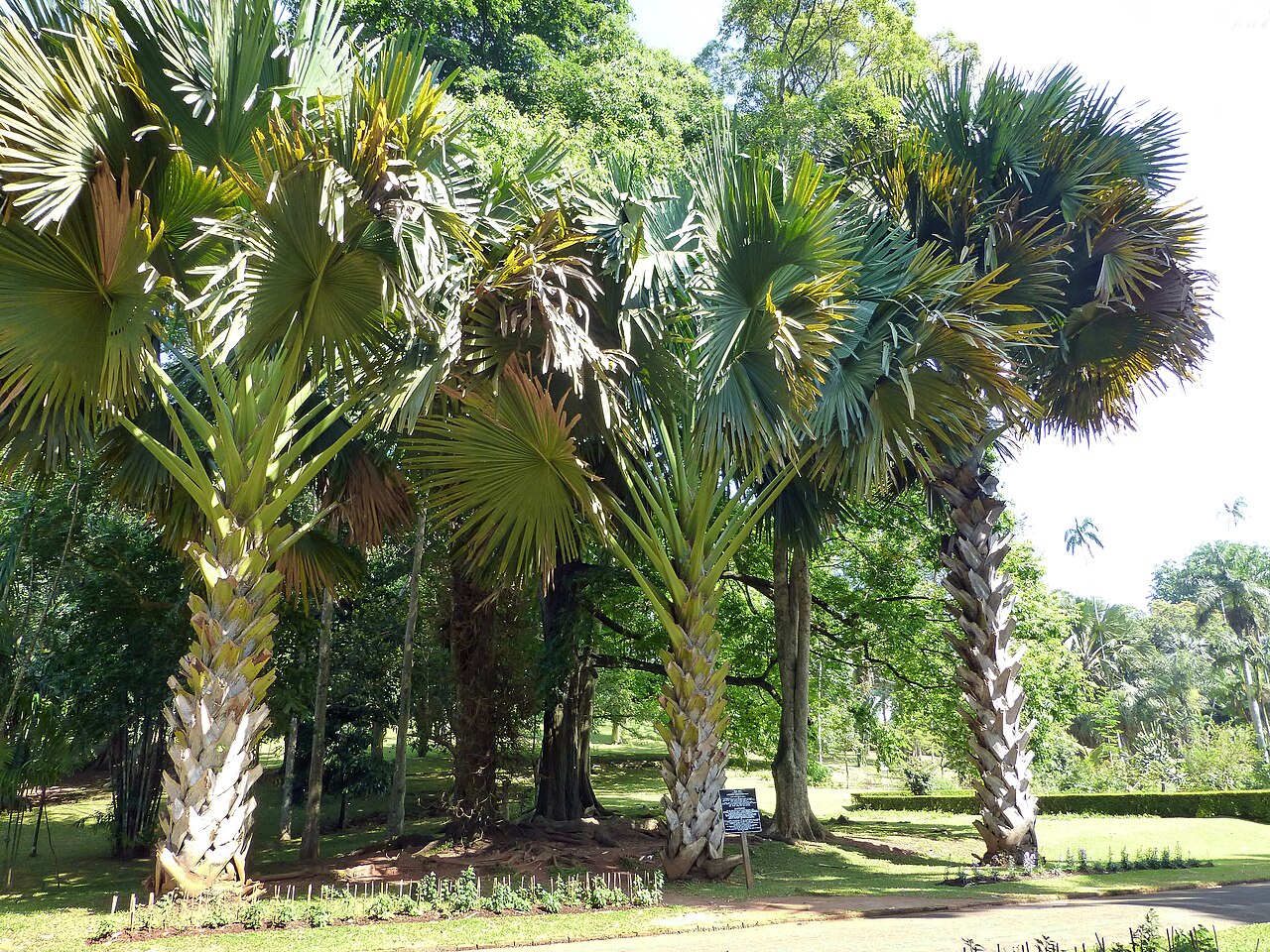
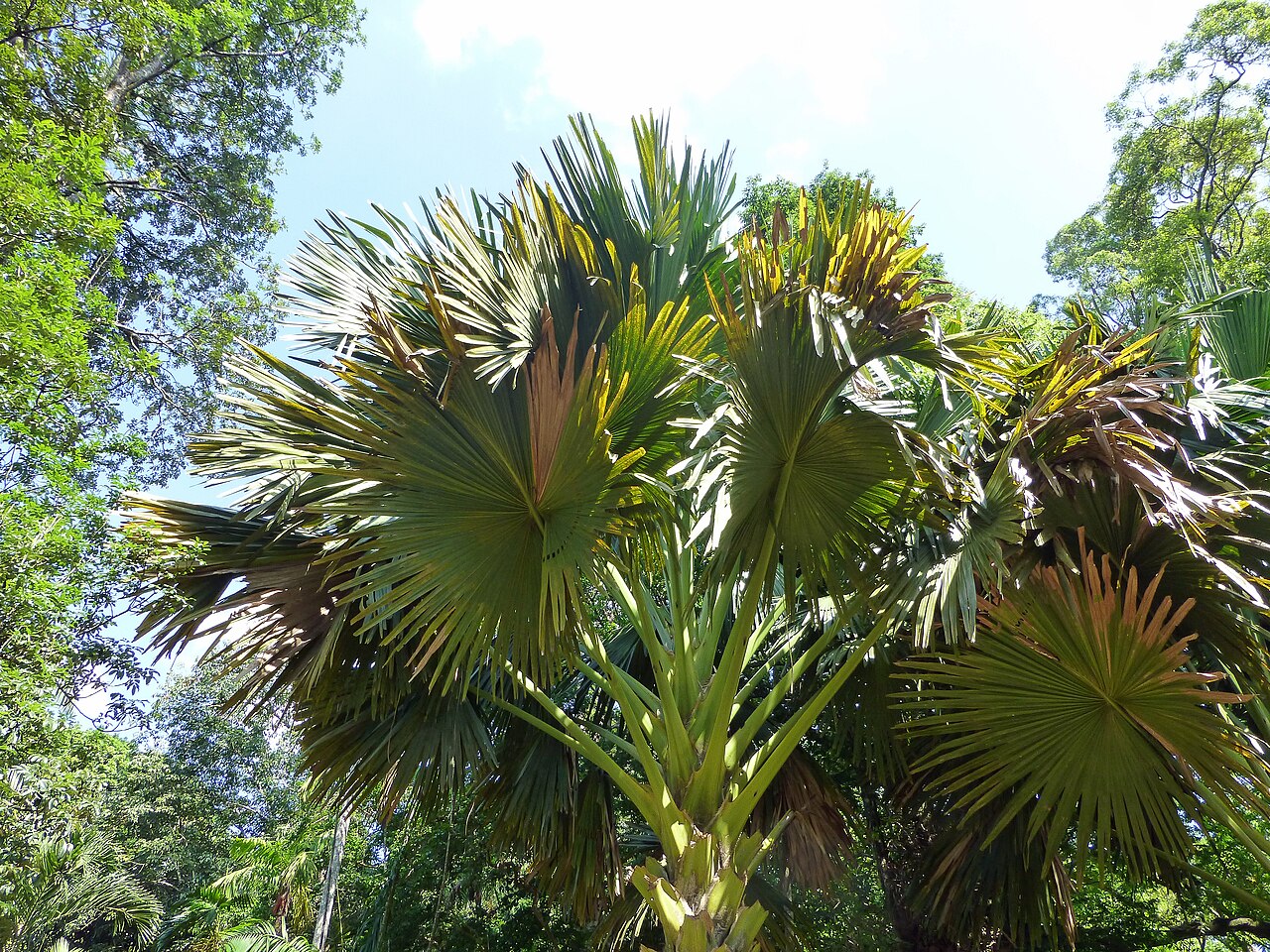
The talipot palm is a fan palm with large, palmate leaves up to 5 m in diameter and petioles up to 4 m long. It is monocarpic, flowering only once when it is 30 to 80 years old, and dies shortly after fruiting. The inflorescence, 6–8 m long, consists of one to several million small flowers. Fruit maturation takes about a year, producing thousands of round, yellow-green fruit 3–4 cm in diameter, each containing a single seed.
Historically, the leaves were written upon in various South Asian and Southeast Asian cultures using an iron stylus to create palm leaf manuscripts. In the Philippines, it is locally known as buri or buli. The leaves are also used for thatching, and the sap is tapped to make palm wine. In South India, the leaves are used to make umbrellas for agricultural workers. In Cambodia, the palm was extensively used to write religious manuscripts, and in recent times the leaf media has been used by traditional healers and soothsayers. Mature leaves are used to make thatches, mats, and hats; petioles are used for canes, arrows, and netting needles; and fishers use the fruit to stupefy fish at low tide.
Reader's Guide
The talipot palm holds significance as a botanical marvel due to its massive inflorescence, the largest of any plant, and its monocarpic life cycle. Its leaves have been historically crucial for recording texts in South Asian and Southeast Asian cultures, serving as a medium for palm leaf manuscripts. The plant's practical uses extend to thatching, umbrella making, and the production of palm wine, as well as traditional fishing practices. Its cultivation across India, Sri Lanka, and parts of Southeast Asia underscores its cultural and economic importance. The palm's unique life history—flowering once after decades and then dying—makes it a subject of botanical interest and a symbol of patience and culmination in the regions where it grows.
Did You Know?
- The talipot palm bears the largest inflorescence of any plant, measuring 6–8 m long.
- It lives 30 to 80 years before bearing flowers and fruits, then dies shortly after.
- Its leaves were historically written upon using an iron stylus to create palm leaf manuscripts.
Taxonomic Place & Native Range
Corypha umbraculifera, commonly known as the talipot palm, is a species native to the Indian subcontinent and Sri Lanka. It belongs to the genus Corypha, which also includes the buri palm (Corypha utan) found across Asia and Oceania. While these two Corypha species are notable contributors to the vegetable ivory trade, they are not the primary sources. That distinction belongs to the genus Phytelephas—whose name literally translates to "elephant plant"—whose South American species dominate the industry. Other palms contributing to vegetable ivory production include the Caroline ivory-nut palm from the western Pacific, the natangura palm of the Solomon Islands and Vanuatu, and the real fan palm of Sub-Saharan Africa. The talipot palm's significance lies in its role as one of the diverse global sources of the hard white endosperm harvested from palm seeds, a material that has been valued across cultures for its striking resemblance to animal ivory and its suitability for fine craftsmanship.
Growth Cycle & Material Properties
The talipot palm, like other palms yielding vegetable ivory, follows a remarkably patient growth timeline. A tree of this kind can require as long as fifteen years before it reaches maturity and begins producing the hard white endosperm that defines the material. Yet once that threshold is crossed, the reward is extraordinary: a single mature palm can continue yielding vegetable ivory for as long as a century. In any given productive year, the output ranges from fifteen to twenty kilograms of the dense seed material. The endosperm itself is naturally white and displays a fine marbled grain structure that distinguishes it visually. Its density and hardness are remarkable—comparable to stone in workability. A craftsman cannot simply slice or carve it with a knife; instead, the material demands the use of hacksaws and files to shape it. This extreme hardness is precisely what makes the material so durable in finished objects, from jewelry to decorative carvings, and what gives it the quality that earned it the name "vegetable ivory" in reference to its animal counterpart.
Dyeing, Grain & Craftsmanship
One of the most distinctive working characteristics of vegetable ivory from palms like the talipot is its interaction with dye. The material can be colored, and the application of dye actually serves to accentuate the fine marbled grain that runs through the naturally white endosperm. However, the dye does not penetrate deeply; it affects only the outermost layer. This limitation became a design feature rather than a flaw. In button manufacturing, artisans deliberately exploited this shallow penetration by leaving the natural white color visible beneath a dyed surface, creating a striking contrast that both enhanced the aesthetic appeal and provided a reliable visual cue for identifying the material as genuine vegetable ivory rather than a substitute. Beyond buttons, the same hard, dense quality makes the material well suited to small precision objects: dice, knife handles, and chess pieces all benefit from its resistance to wear. The talipot palm's contribution to this craft tradition places it within a broader family of palms—including Hyphaene species from Africa and Metroxylon species from the Pacific—that collectively supply the raw material for these applications.
Industrial Era & the Rise of Plastic
The story of vegetable ivory in the industrial era is one of brief dominance followed by rapid displacement. The earliest well-documented large-scale use dates to the 1880s, when the material entered button manufacturing under the trade names corozo or corosso. The city of Rochester, New York, emerged as a major center for this industry, where producers subjected the material to a finishing treatment that remained a closely guarded secret among local manufacturers. The purpose of this proprietary process was to enhance both the visual beauty and the wearing qualities of the finished buttons. At the height of this era, before synthetic plastics entered mass production, roughly one in five buttons manufactured in the United States was made from vegetable ivory. That figure underscores how central the material was to everyday garment construction. The arrival of cheap, uniform plastic buttons gradually rendered the natural product obsolete in this role, shifting the demand for vegetable ivory toward niche applications in jewelry, artistic carving, and small decorative objects where its hardness, grain, and organic character remain unmatched by synthetic alternatives.
Gallery
Frequently Asked Questions
What is Corypha umbraculifera?
It is a giant palm species commonly called the talipot palm, native to eastern and southern India and Sri Lanka. It is one of only five recognized species within the genus Corypha.
What makes Corypha umbraculifera famous among plant enthusiasts?
It produces the largest inflorescence (flower cluster) of any plant on Earth, stretching roughly 6 to 8 meters in length. That single, sprawling bloom is the feature that sets it apart from every other palm.
Where does Corypha umbraculifera grow naturally and where is it cultivated?
Its native range covers eastern and southern India plus Sri Lanka. It has also been planted in Cambodia, Myanmar, Thailand, Mauritius, the Andaman Islands, and small pockets of China.
How large does the talipot palm get?
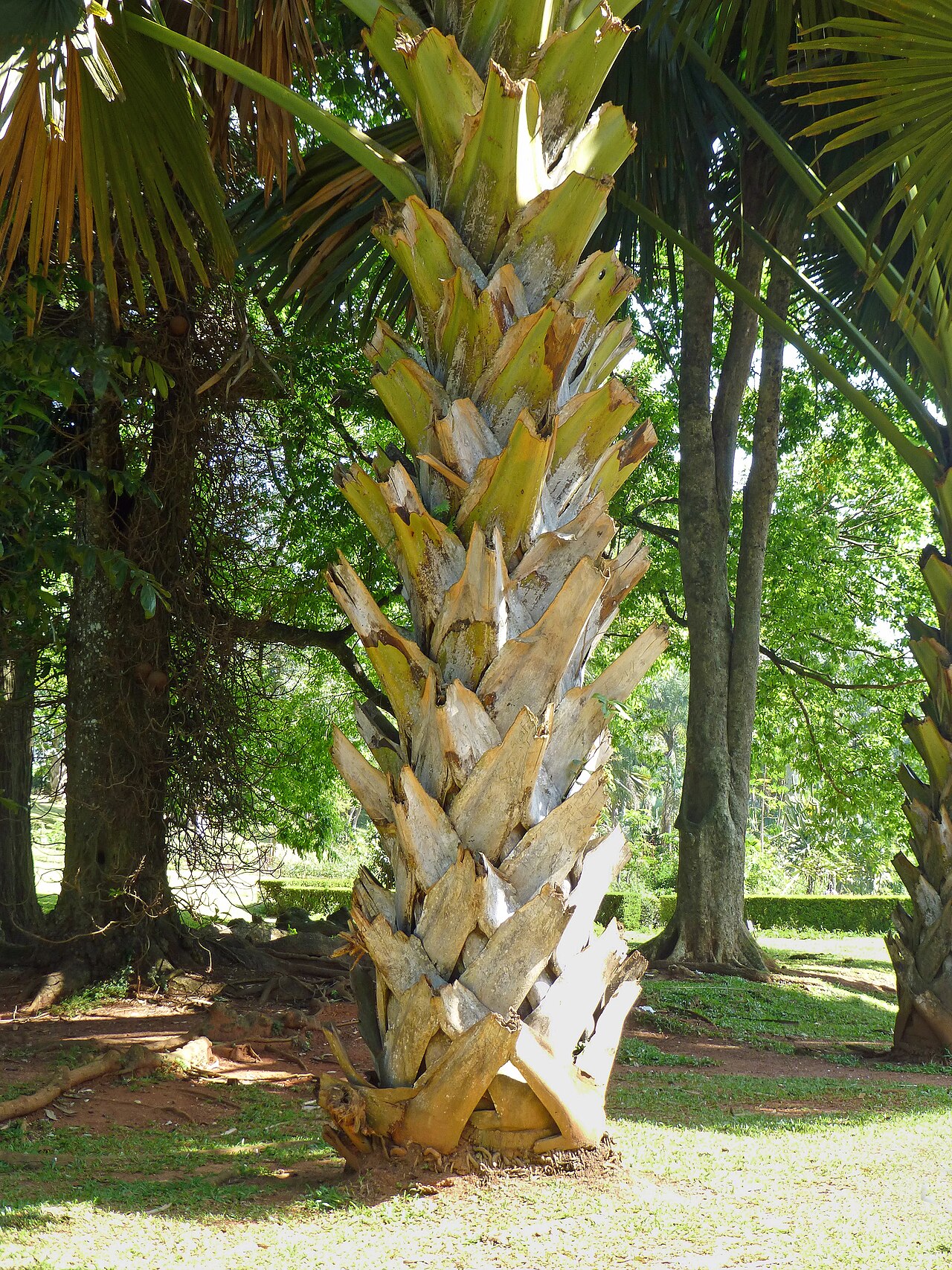
The trunk can climb to about 25 meters (82 ft) tall with a diameter reaching 1.3 meters (4.3 ft), and individual fronds may spread up to 5 meters (16 ft) across.
What happens to Corypha umbraculifera after it finishes fruiting?
As a monocarpic palm, it completes its entire life cycle in a single reproductive event and then dies. This dramatic 'flower once, then perish' pattern is the species' most talked-about biological trait.
More in Trees & Timber 1-19
Spotted an error? Know more?
Reader corrections go straight into our review queue. Suggest an edit · How this site is sourced