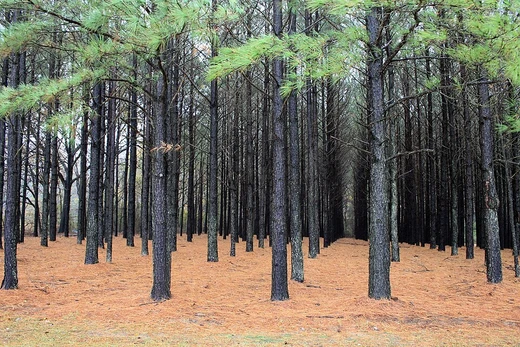
Cupressus sempervirens
A long-lived evergreen tree central to Mediterranean culture and ecology.

Al*from*Lig · CC BY-SA 4.0
Cupressus sempervirens—commonly called the Mediterranean, Italian, Tuscan, or Persian cypress—is a conifer native to the eastern Mediterranean and Iran. It thrives across the Mediterranean basin and has become established in other regions with dry summers, thanks to its tolerance for both acidic and alkaline soils and its resistance to drought. This tree holds cultural significance in Mediterranean and Middle Eastern societies, where it has long been used in symbolism, ceremonies, and folk remedies, and it is widely planted as an ornamental around the world.
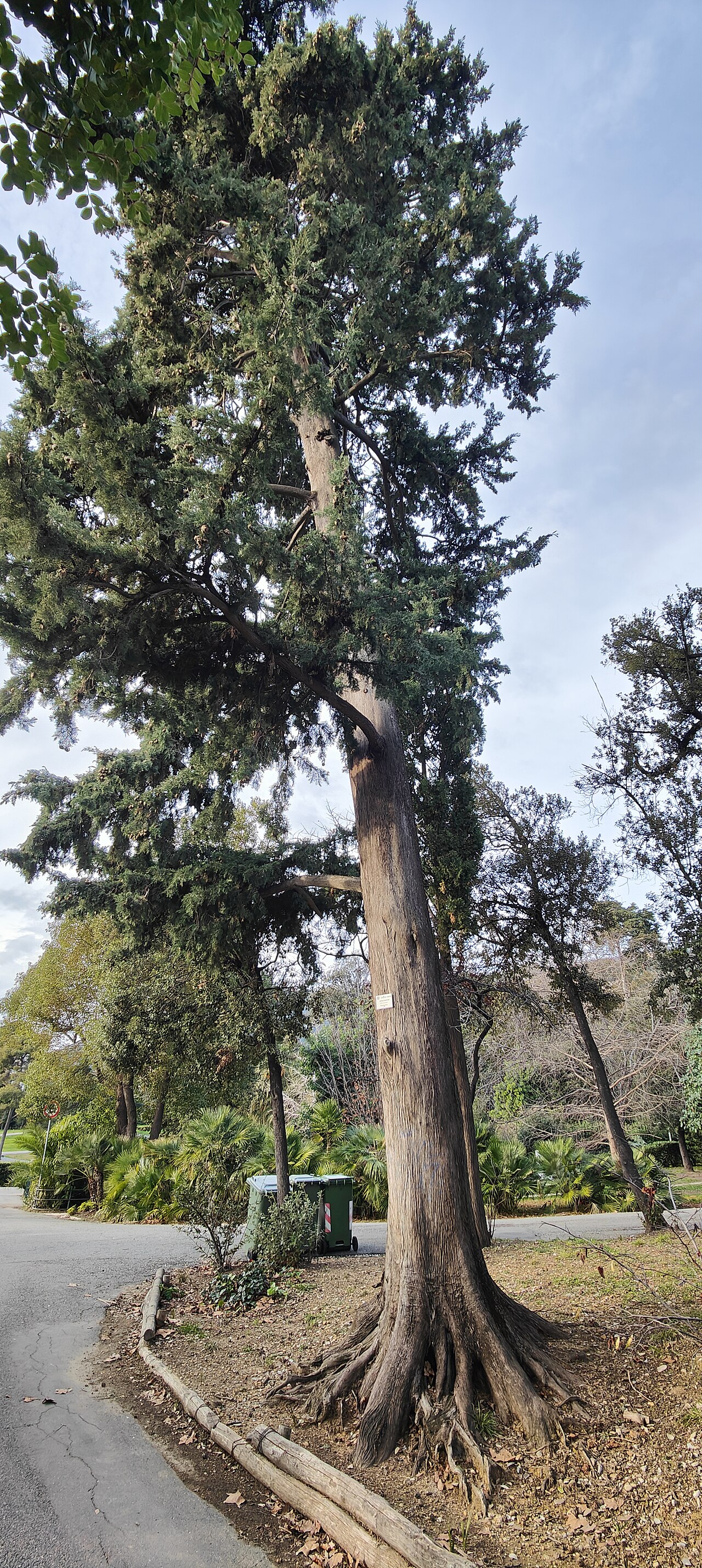
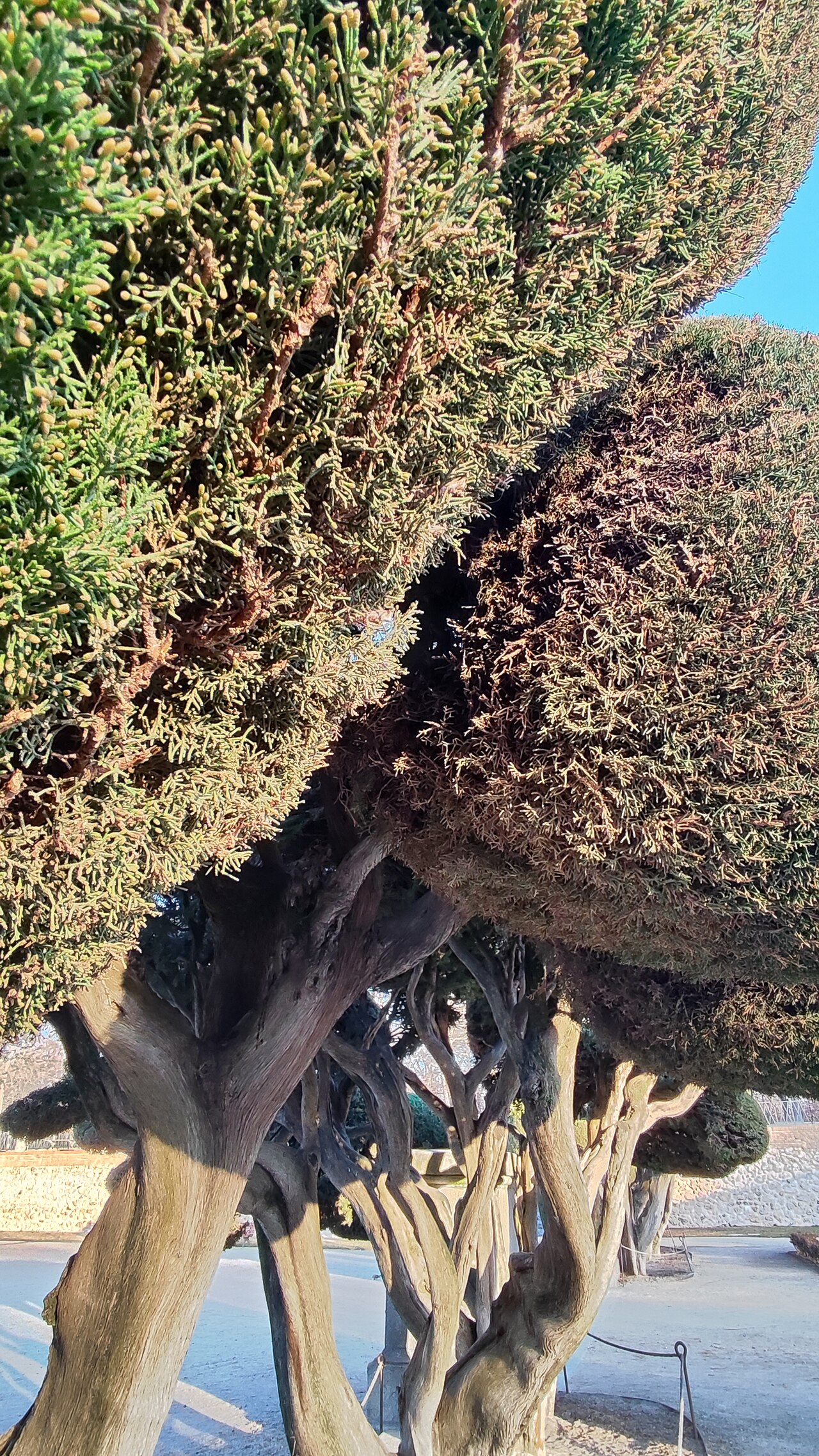
A medium-sized evergreen, it can reach 35 meters (115 feet) in height, with a conical crown, level branches, and loosely hanging branchlets. It is exceptionally long-lived, with some individuals reported to be over a thousand years old. Its lateral shoots often grow upward toward light, and the dense, dark green foliage consists of scale-like leaves 2–5 mm long on rounded shoots. The seed cones are ovoid or oblong, 25–40 mm long, with 10–14 scales that start green and turn brown 20–24 months after pollination. Male cones are 3–5 mm long and release highly allergenic pollen in late winter. The cones can remain sealed for years, a trait known as serotiny. The tree is highly susceptible to cypress canker, caused by the fungus *Seiridium cardinale*, which can lead to extensive dieback. The species name *sempervirens* means "evergreen" in Latin.
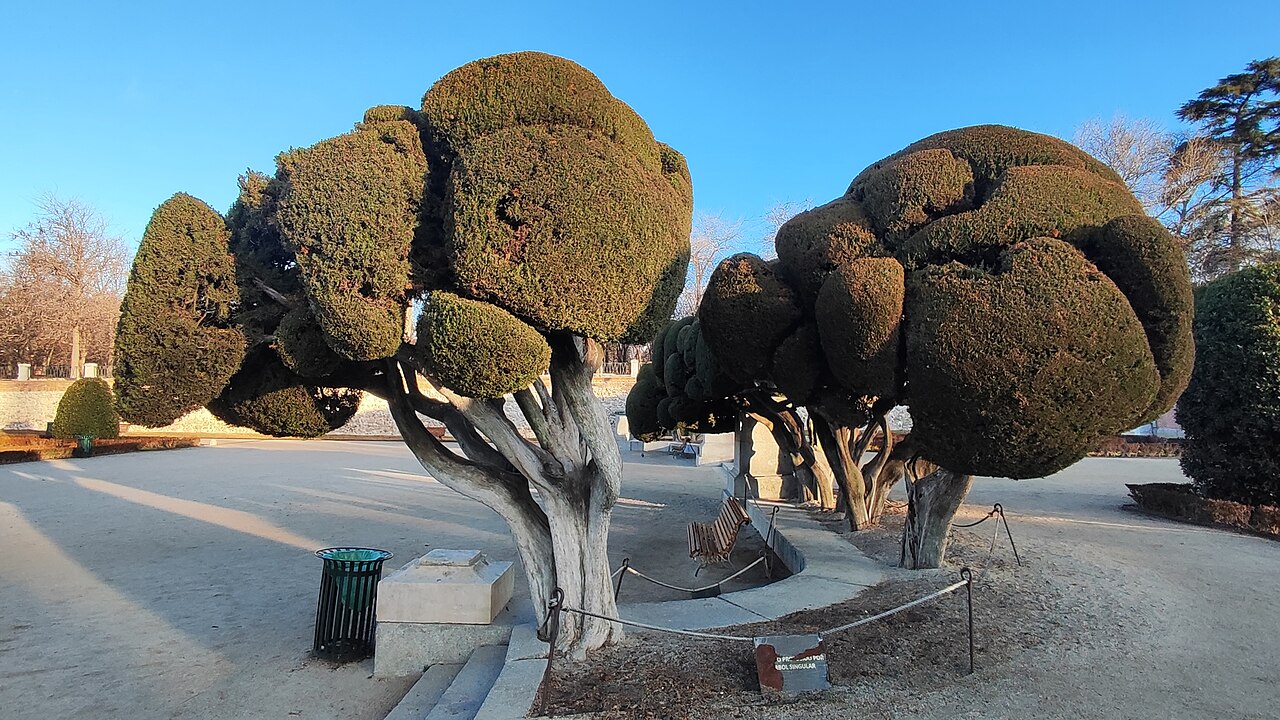
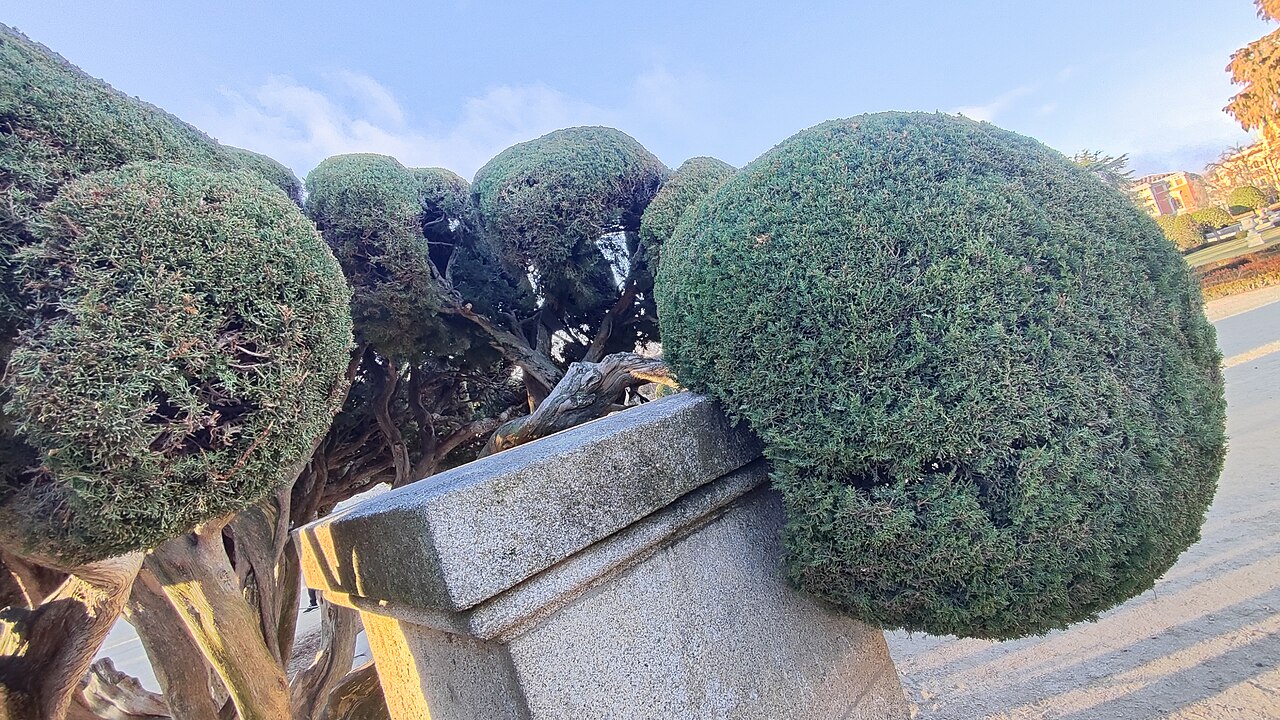
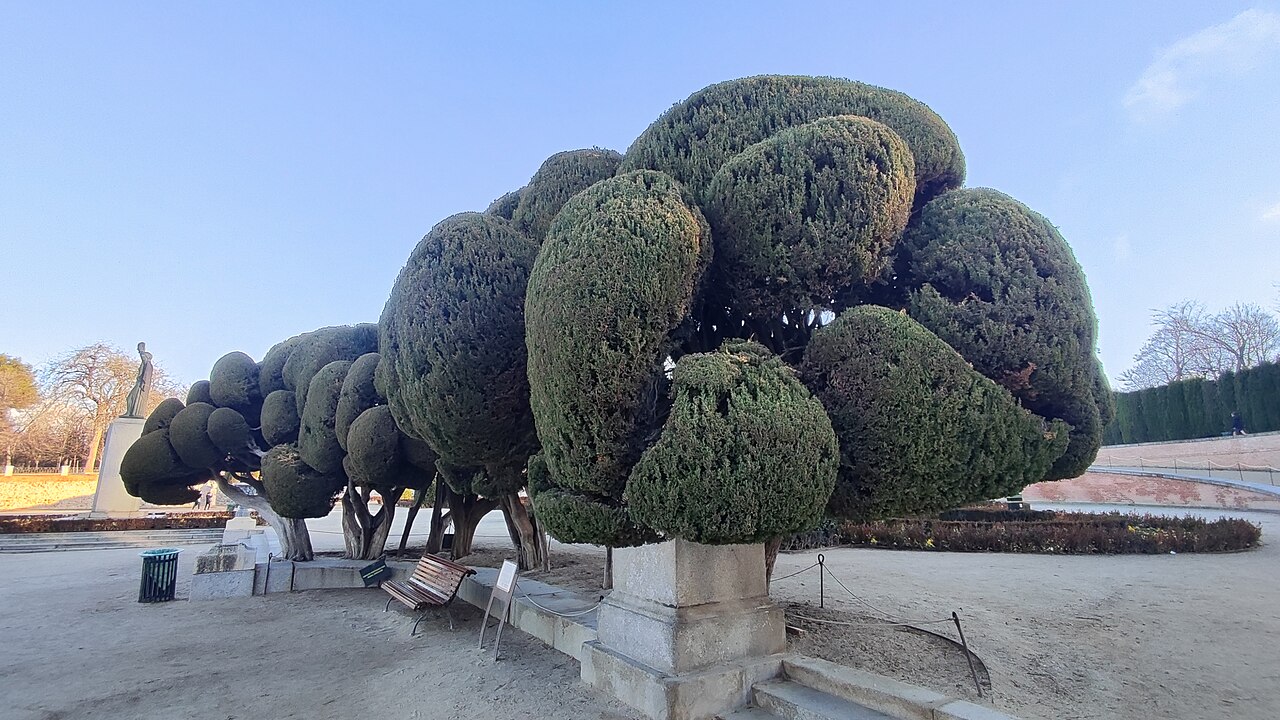
For millennia, *C. sempervirens* has been cultivated outside its native range, especially across the Mediterranean and in areas with hot, dry summers and mild, rainy winters, such as California, southwestern South Africa, and southern Australia. It also grows in cooler, moister climates like the British Isles, New Zealand, and the Pacific Northwest, as well as in humid subtropical zones like the coastal southern United States. In some places, notably the U.S., it is called Italian or Tuscan cypress. In its native range, it has historically been planted in gardens and cemeteries and used as windbreaks along roads, and it can help prevent land damage from severe weather. Most cultivated trees are fastigiate cultivars, with erect branches forming a narrow crown often less than a tenth as wide as the tree is tall—a dark green "exclamation mark" shape iconic to Mediterranean landscapes.
Quick Facts
- Genus
- Cupressus
- Species
- sempervirens
Facts from the source article.
Lore & Background
Cupressus sempervirens is a medium-sized coniferous evergreen tree growing up to 35 m tall, with a conic crown and variably loosely hanging branchlets. It is very long-lived, with some trees reported to be over 1,000 years old. The foliage grows in dense, dark green sprays, and the leaves are scale-like. The seed cones are ovoid or oblong, 25–40 mm long, with 10–14 scales that mature to brown about 20–24 months after pollination. The male cones release highly allergenic pollen in late winter. The tree is highly susceptible to cypress canker caused by the fungus Seiridium cardinale.
In Iran, C. sempervirens is called the 'Graceful Cypress' and bears metaphors for the graceful figure of the beloved.
Reader's Guide
Cupressus sempervirens holds deep cultural and practical significance across the Mediterranean and Middle East. Its dark green, narrow 'exclamation mark' shape is a highly characteristic signature of Mediterranean landscapes, and it has been widely cultivated as an ornamental tree for millennia. The tree is notable for its low resin content, which gives it fire resistance; a 2012 forest fire in Andilla, Spain, left a group of 946 cypress trees virtually unharmed, leading to interest in using the species for firebreaks. In folk medicine, dried leaves are used to treat various ailments, and the oil from leaves aids recovery from minor conditions like nasal congestion. The tree also has cosmetic uses as an astringent and anti-aging agent. Its wood is traditional for Italian harpsichords. In Israel, most Mediterranean cypress trees result from intentional reforestation by the JNF and are common at cemeteries, parks, and wooded areas. The species name sempervirens comes from the Latin for 'evergreen'.
Did You Know?
- The oldest living cypress, Sarv-e-Abarkooh in Iran, is estimated to be approximately 4,000 years old.
- In a 2012 forest fire in Andilla, Spain, only 12 out of 946 cypress trees were burned, demonstrating the species' fire resistance.
- C. sempervirens is the traditional wood used for Italian harpsichords.
Taxonomic Identity & Phylogenetic Placement
Cupressus sempervirens occupies a foundational role in botanical nomenclature as the type species of the genus Cupressus, serving as the reference point against which the entire genus is defined. The genus sits within the subfamily Cupressoideae of the evergreen conifer family Cupressaceae, a placement confirmed through both genetic and morphological analysis. Yet the genus has long been regarded as polyphyletic, meaning its members do not all descend from a single exclusive common ancestor. A 2021 molecular study clarified that Cupressus is the sister genus to Juniperus, while the western members previously housed in Cupressus proved more closely allied with Xanthocyparis and have since been transferred to Hesperocyparis and Callitropsis. The number of recognised species within the genus varies dramatically—anywhere from 16 to 25 or more—because most populations are small and isolated, making it difficult to decide whether they warrant species, subspecies, or variety rank. Current taxonomic trends favour a narrower species concept, though the Vietnamese golden cypress remains an outlier, showing closer genetic ties to New World species than to its Old World relatives.
Morphology & Fire Ecology
Cupressus sempervirens and its Old World relatives are evergreen trees or large shrubs that typically reach between 5 and 40 metres in height, though the closely related C. austrotibetica has been recorded at an extraordinary 102 metres, making it the second-tallest tree species on Earth after Sequoia sempervirens. Adult foliage consists of small scale-like leaves, just 2 to 6 millimetres long, arranged in opposite decussate pairs and persisting for three to five years. Young plants up to two years old, however, bear distinctly needle-like leaves measuring 5 to 15 millimetres. The reproductive cones, 8 to 40 millimetres long, carry between 4 and 14 scales in decussate pairs and require 18 to 24 months from pollination to mature. Old World cypresses tend toward the higher end of that scale count, each scale bearing a short broad ridge rather than a spike. Seeds are small, 4 to 7 millimetres long, and carry two narrow wings. Notably, several species in the genus are adapted to forest fires, retaining seeds in closed cones for years until fire kills the parent tree and releases the seeds onto bare, burnt ground for colonisation.
Myth, Mourning & Cultural Resonance
The very name "cypress" carries a mythological weight stretching back to ancient Greece. The genus name derives from Cyparissus, a young man beloved by Apollo who, during a hunting expedition, accidentally killed a dear stag. In his grief, Apollo transformed the boy into a tree, embedding sorrow into the very identity of the plant. In Hellenic culture the cypress was regarded as sacred to the gods, and its association with mourning persisted through Roman times into the modern era. This funerary symbolism was reinforced by a practical botanical trait: cypress roots grow straight down into the ground and expand only slightly laterally, meaning they do not damage the burials beneath them. In Asia, cypresses are planted around temples, and in Mediterranean and other warm regions they feature prominently in parks and cemeteries. The name itself travelled through Latin cyparissus and Old French cipres before settling into English, preserving the echo of that ancient grief across millennia.
Cultivation, Allergenicity & Geographic Range
Native to scattered localities across warm temperate regions of the Northern Hemisphere—including northwest Africa, the Middle East, the Himalayas, southern China, and northern Vietnam—Cupressus sempervirens and its relatives have been so extensively cultivated that in some areas the boundary between wild populations and planted specimens has become virtually indistinguishable. Cypresses are grown as ornamental trees in parks worldwide, around temples in Asia, and in gardens where their evergreen form, varied sizes, and range of colours make them popular. A few species are also valued for their timber, which can be remarkably durable. The fast-growing Leyland cypress, a hybrid widely used in gardens, takes one parent from this genus (Cupressus macrocarpa, the Monterey cypress) and the other from Callitropsis nootkatensis. However, the genus carries a significant health caveat: all Cupressus species, including those now reclassified under Callitropsis, are extremely allergenic, earning the maximum OPALS allergy scale rating of 10. In warm Mediterranean climates, these trees release large quantities of pollen for approximately seven months each year, making them a persistent seasonal concern for allergy sufferers.
Gallery
Frequently Asked Questions
What is Cupressus sempervirens?
Cupressus sempervirens is a medium-sized evergreen conifer widely known by names such as Italian cypress, Tuscan cypress, or Persian cypress. It is native to the eastern Mediterranean and Iran and is instantly recognizable by its tall, columnar silhouette.
How tall can Cupressus sempervirens grow?
At full maturity the species can reach roughly 35 metres (about 115 feet) in height. Despite that stature it is still classified as a medium-sized evergreen rather than a giant conifer.
Where does Cupressus sempervirens naturally grow and why has it spread elsewhere?
Its native range covers the eastern Mediterranean basin and Iran. It has become naturalised in other dry-summer regions because it tolerates both acidic and alkaline soils and shrugs off prolonged drought.
Why is Cupressus sempervirens culturally significant?
For centuries the tree has featured in Mediterranean and Middle Eastern symbolism, ceremonial practices, and folk remedies. It is also one of the most widely planted ornamental trees worldwide, often lining avenues and marking cemeteries.
How long can a Cupressus sempervirens live?
Individuals of this species are documented to survive well past 1,000 years, placing it among the longer-lived conifers. Its natural fire resistance and drought hardiness are key factors behind that exceptional longevity.
More in Trees & Timber 1-19
Spotted an error? Know more?
Reader corrections go straight into our review queue. Suggest an edit · How this site is sourced