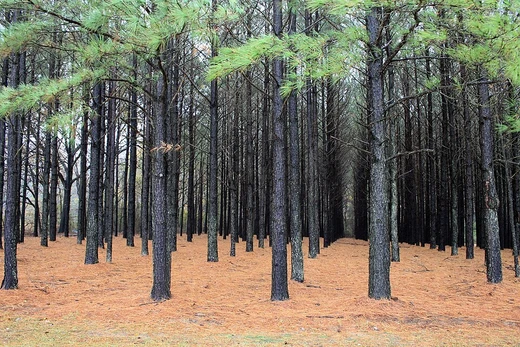
Dalbergia
A genus of tropical trees valued for fragrant, decorative timber.

ThrasherÜbermensch · CC BY-SA 4.0
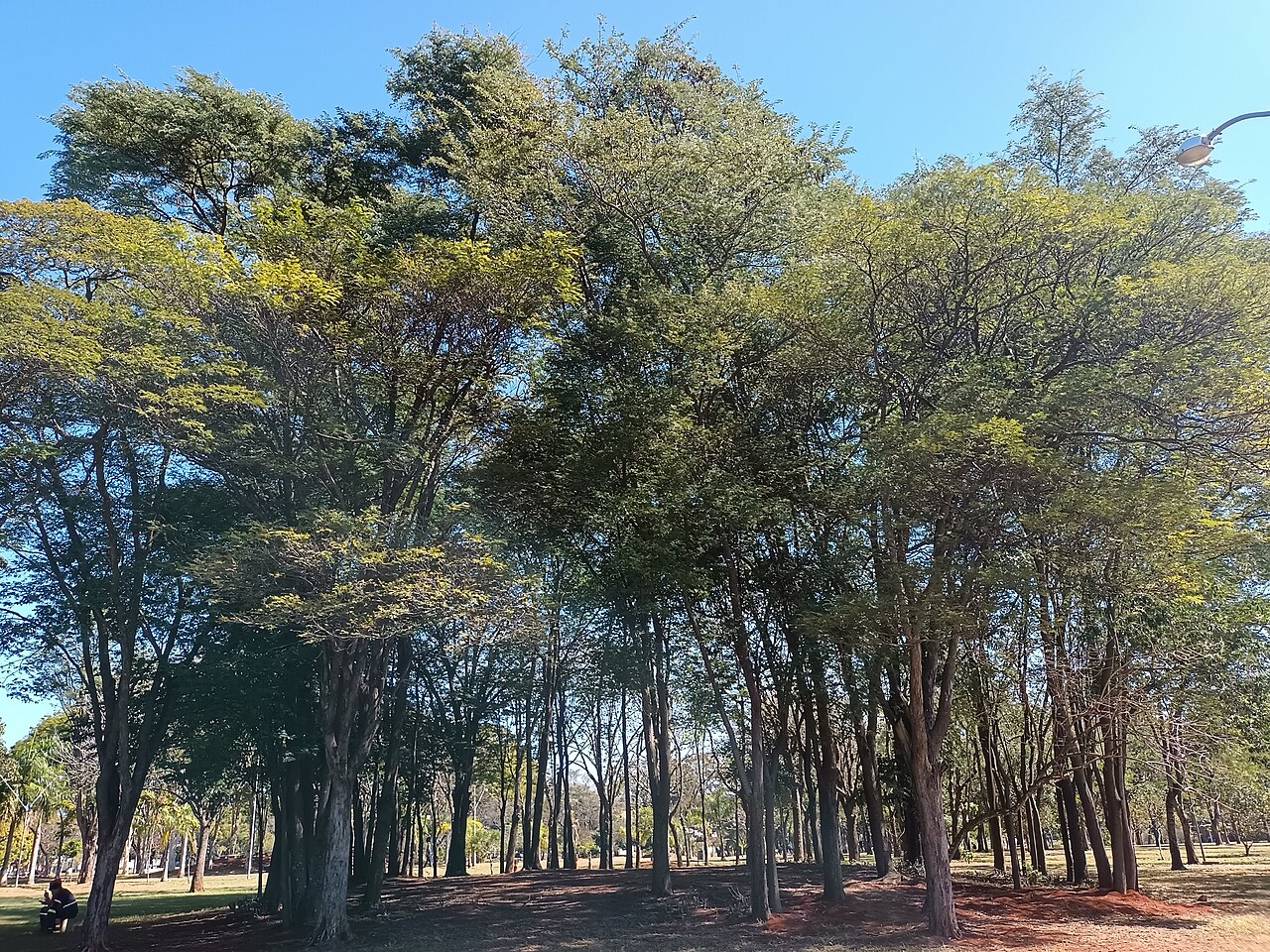
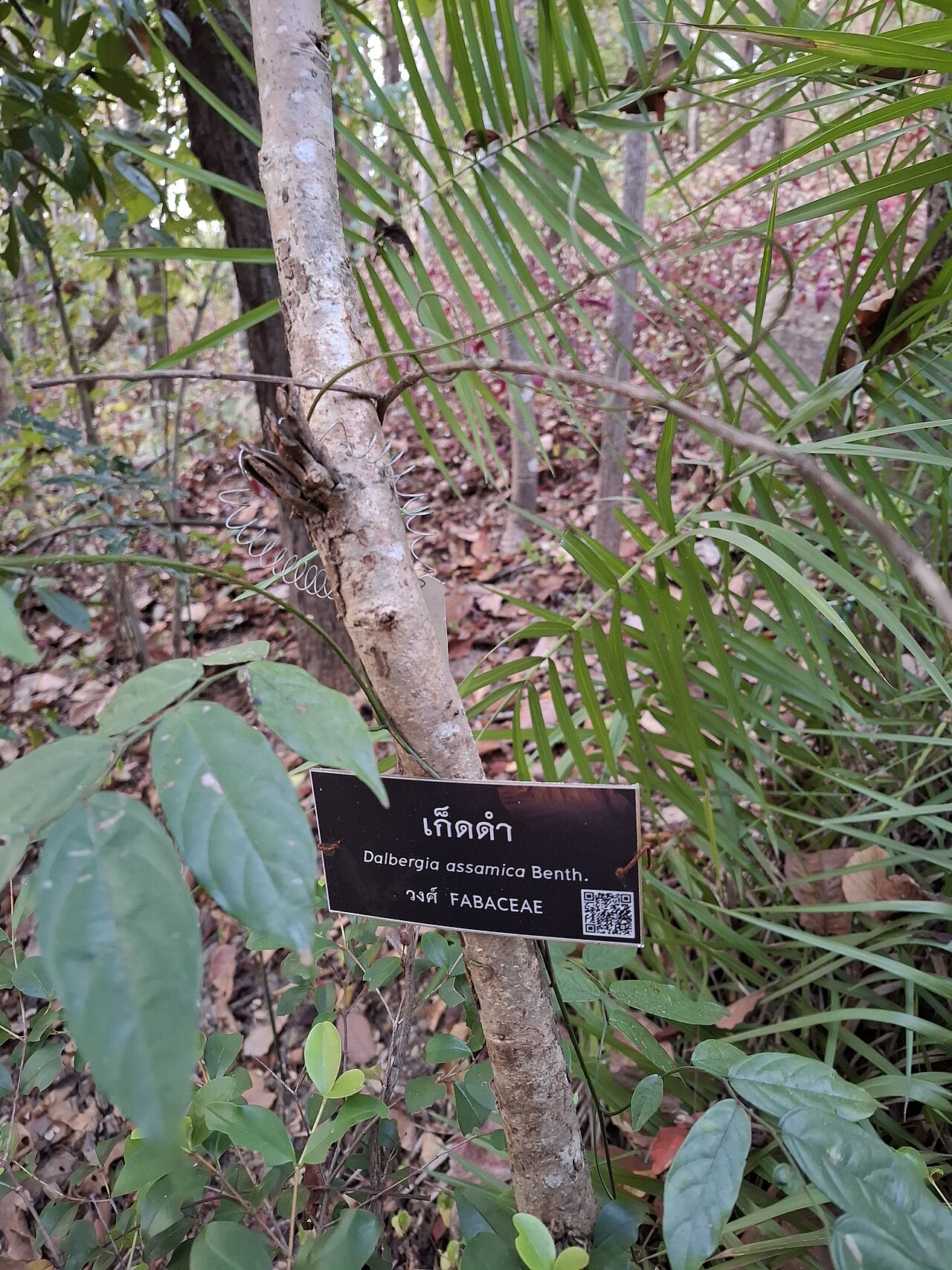
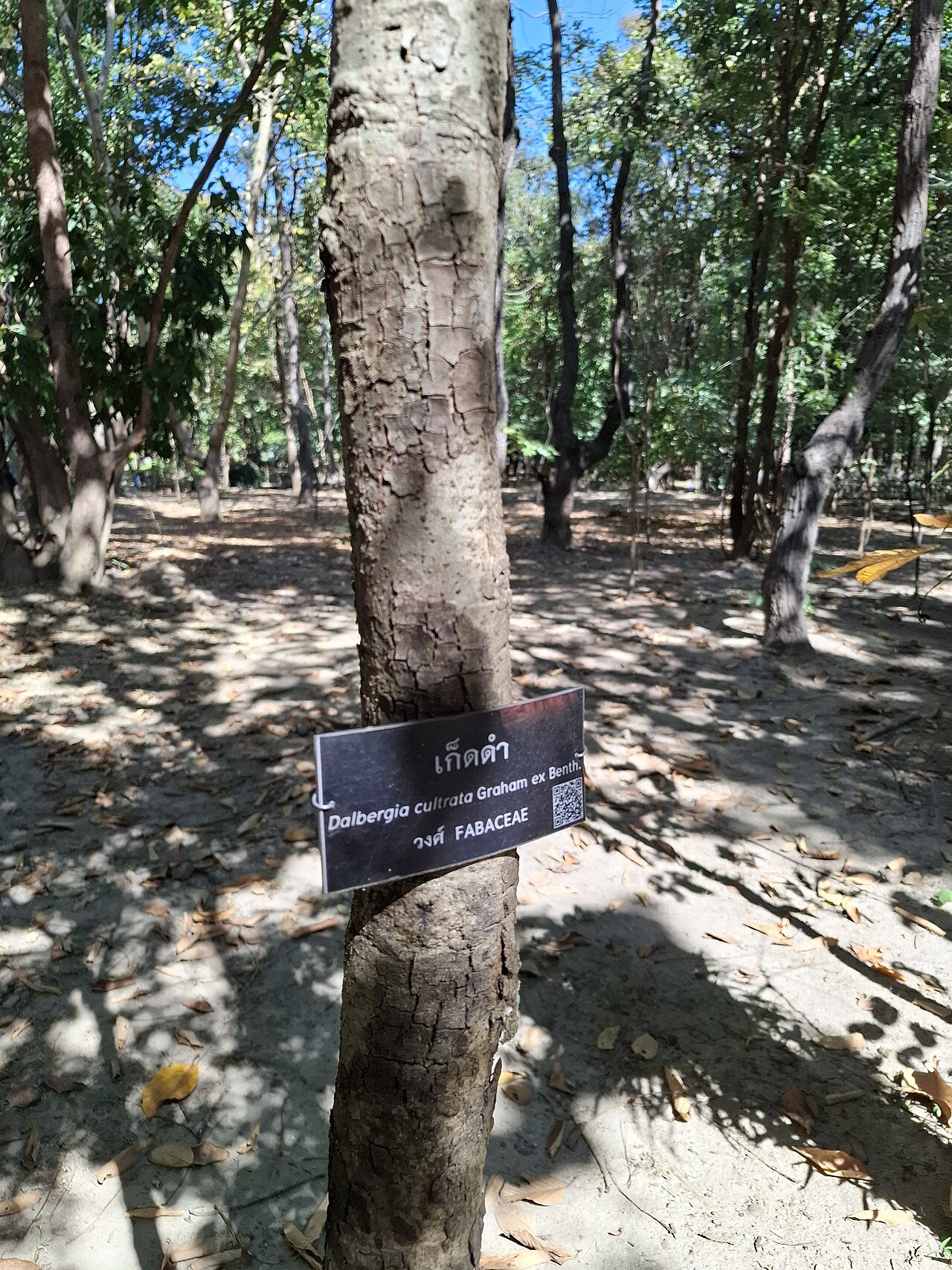
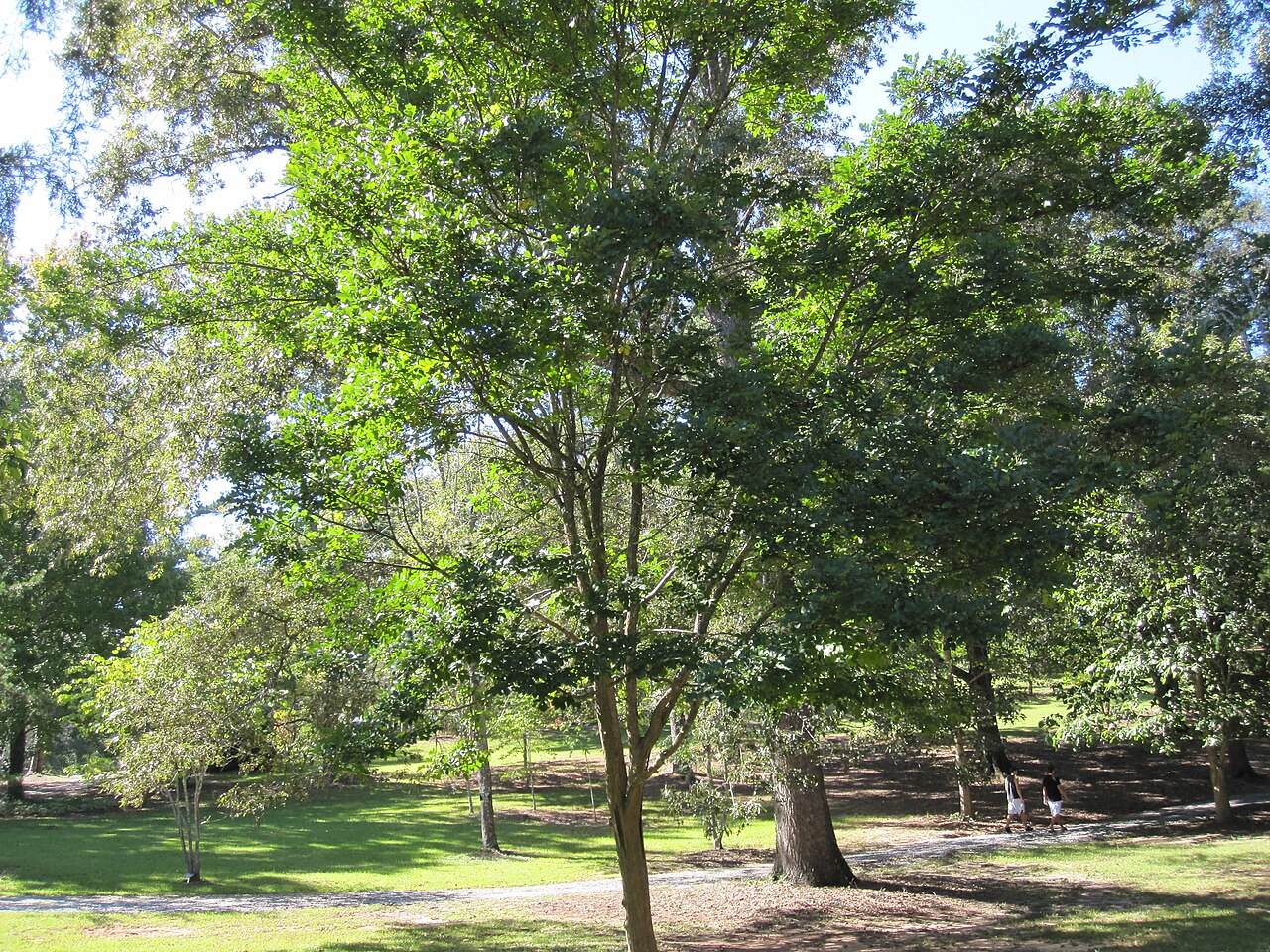
Dalbergia is a large genus within the pea family, Fabaceae, consisting of small to medium trees, shrubs, and lianas. It belongs to the Faboideae subfamily and has been placed in the informal, monophyletic Dalbergia clade, also known as the tribe Dalbergieae. The genus is widely distributed across tropical regions, including Central and South America, Africa, Madagascar, and Southern Asia.
Fossil evidence includes a seed pod of †Dalbergia phleboptera from a Chattian deposit in Aix-en-Provence, France. Fossils of †Dalbergia nostratum have been found in Lower Miocene rhyodacite tuff near Lučenec in southern Slovakia. Seed pods of †Dalbergia mecsekense come from a Sarmatian deposit in Hungary, while †Dalbergia lucida fossils have been described from the late Miocene Xiaolongtan Formation in Kaiyuan County, Yunnan, China.
Many Dalbergia species are valued as timber trees, prized for their decorative, often fragrant wood that is rich in aromatic oils. The most famous are the rosewoods, named for their scent when cut, but the genus also yields several other valuable woods. Species such as Dalbergia nigra (known as Rio, Bahia, Brazilian rosewood, palisander de Rio Grande, or jacaranda) and Dalbergia latifolia (East Indian rosewood or Sonokeling) have been heavily used in furniture and musical instruments due to their color and grain. Several East Asian species are important in traditional Chinese furniture.
Brazilian tulipwood (D. decipularis) is cream-colored with red or salmon stripes, commonly used in crossbanding and veneers; it is distinct from the tulipwood of the American tulip tree, Liriodendron tulipifera. Kingwood (D. cearensis), also Brazilian, is purple with darker stripes and comes from small to medium trees reaching about 10 meters. Cocobolo, mainly from D. retusa, is a Central American timber with a striking orange-red figure on fresh cuts that fades to softer tones over time.
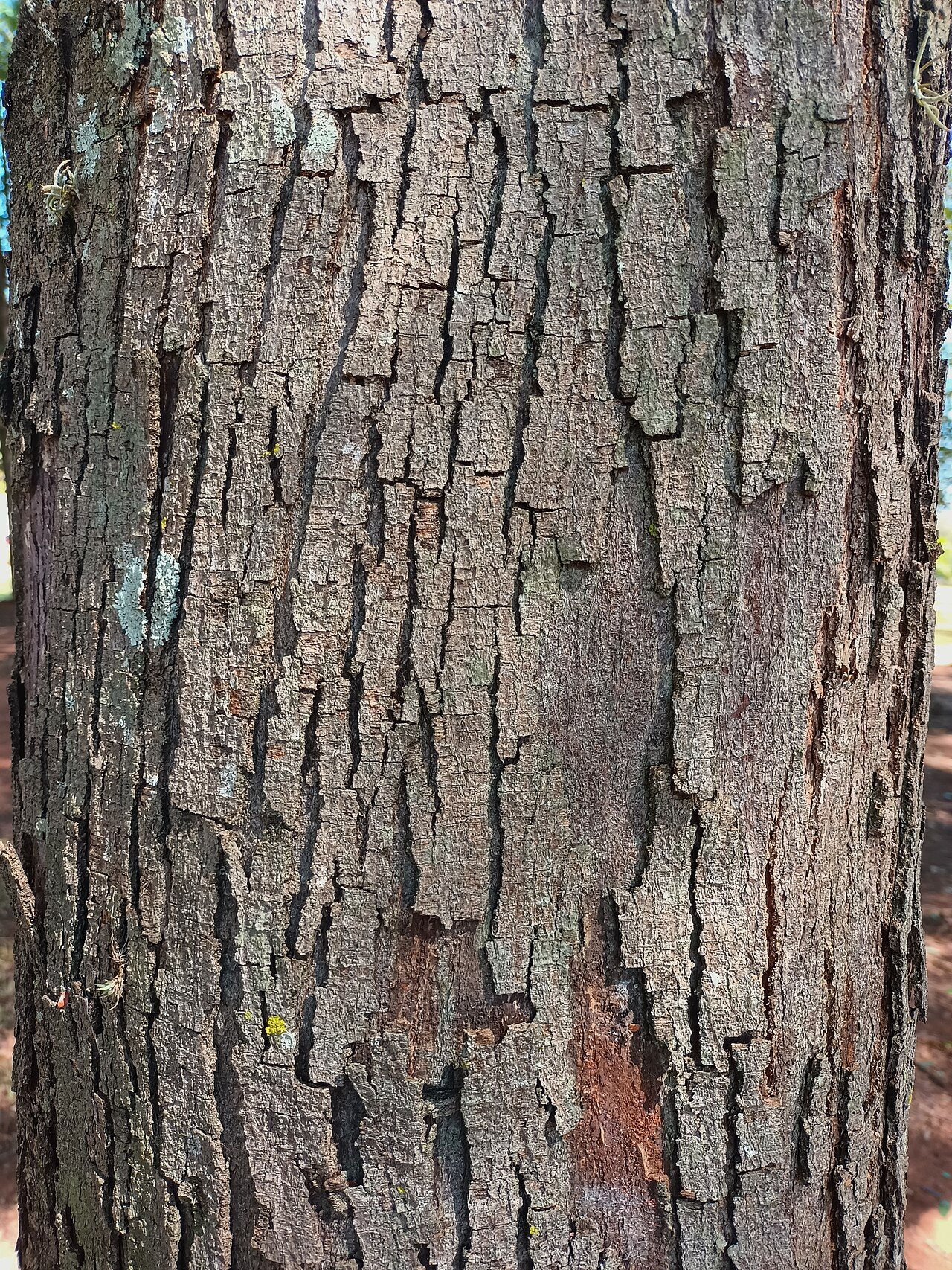
Dalbergia sissoo (Indian rosewood) is primarily used for furniture in northern India. Historically the main rosewood of the region, its wood is strong, tough, golden to dark brown, durable, and holds its shape well. It seasons easily but is difficult to work, taking a fine polish. It is used for high-quality furniture, plywoods, bridge piles, sporting goods, railway sleepers, and decorative veneers.
Quick Facts
- Taxon
- Dalbergia
Facts from the source article.
Lore & Background
The fossil record of Dalbergia includes several extinct species. A fossil seed pod of †Dalbergia phleboptera was found in a Chattian deposit in Aix-en-Provence, France. Fossils of †Dalbergia nostratum have been found in Lower Miocene rhyodacite tuff in Southern Slovakia near Lučenec. Fossil seed pods of †Dalbergia mecsekense were found in a Sarmatian deposit in Hungary, and †Dalbergia lucida fossils have been described from the late Miocene Xiaolongtan Formation in Yunnan Province, China.
Many Dalbergia species are important timber trees. Dalbergia nigra (Brazilian rosewood) and Dalbergia latifolia (East Indian rosewood) have been heavily used in furniture and musical instruments. Dalbergia decipularis yields Brazilian tulipwood, cream colored with red or salmon stripes, used in crossbanding and veneers. Dalbergia cearensis produces kingwood, purple with darker stripes. Cocobolo, mainly from Dalbergia retusa, is a Central American timber with orange red figure that fades to subdued tones. Dalbergia sissoo (Indian rosewood) is used for furniture in northern India, and its export is highly regulated due to recent high rates of tree death from unknown causes. African blackwood (Dalbergia melanoxylon) is used for woodwind musical instruments.
Dalbergia species are used as food plants by some Lepidoptera larvae, including Bucculatrix mendax which feeds exclusively on Dalbergia sissoo. The wood of Dalbergia species is notorious for causing allergic reactions due to sensitizing quinones.
Reader's Guide
Dalbergia is a genus of significant economic and ecological importance, primarily known for its timber species that produce rosewoods, cocobolo, kingwood, and African blackwood. These woods are prized for their decorative grain, color, and aromatic oils, making them essential materials in high-quality furniture, musical instruments (especially woodwinds), veneers, and traditional Chinese furniture. The genus has a wide tropical distribution across Central and South America, Africa, Madagascar, and Southern Asia. All Dalbergia species are protected under CITES, with Dalbergia nigra listed in Appendix I (most restrictive) and all others in Appendix II, reflecting conservation concerns due to overexploitation and habitat loss. The fossil record shows the genus has existed since at least the Oligocene (Chattian) in Europe and Asia. The wood's tendency to cause allergic reactions due to quinones is a notable characteristic. Dalbergia sissoo, historically the primary rosewood of northern India, faces recent unexplained tree death that has led to export regulation. The genus continues to be studied for its taxonomy, conservation, and sustainable use.
Did You Know?
- Fossil seed pods of †Dalbergia phleboptera have been found in a Chattian deposit in Aix-en-Provence, France.
- Dalbergia species are notorious for causing allergic reactions due to sensitizing quinones in the wood.
- African blackwood (Dalbergia melanoxylon) is used for making woodwind musical instruments.
Botanical Identity & Physical Properties
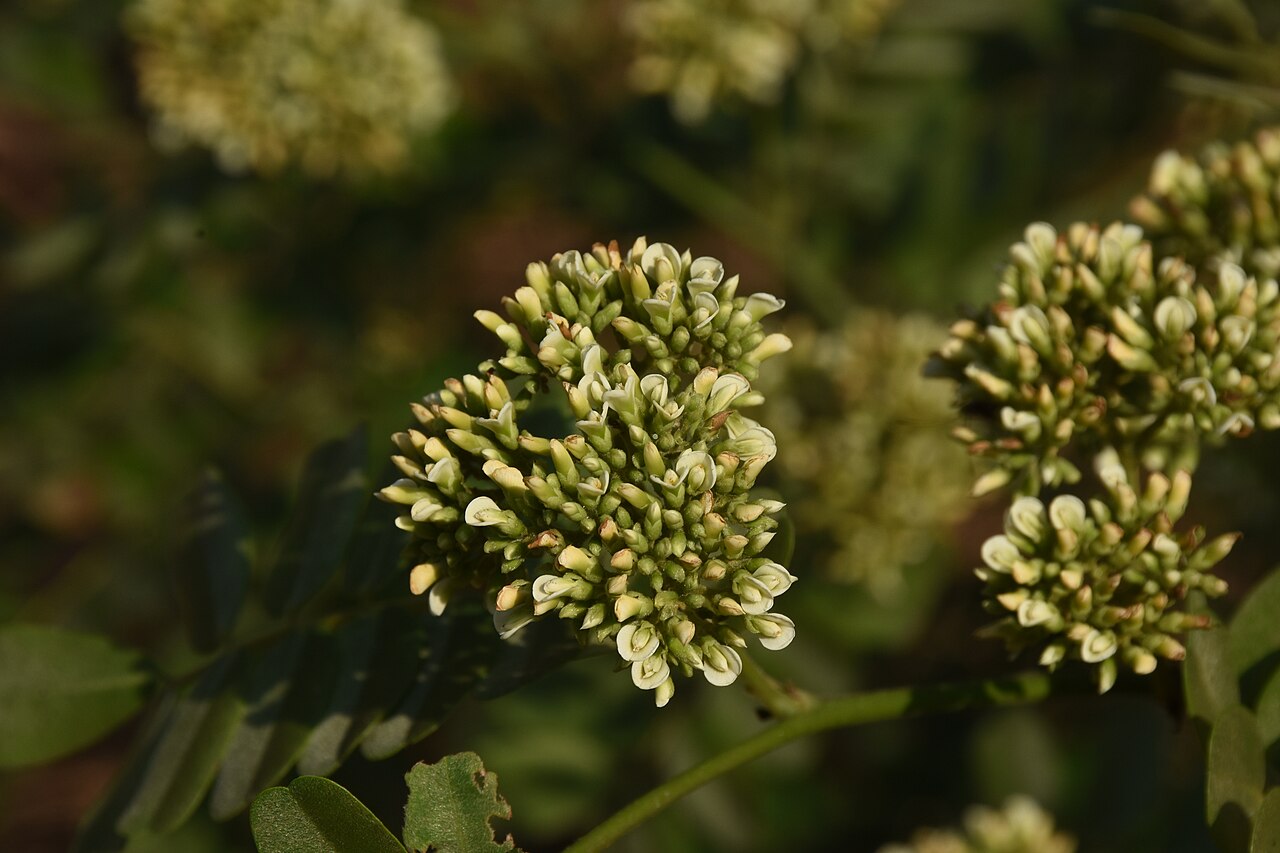
Dalbergia melanoxylon, commonly called African blackwood or grenadilla, is a flowering tree belonging to the Faboideae subfamily within the legume family Fabaceae. Its natural range stretches across seasonally dry African landscapes, from Senegal in the west to Eritrea in the east, and from Tanzania and Mozambique in the south to the northeastern reaches of South Africa. The tree is relatively modest in stature, typically reaching four to fifteen metres, and displays grey bark with spiny young shoots. During the dry season it sheds its alternate, pinnately compound leaves, each bearing six to nine leaflets spread across a six- to twenty-two-centimetre rachis. In bloom, it produces dense clusters of small white flowers, followed by slender pods three to seven centimetres long that hold one or two seeds. Perhaps most striking is its physical character: the dense, lustrous heartwood ranges from deep reddish tones to pure black, and it holds the distinction of being the hardest known wood, requiring roughly two thousand kilograms of force to drive a one-square-centimetre ball bearing into a sample. When turned on a lathe, the wood releases a faintly sweet, rose-like fragrance while simultaneously dulling cutting tools far faster than most timbers.
Musical & Craft Applications
The combination of exceptional density, dimensional stability, moisture repellence, and smooth machinability has made African blackwood a material of choice across centuries of craftsmanship. In the world of woodwind instruments, its properties are particularly prized: clarinets, oboes, transverse flutes, piccolos, recorders, Highland pipes, and Northumbrian smallpipes all benefit from the wood's acoustic and structural qualities. The Deering Banjo Company specifically selects grenadilla for the tone ring in its John Hartford-model banjo, noting that the wooden ring weighs less than brass or bronze alternatives and that it "plays in," meaning its tonal character improves with sustained use. The timber's legacy in furniture-making stretches back to ancient Egypt, and a persistent story holds that it once served as ballast in trading vessels, with enterprising Northumbrian pipe makers later repurposing discarded blackwood ballast to excellent effect. In the kitchen, German knife manufacturers Wüsthof, Böker, and J. A. Henckels all offer handles crafted from the wood, exploiting its natural resistance to moisture. Commercially, top-grade "A" billets command premium prices, and the wood is frequently listed alongside sandalwood, pink ivory, agarwood, and true ebony as among the most expensive timbers on Earth.
Conservation Crisis
Despite its cultural and economic importance, African blackwood faces a serious existential threat across much of its native range. In Kenya the species is classified as severely threatened, while populations in Tanzania and Mozambique are also in need of urgent attention. The core problem is a mismatch between demand and the tree's biology: a mature mpingo requires upwards of sixty years to reach harvestable size, yet it is being felled at rates that far outpace natural regeneration. Compounding this, the species exhibits low germination rates, and in many areas conservation planning is either inadequate or entirely absent, leaving populations and the genomic diversity they carry at risk of irreversible loss. Illegal smuggling of the wood, particularly into Kenya, has accelerated the depletion of stands. The result is that what was once a common timber in seasonally dry African forests is now one of the most sought-after and scarce hardwoods on the global market, with the very act of harvesting it driving the species closer to the edge of local extinction in its heartland.
Conservation Efforts & Alternative Sources
Several dedicated organisations are working to reverse the decline of mpingo. The Mpingo Conservation & Development Initiative (MCDI) combines research, public awareness, and on-the-ground conservation, with a particular emphasis on ensuring that local communities in harvesting areas receive a fair share of the revenue generated by the timber. By helping these communities obtain Forest Stewardship Certification, MCDI aims to create a financial incentive for environmentally responsible habitat management. The African Blackwood Conservation Project operates around Mount Kilimanjaro, replanting blackwood trees and running conservation education programmes in partnership with adult and women's groups to promote sustainable land use. In the United States, the Daraja Music Initiative (formerly Clarinets for Conservation) takes a creative approach, using music education in Tanzanian schools during summer programmes to teach students about the value of mpingo through performances, classroom lessons, and tree-planting activities. Meanwhile, small-scale growers in Naples, Florida have found that the warm climate, rich soil, and long growing season produce taller, larger trees with timber of superior quality, offering a more sustainable alternative to African harvests.
Gallery
Frequently Asked Questions
What is Dalbergia?
Dalbergia is a large genus of small-to-medium trees, shrubs, and lianas within the pea family (Fabaceae), specifically the Faboideae subfamily. It is grouped in the monophyletic Dalbergia clade, also referred to as the tribe Dalbergieae.
Where does Dalbergia naturally grow?
The genus has a broad tropical distribution, spanning Central and South America, Africa, Madagascar, and Southern Asia. Fossil records push its history back to at least the Chattian epoch in southern France and the Lower Miocene in the Lučenec region.
Why is Dalbergia so sought after in the timber trade?
Many Dalbergia species produce dense, aromatic heartwood commonly marketed as rosewood, prized for furniture, musical instruments, and ornamental carving. This high commercial value has made the genus a major target of illegal logging.
What is Dalbergia's conservation status?
The vast majority of Dalbergia species are listed in CITES Appendix II, while the critically threatened Dalbergia nigra (Brazilian rosewood) is elevated to Appendix I. A notable exception is Dalbergia sissoo, which is not CITES-listed.
Which Dalbergia species are the most well-known?
Dalbergia nigra (Brazilian rosewood), Dalbergia latifolia (Indian rosewood), Dalbergia sissoo (Indian sissoo), and Dalbergia melanoxylon (African blackwood) are among the most frequently cited members of the genus. Each is valued for distinct wood properties ranging from deep purple-brown to near-black tones.
More in Trees & Timber 1-19
Spotted an error? Know more?
Reader corrections go straight into our review queue. Suggest an edit · How this site is sourced