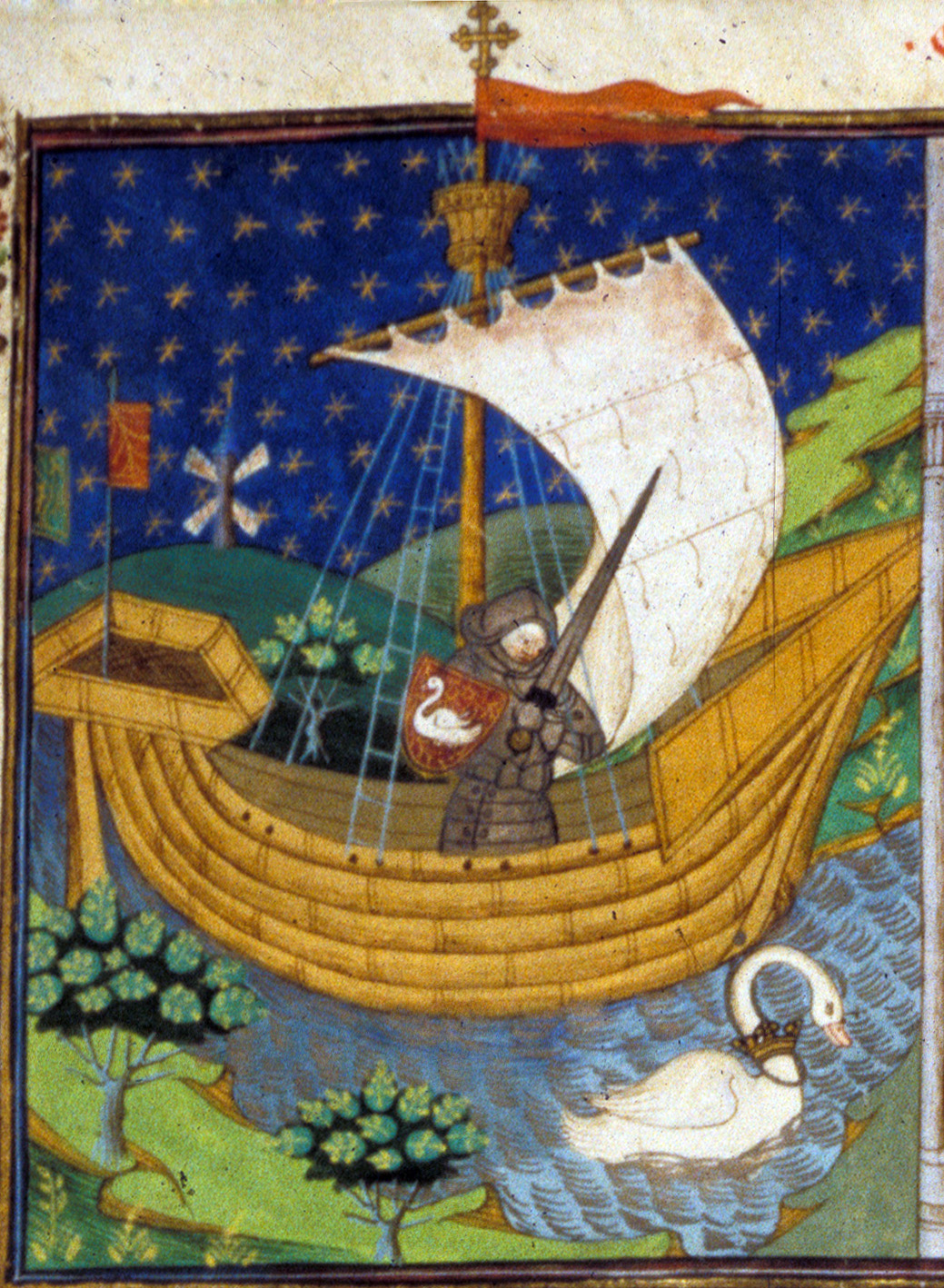
Knight of the Swan
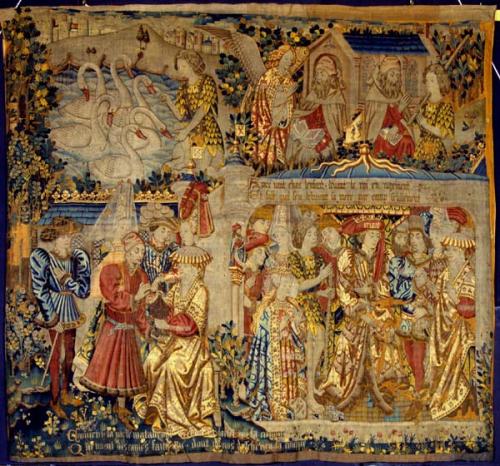
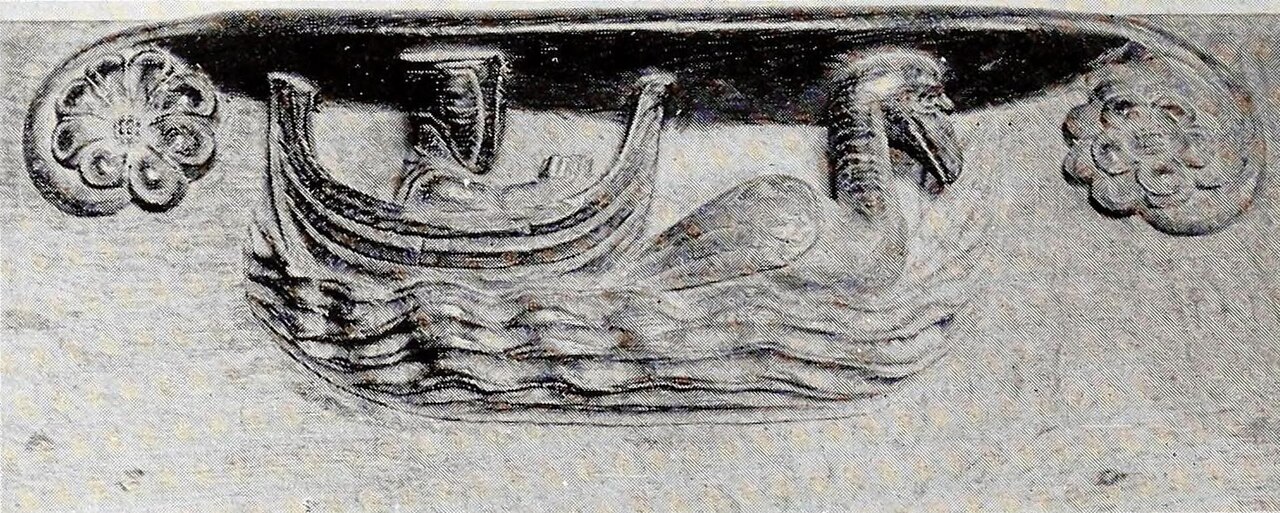
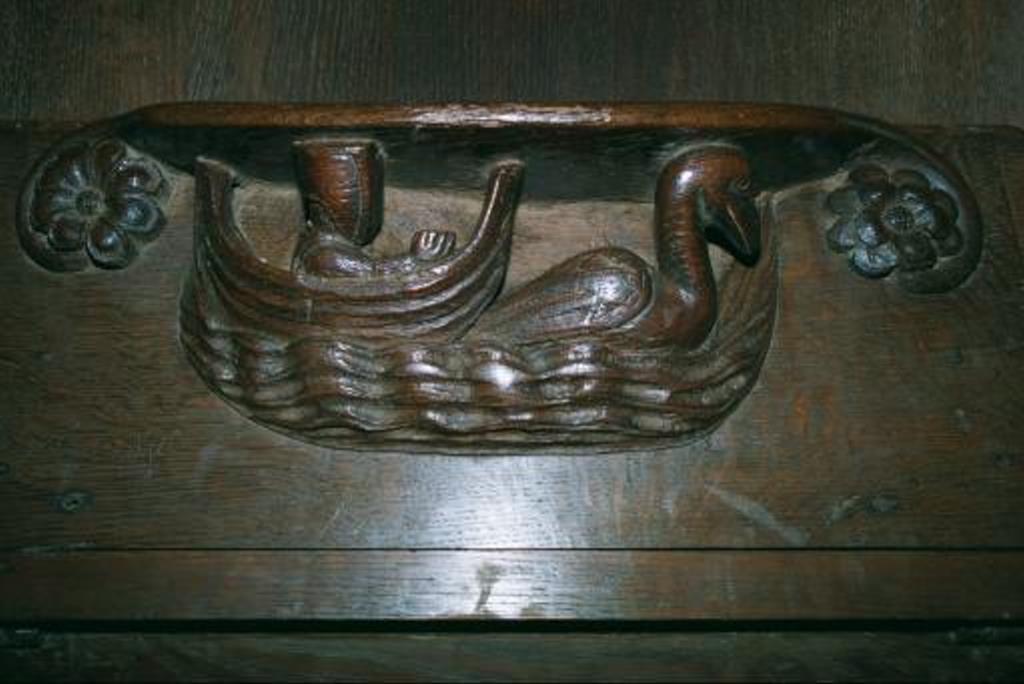
Mysterious knight who comes by swan-drawn boat, name never to be asked.

Unknown 15th-century artist · Public domain
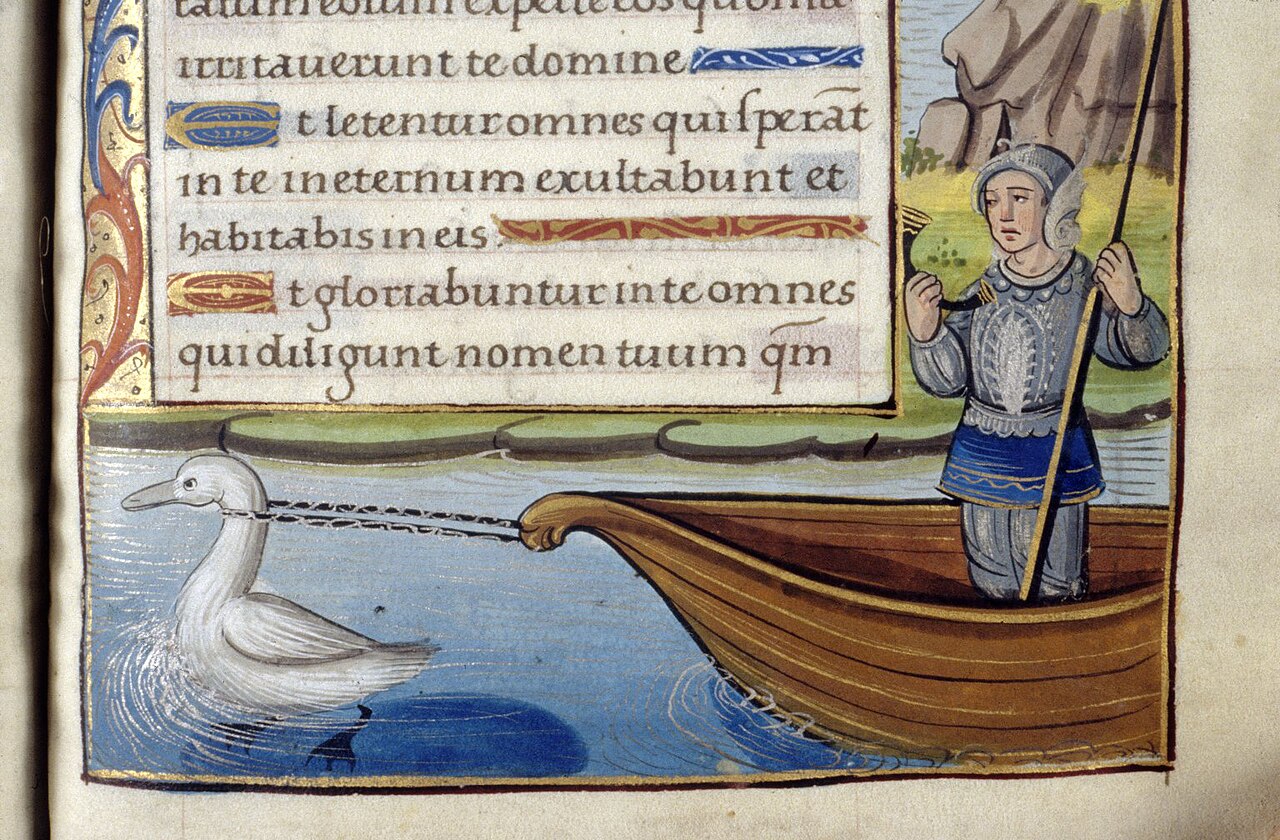
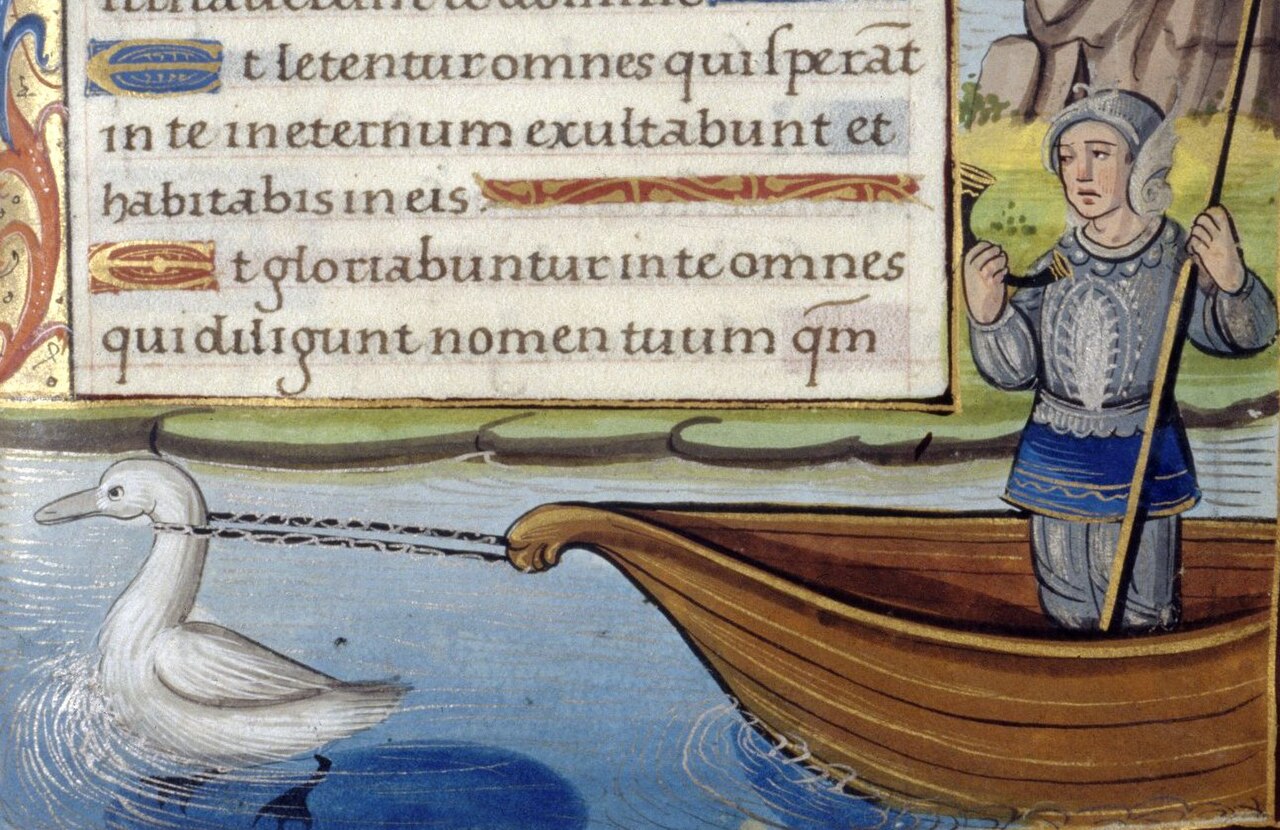
The Knight of the Swan, also known as the Swan Knight, is a figure from medieval romance who arrives in a swan-drawn boat to defend a damsel, on the condition that his name never be asked. The tale appears in multiple literary traditions, including the Old French Crusade cycle, where the Swan Knight (Le Chevalier au Cigne) is presented as the legendary ancestor of Godfrey of Bouillon, and in German works by Wolfram von Eschenbach and Konrad von Würzburg, which later inspired Richard Wagner's opera Lohengrin.
- Notable versions
- Le Chevalier au Cigne (c. 1192), Parzival (early 13th c.), Konrad von Würzburg (c. 1257–1280)
Lore & Background
The earliest known version of the Swan Knight romance is the Old French 'Le Chevalier au Cigne' (c. 1192), not the earlier Dolopathos, which contains a related but distinct swan-child narrative. The Old French Crusade cycle of chansons de geste adapted the tale around 1192, making the Swan Knight, also called Helias, the son of Orient of L'Islefort and his wife Beatrix. This version was adopted for the late fourteenth-century Middle English Cheuelere Assigne. The hero's mother's name varies by text: Elioxe, Beatrix, or in a Spanish version, Isomberte.
In German literature, Wolfram von Eschenbach incorporated the swan knight Loherangrin into his epic Parzival (first quarter of the 13th century). Konrad von Würzburg wrote 'Der Schwantritter' around 1257–1280 (the exact year is uncertain), featuring a nameless Swan Knight. These German texts were later used to construct the libretto for Richard Wagner's opera Lohengrin (Weimar 1850). Another example of the motif is Brangemuer, a knight who arrives in a swan-drawn boat and is later found dead; his adventure is taken up by Gawain himself in the First Continuation of Chrétien de Troyes' 'Perceval'.
The swan-children narrative, which provides an origin for the Swan Knight, appears to have been originally separate. Scholars such as Gaston Paris and Gédeon Huet argue it combines folktales including 'The Brothers Transformed into Birds' and 'The Sisters Jealous of their Cadette.' In the Dolopathos version, a young lord marries a swan maiden who gives birth to septuplets with golden chains; all but one boy regain human form, and the one permanently a swan becomes the Swan Knight.
Reader's Guide
The Knight of the Swan holds significance as a recurring motif in medieval European literature, bridging chivalric romance, Crusade mythology, and folk tradition. His story was adapted to provide a legendary genealogy for Godfrey of Bouillon, ruler of Jerusalem after the First Crusade, thereby linking a popular folk figure to historical Christian heroism. The tale's condition—that the knight's name must never be asked—creates a tension between trust and curiosity that resonates in later works, most famously Wagner's Lohengrin. The swan-children backstory, which scholars view as a hybrid of multiple folk narratives, adds depth by explaining the knight's swan companion. The motif's persistence across French, German, Spanish, and English texts demonstrates its wide appeal and adaptability. The uncertainty among scholars about the tale's origins—whether it is a fusion of separate stories or a single narrative with variants—reflects the complex transmission of medieval folklore. The Knight of the Swan thus serves as a case study in how legends evolve to serve political, literary, and cultural purposes.
Did You Know?
- The earliest Swan Knight romance is the Old French 'Le Chevalier au Cigne' (c. 1192); the earlier Dolopathos contains a related but distinct swan-child story.
- The Old French Crusade cycle made the Swan Knight the legendary ancestor of Godfrey of Bouillon.
- Wolfram von Eschenbach's Parzival and Konrad von Würzburg's text (c. 1257–1280) were used for Wagner's opera Lohengrin.
- Scholars debate whether the swan-children tale was originally separate from the Swan Knight story.
The Feathered Bond: Core Narrative Structure
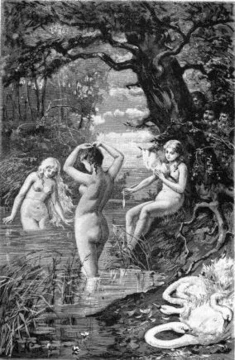
The Swan Maiden tale, catalogued as ATU 400, revolves around a deceptively simple yet powerful mechanism: a supernatural woman's ability to transform into a bird is bound to a specific garment, typically a swan skin or a cloak adorned with feathers. In the archetypal version, a man encounters a group of celestial maidens bathing in a body of water. He secretly steals, conceals, or even burns her feathered garment, thereby stripping her of the means to take flight or swim away. Deprived of her escape, she is compelled to accept marriage to her captor. The narrative often specifies that she is the youngest among several sisters, and in many tellings she ultimately departs from her husband, leaving him to search for her. The tale's emotional core lies in this tension between forced union and the inevitable loss of a being who belongs to another realm entirely. The transformation garment serves as both a plot device and a symbol of the boundary between the human and supernatural worlds.
Ancient Roots and Worldwide Echoes
The earliest surviving record of this narrative pattern comes from fourth-century China, preserved in texts such as the Sou shen ji and Guo Pu's Xuan zhong ji. In the Chinese version, a man from the Yuzhang region witnesses six or seven bird maidens and seizes one of their feather cloaks, compelling her into domestic life. Centuries later, Dunhuang manuscripts echo the motif with a poor man encountering three crane maidens at a lake. Across the Pacific, medieval Japanese chronicles like the Ōmi fudoki and Tango fudoki describe heavenly women whose feather garments are stolen or hidden, forcing them into marriage or adoption into mortal households. In Europe, the Völundarkviða and the Brothers Grimm's collection both preserve variants, while countless other cultures substitute different birds—goose, crane, duck, heron, even vultures and parrots. This extraordinary geographic spread, spanning East Asia, Europe, and the Americas, suggests a narrative impulse so fundamental that it has been independently shaped across dozens of traditions over millennia.
Valkyries, Smiths, and Sorrows: The Medieval European Tradition
In Germanic heroic legend, the swan maiden is intimately linked to the Valkyrie. Jacob Grimm himself noted this connection in his Teutonic Mythology. The tale of Wayland the Smith tells of Swanhilde, daughter of a mortal woman and a fairy king, who can fly as a swan. Wounded by a spear, she is rescued by the master craftsman Wieland, and they marry. When the hostile Neidings steal his magic ring, abduct Swanhilde, and cripple Wieland, he fashions wings for himself and escapes, destroying their stronghold in the process. In the Völsunga saga, King Agnar withholds the valkyrie Brynhild's swan shirt, binding her to his service. The Kara-lied presents a similar valkyrie, Kára, alongside her lover Helgi. In the Irish tradition, the Oidheadh chloinne Lir ranks among the great Sorrows of Storytelling, while The Wooing of Étaine and the love story of Óengus and Caer Ibormeith—where she appears as a swan wearing a golden chain with 150 swan-form attendants—show how deeply bird-transformation permeates Celtic narrative.
The Magic Wife: A Universal Motif
Folklorists have long debated the precise boundaries of the swan maiden category. While the name evokes a specific bird, the underlying tale type—ATU 400, The Man on a Quest for His Lost Wife—encompasses a far wider spectrum. The supernatural spouse might be a crane, a heron, a dove, or even a non-migratory species like a parrot. In some traditions the figure is not a bird at all but a star, a celestial nymph, or a lake fairy. Russian folklorist Eleazar Meletinskii devoted extensive study to the broader human-animal marriage tradition, warning that folding all such stories under the swan maiden label would distort the field. Scholars increasingly situate these tales within the even larger Magic Wife motif, which is regarded as one of the most widely distributed narrative patterns on Earth, possibly stretching back many millennia. It is considered the best-known supernatural wife figure in world storytelling and one of the most interconnected motifs, referenced and echoed across an enormous range of other tales.
Gallery
Frequently Asked Questions
Who is Knight of the Swan?
The Knight of the Swan is a legendary figure from medieval romance who arrives on a boat pulled by swans to come to the aid of a damsel in peril. His defining trait is a strict taboo: no one is permitted to ask his name, or the protection he offers will be lost.
What is Knight of the Swan's role and how does he appear?
He functions as a mysterious, otherworldly protector who shows up unannounced in a swan-drawn vessel to defend a besieged or wronged lady. His power is tied entirely to the secrecy of his identity; the moment his name is spoken aloud, his mission ends and he must leave.
Why is Knight of the Swan important in literary history?
He is one of the most widely retold figures in medieval romance, appearing across French, German, and other European traditions. His legend is the direct source material for Richard Wagner's opera Lohengrin, making him a bridge between twelfth-century courtly literature and nineteenth-century music.
Which texts feature Knight of the Swan?
The earliest known version is the Old French Le Chevalier au Cigne (circa 1192), in which he is cast as the mythical ancestor of Godfrey of Bouillon. German retellings follow in Wolfram von Eschenbach's Parzival (early 13th century) and in Konrad von Würzburg's romance (roughly 1257–1280).
More in Swan maidens 1-21
Spotted an error? Know more?
Reader corrections go straight into our review queue. Suggest an edit · How this site is sourced