
AS-203
Uncrewed Saturn IB flight testing S-IVB restart for lunar missions.

NASA · Public domain
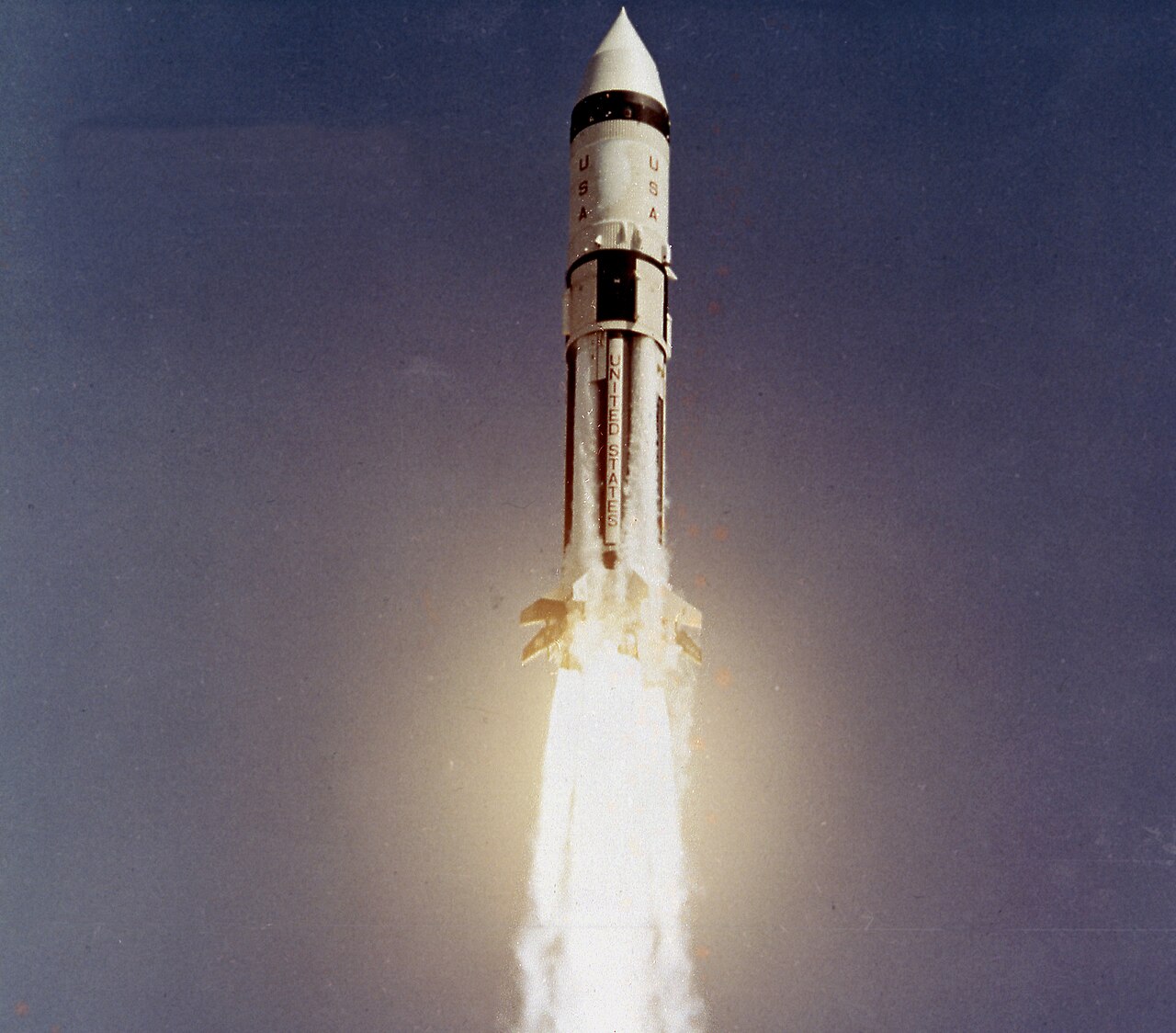
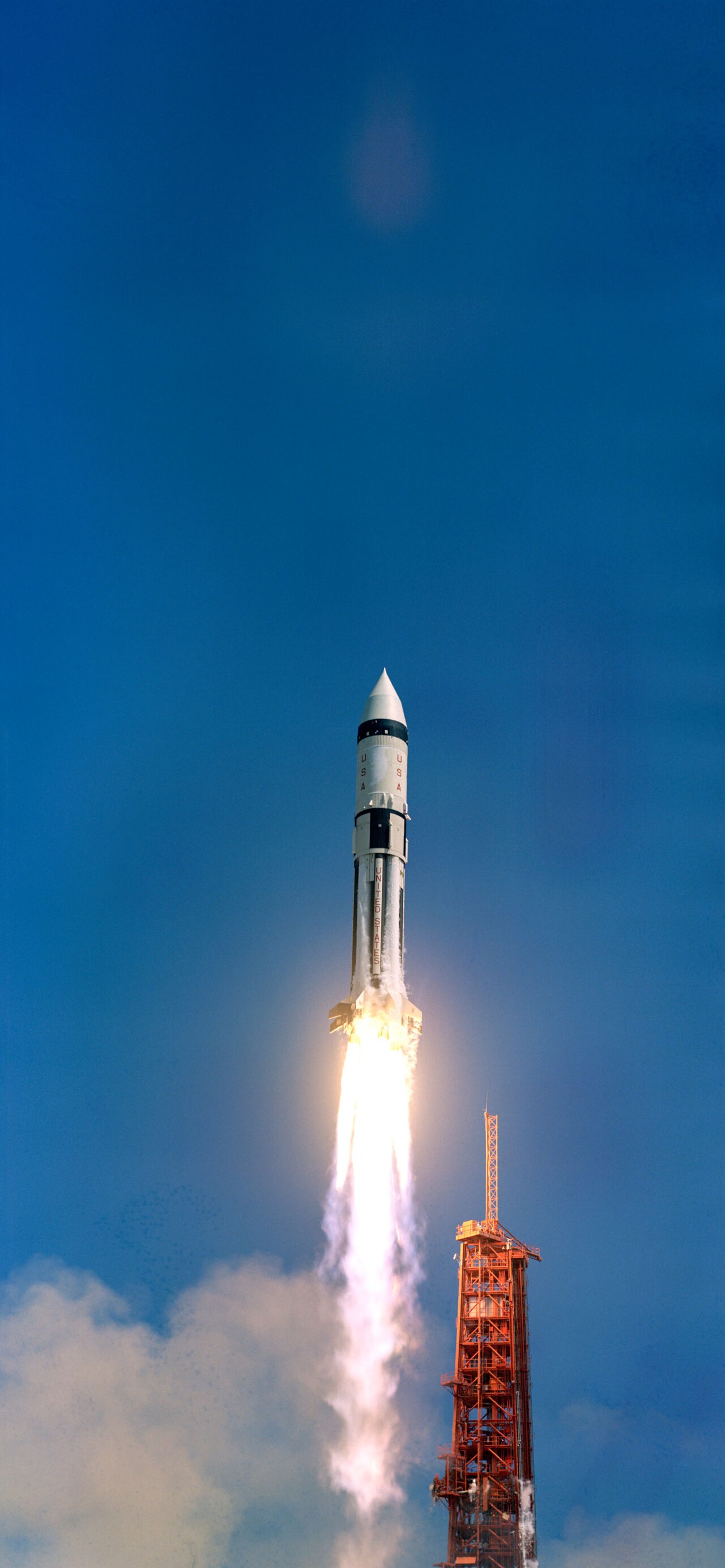
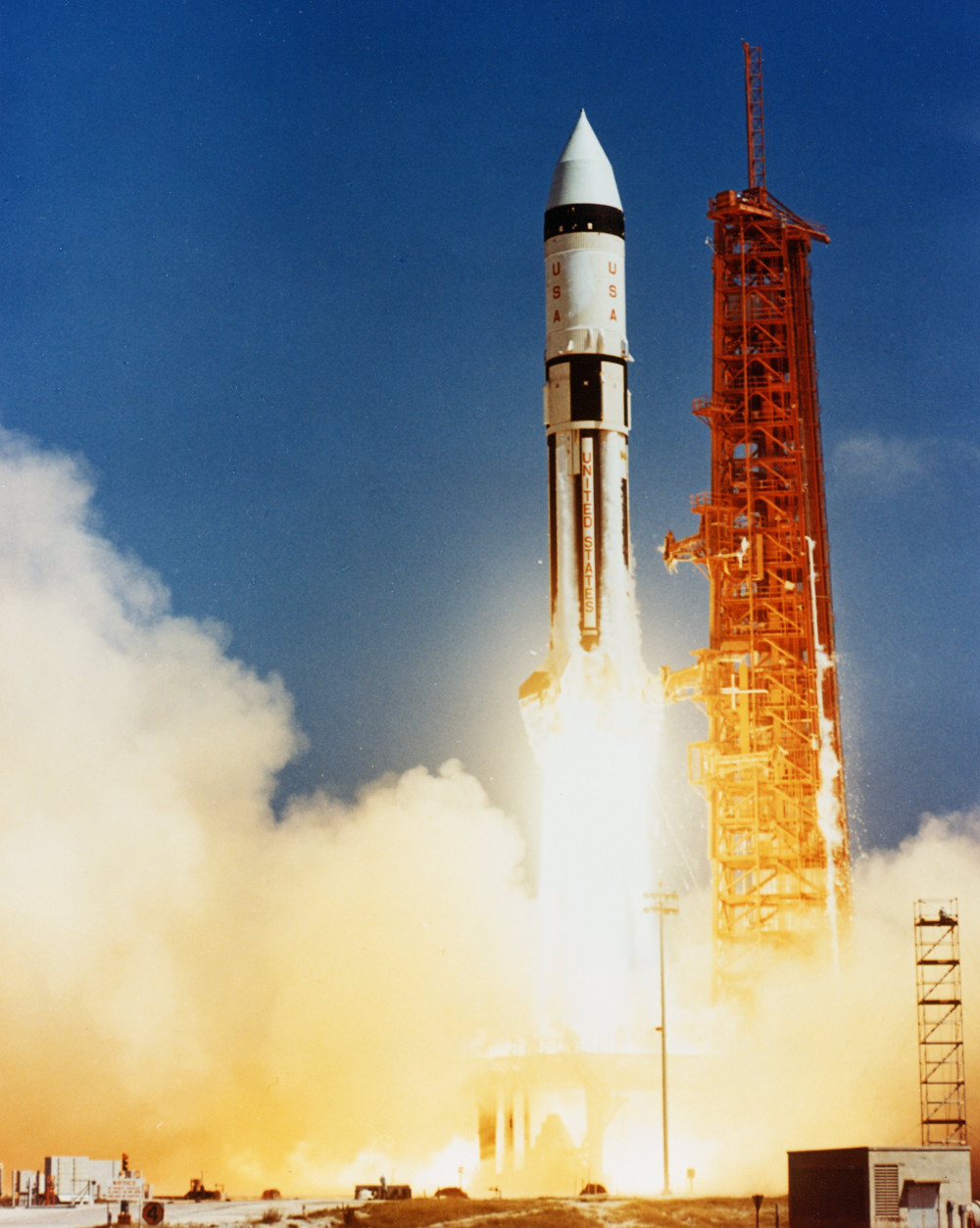
AS-203, also called SA-203 or Apollo 3, was an uncrewed Saturn IB mission launched on July 5, 1966. Unlike earlier flights, it had no command and service module; instead, an aerodynamic nose cone replaced the payload. The goal was to test the S-IVB stage’s ability to restart in orbit—a capability later essential for sending Apollo astronauts from Earth orbit toward the Moon. The mission succeeded in its main objectives, though the S-IVB was lost after four orbits when a differential pressure test pushed it beyond design limits, causing an explosion.
The flight focused on how weightlessness affected the liquid hydrogen fuel inside the S-IVB-200’s second-stage tank. For lunar missions, a modified version—the S-IVB-500—would serve as the Saturn V’s third stage, requiring a brief burn to reach Earth orbit, then a restart for the trans-lunar injection. Engineers needed to confirm that anti-slosh measures kept the hydrogen properly positioned, and that fuel lines and engines stayed at the right temperatures for a restart. To leave enough residual propellant in orbit, the liquid oxygen load was slightly reduced, so the remaining hydrogen matched what a Saturn V would have in its parking orbit. The tank carried 88 sensors and two TV cameras to record fuel behavior. This was also the first Saturn IB launch from Pad 37B.
In spring 1966, AS-203 was moved ahead of AS-202 because the command and service module for AS-202 was delayed. The S-IVB stage reached Cape Kennedy on April 6, 1966; the S-IB first stage arrived six days later, and the Instrument Unit two days after that. Technicians began assembling the booster at Pad 37B on April 19. Testing again encountered issues similar to those on AS-201, including cracked solder joints in printed-circuit boards, which required over 8,000 replacements.
The rocket launched on its first attempt, July 5. The S-IVB and Instrument Unit reached a circular orbit of 100 nautical miles (190 km; 120 mi). Primary test objectives were completed during the first two orbits: the hydrogen behaved mostly as predicted, with adequate control over its location and engine temperatures for restart. The next two orbits were used for extra experiments to aid future cryogenic stage designs. These included a free-coast test to observe and manage the negative acceleration from aerodynamic drag; a rapid fuel tank depressurization test; and a closed f
- Mission
- AS-203 (SA-203, Apollo 3)
- Launch Date
- July 5, 1966
- Vehicle
- Saturn IB
- Launch Site
- Pad 37B
- Payload
- None (aerodynamic nose cone)
- Primary Objective
- Verify S-IVB stage restart capability
- Outcome
- Success (stage destroyed after objectives met)
Lore & Background
The purpose of the AS-203 flight was to investigate the effects of weightlessness on the liquid hydrogen fuel in the S-IVB-200 second-stage tank. The lunar missions would use a modified version of the S-IVB-200, the S-IVB-500, as the third stage of the Saturn V launch vehicle. This called for the stage to fire briefly to insert the spacecraft into an Earth parking orbit, before restarting the engine for flight to the Moon. In order to design this capability, engineers needed to verify that the anti-slosh measures designed to control the hydrogen's location in the tank were adequate, and that the fuel lines and engines could be kept at the proper temperatures to allow engine restart. To keep residual propellants in the tanks on orbit, there would be no command and service module payload, with an aerodynamic nose cone in its place. The tank was equipped with 88 sensors and two TV cameras to record the fuel's behavior.
Reader's Guide
AS-203 was significant because it validated the design concept of the restartable S-IVB-500 version, which was essential for the Apollo program's lunar missions. The S-IVB stage and Instrument Unit were inserted into a 100-nautical-mile circular orbit. The primary design test objectives were carried out on the first two orbits, and the hydrogen was found to behave mostly as predicted, with sufficient control over its location and of engine temperatures required for restart. The next two orbits were used for extra experiments, including a free-coast experiment, a rapid fuel tank depressurization test, and a closed fuel tank pressurization test. The closed fuel tank experiment led to the collapse of the common bulkhead separating the hydrogen and oxygen tanks, causing an explosion that destroyed the stage. Despite this, NASA classified the mission as a success, having achieved all primary objectives. In September, Douglas Aircraft Company declared the design ready for use on the Saturn V to send men to the Moon.
Did You Know?
- AS-203 was the first launch of a Saturn IB from Pad 37B.
- The S-IVB stage was equipped with 88 sensors and two TV cameras to record fuel behavior.
- The stage was destroyed during a closed fuel tank pressurization test that exceeded design limits.
- The mission carried no command and service module, using an aerodynamic nose cone instead.
Mission Purpose & Engineering Challenge
The AS-203 mission, also catalogued as SA-203 or Apollo 3, was conceived with a single critical question at its heart: could the S-IVB stage's liquid hydrogen fuel be managed reliably in the weightless environment of orbit, and could its engine be restarted after a coast period? The answer was essential to the entire Apollo lunar architecture, because the S-IVB-500 variant would serve as the third stage atop the Saturn V, tasked with a brief burn to place the crewed spacecraft into a parking orbit followed by a second ignition to send it toward the Moon. To validate this sequence, engineers needed proof that anti-slosh baffles could keep the hydrogen where it belonged and that fuel lines and engine components could be held at temperatures permitting a safe relight. The vehicle carried no command and service module; instead, an aerodynamic nose cone capped the stack, and the liquid oxygen load was deliberately trimmed so the residual hydrogen mirrored what a Saturn V parking orbit would leave behind. Eighty-eight sensors and two television cameras monitored the fuel's behavior throughout the flight. The mission also marked the inaugural Saturn IB launch from Pad 37B at Cape Kennedy.
Four Orbits of Data
The rocket lifted off on its first attempt on July 5, 1966, and the S-IVB together with its Instrument Unit settled into a circular orbit roughly 100 nautical miles above Earth. The primary design-verification work was completed across the first two revolutions, during which the liquid hydrogen behaved largely as the models had predicted. Engineers confirmed that the slosh-control hardware kept the fuel in the expected region of the tank and that the engine and feed-line temperatures remained within the window needed for a subsequent restart. With those core objectives met, the remaining two orbits were devoted to supplementary experiments intended to inform the next generation of cryogenic stage designs. These included a free-coast maneuver to measure and manage the small negative acceleration imparted by residual atmospheric drag on the vehicle, a rapid depressurization of the hydrogen tank, and a closed-tank pressurization test. It was this final experiment that would prove fatal to the hardware, though the data it produced had already served its purpose in the broader design validation.
The Bulkhead Rupture
The closed-tank pressurization test was designed to reproduce a failure mode already observed in ground testing. By sealing the hydrogen tank's vents while allowing the oxygen tank to continue bleeding off, engineers created a growing pressure differential across the common bulkhead that separated the two propellant chambers. The differential climbed to as much as 39.4 pounds per square inch, a level expected to crush the shared wall. The rupture occurred during a two-minute gap in tracking, as the vehicle passed between the Manned Spacecraft Center and the Trinidad station. When the Trinidad radar reacquired the target, the return showed the vehicle broken into multiple fragments. Telemetry was never recovered. NASA's post-flight analysis concluded that a spark or mechanical impact at the moment of structural failure had ignited the residual propellants, producing a violent explosion that destroyed the stage entirely. Four orbits of hard-won data ended in a cloud of shrapnel, yet the critical engineering questions had already been answered.
Validation and the Road to the Moon
Despite the dramatic loss of the S-IVB stage, NASA officially classified AS-203 as a mission success. Every primary objective had been met before the catastrophic test, and the data confirmed that the restartable S-IVB-500 concept was sound. In September of that year, Douglas Aircraft Company, the prime contractor responsible for building the stage, formally declared the design ready for integration onto the Saturn V launch vehicle. That declaration cleared a critical path: the same stage validated in orbit on a bare Saturn IB would now carry astronauts beyond Earth orbit and toward the lunar surface. The mission also carried smaller but notable firsts, including the first Saturn IB launch from Pad 37B. Behind the scenes, preparation had been far from smooth; the command and service module originally slated for the companion AS-202 flight was delayed, forcing AS-203 to fly first, and technicians had to replace more than 8,000 cracked solder joints on printed-circuit boards before the vehicle was cleared for launch.
Gallery
Frequently Asked Questions
What is AS-203?
AS-203 (also called SA-203 or Apollo 3) was an uncrewed Saturn IB rocket flight that lifted off from Pad 37B on July 5, 1966. Instead of carrying a spacecraft, it topped out with a simple aerodynamic nose cone in place of the usual command and service module.
What was AS-203's main purpose?
The flight was built to prove that the S-IVB upper stage could fire its engine a second time after coasting in orbit. That restart capability later became the key maneuver for pushing Apollo crews from Earth orbit out toward the Moon.
How did AS-203 differ from earlier Saturn IB test flights?
Previous uncrewed flights carried a full command and service module on top, but AS-203 replaced that payload with just an aerodynamic nose cone. This let engineers concentrate exclusively on the S-IVB stage's performance rather than testing the entire Apollo stack.
What happened to the S-IVB after the mission?
After completing four successful orbits, the stage was lost when a differential pressure test pushed it past its structural limits and triggered an explosion. Despite that loss, the flight had already met its primary restart objective before the failure.
Why is AS-203 considered a successful mission?
It verified that the S-IVB engine could reliably reignite in orbit, a step essential for the trans-lunar injection burns that later Apollo crews would depend on. Without that confirmation, the path to sending astronauts to the Moon would have remained uncertain.
More in Successful space missions 1-24
Spotted an error? Know more?
This is a living reference — every entry is fact-audited, and reader corrections feed straight into our audit queue. Suggest an edit · See this site's audit record