
Apollo 5
First uncrewed test flight of the Apollo Lunar Module.

NASA; restored by Michel Vuijlsteke · Public domain
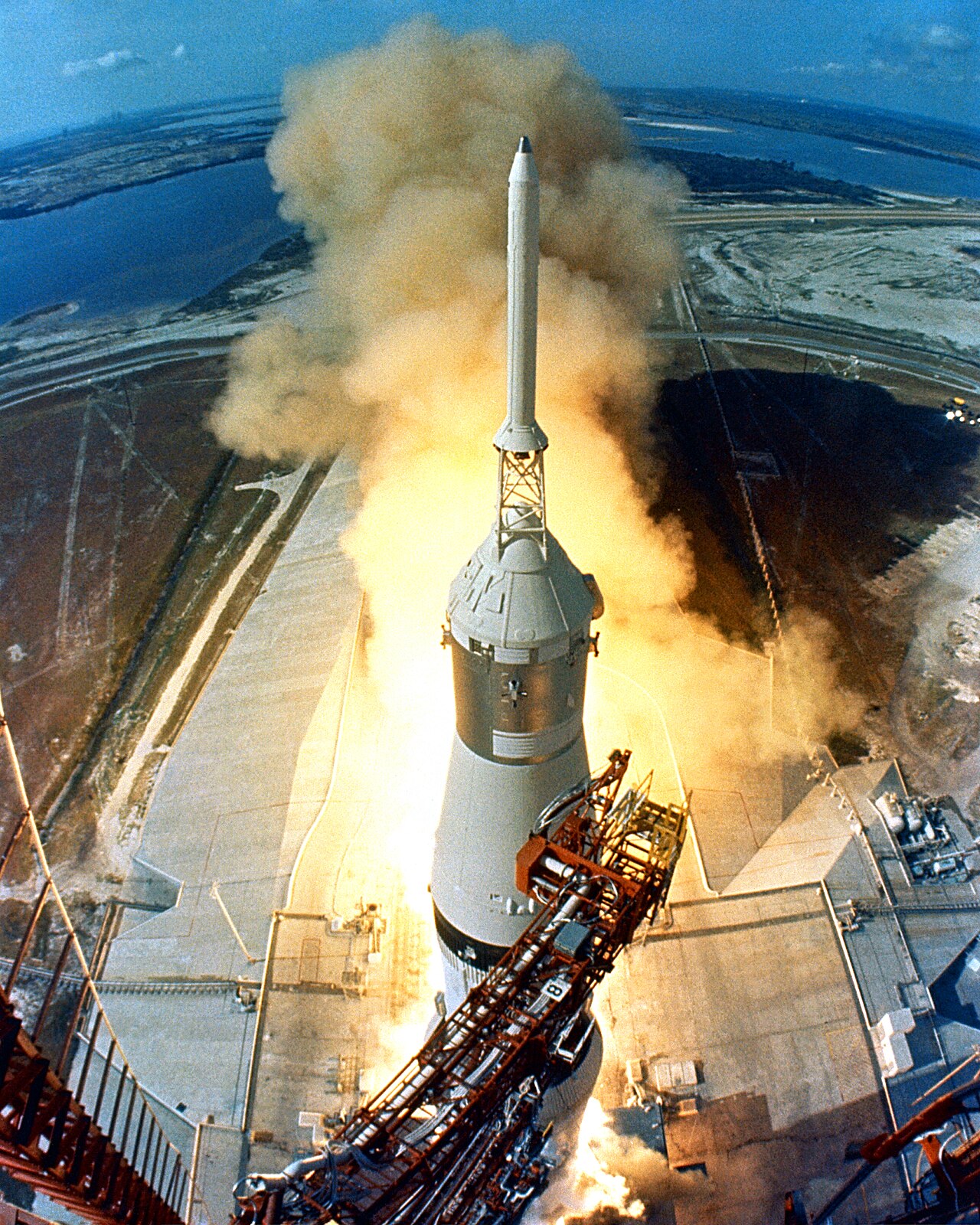
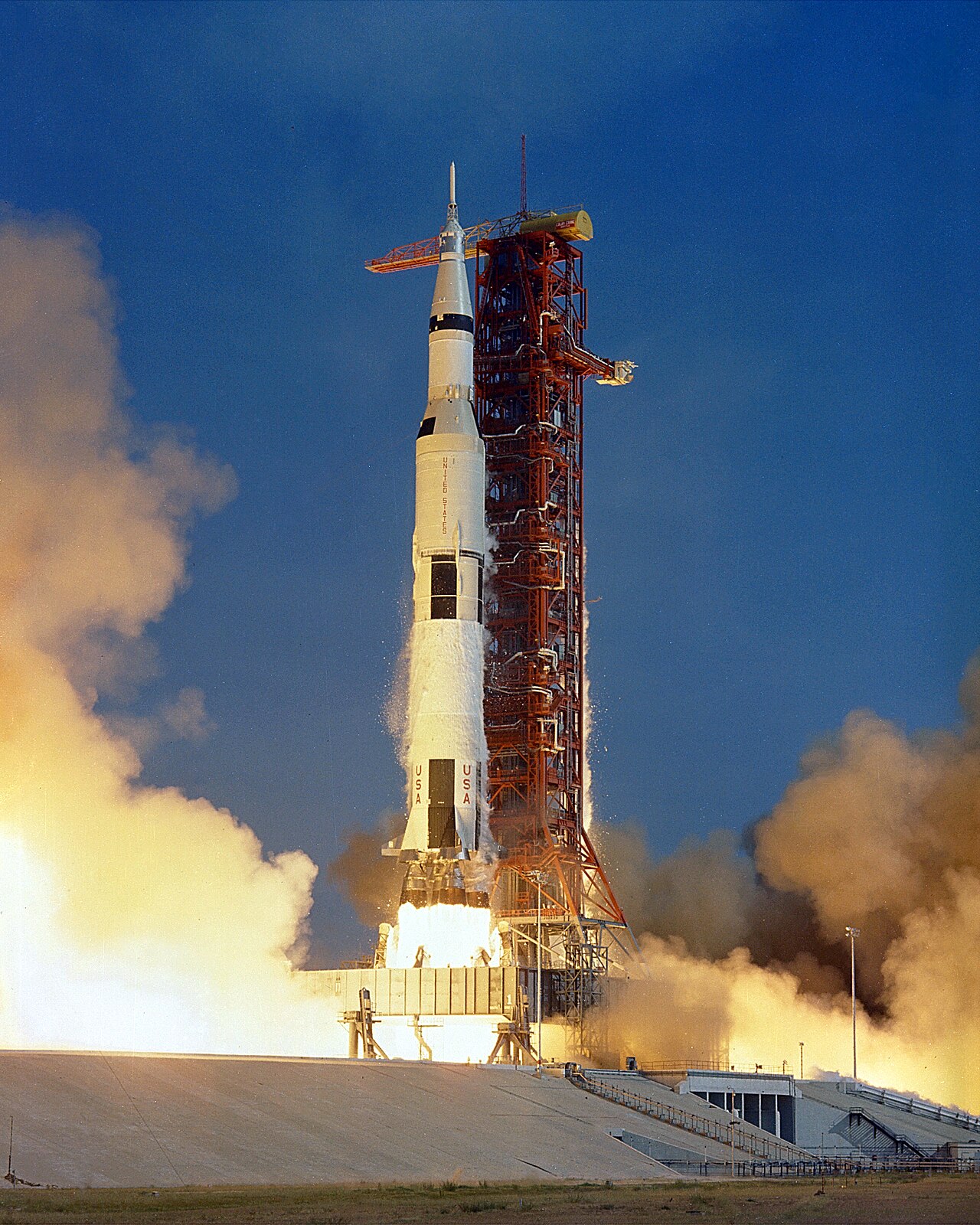
Apollo 5 launched without a crew on January 22, 1968. It was the first flight of the Apollo Lunar Module, the vehicle later used to land astronauts on the Moon. The mission succeeded, but because of programming issues, the flight followed a different plan than originally intended. The test was so effective that NASA canceled a second uncrewed LM flight, which helped speed up the goal of landing an astronaut on the Moon before the 1960s ended.
The mission faced long delays, much like Apollo 4, mainly because the Lunar Module—built by Grumman Aircraft—was behind schedule. The Saturn IB rocket originally meant for LM-1 was reassigned from the canceled Apollo 1 mission, not taken down and replaced. LM-1 reached the Kennedy Space Center in June 1967. The following months were spent testing it and placing it on top of the Saturn IB. After final holdups caused by equipment problems, the countdown started on January 21, 1968, and the rocket launched the next day.
Once in orbit, the LM separated from the S-IVB booster, and the testing program began. However, a planned engine burn was automatically aborted when the Apollo Guidance Computer saw the craft wasn't moving as fast as expected. A pre-planned alternate mission was then executed, which still achieved all the goals for testing LM-1. The mission’s success made a second uncrewed LM test unnecessary, moving NASA closer to landing astronauts on the Moon.
- Launch date
- January 22, 1968
- Alternative designation
- None (not AS-204; that designation belonged to Apollo 1)
- Launch vehicle
- Saturn IB (SA-204R)
- Spacecraft
- Lunar Module LM-1
- Mission type
- Uncrewed test flight
- Launch site
- Cape Kennedy Air Force Station, Launch Complex 37B
- Mission result
- Successful (alternate mission executed)
Lore & Background
Apollo 5 was the first flight of the Apollo Lunar Module (LM), built by Grumman Aircraft. The mission was long delayed due to setbacks in LM development. The Saturn IB rocket used for Apollo 5 was originally assigned to Apollo 1, but after the fire that killed three astronauts, it was reassigned to this mission rather than being taken down and replaced. LM-1 arrived at the Kennedy Space Center in June 1967, and after months of testing and delays, the countdown began on January 21, 1968, with launch the following day.
Once in orbit, the LM separated from the S-IVB booster, but a planned burn was aborted automatically when the Apollo Guidance Computer detected the craft was not going as fast as planned. A pre-planned alternate mission was then executed, during which the mission's goals of testing LM-1 were accomplished. The mission was successful enough that a second uncrewed test flight was cancelled.
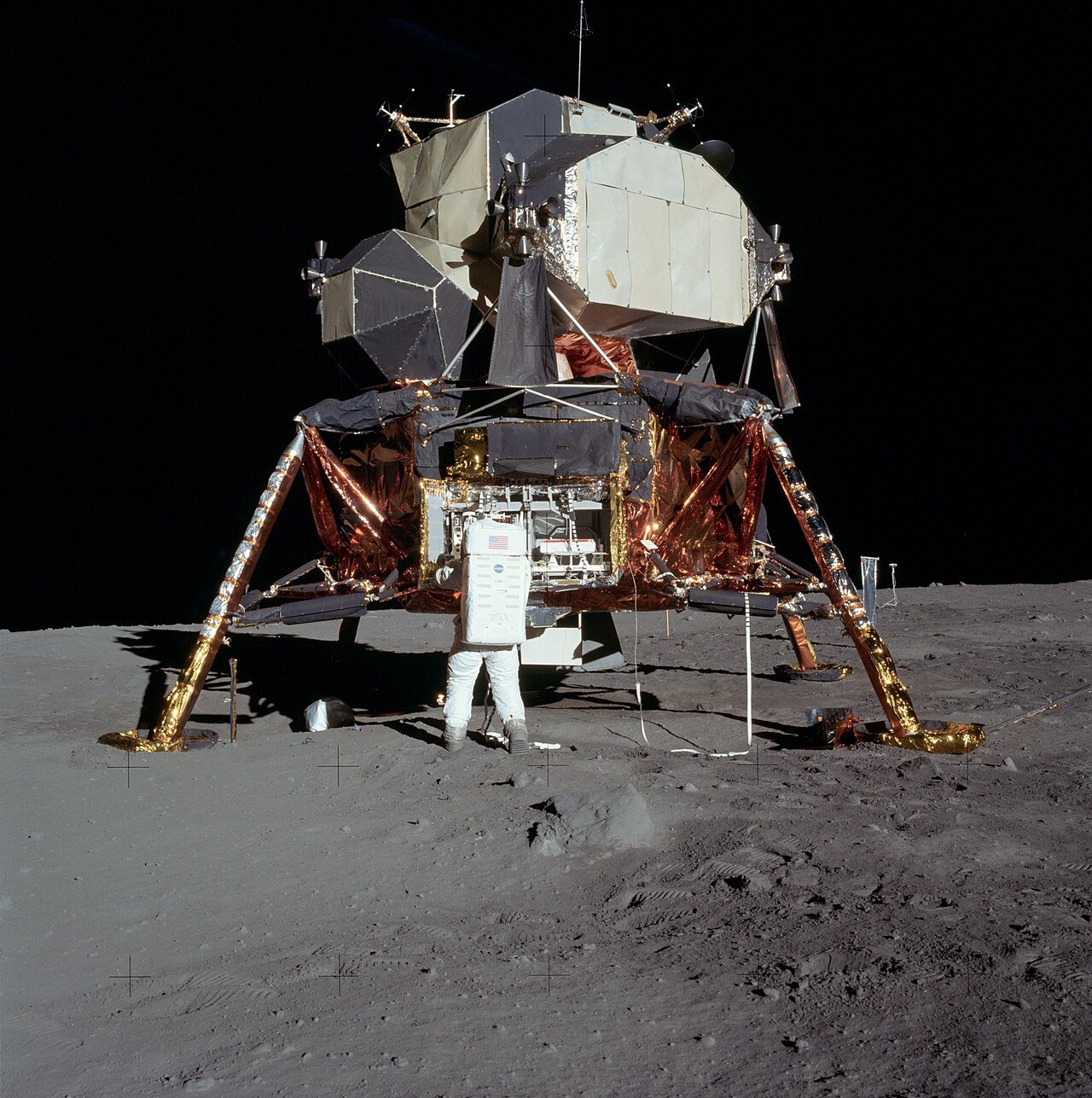
The LM-1 had no landing legs and its windows were replaced with aluminum plates after a window on a later LM broke during testing. A mission programmer allowed remote control. Not all systems were fully activated; for example, primary batteries were partially discharged and oxygen tanks only partially full.
Reader's Guide
Apollo 5 was a critical step in the Apollo program, demonstrating the Lunar Module's basic functionality in orbit despite a programming glitch that forced an alternate mission plan. The success of this uncrewed flight allowed NASA to cancel a planned second uncrewed LM test, accelerating the schedule toward a crewed lunar landing. The mission also used the Saturn IB rocket originally built for Apollo 1, repurposed after the fatal fire. By verifying the LM's ascent and descent engine operations and the 'fire in the hole' test procedure, Apollo 5 provided essential data for subsequent crewed missions. Its legacy lies in proving that the LM could operate in space, paving the way for the Apollo 9 Earth-orbit crewed test and ultimately the Apollo 11 lunar landing.
Did You Know?
- The Saturn IB rocket used for Apollo 5 was originally assigned to Apollo 1 and survived the fire unscathed.
- LM-1 had no landing legs and its windows were replaced with aluminum plates due to a window failure on a later LM.
- The alternate mission flown by Apollo 5 was pre-planned as a contingency, not improvised on the spot.
Mission Designation and Program Sequence
Apollo 5 occupied a specific and somewhat unusual position in the Apollo flight numbering scheme. Following the tragic 1967 cabin fire that killed the AS-204 crew during a ground test, NASA posthumously renamed that mission Apollo 1. This left the first three uncrewed flights—AS-201, AS-202, and AS-203—without simple Apollo numbers, though briefly considering renaming them Apollo 1-A, 2, and 3 was discussed. Uncrewed testing then resumed with the Saturn V, and the flights were designated Apollo 4, 5, and 6. Apollo 5 was classified as a B-type mission, meaning its primary objective was an uncrewed test of the Lunar Module. This placed it between two A-type missions (Apollo 4 and 6) that focused on testing the Command/Service Module and the Saturn V together. The first crewed Apollo flight would not occur until Apollo 7, making Apollo 5 a critical uncrewed stepping stone in the sequence that ultimately led to the Moon.
The All-Up Testing Revolution
Before George Mueller took over as NASA's Associate Administrator for Manned Space Flight in 1963, the prevailing assumption was that twenty Saturn V rockets would need to be built, with at least ten unpiloted test flights required to qualify the vehicle for crew. This conservative approach mirrored the one-stage-at-a-time testing philosophy that had governed Saturn I development. Mueller shattered that paradigm by introducing what became known as the all-up testing philosophy: every test flight would carry three live stages plus the Apollo spacecraft, rather than testing individual stages in isolation. Apollo 5 was a direct product of this revolution. Instead of being one of ten or more uncrewed flights, it was merely the second of just three planned Saturn V uncrewed tests. The production lot for the Saturn V was slashed from twenty units down to fifteen, and the entire development timeline was compressed enough to make the 1969 lunar landing goal achievable. Apollo 5 thus embodied a fundamentally different engineering culture—one that trusted integrated systems testing over incremental, stage-by-stage validation.
Qualified Success and the Cancelled Third Flight
Apollo 5 was the second of three uncrewed test flights planned to human-rate the Saturn V, the super heavy-lift vehicle that would carry crewed Apollo missions to the Moon. The first flight achieved full success, and Apollo 5 delivered what NASA termed a qualified success. Together, these two outcomes were sufficient to convince program leadership that a third uncrewed test was unnecessary, and it was cancelled. This decision was a direct consequence of the all-up testing philosophy that had made each flight so information-rich. The cancellation compressed the remaining schedule, clearing the path for the first crewed mission, Apollo 7, to proceed in Earth orbit, followed by the rapid succession of crewed flights that culminated in the Apollo 8 lunar orbit mission and ultimately the Apollo 11 landing in July 1969. Had the older one-stage-at-a-time approach been maintained, the program might have required ten or more unpiloted flights before astronauts could board the Saturn V, potentially pushing the lunar landing well past the 1969 target. Apollo 5's qualified success was the hinge on which that acceleration turned.
Testing the Lunar Module in the Full Stack
Apollo 5 carried a specific and singular mission objective: to test the Lunar Module uncrewed, earning its classification as a B-type flight in the alphabetical mission taxonomy proposed by Owen Maynard in September 1967. While the A-type missions (Apollo 4 and 6) focused on validating the Command/Service Module alongside the Saturn V, Apollo 5's payload was the LM—the very spacecraft that would one day carry astronauts down to the lunar surface. This testing was conducted within the context of the full Saturn V stack under the all-up philosophy, meaning the LM was evaluated as part of the complete three-stage launch vehicle rather than in isolation. Earlier in the program, a separate suborbital Lunar Module test had been conducted on the Saturn IB, and its success had led to the cancellation of a planned second such flight. Apollo 5 thus represented the next logical step: proving the LM's performance in the operational launch environment of the Saturn V, building confidence that the vehicle could be trusted with the crewed lunar landing missions that would follow.
Gallery


Frequently Asked Questions
What was Apollo 5?
Apollo 5 was an uncrewed test flight that lifted off from Cape Kennedy on January 22, 1968. It marked the very first flight of the Apollo Lunar Module, the spacecraft later tasked with putting astronauts on the Moon's surface.
What did Apollo 5 actually test?
The mission was designed to validate the Lunar Module's systems in space, including its descent and ascent engines. The LM-1 vehicle rode atop a Saturn IB rocket (SA-204R) from Launch Complex 37B.
Why did Apollo 5 follow a different flight plan than expected?
Programming problems during the flight forced the ground team to alter the originally intended sequence of operations. Even with that deviation, the mission was still judged a success.
How did Apollo 5 change the Moon-landing timeline?
The test proved so thoroughly effective that NASA scrapped the planned second uncrewed Lunar Module flight. Eliminating that extra step helped keep the program on pace to land a human on the Moon before the 1960s were over.
What caused the long delays before Apollo 5 launched?
Grumman Aircraft, the contractor building the Lunar Module, fell behind its production schedule, pushing the launch back significantly. The situation mirrored the schedule troubles seen on the earlier Apollo 4 mission.
More in Successful space missions 1-24
Spotted an error? Know more?
This is a living reference — every entry is fact-audited, and reader corrections feed straight into our audit queue. Suggest an edit · See this site's audit record