
Apollo 4
First uncrewed test flight of the Saturn V rocket.

NASA · Public domain
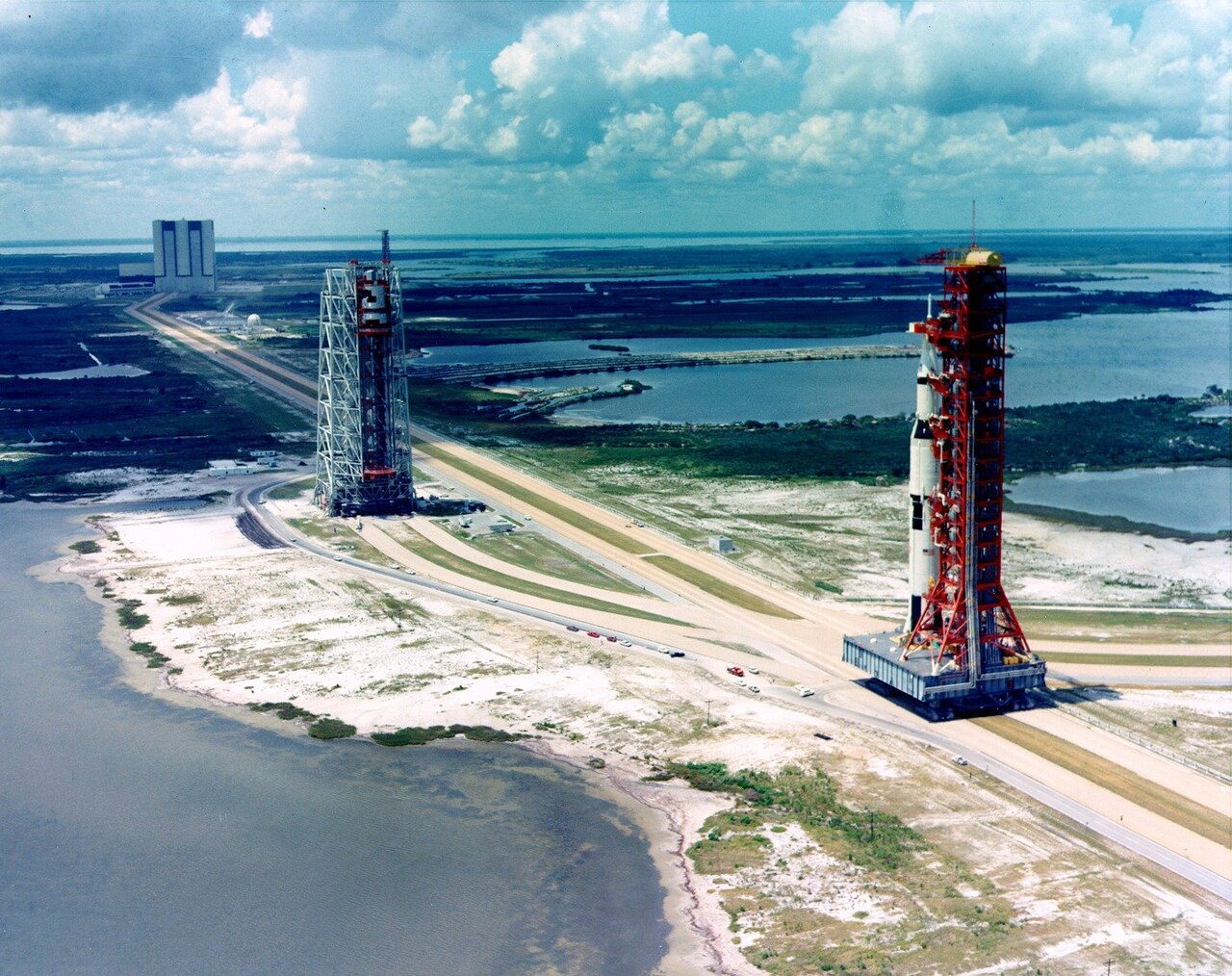
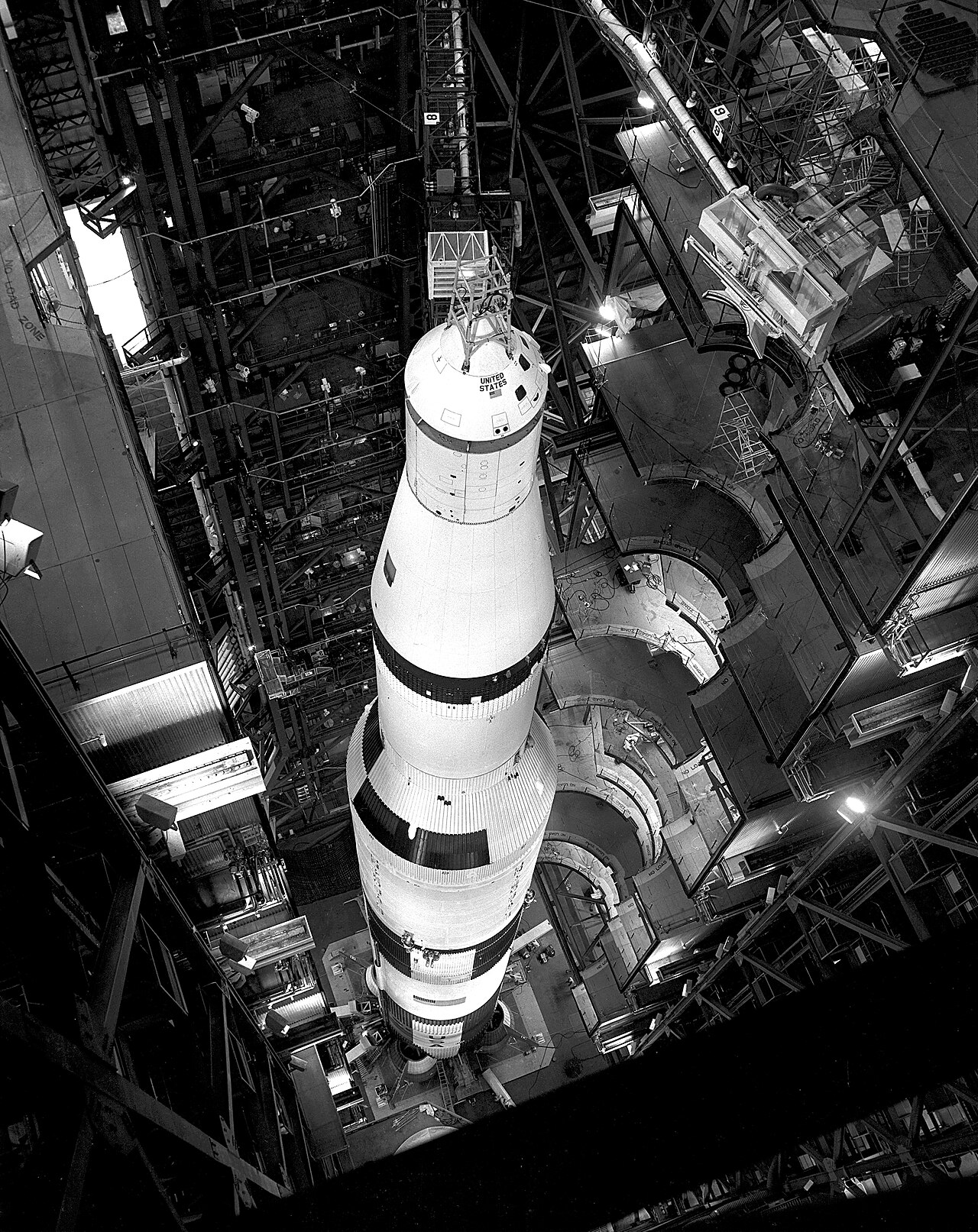
Apollo 4 launched on November 9, 1967, as the first uncrewed test of the Saturn V rocket—the same vehicle that would later carry astronauts to the Moon. It was assembled inside the Vehicle Assembly Building and marked the first launch from Kennedy Space Center’s Launch Complex 39, a facility built specifically for the Saturn V. This mission was an “all-up” test, meaning every stage of the rocket and the spacecraft were fully operational on its maiden flight, a novel approach for NASA at the time.
The flight saw the debut of the S-IC first stage and the S-II second stage, and it demonstrated the S-IVB third stage’s ability to restart in orbit. The spacecraft was a modified Block I command and service module, used to test several key Block II upgrades, including its heat shield under conditions simulating the speed and angle of a return from the Moon. Originally scheduled for early 1967, the launch was pushed back to November due to problems with spacecraft components and difficulties during pre-flight testing. Additional inspections were required after the Apollo 1 fire in January 1967, which killed the crew.
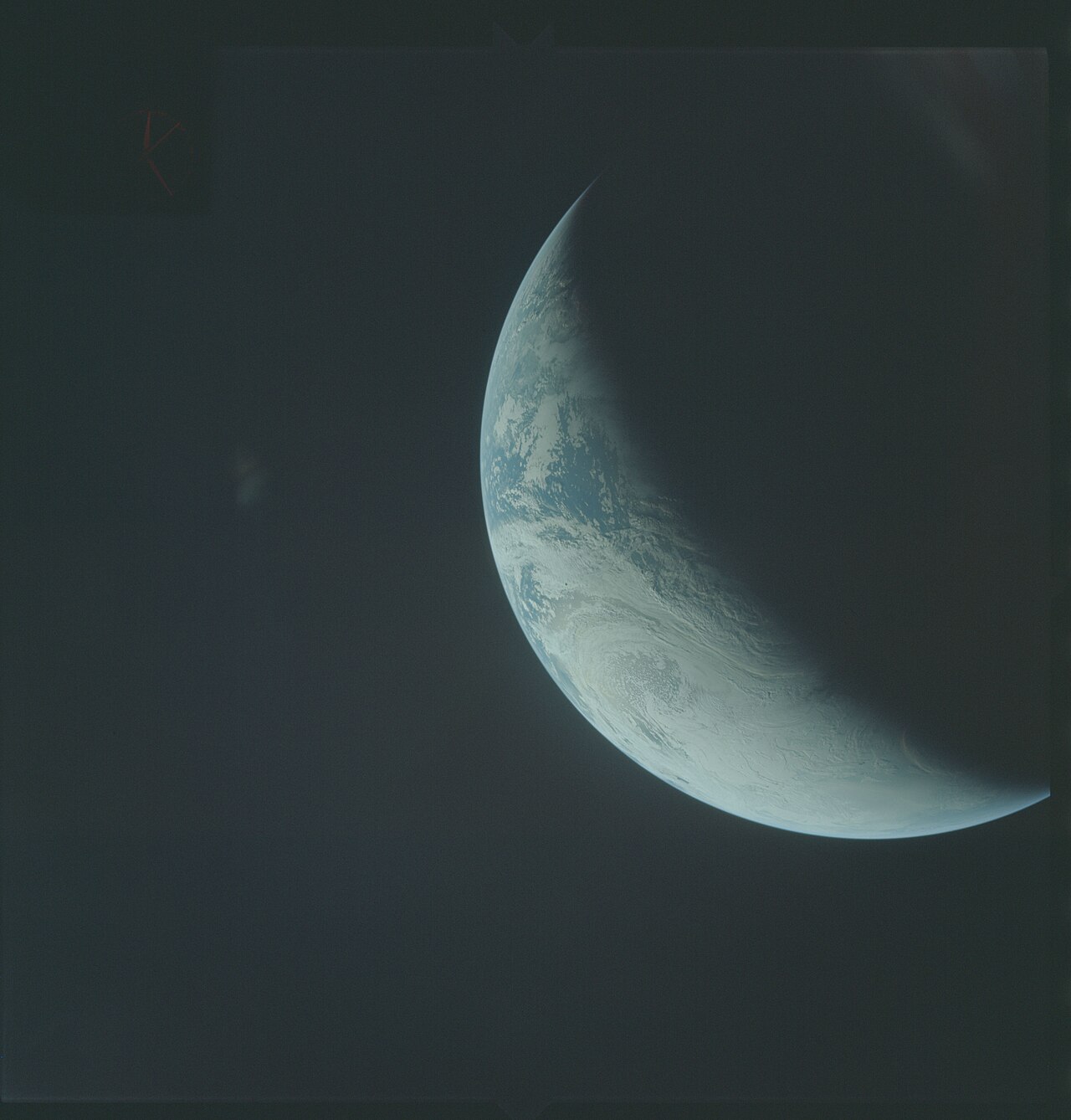
Apollo 4 splashed down in the Pacific Ocean less than nine hours after liftoff, having met all its objectives. NASA declared the mission a complete success, confirming that the Saturn V was operational—a critical step toward landing astronauts on the Moon and returning them safely before the end of the 1960s.
**Background**
In 1961, President John F. Kennedy proposed that the United States land a man on the Moon and bring him back safely by the end of the decade. To achieve this, NASA needed a suitable launch vehicle and settled on the Saturn C-5, a three-stage rocket based on existing designs. Approved by NASA in 1962, the agency initially planned a first test launch in 1965 and a crewed flight by 1967, leaving ample time to meet Kennedy’s goal. In early 1963, the C-5 was redesignated as the Saturn V.
By late 1962, NASA decided on a lunar orbit rendezvous approach: the Saturn V’s S-IVB third stage would propel the complete Apollo spacecraft toward lunar orbit. Once there, astronauts destined for the surface would transfer to the Lunar Excursion Module, which would separate, land, and later be discarded after the crew returned to the main spacecraft for the journey home. The existing launch facilities were inadequate for the
- Mission
- Apollo 4
- Launch date
- November 9, 1967
- Launch vehicle
- Saturn V (SA-501)
- Launch site
- Kennedy Space Center, Launch Complex 39
- Mission type
- Uncrewed test flight
- Duration
- Less than nine hours
- Outcome
- Splashdown in Pacific Ocean; considered a complete success
Lore & Background
Apollo 4 was an "all-up" test, meaning all rocket stages and spacecraft were fully functional on the initial flight, a first for NASA. It was the first time the S-IC first stage and S-II second stage flew. It also demonstrated the S-IVB third stage's first in-flight restart. The mission used a Block I command and service module modified to test several key Block II revisions, including its heat shield at simulated lunar-return velocity and angle.
The launch was planned for early 1967, but delayed to November 9 because of problems with various elements of the spacecraft and difficulties during pre-flight testing. Additional inspections were also required after a fire killed the Apollo 1 crew in January 1967. The mission splashed down in the Pacific Ocean slightly less than nine hours after launch, having achieved its objectives.
Reader's Guide
Apollo 4 was a critical milestone in the Apollo program, proving that the Saturn V launch vehicle worked as designed. Its success was an important step towards achieving the main objective of landing astronauts on the Moon and bringing them back safely before the end of the 1960s. The mission validated the all-up testing philosophy, where all stages and spacecraft were tested together on the first flight, saving time and resources. It also demonstrated the ground systems at Kennedy Space Center could successfully launch a Saturn V, paving the way for crewed missions. The delays caused by technical problems and the Apollo 1 fire underscored the challenges NASA faced, but the mission's complete success restored confidence in the program.
Did You Know?
- Apollo 4 was the first flight from Kennedy Space Center and the first using Launch Complex 39.
- It was the first time the S-IC first stage and S-II second stage flew.
- The mission demonstrated the S-IVB third stage's first in-flight restart.
- Inspections after the Apollo 1 fire found 1,407 errors in the spacecraft.
The All-Up Testing Revolution
George Mueller's arrival as NASA's Associate Administrator for Manned Space Flight in 1963 fundamentally reshaped how the Saturn V would be proven. Before his tenure, the prevailing assumption was that twenty Saturn Vs would be built, with at least ten unpiloted test flights following the conservative one-stage-at-a-time approach used for the Saturn I. Mueller rejected this incremental philosophy and instead championed what became known as all-up testing: every uncrewed flight would carry three live stages plus the full Apollo spacecraft stack. This bold strategy compressed the development timeline dramatically. The production lot for the Saturn V was slashed from twenty units down to fifteen, and only three uncrewed flights were planned to human-rate the super heavy-lift vehicle. Apollo 4 was the first of those three, and its success—combined with the qualified success of the second flight—was enough to cancel the third entirely. What had once seemed to require a decade of cautious testing was accomplished in a matter of years, keeping the 1969 lunar landing goal firmly in reach.
A Numbering Legacy
The designation Apollo 4 carries a strange weight of history that few spaceflight missions share. In the early days of the program, the first three uncrewed flights carried designations like AS-201, AS-202, and AS-203. The fourth flight in that sequence, AS-204, was originally slated to be the first crewed mission. When a catastrophic cabin fire on the launch pad killed the entire crew during a ground test in 1967, AS-204 was posthumously renamed Apollo 1. This single act of remembrance created a numbering gap that still echoes through the program's history. The first three uncrewed flights never received simple Apollo numbers, though briefly renaming them Apollo 1-A, Apollo 2, and Apollo 3 was considered. After the tragedy, uncrewed testing resumed with the Saturn V and Lunar Module, and those flights were designated Apollo 4, 5, and 6. The first crewed mission to actually fly was therefore Apollo 7. For a program that would put twelve humans on the Moon, the numbering of its early test flights remains one of its most tangled and human footnotes.
Proving the Stack
Apollo 4 was classified as an A-type mission, one of two uncrewed flights designed to validate the Command/Service Module and the Saturn V launch vehicle as an integrated system. Under the all-up philosophy, the vehicle flew with all three Saturn V stages live and the full Apollo spacecraft on top. The mission's purpose was to demonstrate that this super heavy-lift combination could be trusted to eventually carry astronauts on a lunar trajectory. It was part of a broader sequence of uncrewed test flights beginning in 1966 that collectively demonstrated the safety of the launch vehicles and spacecraft to carry humans. The program had already tested individual elements—the Saturn I in low Earth orbit, the Saturn IB with a Command Module and half-fueled Service Module, and the Lunar Module in its own dedicated test—but Apollo 4 represented the first time the complete Saturn V stack was challenged in flight. Its success, alongside the qualified success of the follow-on A-type mission, gave NASA the confidence to proceed toward crewed operations and ultimately the four crewed flights beginning in October 1968 that proved the spacecraft could execute a lunar landing.
The Flight That Saved a Flight
The most consequential outcome of Apollo 4 may not have been what it proved, but what it made unnecessary. NASA had originally planned three uncrewed test flights to human-rate the Saturn V before sending astronauts aboard. Apollo 4 delivered a clean success, and the second A-type mission achieved a qualified success. Together, those two results were sufficient for NASA to cancel the third planned uncrewed test entirely. This decision compressed the timeline between uncrewed validation and the first crewed flight, Apollo 7, and kept the overall program schedule aligned with the 1969 lunar landing goal. The ripple effects extended to manufacturing as well: the Saturn V production lot had already been reduced from twenty to fifteen units under Mueller's all-up strategy, and the early cancellation of the third test meant fewer vehicles needed to be built and tested. In a program that would ultimately see twelve astronauts walk on the Moon and return 842 pounds of lunar samples to Earth, Apollo 4's quiet success in the uncrewed phase helped ensure that the crewed phase arrived on schedule.
Gallery

Frequently Asked Questions
What was Apollo 4?
Apollo 4 was NASA's maiden uncrewed test of the Saturn V rocket, flying on November 9, 1967. It proved the massive launch vehicle capable of one day delivering astronauts all the way to the Moon.
What made Apollo 4's testing strategy unusual?
It was NASA's first 'all-up' test, with every rocket stage and the spacecraft running at full capability on that very first flight. Rather than peeling back components one by one, the agency committed the entire stack to a single proving run.
Where did Apollo 4 launch from, and why was that notable?
The rocket lifted off from Launch Complex 39 at Kennedy Space Center, making it the first vehicle ever to use that pad. The facility had been purpose-built to handle the sheer size of the Saturn V, and Apollo 4 was its inaugural occupant.
How long did the Apollo 4 mission last?
The entire flight, from liftoff to splashdown, took less than nine hours. During that window the S-IC first stage and S-II second stage both made their operational debuts.
Why do fans consider Apollo 4 a turning point for the program?
By validating the full Saturn V stack in a single test, it removed the biggest hardware uncertainty standing between NASA and crewed lunar missions. Without that clean all-up demonstration, the subsequent Apollo flights to the Moon would have lacked a proven launch vehicle.
More in Successful space missions 1-24
Spotted an error? Know more?
This is a living reference — every entry is fact-audited, and reader corrections feed straight into our audit queue. Suggest an edit · See this site's audit record