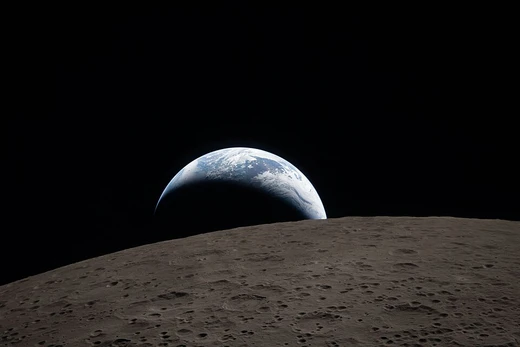
Artemis I
Uncrewed Moon-orbiting mission testing Orion and SLS.

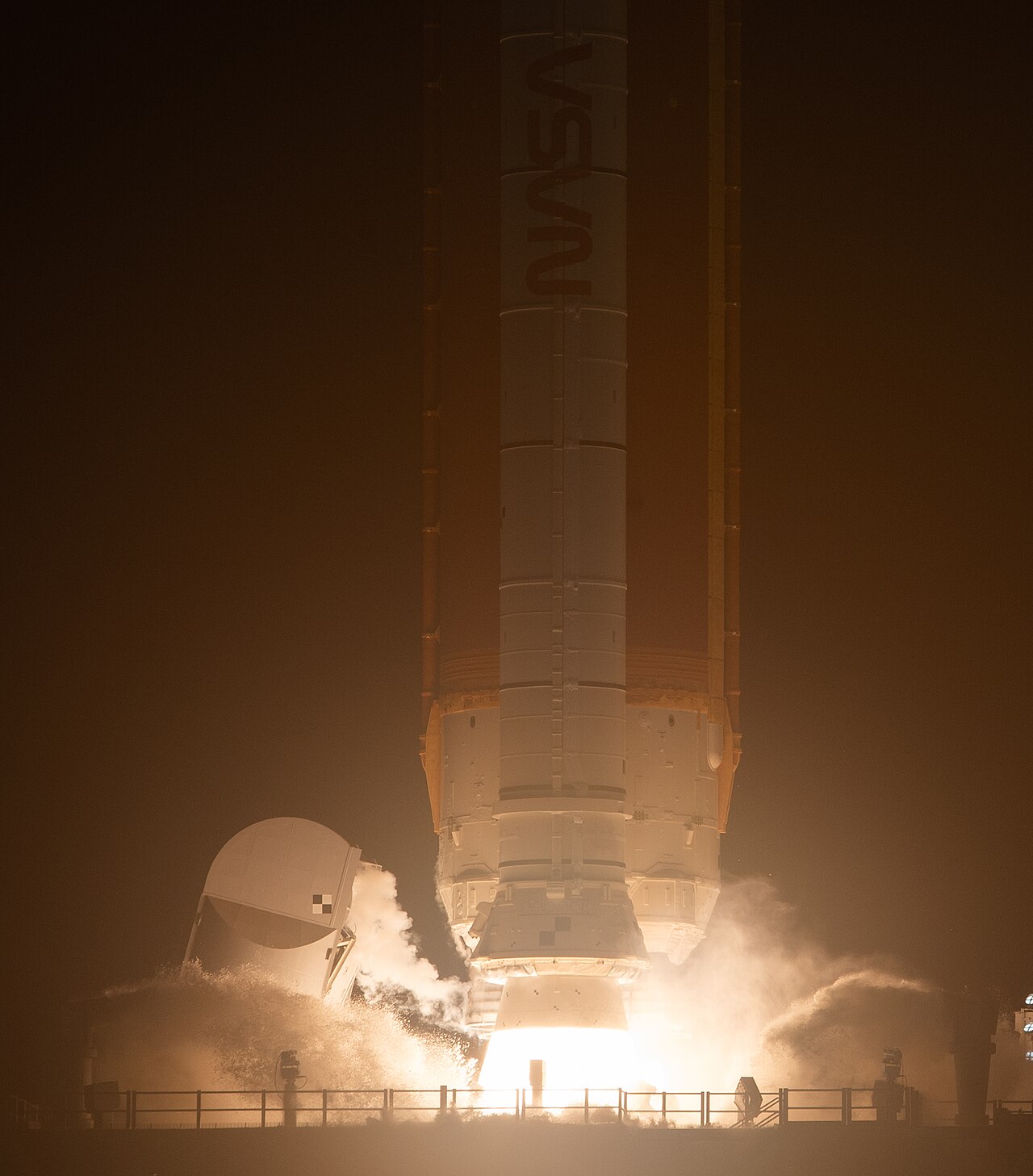
Joel Kowsky · Public domain
Artemis I was an uncrewed mission that orbited the Moon from November 16 to December 11, 2022. Originally called Exploration Mission-1 (EM-1), it served as the inaugural major flight of NASA’s Artemis program, returning the agency to lunar exploration roughly fifty years after the Apollo program ended. This flight marked the first time the Orion spacecraft and the Space Launch System (SLS) rocket were tested together, with the primary goal of evaluating Orion—especially its heat shield—for future crewed missions. Those later Artemis flights aim to put humans back on the Moon and to test technologies and business models for future scientific work, including trips to Mars.
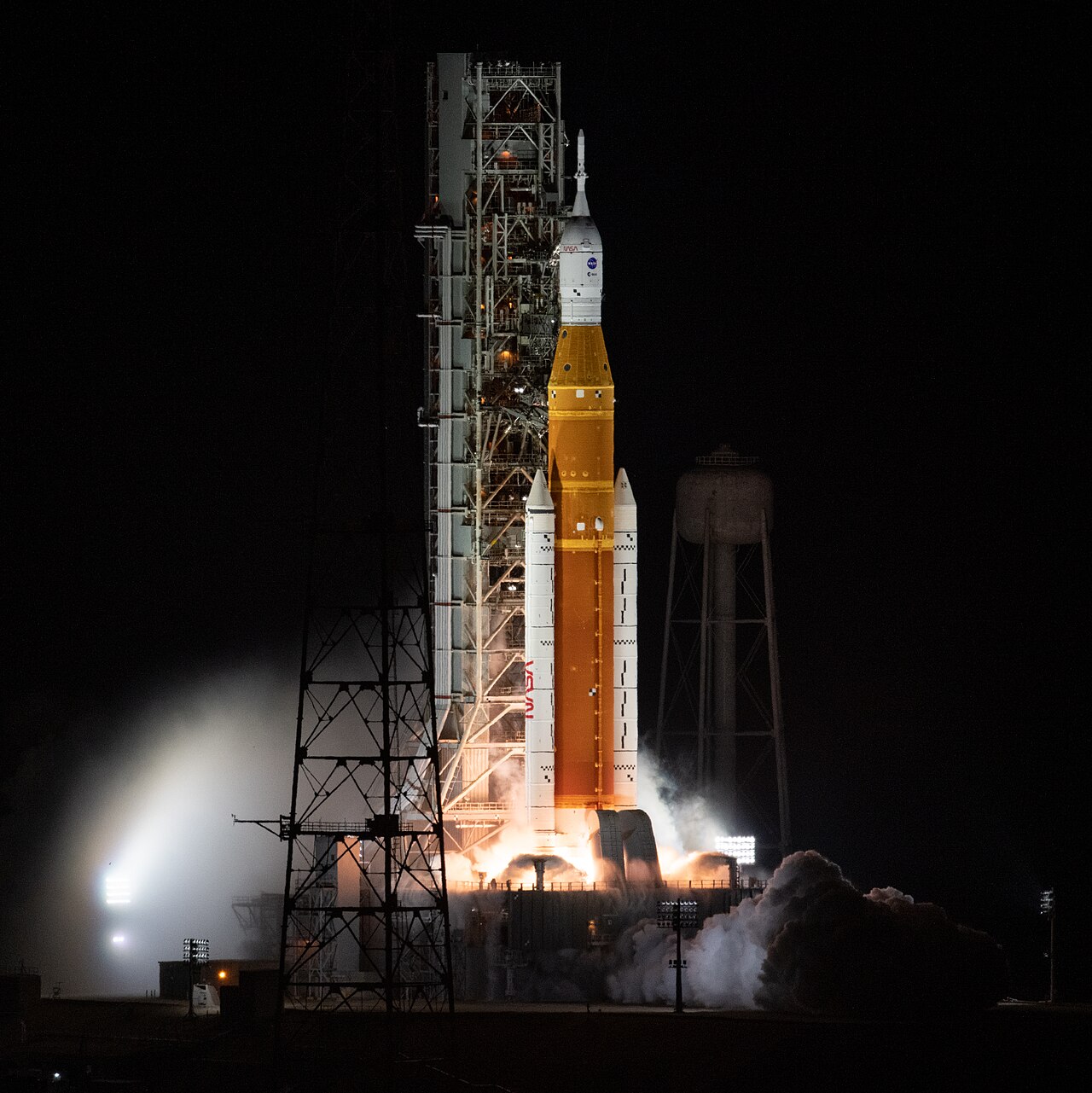
The Orion spacecraft for this mission was stacked on October 20, 2021. After several delays caused by pre-flight testing issues, the fully assembled vehicle was rolled out for launch on August 17, 2022. The first two launch attempts were scrubbed: one on August 29 due to a faulty engine temperature reading, and another on September 3 because of a hydrogen leak during fueling. Artemis I finally lifted off on November 16, 2022, at 1:47:44 am EST from Launch Complex 39B at the Kennedy Space Center.
Once in Earth orbit, the upper stage carrying Orion separated and performed a trans-lunar injection burn, releasing Orion and ten CubeSat satellites. Orion flew past the Moon once on November 21, entered a distant retrograde orbit for six days, and made a second lunar flyby on December 5. The spacecraft then returned to Earth, using its heat shield to survive reentry, and splashed down in the Pacific Ocean on December 11. The mission was designed to certify Orion and the SLS for crewed flights, starting with Artemis II—a crewed lunar flyby planned for April 2026.
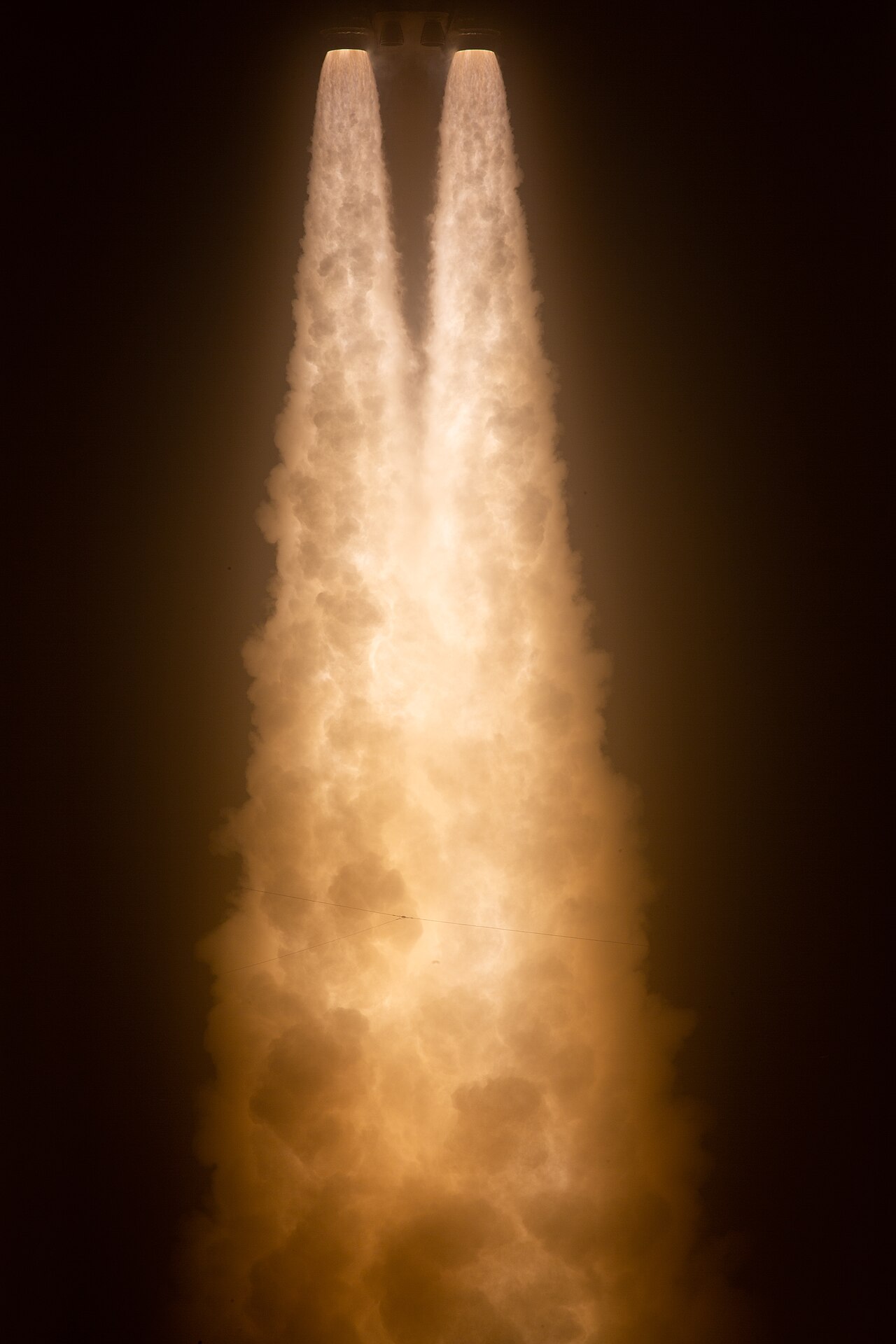
For this flight, the SLS used its Block 1 configuration, which included a core stage, two five-segment solid rocket boosters, and an upper stage. The core stage had four RS-25D engines, three of which had previously flown on Space Shuttle missions; the fourth, engine E2045, was a brand-new unit making its debut. Together, the core and boosters generated 39,000 kN (8,800,000 lbf) of thrust—about 4,000 metric tons—at liftoff. The upper stage, called the Interim Cryogenic Propulsion Stage (ICPS), was based on the Delta Cryogenic Second Stage and used a single RL10B-2 engine.
After reaching orbit, the ICPS fired for the trans-lunar injection
- Launch date
- November 16, 2022, at 1:47:44 am EST
- Splashdown date
- December 11, 2022
- Mission duration
- Approximately three weeks
- Launch site
- Launch Complex 39B, Kennedy Space Center
- Spacecraft
- Orion (uncrewed)
- Launch vehicle
- Space Launch System (SLS) Block 1
- Maximum distance from Earth
- 432,210 km (268,563 mi)
Lore & Background
Artemis I was outlined by NASA as Exploration Mission 1 in 2012, initially set to launch in 2017. The Orion spacecraft's service module was announced in January 2013 to be built by the European Space Agency. Construction of the SLS core stage began in mid-November 2014 at NASA's Michoud Assembly Facility. In February 2017, NASA investigated a crewed launch as the first SLS flight but rejected the proposal due to cost. In March 2019, NASA administrator Jim Bridenstine proposed moving Orion to commercial rockets, but the idea was shelved in mid-2019 after a study concluded it would further delay the mission.
The core stage underwent the Green Run test series at Stennis Space Center, with the final static fire test occurring on January 16, 2021.
Reader's Guide
Artemis I was a foundational mission for NASA's Artemis program, marking the agency's return to lunar exploration after nearly five decades. As the first integrated flight test of the Orion spacecraft and Space Launch System rocket, it aimed to certify these systems for crewed flights, beginning with Artemis II, a crewed lunar flyby scheduled for April 2026. The mission successfully demonstrated Orion's heat shield during reentry and its ability to operate in lunar orbit, including six days in a distant retrograde orbit. It also deployed ten CubeSats for scientific research and technology demonstrations. The mission's delays and technical challenges, such as the hydrogen leak and engine temperature issue, highlighted the complexities of testing new heavy-lift vehicles. By achieving its primary objectives, Artemis I paved the way for future missions seeking to reestablish a human presence on the Moon and demonstrate technologies needed for exploration of Mars.
Did You Know?
- Artemis I was the first super-heavy-lift vehicle stacked inside NASA's Vehicle Assembly Building since the final Saturn V in 1973.
- The Orion spacecraft came within approximately 130 km (80 mi) of the lunar surface during its closest approach.
- The SLS core stage used four RS-25D engines, all of which had previously flown on Space Shuttle missions.
- The first two launch attempts were canceled due to a faulty engine temperature reading on August 29, 2022, and a hydrogen leak on September 3, 2022.
A New Chapter in Lunar Exploration
Artemis I represented NASA's first major step back toward the Moon after nearly fifty years without a crewed lunar program. Originally conceived in 2012 under the designation Exploration Mission 1, the flight was designed as the integrated debut of two critical hardware pieces: the Orion spacecraft and the Space Launch System rocket. Its central engineering goal was to validate Orion's heat shield under the extreme conditions of atmospheric reentry, a capability that would be non-negotiable for the crewed missions to follow. The spacecraft carried a full life-support system and crew seats, yet flew entirely uncrewed—a deliberate choice after NASA explored and ultimately rejected a two-astronaut first flight in 2017, citing prohibitive costs. The European Space Agency contributed the service module, underscoring the international dimension of the effort. Looking forward, a successful Artemis I was the gateway to Artemis II, a crewed lunar flyby currently targeted for April 2026, and ultimately to sustained human presence on the Moon and the technological groundwork for Mars exploration.
Three Weeks Beyond Earth
The flight itself unfolded over roughly three weeks. After clearing Launch Complex 39B at Kennedy Space Center on the morning of November 16, 2022, the vehicle reached Earth orbit before the Interim Cryogenic Propulsion Stage ignited for a trans-lunar injection burn, sending Orion and its payload on a trajectory toward the Moon. Once Orion separated, the upper stage released ten CubeSats destined for scientific research and technology demonstrations. Orion then coasted to its first lunar flyby on November 21, dipping to a closest approach of approximately 130 kilometers above the lunar surface. Rather than looping back immediately, the spacecraft settled into a distant retrograde orbit around the Moon, where it remained for six days. A second lunar flyby followed on December 5. The trajectory carried Orion to a maximum distance of 432,210 kilometers from Earth. On December 11, the spacecraft reentered the atmosphere shielded by its heat shield and splashed down in the Pacific Ocean, completing the certification flight that would green-light crewed operations.
The Machine Behind the Mission
The Space Launch System Block 1 that lifted Artemis I off the pad was a towering assembly of proven and new hardware. Its core stage, built by Boeing at NASA's Michoud Assembly Facility in Louisiana, burned four RS-25D engines—engines with prior Space Shuttle heritage. Paired with two five-segment solid rocket boosters, the combined liftoff thrust reached approximately 39,000 kilonewtons, or roughly four thousand metric tons. Above the core sat the Interim Cryogenic Propulsion Stage, derived from the Delta Cryogenic Second Stage and powered by a single RL10B-2 engine. The Orion spacecraft itself benefited from a structural redesign that cut its primary structure mass by up to twenty-five percent compared to the earlier EFT-1 vehicle, achieved by reducing cone panels from six to three and cutting welds from nineteen to seven. Before it ever flew, the core stage endured an eight-step Green Run test series at Stennis Space Center, culminating in an eight-minute static fire that validated the entire propulsion stack.
A Long Road to Liftoff
The path from stacking to launch was neither smooth nor quick. Orion was mated to its rocket on October 20, 2021, but the fully assembled vehicle did not roll out to the pad until August 17, 2022, after a stretch of pre-flight testing difficulties. Two consecutive launch attempts were scrubbed: on August 29, a faulty engine temperature reading forced a cancellation, and on September 3, a hydrogen leak discovered during fueling did the same. The successful ignition finally came at 1:47:44 a.m. Eastern on November 16. The delays were not entirely unexpected; the Green Run campaign at Stennis had its own hiccup when the final static fire in January 2021 ended early due to a hydraulic pressure anomaly in the thrust-vector control system. Even the mission architecture had been questioned—Administrator Jim Bridenstine briefly floated a two-launch commercial-rocket alternative in 2019, but the idea was shelved after studies showed it would only add more delay.
Gallery


Frequently Asked Questions
What was Artemis I?
Artemis I was NASA's first uncrewed orbital lunar flight, serving as the debut major test of the agency's Artemis program. It carried the Orion spacecraft around the Moon over roughly three weeks in late 2022, marking a return to serious lunar exploration after a half-century gap since Apollo.
Why was Artemis I considered so important?
It was the first time NASA's new Orion capsule and SLS rocket flew together on a full mission, proving the hardware could endure the rigors of deep-space travel. The flight validated critical systems—especially Orion's heat shield—so that future crewed Artemis missions could safely send astronauts to the lunar surface.
When did Artemis I launch and splash down?
The mission lifted off from Kennedy Space Center's Launch Complex 39B on November 16, 2022, at 1:47 a.m. EST. Orion re-entered Earth's atmosphere and splashed down in the Pacific on December 11, 2022, completing about three weeks of flight.
What was the primary goal of Artemis I?
The core objective was to stress-test Orion's life-support, navigation, and thermal-protection systems on an uncrewed trajectory around the Moon. By flying without astronauts, NASA could push the spacecraft to its limits and confirm it was ready for the crewed flights that follow.
What rocket and spacecraft made up the Artemis I stack?
The mission rode on the SLS Block 1, NASA's newest heavy-lift launch vehicle, which carried the uncrewed Orion crew module on a lunar trajectory. It represented the first operational flight of both the SLS and Orion working as a combined stack.
More in Successful space missions 1-24
Spotted an error? Know more?
This is a living reference — every entry is fact-audited, and reader corrections feed straight into our audit queue. Suggest an edit · See this site's audit record