Apollo 10
Dress rehearsal for the first Moon landing.

NASA · Public domain
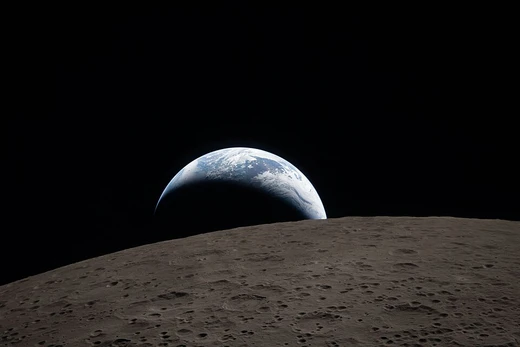
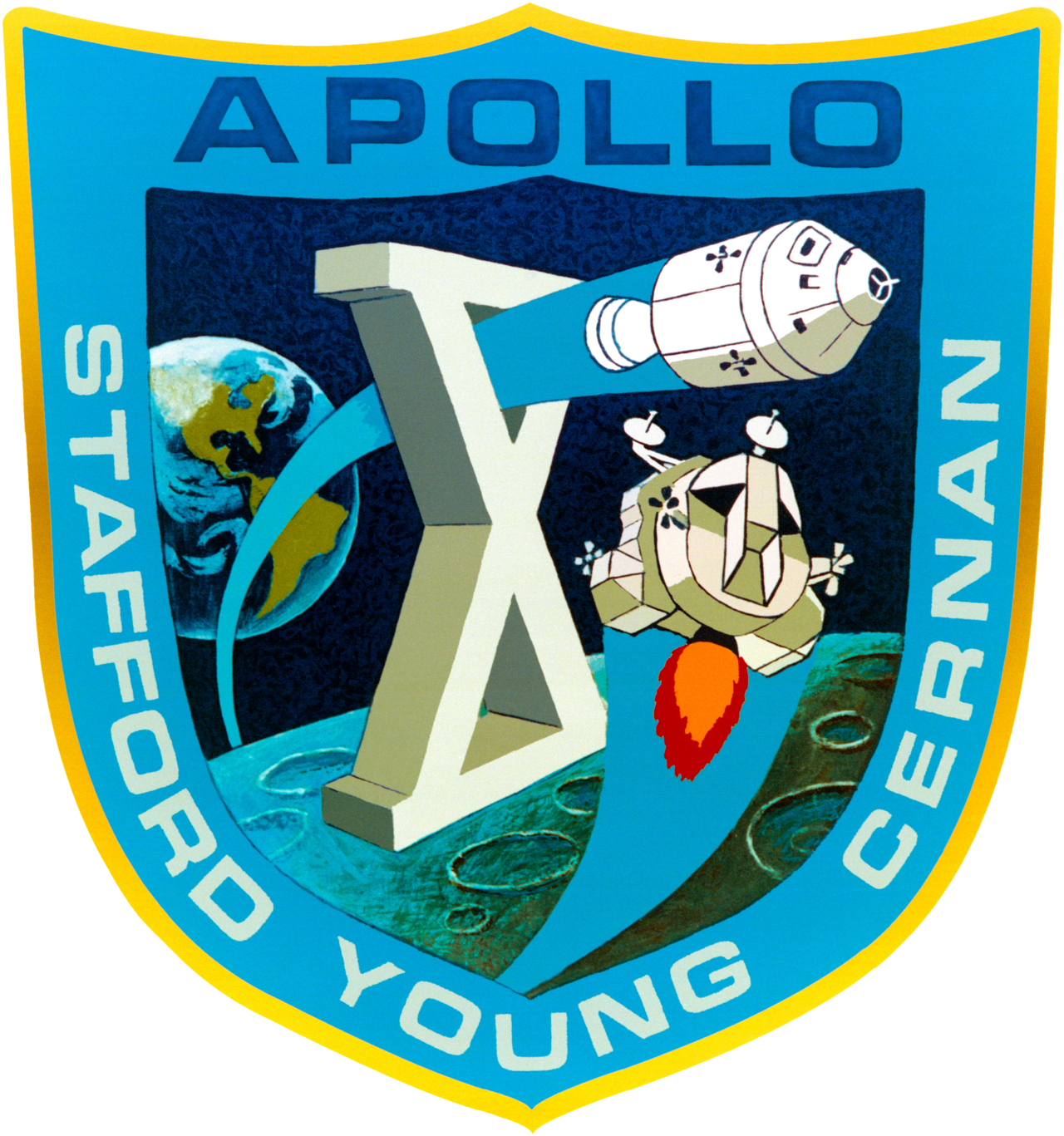
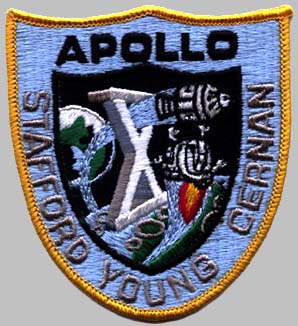
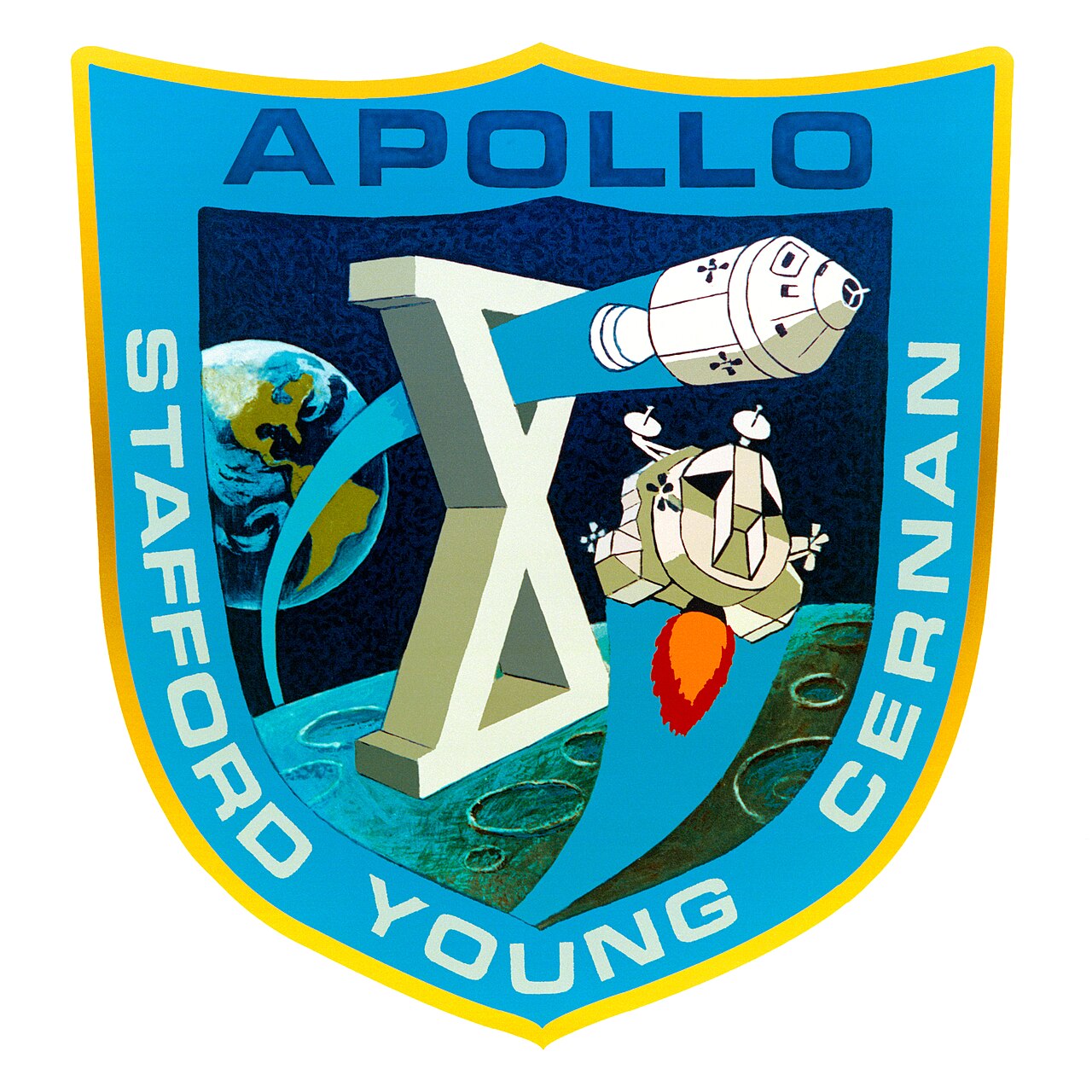
Apollo 10 flew from May 18 to 26, 1969, as the fourth crewed Apollo mission and the second to circle the Moon. NASA called it a "dress rehearsal" for the lunar landing that Apollo 11 would attempt two months later. Classified as an "F" mission, its job was to check out every spacecraft system and procedure except the actual touchdown on the Moon.
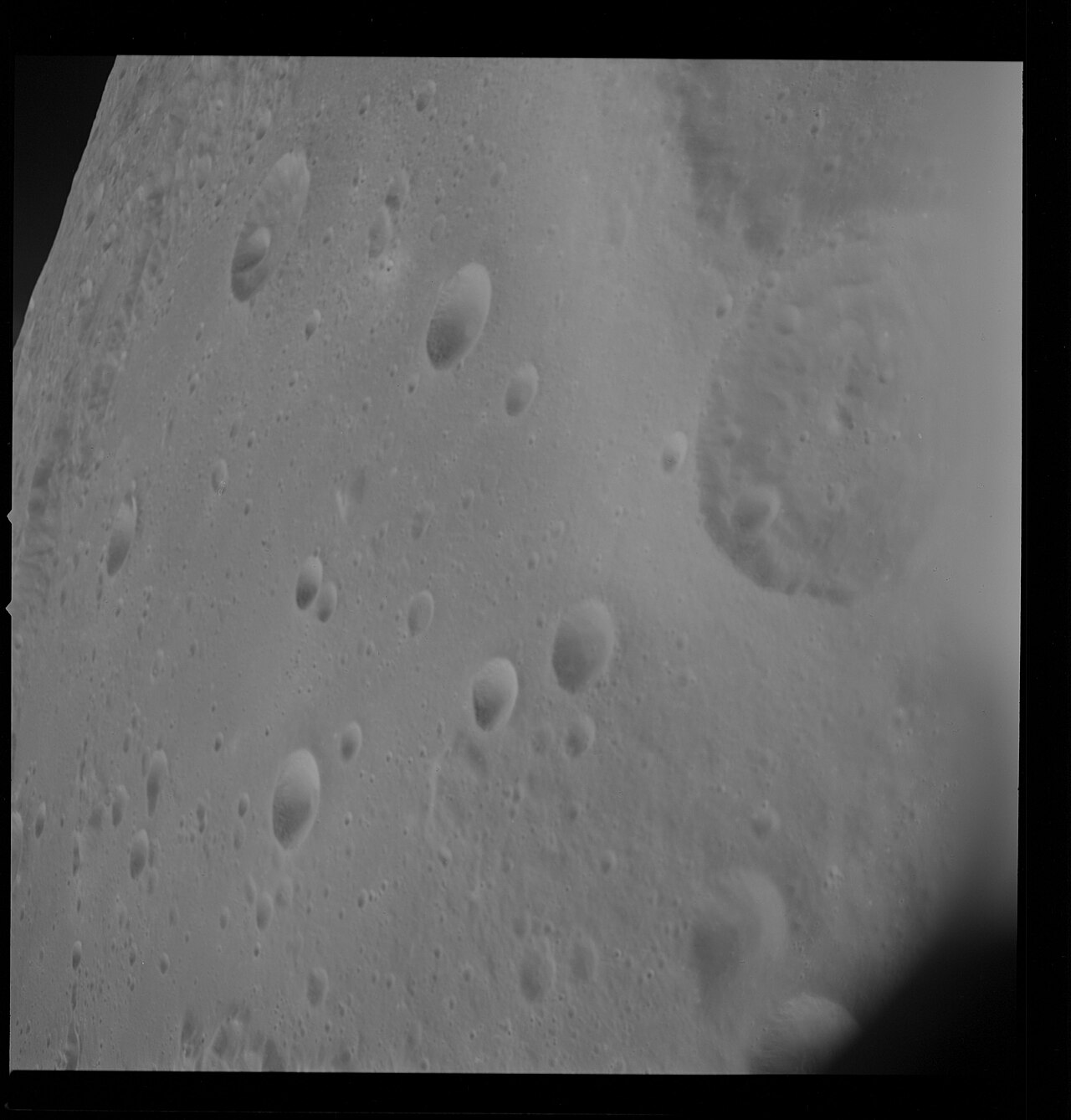
Once the spacecraft reached lunar orbit, John Young stayed in the Command and Service Module (CSM) while Thomas Stafford and Gene Cernan took the Lunar Module (LM) down to within 14.4 kilometers (about 9 miles) of the Moon's surface—the altitude where a landing mission would start its powered descent. After four orbits alone, they rejoined Young in the CSM. The CSM completed 31 orbits of the Moon before the crew returned safely to Earth.
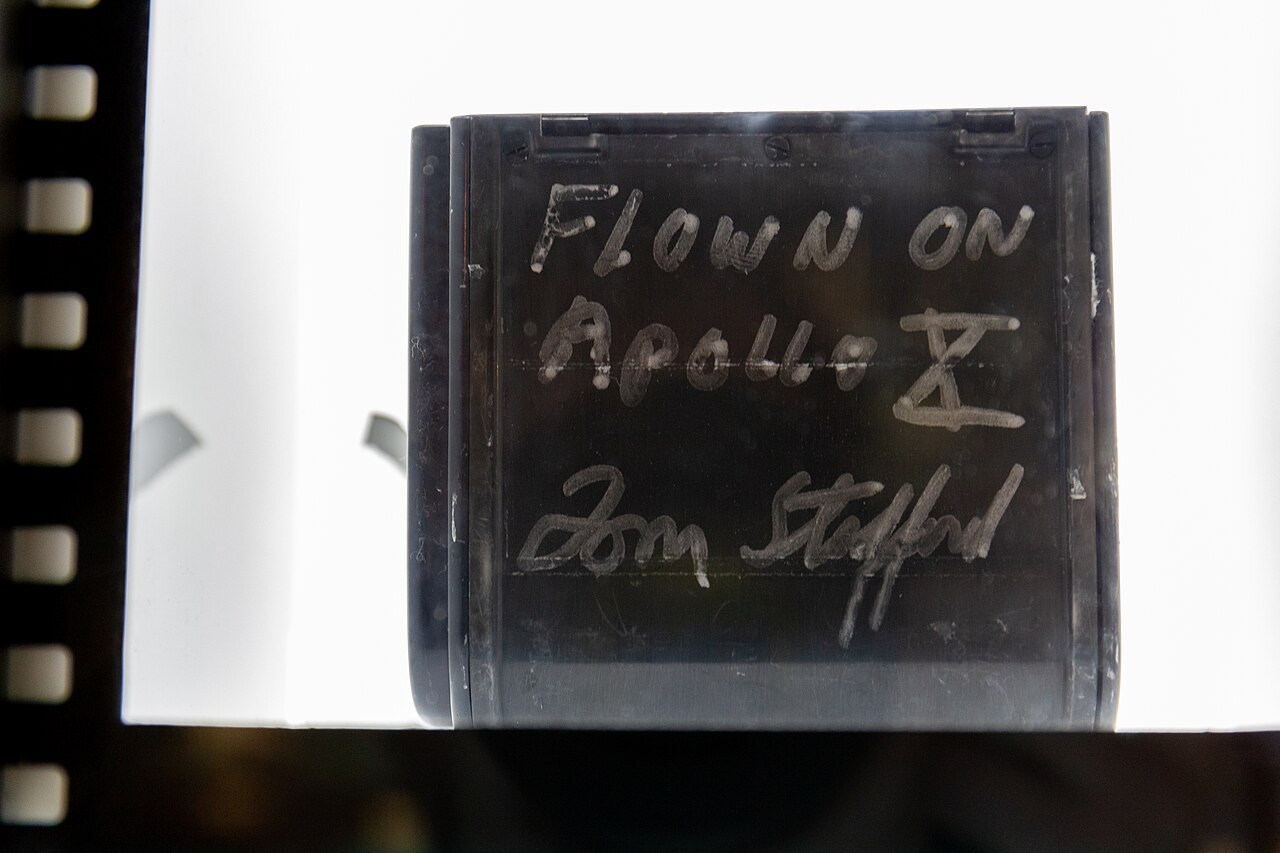
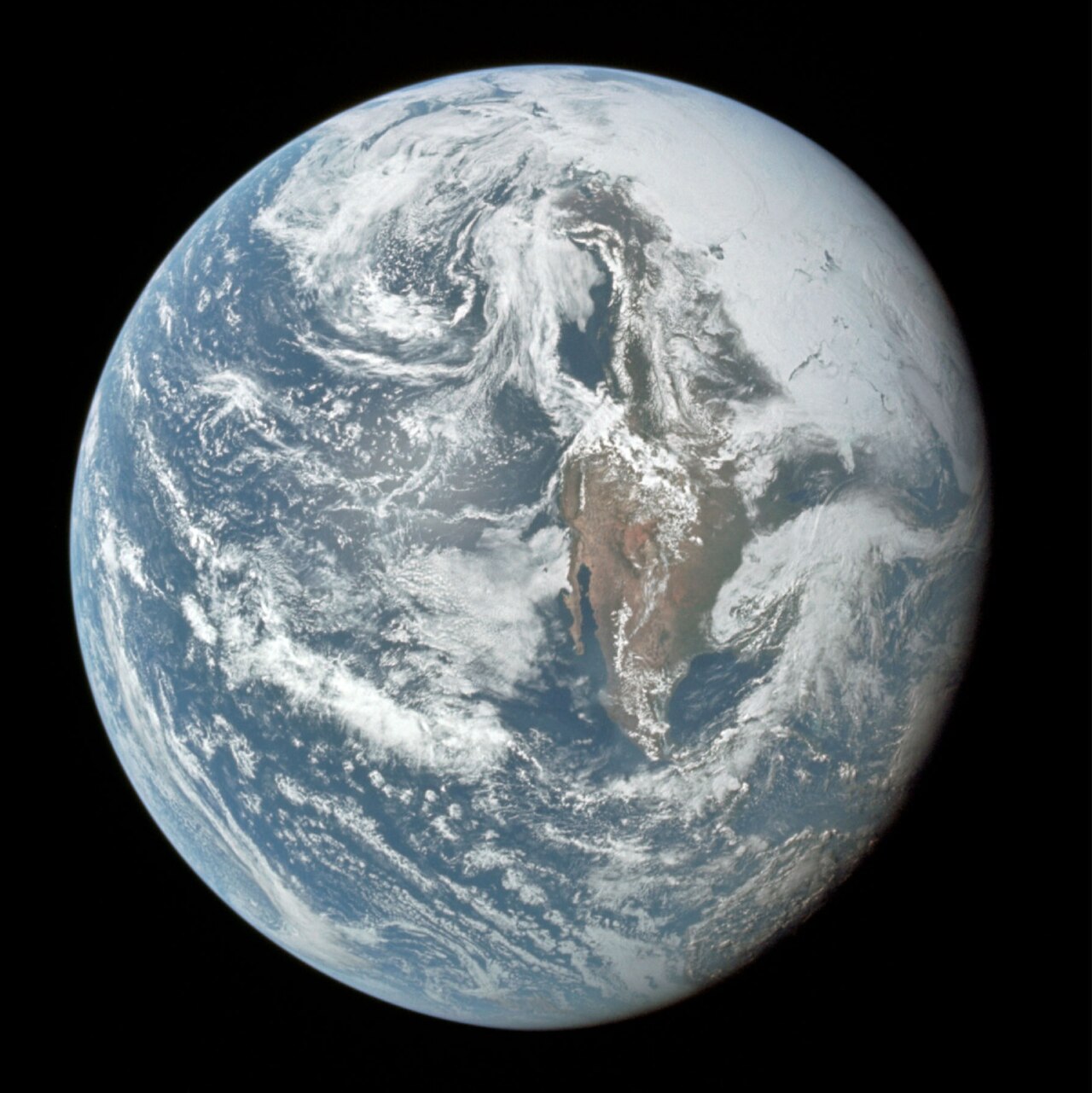
NASA had thought about making Apollo 10 the first landing mission, but planners decided a practice flight was smarter to refine procedures. The crew ran into a few issues: pogo oscillations during launch and a brief, uncontrolled spin of the LM's ascent stage while it flew solo in lunar orbit. Still, the mission hit its main goals. Stafford and Cernan spotted and photographed Apollo 11's planned landing site in the Sea of Tranquility. Apollo 10 spent 61 hours and 37 minutes orbiting the Moon, with Stafford and Cernan flying the LM apart from Young for about eight of those hours. The whole trip lasted about eight days. On May 26, 1969, during the return leg, the spacecraft set a record for the fastest speed ever achieved by a crewed vehicle relative to Earth: 39,897 kilometers per hour (24,791 miles per hour).
The mission's call signs came from the Peanuts comic strip: Charlie Brown for the CSM and Snoopy for the LM. Snoopy became a semi-official mascot, and Peanuts creator Charles Schulz drew mission-related artwork for NASA.
**Background**
By 1967, NASA had laid out a letter-based series of mission types needed before a landing attempt (the "G" mission). Early uncrewed flights were "A" or "B." Apollo 7, the crewed test of the CSM, was "C." Apollo 9, the first crewed orbital test of the LM, was "D." Apollo 8, which flew to the Moon without an LM, was labeled "C-prime." Its success let NASA skip the "E" mission (which would have tested the full spacecraft in medium or high Earth orbit). Apollo 10, the dress rehearsal, became the "F" mission.
NASA also debated skipping the "F" m
- mission_dates
- May 18–26, 1969
- operator
- NASA
- mission_type
- F mission (dress rehearsal for lunar landing)
- crew
- Thomas P. Stafford (Commander), John Young (Command Module Pilot), Gene Cernan (Lunar Module Pilot)
- call_signs
- Charlie Brown (CSM), Snoopy (LM)
- max_speed
- 39,897 km/h (24,791 mph) relative to Earth
- lunar_orbit_time
- 61 hours 37 minutes
Lore & Background
After the spacecraft reached lunar orbit, astronaut John Young remained in the Command and Service Module (CSM) while astronauts Thomas Stafford and Gene Cernan flew the Apollo Lunar Module (LM) to within 14.4 kilometers (7.8 nautical miles; 9 miles) of the lunar surface, the point at which powered descent for landing would begin on a landing mission. After four orbits they rejoined Young in the CSM and, after the CSM completed its 31st orbit of the Moon, they returned safely to Earth. While NASA had considered attempting the first crewed lunar landing on Apollo 10, mission planners ultimately decided that it would be prudent to have a practice flight to hone the procedures and techniques. The crew encountered some problems during the flight: pogo oscillations during the launch phase and a brief, uncontrolled tumble of the LM ascent stage in lunar orbit during its solo flight. However, the mission accomplished its major objectives. Stafford and Cernan observed and photographed Apollo 11's planned landing site in the Sea of Tranquility.
Reader's Guide
Apollo 10 served as the critical 'F' mission, testing all spacecraft components and procedures short of actual descent and landing. Its success gave NASA confidence for Apollo 11 two months later. The mission set the record for the highest speed attained by a crewed vehicle relative to Earth's surface: 39,897 kilometers per hour. The crew's call signs, Charlie Brown and Snoopy, became iconic, with Peanuts creator Charles Schulz drawing mission-related artwork for NASA. The decision to skip a direct landing attempt on Apollo 10, despite advocacy from some NASA officials like George Mueller, was made by Apollo Program Manager Sam Phillips, who deemed a dress rehearsal crucial. This mission demonstrated the feasibility of lunar orbit operations and rendezvous, paving the way for the historic landing.
Did You Know?
- Apollo 10 set the record for the highest speed attained by a crewed vehicle relative to Earth's surface: 39,897 km/h (24,791 mph).
- The mission's call signs were Charlie Brown for the CSM and Snoopy for the LM, taken from the Peanuts comic strip.
- The LM flew to within 14.4 kilometers (9 miles) of the lunar surface, the point where powered descent would begin on a landing mission.
- The crew encountered pogo oscillations during launch and a brief uncontrolled tumble of the LM ascent stage in lunar orbit.
The F-Type Mission: Apollo 10's Defining Role
Apollo 10 held a singular position in the program's sequence: as the F-type mission, it was tasked with flying the combined Command/Service Module and Lunar Module all the way to the Moon for final integrated testing, yet stopping short of an actual landing. This made it the ultimate dress rehearsal, the last step before astronauts would set foot on another world. The mission-type framework, originally proposed by Owen Maynard in September 1967, laid out a logical progression. Two A-type flights had tested the CSM and Saturn V uncrewed, a B-type flight had proven the Lunar Module, Apollo 7 had served as the C-type crewed Earth-orbit test, and Apollo 9 had completed the D-type combined CSM/LM Earth-orbit rehearsal. By the time Apollo 10 reached the pad, every major hardware element had been validated in progressively riskier configurations. What remained was to confirm that the full stack could operate in the lunar environment, execute the docking and separation maneuvers a landing mission would demand, and return safely — all without committing to the irreversible act of touching down. Apollo 10 was, in essence, the program's final examination before the graduation ceremony of Apollo 11.
The Architecture of Testing: From Alphabet to Moon
The Apollo program's path to the Moon was not a single leap but a carefully sequenced chain of increasingly ambitious tests, and the reclassification of mission types reveals how that chain was reshaped in real time. Owen Maynard's September 1967 alphabetical scheme had envisioned a steady climb: A-types for uncrewed CSM and Saturn V validation, a B-type for the Lunar Module, a C-type crewed Earth-orbit flight, a D-type combined spacecraft test, an E-type medium Earth orbital test, and finally the F-type lunar flyby. But George Low's proposal to commit a mission to lunar orbit ahead of schedule — driven by the CSM's proven status and ongoing Lunar Module production delays — upended the plan. Apollo 8 was reclassified from its original D-type assignment to a 'C-prime' mission that would carry humans to the Moon. Once that flight succeeded, the E-type medium Earth orbit objective became unnecessary. The D-type test was reassigned to Apollo 9, and the F-type slot fell to Apollo 10. The alphabet, in other words, was not a fixed curriculum but a living document, bending to engineering realities and schedule pressure until the final test of the full spacecraft stack in lunar space was locked in.
The Saturn V and the 'All-Up' Revolution
Before George Mueller took over as NASA's Associate Administrator for Manned Space Flight in 1963, the prevailing assumption was that twenty Saturn V rockets, with at least ten uncrewed test flights, would be needed to achieve a crewed lunar landing. The conservative one-stage-at-a-time philosophy that had governed Saturn I testing was expected to continue. Mueller shattered that approach with the 'all-up' testing philosophy: every test flight would carry three live stages plus the Apollo spacecraft. The result was a dramatic compression of the development timeline. The Saturn V production lot shrank from twenty units to fifteen, and only three uncrewed test flights were planned to human-rate the super heavy-lift vehicle. Success on the first flight and a qualified success on the second led NASA to cancel the third entirely. This efficiency depended on earlier groundwork, including the Saturn IB's conversion from the original Saturn I by swapping in the S-IVB second stage, and the extensive launch escape system tests conducted at White Sands Missile Range from August 1963 to January 1966, which simulated both pad aborts and in-flight Mode I aborts using the Little Joe II rocket. By the time Apollo 10's Saturn V ignited, the vehicle had already been proven through a fraction of the originally envisioned test campaign.
The Program's Arc: Triumph, Tragedy, and Legacy
Apollo 10 did not exist in a vacuum; it was one link in a program that spanned eleven years, from 1961 to 1972, and that carried both extraordinary triumph and devastating loss. The program's darkest hour came in 1967, when a cabin fire during a ground test killed the entire Apollo 1 crew — the very flight that was to have been the first crewed mission. The program's most harrowing in-flight crisis came on Apollo 13, the third landing attempt, when an oxygen tank explosion en route to the Moon disabled the CSM Odyssey's electrical power, life support, and propulsion, forcing the crew to circle the Moon and limp home. Between those two failures lay the program's crowning achievement: Apollo 11, when Neil Armstrong and Buzz Aldrin walked on the Sea of Tranquility while Michael Collins orbited above in the CSM Columbia, all three returning safely on July 24, 1969. Five subsequent landings brought twelve men to the lunar surface and returned 842 pounds of rocks and soil that transformed humanity's understanding of the Moon's geology. Apollo 10, the F-type flyby, was the quiet, essential bridge between the program's testing phase and its landing phase — the rehearsal that made the performance possible.
Gallery
Frequently Asked Questions
What was Apollo 10?
Apollo 10 was NASA's fourth crewed Apollo flight, launched in May 1969 as a full-scale test of every system and procedure needed for a lunar landing. It orbited the Moon twice and exercised the complete mission sequence except the final descent and touchdown.
Who was the crew of Apollo 10?
The three astronauts were Thomas P. Stafford as Commander, John Young as Command Module Pilot, and Gene Cernan as Lunar Module Pilot. Stafford and Cernan flew the Lunar Module while Young remained in the Command and Service Module.
Why is Apollo 10 called a 'dress rehearsal'?
NASA designated it an 'F' mission whose sole purpose was to rehearse the entire landing sequence—trans-lunar injection, lunar orbit insertion, descent, and ascent—without actually touching down. It confirmed that every spacecraft system and crew procedure was ready two months before Apollo 11's historic landing.
How close did Apollo 10 get to the Moon's surface?
Stafford and Cernan descended the Lunar Module to an altitude of about 14.4 kilometers (roughly 9 miles) above the surface. That was the lowest point of the mission, just above the altitude where Apollo 11 would have begun its braking burn for touchdown.
What were the callsigns used on Apollo 10?
The Command and Service Module was nicknamed 'Charlie Brown' and the Lunar Module was called 'Snoopy,' both characters from Charles Schulz's Peanuts comic strip. The naming tradition carried into Apollo 11, where the Lunar Module was christened 'Eagle.'
More in Successful space missions 1-24
Spotted an error? Know more?
This is a living reference — every entry is fact-audited, and reader corrections feed straight into our audit queue. Suggest an edit · See this site's audit record