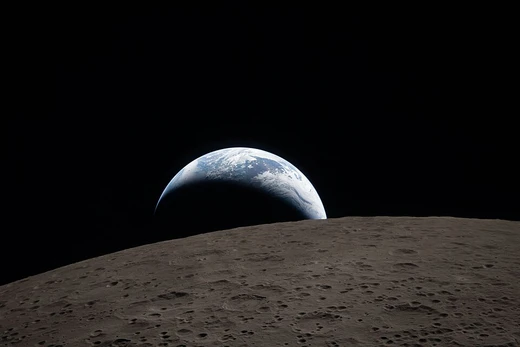
Apollo 15
First J mission with rover, deep-space spacewalk, and Genesis Rock.

NASA · Public domain
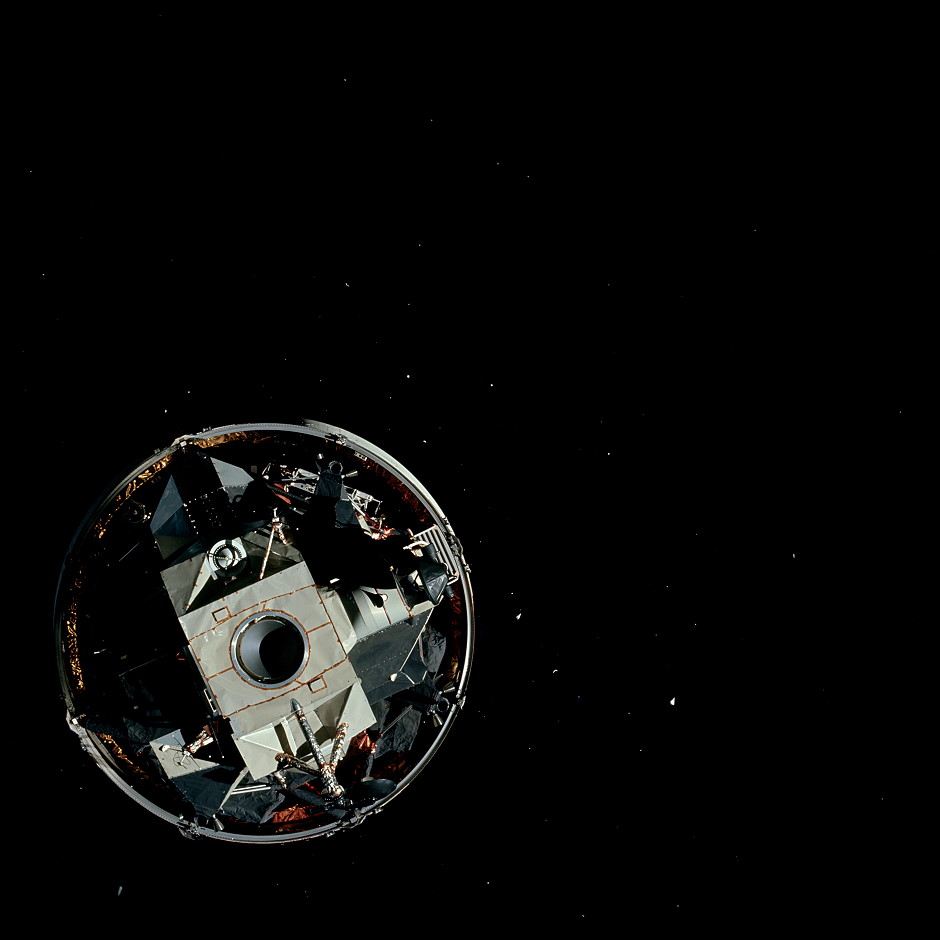
Apollo 15 ran from July 26 to August 7, 1971, as the fourth mission to land on the Moon and the ninth crewed flight of the Apollo program. It marked the first J-class mission, which meant a longer lunar stay and a heavier emphasis on science, and it introduced the Lunar Roving Vehicle.
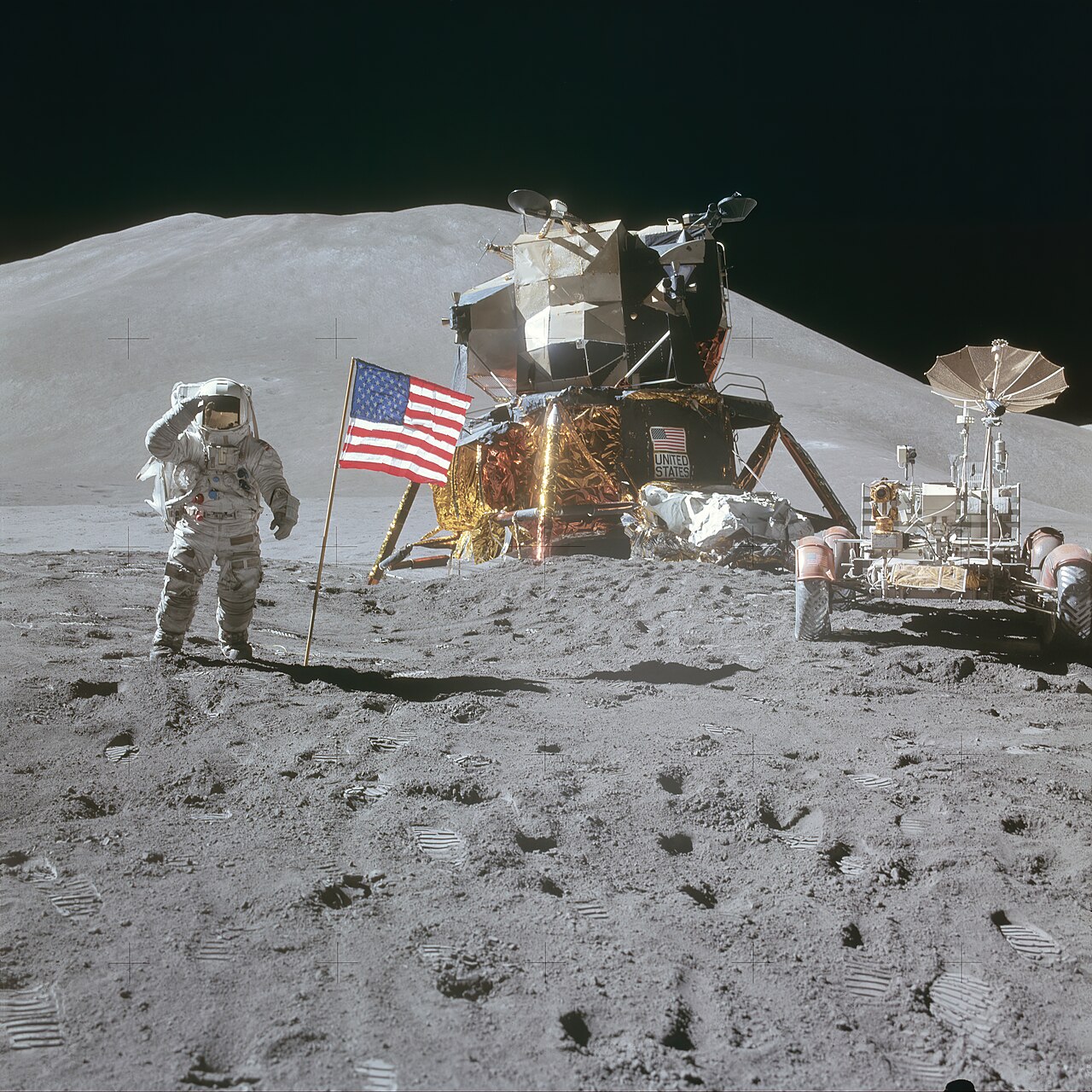
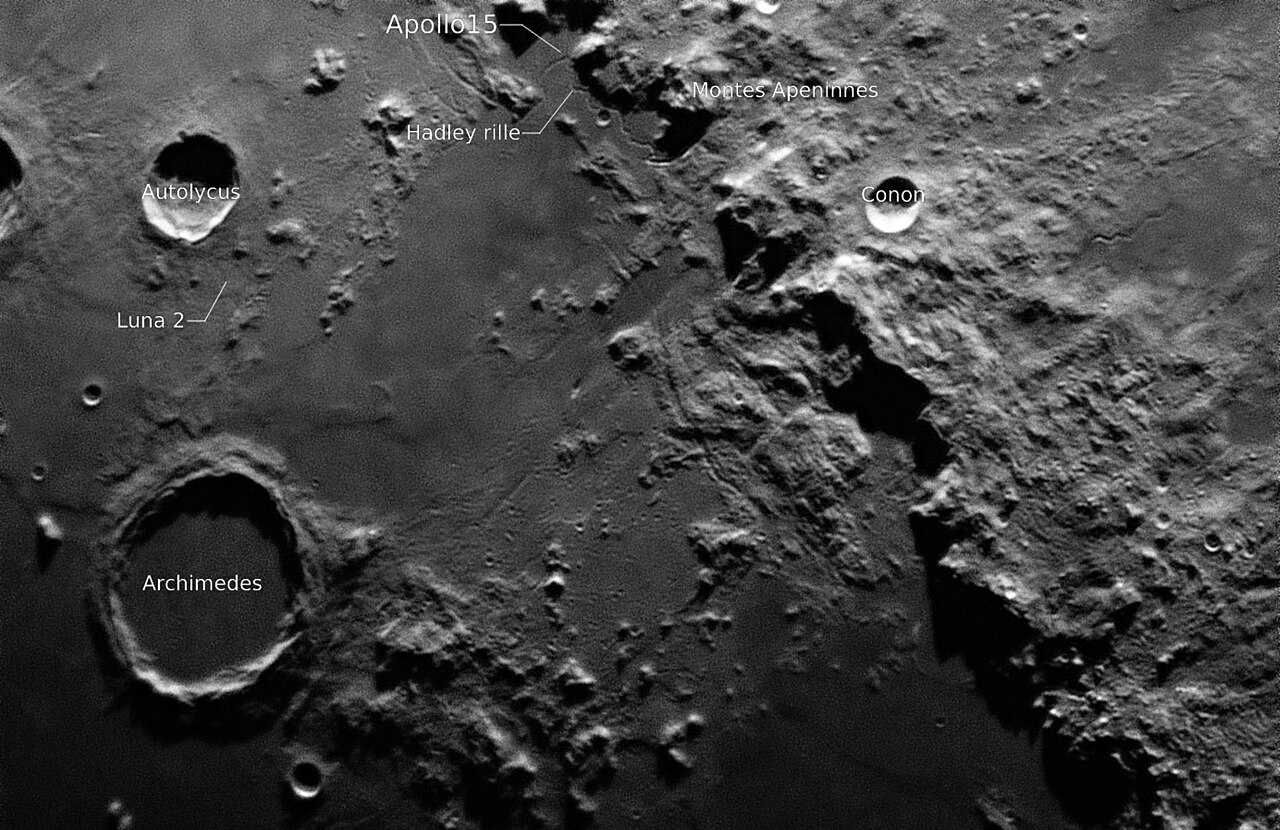
Commander David Scott and Lunar Module Pilot James Irwin touched down near Hadley Rille on July 30 and spent four days exploring the area. Using the rover, they traveled farther from their lander than any previous crew had managed. Over four moonwalks totaling 18.5 hours, they gathered 170 pounds (77 kg) of surface samples. Meanwhile, Command Module Pilot Alfred Worden stayed in orbit around the Moon, running the scientific instrument module (SIM) bay in the service module. That bay carried a panoramic camera, gamma-ray spectrometer, mapping camera, laser altimeter, mass spectrometer, and a lunar subsatellite released after the moonwalks ended. The Lunar Module rejoined the command module safely, and after the 74th orbit, the engine fired for the return trip. On the way home, Worden performed the first deep-space spacewalk. The mission splashed down on August 7, despite one of its three parachutes only partially opening.
The crew achieved all their goals. They brought back the Genesis Rock, believed to be a piece of the Moon’s early crust. Scott also demonstrated Galileo’s theory—that without air resistance, objects of different masses fall at the same rate due to gravity—by dropping a hammer and a feather. However, the mission drew negative publicity the next year when it came out that the crew had taken unauthorized postal covers to the lunar surface, some of which a West German stamp dealer sold. The astronauts were reprimanded for poor judgment and never flew in space again.
**Background**
In 1962, NASA ordered fifteen Saturn V rockets for the Apollo program, aiming for a crewed Moon landing by 1970, though the exact number of missions needed was unknown. Apollo 11 succeeded in 1969 using the sixth Saturn V, leaving nine rockets for what was hoped to be ten total landings. The last five missions (Apollo 16 through 20) were planned to use a heavier, extended Apollo spacecraft. The upgraded Lunar Module could stay up to 75 hours and carry a Lunar Roving Vehicle. The service module would include an orbital experiment package for lunar data collection. Originally, Apollo 1
- Mission
- Apollo 15
- Launch date
- July 26, 1971
- Landing date
- July 30, 1971
- Splashdown date
- August 7, 1971
- Crew
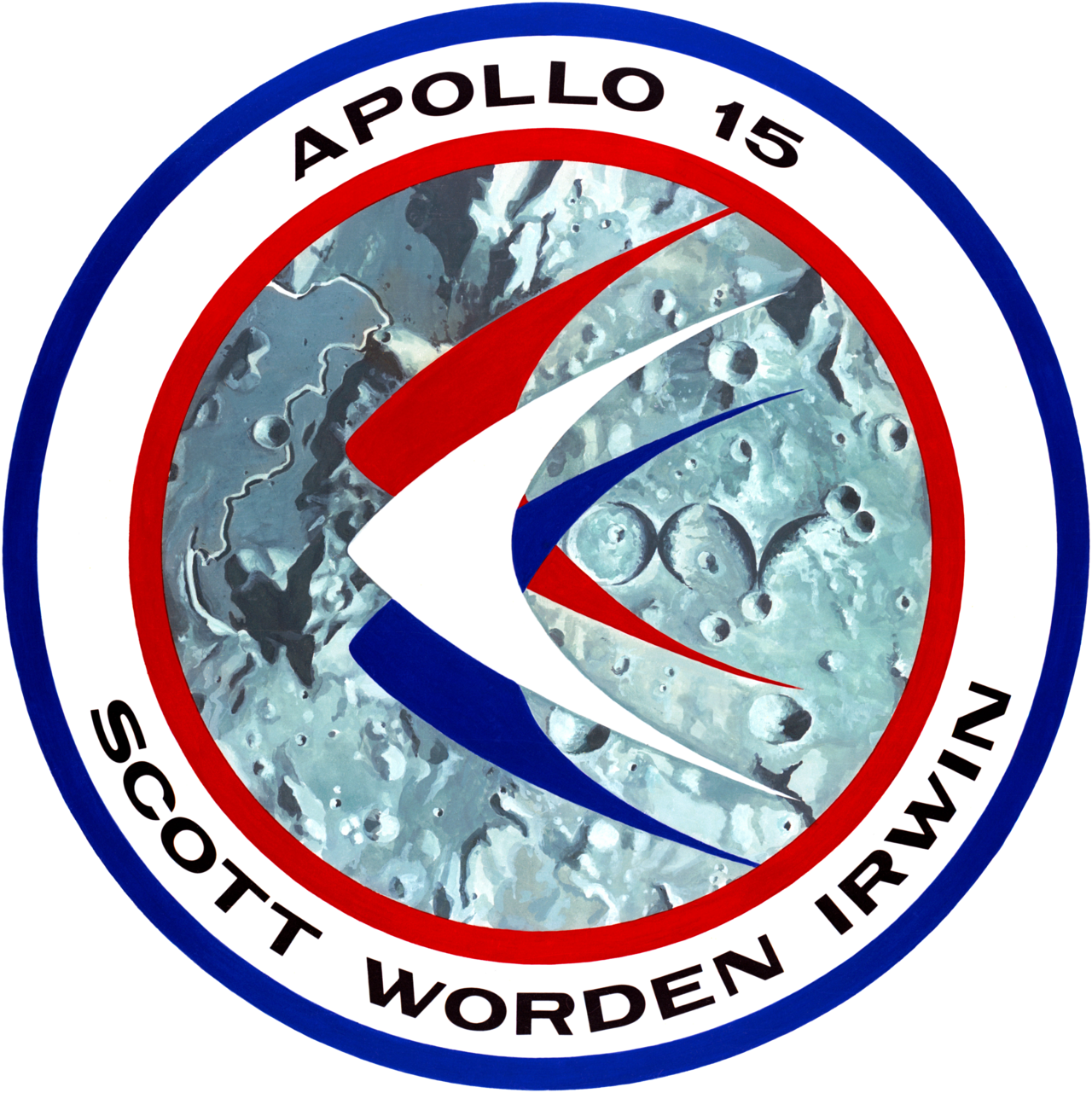
- David Scott (Commander), Alfred Worden (Command Module Pilot), James Irwin (Lunar Module Pilot)
- Duration
- July 26 – August 7, 1971
- Key achievement
- First J mission, first use of Lunar Roving Vehicle, first deep-space spacewalk
Lore & Background
Apollo 15 was the ninth crewed Apollo mission and the fourth to land on the Moon. Commander David Scott and Lunar Module Pilot James Irwin landed near Hadley Rille and spent 18½ hours on the lunar surface across four extravehicular activities, using the Lunar Roving Vehicle to travel farther from the Lunar Module than previous missions. They collected 170 pounds (77 kg) of surface material, including the Genesis Rock, thought to be part of the Moon's early crust. Command Module Pilot Alfred Worden orbited the Moon, operating a suite of scientific instruments in the service module's SIM bay, including a panoramic camera, gamma-ray spectrometer, mapping camera, laser altimeter, mass spectrometer, and a lunar subsatellite deployed after the moonwalks. During the return trip, Worden performed the first spacewalk in deep space. The mission splashed down safely on August 7 despite the partial opening of one of its three parachutes.
Reader's Guide
Apollo 15 marked a significant shift in the Apollo program toward extended scientific exploration. As the first J mission, it demonstrated the value of longer lunar stays and the Lunar Roving Vehicle, which greatly expanded the range of surface exploration. The collection of the Genesis Rock provided insights into the Moon's early crust, and Scott's feather-and-hammer experiment validated Galileo's theory of gravity in a vacuum. Worden's deep-space spacewalk and orbital science operations expanded the mission's scientific return. However, the mission also received negative publicity the following year when it emerged that the crew had carried unauthorized postal covers to the lunar surface, some sold by a West German stamp dealer. The crew members were reprimanded for poor judgment and did not fly in space again. Despite this, Apollo 15's scientific achievements and technical firsts remain a benchmark for lunar exploration.
Did You Know?
- Apollo 15 was the first J mission, with a longer stay on the Moon and greater focus on science.
- It was the first mission to use the Lunar Roving Vehicle.
- During the return trip, Alfred Worden performed the first spacewalk in deep space.
- The crew collected the Genesis Rock, thought to be part of the Moon's early crust.
Engineering the Path to the Moon
The road to putting humans on the lunar surface demanded a launch vehicle of unprecedented power, and NASA's approach to building that vehicle evolved dramatically. The original Saturn I, with a payload ceiling of roughly 20,000 pounds, proved too limited to carry even a partially fueled Service Module into orbit, forcing planners to abandon its crewed-flight ambitions in favor of the uprated Saturn IB. That upgrade swapped in the S-IVB stage, boosting capacity to 46,000 pounds—enough to orbit a fully fueled Lunar Module. The real revolution, however, came in testing philosophy. Before George Mueller assumed the Associate Administrator role in 1963, the plan called for twenty Saturn Vs and at least ten unpiloted flights, following a cautious one-stage-at-a-time method. Mueller instead championed an "all-up" strategy: every test flight would fly all three live stages plus the Apollo spacecraft. This bold compression cut the production lot to fifteen units and required only three uncrewed Saturn V flights, with the third ultimately cancelled after the first two succeeded. The result was a vehicle ready for crewed lunar missions well within the 1969 deadline.
A Ladder of Missions
NASA's path to a crewed lunar landing was not a single leap but a carefully sequenced staircase of test flights, each validating a new capability before the next. In September 1967, Owen Maynard proposed an alphabetical taxonomy of mission types to organize this progression. Two A-type flights would prove the CSM and Saturn V together without crew; a B-type would test the Lunar Module uncrewed; a C-type would put astronauts in the CSM in Earth orbit. The plan shifted when George Low argued for sending humans to lunar orbit ahead of schedule, reasoning that the CSM was already proven while the LM faced production delays. Apollo 8 was reclassified from a D-type Earth-orbit test to a "C-prime" mission that would carry a crew around the Moon, a decision that eliminated the need for a separate E-type medium Earth orbit test. The D-type objective was reassigned to Apollo 9, and the F-type mission, Apollo 10, flew the full CSM/LM stack to the Moon for a dress rehearsal without landing. Each rung of this ladder narrowed the risk before the G-type landings that followed.
Fire, Failure, and Survival
The Apollo program's triumphs were shadowed by two catastrophic failures that tested the very limits of human endurance and engineering. In 1967, during a ground test in preparation for what would have been the first crewed flight, a cabin fire on the launch pad killed the entire Apollo 1 crew. The tragedy forced a pause in the program and a fundamental reexamination of safety procedures before uncrewed flights could resume to qualify the Saturn V and the Lunar Module. Years later, during the third attempt at a lunar landing, Apollo 13 encountered an oxygen tank explosion en route to the Moon. The blast disabled the CSM Odyssey's electrical power and life support systems and rendered its propulsion system too dangerous to use. Rather than attempting a landing, the crew circled the Moon and returned safely to Earth. These two events—one a preventable accident on the ground, the other a sudden in-flight catastrophe—demonstrated both the fragility of the technology and the resilience of the crews who ultimately brought the program to its goal.
Twelve Walkers and a Mountain of Rock
By the time the program concluded in December 1972, the cumulative record of Apollo's lunar landings stood as one of the most extraordinary feats in human history. Beginning with Neil Armstrong and Buzz Aldrin stepping onto the Sea of Tranquility in July 1969 while Michael Collins orbited above in the CSM Columbia, five subsequent missions carried additional astronauts to various sites across the lunar surface. In total, twelve men walked on the Moon, and those excursions returned 842 pounds—roughly 382 kilograms—of rocks and soil samples to Earth. That haul of lunar material became an invaluable resource for scientists, greatly deepening humanity's understanding of the Moon's composition and geological history. The achievement was built on a foundation of uncrewed demonstrations beginning in 1966 and four crewed flights from October 1968 onward, all orchestrated by NASA between 1961 and 1972 using the Saturn IB and Saturn V rockets. What began as a national program to land astronauts on another world ended with a transformed understanding of our planetary neighborhood.
Gallery

Frequently Asked Questions
Who was the crew of Apollo 15?
David Scott served as commander, Alfred Worden piloted the command module, and James Irwin was the lunar module pilot. Scott and Irwin were the two astronauts who actually walked on the Moon during the mission.
What made Apollo 15 different from earlier Apollo Moon landings?
It was the first J-class mission, meaning the crew stayed on the lunar surface longer and prioritized hands-on science over the flag-planting ceremonies of earlier flights. It also introduced the Lunar Roving Vehicle, a small electric car that let the astronauts travel much farther from their lander than any previous crew had managed.
Where did Apollo 15 land and how long did the surface stay last?
The Lunar Module touched down near Hadley Rille on July 30, 1971, and the two surface astronauts spent roughly four days conducting moonwalks. Across those excursions they logged about 18.5 hours of EVA time and collected around 77 kilograms of rock and soil samples.
What is the Genesis Rock from Apollo 15?
It is a fragment of the Moon's original crust, roughly 4.4 billion years old, that Scott and Irwin pried from a boulder near the landing site. Finding it gave scientists a rare piece of the Moon's earliest solid material and a key reference point for understanding how the Moon formed.
Why do space fans consider Apollo 15 one of the most important missions?
It proved that a longer stay, a rover, and a dedicated geology program could work in practice, setting the scientific template for the final two Moon landings. It also featured the first deep-space spacewalk, in which Worden performed maintenance on the Solar Maximum satellite while orbiting the Moon.
More in Successful space missions 1-24
Spotted an error? Know more?
This is a living reference — every entry is fact-audited, and reader corrections feed straight into our audit queue. Suggest an edit · See this site's audit record