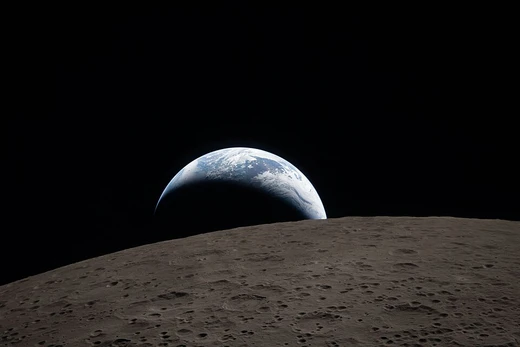
Apollo 9
First crewed flight of the Apollo Lunar Module.

NASA; restored by Michel Vuijlsteke · Public domain
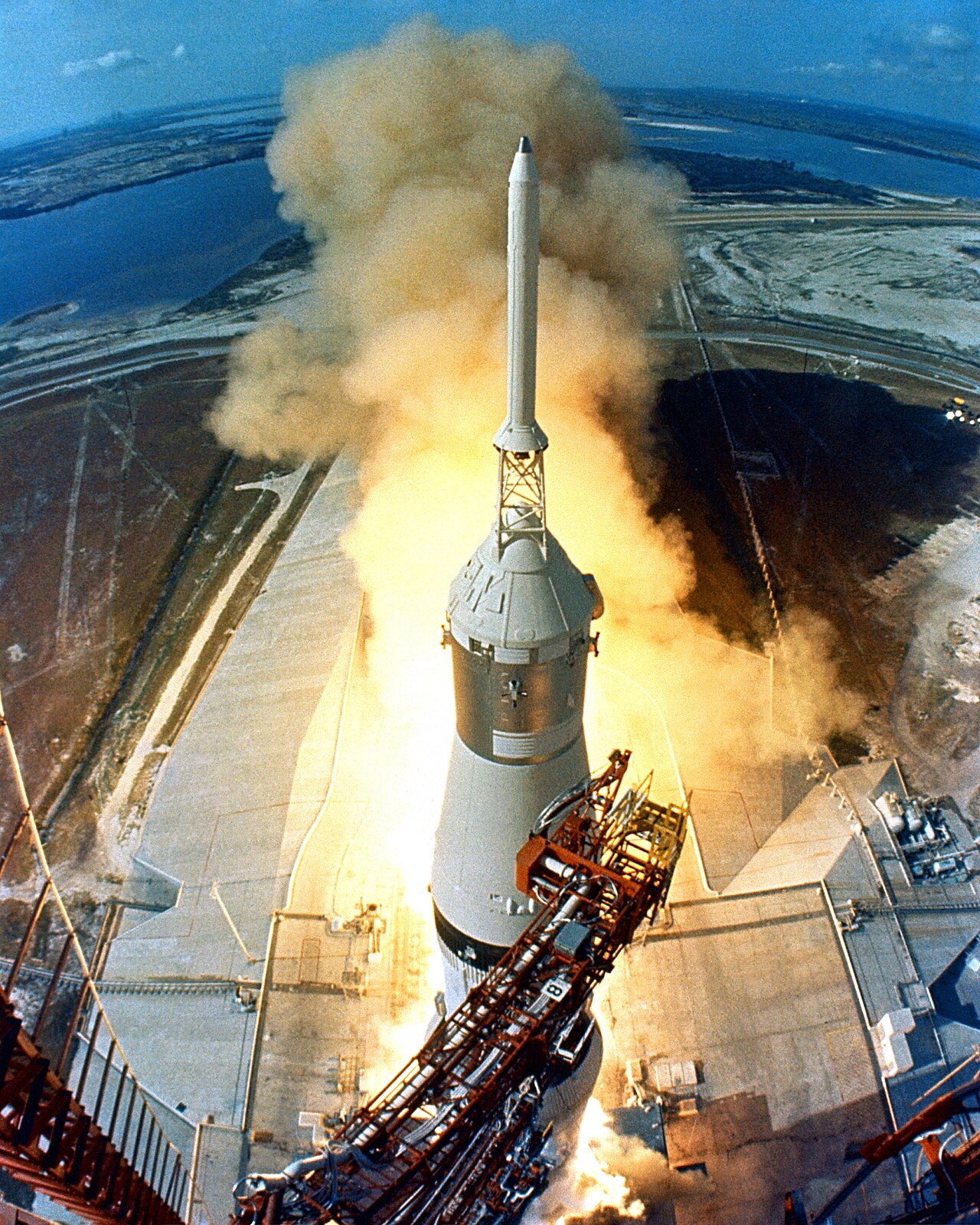
Apollo 9 (March 3–13, 1969) was the third human spaceflight in NASA's Apollo program, flown in low Earth orbit. It was the first crewed flight of the full Apollo spacecraft, including both the command and service module (CSM) and the Lunar Module (LM), and successfully tested systems and procedures critical to landing on the Moon.
- Mission dates
- March 3–13, 1969
- Crew
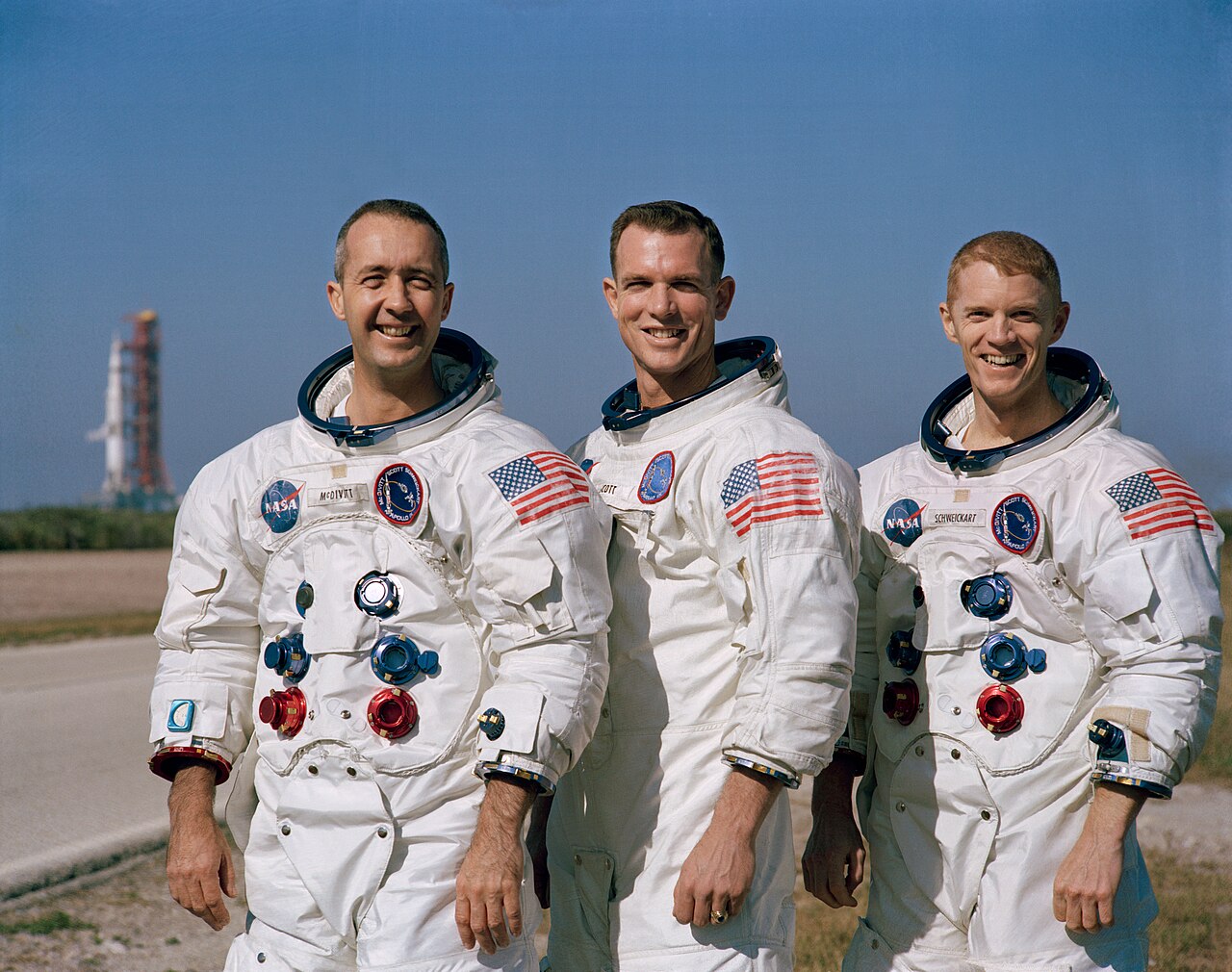
- James McDivitt (Commander), David Scott (Command Module Pilot), Rusty Schweickart (Lunar Module Pilot)
- Launch vehicle
- Saturn V
- Program
- Apollo program
- Mission type
- Crewed Earth orbital test
- Key achievement
- First crewed flight of the Lunar Module
Lore & Background
Apollo 9 was the second crewed Apollo mission launched via a Saturn V rocket. The three-man crew consisted of Commander James McDivitt, Command Module Pilot David Scott, and Lunar Module Pilot Rusty Schweickart. The mission was flown to qualify the LM for lunar orbit operations by demonstrating its descent and ascent propulsion systems, showing that its crew could fly it independently, then rendezvous and dock with the CSM again. Other objectives included firing the LM descent engine to propel the spacecraft stack as a backup mode and use of the portable life support system backpack outside the LM cabin.
The crew performed the first crewed flight of an Apollo Lunar Module, the first docking and extraction of the same, one two-person spacewalk (EVA), and the second docking of two crewed spacecraft—two months after the Soviets performed a spacewalk crew transfer between Soyuz 4 and Soyuz 5. The mission concluded on March 13 and was a complete success, proving the LM worthy of crewed spaceflight and setting the stage for Apollo 10 and the ultimate goal of landing on the Moon.
Reader's Guide
Apollo 9 was a pivotal mission in the Apollo program, serving as the 'D mission' in the alphabetic sequence leading to the lunar landing. It was the first to test the complete Apollo spacecraft in Earth orbit, including the Lunar Module that would later carry astronauts to the Moon's surface. The successful demonstration of the LM's propulsion, independent flight, and rendezvous and docking capabilities proved the vehicle was ready for lunar operations. The mission also tested the portable life support system backpack during a spacewalk. By qualifying the LM for crewed spaceflight, Apollo 9 directly enabled the subsequent dress rehearsal mission Apollo 10 and the first Moon landing on Apollo 11. The crew's extensive training—over 1,800 hours of mission-specific preparation—and their long collaboration since January 1966 contributed to the mission's success.
Did You Know?
- Apollo 9 was the first flight of the full Apollo spacecraft: the command and service module with the Lunar Module.
- The crew performed the first docking and extraction of a Lunar Module from the command module.
- The mission included the second docking of two crewed spacecraft, two months after the Soviets performed a spacewalk crew transfer between Soyuz 4 and Soyuz 5.
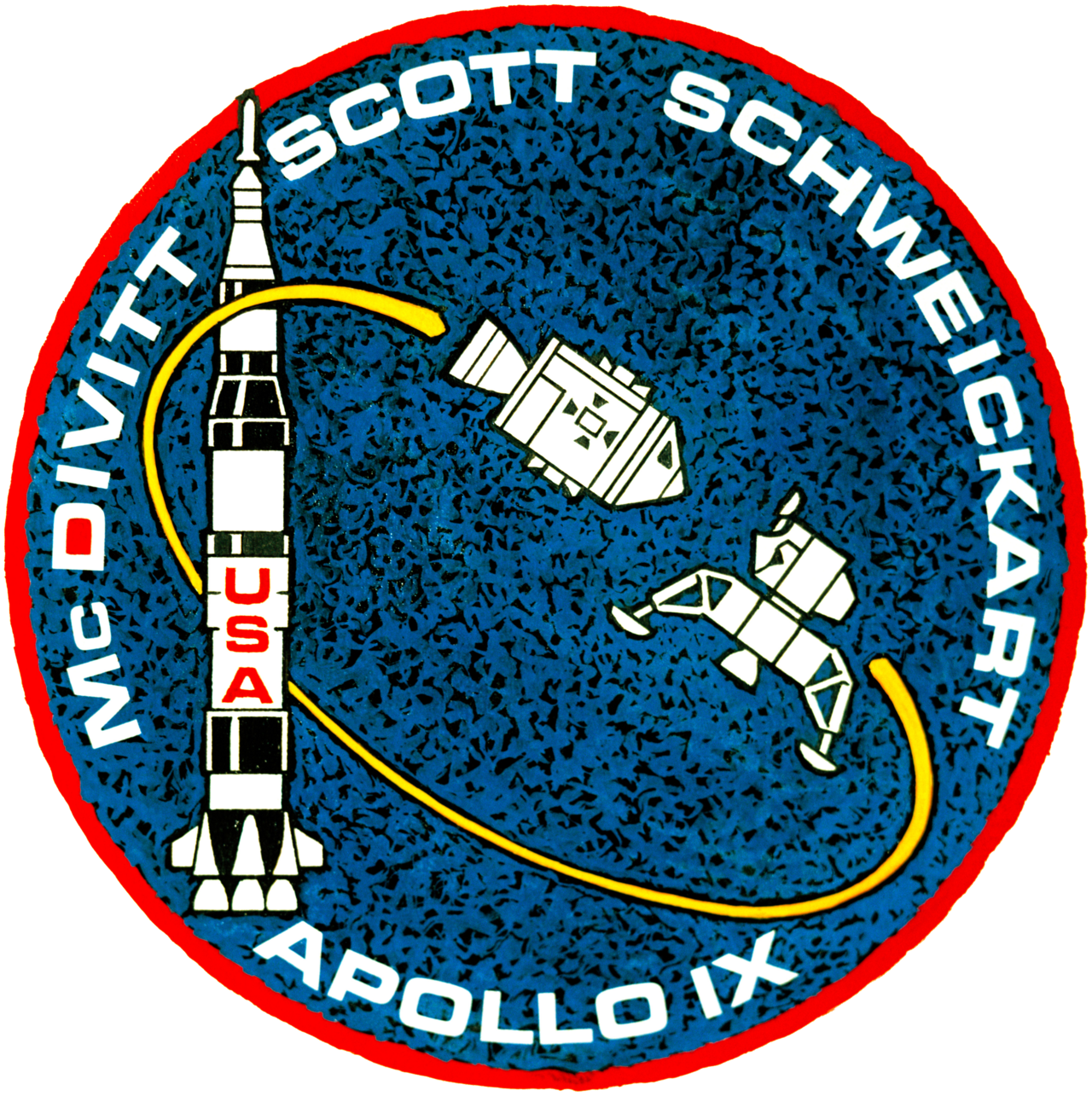
- The mission patch featured a large red 'D' as a central symbol, representing that this was the 'D mission' in the alphabetic sequence of Apollo missions—not part of Commander McDivitt's name.
Mission Designation and the Alphabetical Sequence
Apollo 9's place in the program's mission taxonomy is a story of revision. In September 1967, Owen Maynard proposed an alphabetical list of major mission types to organize the sequential testing needed before a crewed lunar landing. Two A-type missions handled uncrewed CSM and Saturn V tests, a B-type covered the uncrewed Lunar Module, and the C-type—executed by Apollo 7—flew the first crewed CSM in Earth orbit. The D-type was originally intended to test the complete CSM and LM together in Earth orbit. However, George Low proposed committing a mission to lunar orbit ahead of schedule, influenced by the CSM's proven status and production delays on the LM. Apollo 8 was reclassified from D-type to a C-prime mission carrying humans to the Moon. That reclassification eliminated the separate E-type medium Earth orbital test and pushed the D-type objective onto Apollo 9, making it the first crewed mission to fly the full CSM-LM stack in Earth orbit.
The All-Up Testing Philosophy and Uncrewed Foundations
Before any astronaut strapped in, a long chain of uncrewed flights from 1961 through 1967 had to prove that the hardware could survive. Saturn I vehicles, limited to a 20,000-pound payload, could not even lift a partially fueled Service Module, so their role was narrowed to vehicle development, boilerplate testing, and three Pegasus micrometeoroid satellite missions. The uprated Saturn IB, with its S-IVB second stage, raised capacity to 46,000 pounds—enough to orbit a Command Module with a half-fueled Service Module or a fully fueled Lunar Module. Two suborbital CSM tests, one S-IVB development flight, and one LM test were flown; the LM test's success led to cancellation of a planned second uncrewed flight. Meanwhile, from August 1963 to January 1966, launch escape system tests at White Sands Missile Range simulated pad aborts and Mode I in-flight aborts using the Little Joe II rocket. For the Saturn V itself, George Mueller's all-up philosophy—flying all three live stages plus the spacecraft on every test—replaced the conservative one-stage-at-a-time approach, cutting the planned production lot from 20 to 15 vehicles and compressing the timeline toward the 1969 goal.
First Crewed Flight of the Complete Spacecraft
Apollo 9 occupied a unique position as the D-type mission: the first crewed flight of the complete Command/Service Module and Lunar Module operating together in Earth orbit. This followed a logical progression established by the alphabetical mission sequence that Owen Maynard proposed in September 1967. The two A-type flights had validated the Saturn V and CSM without crew, the single B-type had proven the Lunar Module uncrewed, and the C-type—Apollo 7—had carried a crew in the CSM alone. The C-prime mission, Apollo 8, then sent humans to lunar orbit, demonstrating that the CSM could sustain a crew on a translunar trajectory and eliminating the need for a separate E-type medium Earth orbital test. With the CSM now a proven craft and the LM still facing production delays, the program needed a dedicated mission to verify the two vehicles functioning as a pair. Apollo 9 filled that gap, serving as the essential integration test in Earth orbit before Apollo 10 would push the combined spacecraft to the Moon for final testing without landing.
Hardware Evolution and the Road to Crewed Flight
The Saturn launch vehicle family evolved in direct response to the demands of the Apollo mission architecture. The original Saturn I, with its 20,000-pound payload ceiling, proved too small to orbit even a partially fueled Service Module alongside a Command Module, forcing NASA to scrap its planned crewed low Earth orbit role. The solution was the Saturn IB, created by swapping in the more powerful S-IVB second stage—a stage that would also serve as the third stage of the Saturn V with added on-orbit restart capability. This upgrade lifted capacity to 46,000 pounds, sufficient for a Command Module with a half-fueled Service Module or a fully fueled Lunar Module. The Saturn V itself, the super heavy-lift vehicle that would carry crews to the Moon, required three uncrewed test flights to human-rate it. Success of the first and qualified success of the second led to cancellation of the third. By the time Apollo 9 flew its D-type Earth orbit test, the entire hardware chain—from launch vehicle to both spacecraft—had been validated through this layered sequence of uncrewed and crewed demonstrations.
Gallery
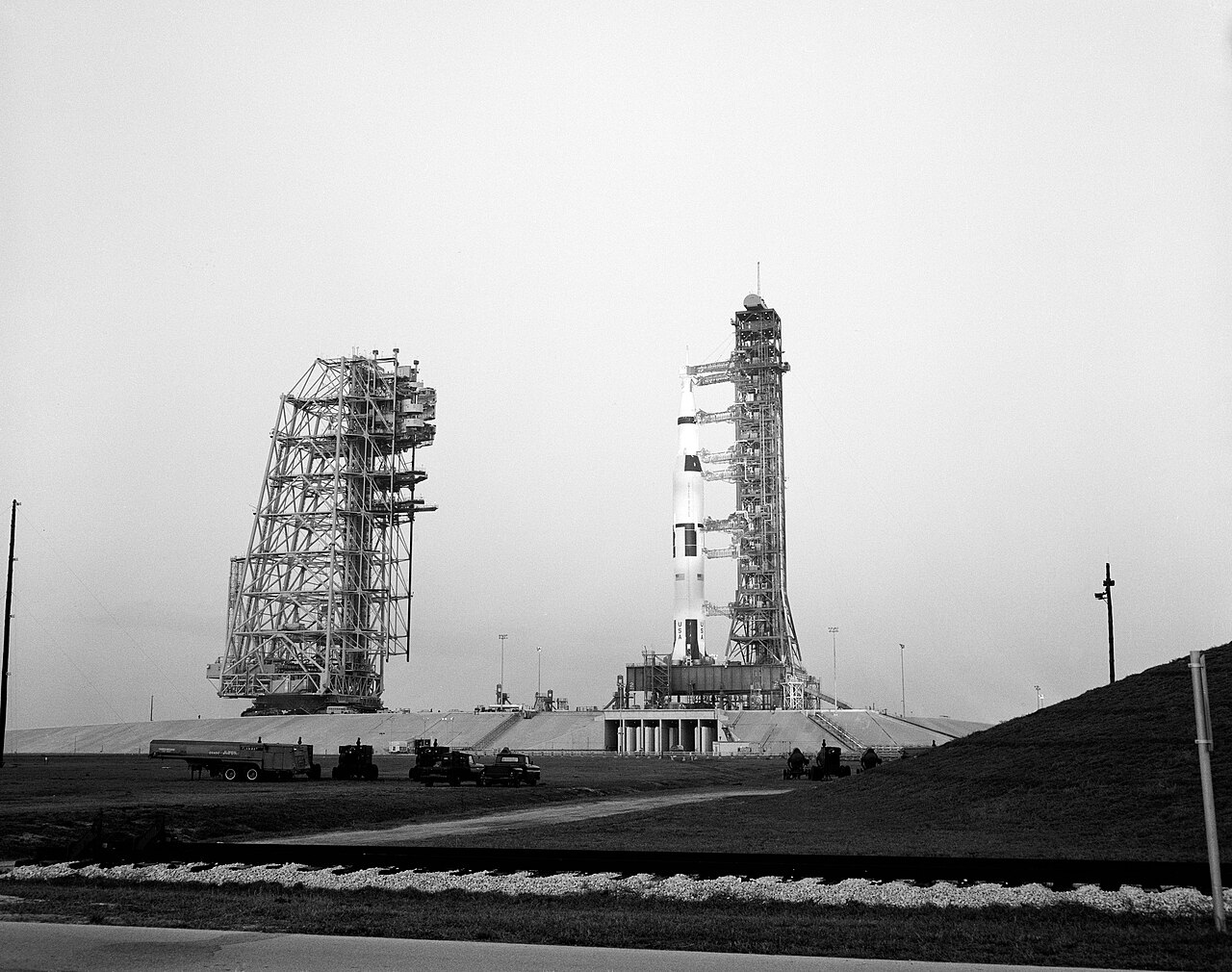
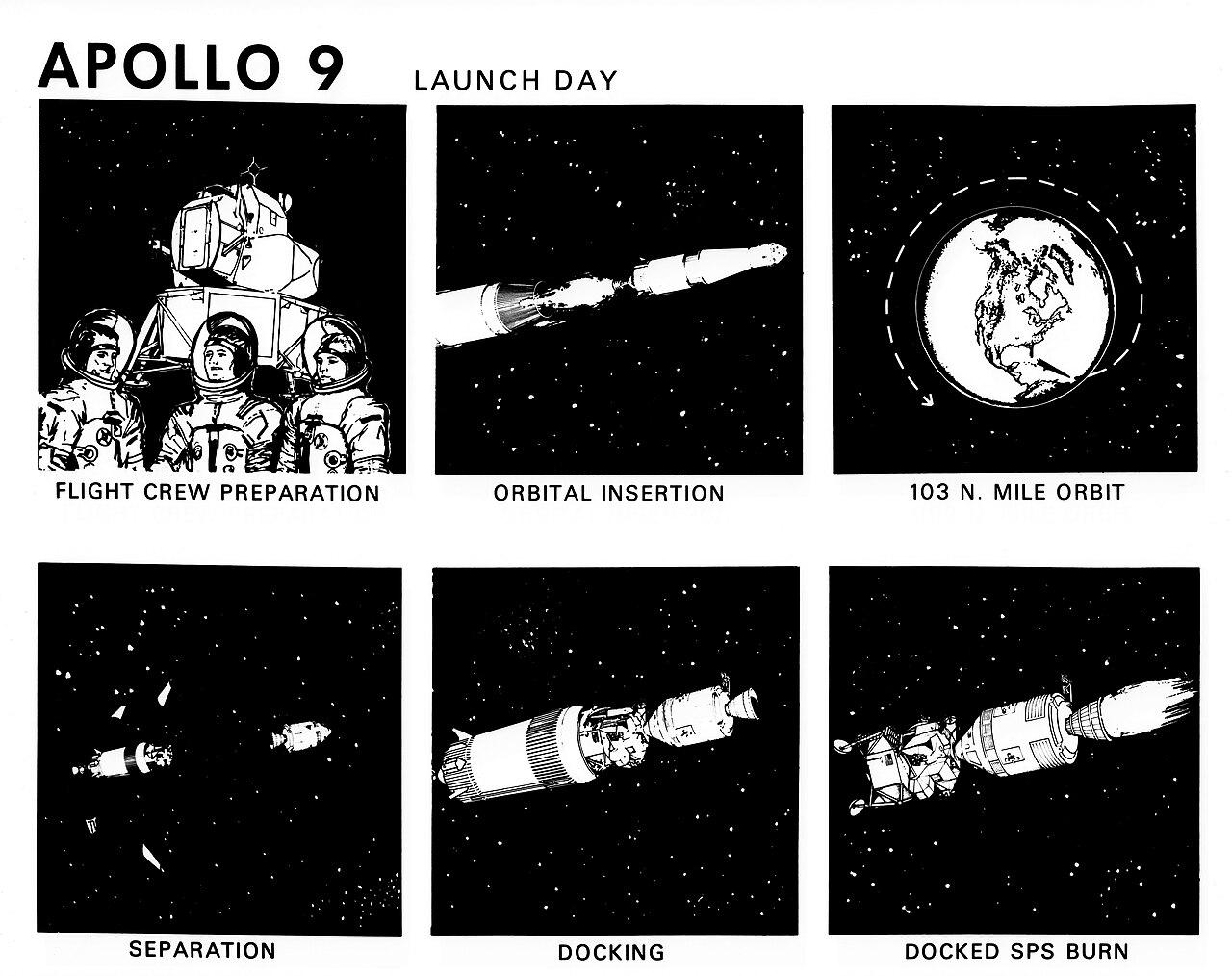
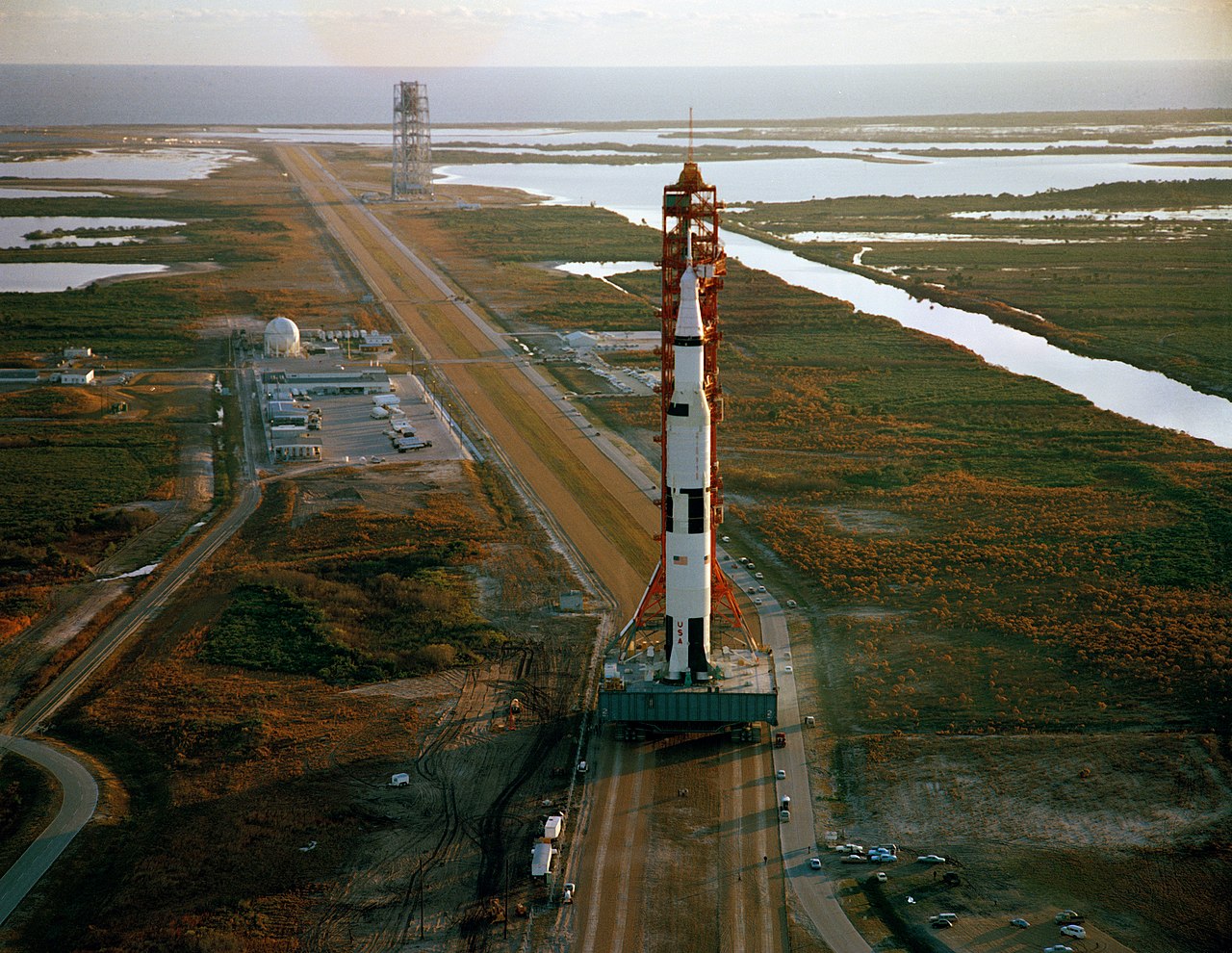
Frequently Asked Questions
What was Apollo 9?
Apollo 9 was NASA's third crewed Apollo flight, conducted in low Earth orbit in March 1969, and it marked the first time the full spacecraft stack—command module, service module, and lunar module—was flown together with astronauts aboard.
Who was the crew of Apollo 9?
Commander James McDivitt led the mission, David Scott served as command module pilot, and Rusty Schweickart was the lunar module pilot, all launched aboard a Saturn V rocket.
Why was Apollo 9 important for the Moon landing?
By exercising the lunar module's systems and operational procedures with a crew in orbit, it confirmed the vehicle was ready for the far more demanding lunar descent and landing that followed in subsequent missions.
What was Apollo 9's main achievement?
It was the first crewed flight of the Apollo Lunar Module, demonstrating that the vehicle could be separated from the command module, maneuvered independently in space, and safely reunited with the crew.
When did Apollo 9 take place?
The mission launched on March 3, 1969, and concluded on March 13, 1969, spanning roughly ten days of low Earth orbit testing.
More in Successful space missions 1-24
Spotted an error? Know more?
This is a living reference — every entry is fact-audited, and reader corrections feed straight into our audit queue. Suggest an edit · See this site's audit record