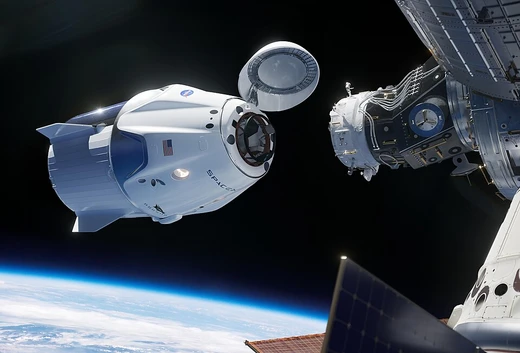
Axiom Mission 4
Private crewed mission to the ISS with first government-sponsored flights for India, Hungary, and Poland.

Axiom Mission 4 (Ax‑4) is a commercially operated flight to the International Space Station, run by Axiom Space alongside SpaceX and NASA. A Falcon 9 Block 5 rocket is set to lift the Crew Dragon capsule named Grace (serial number C213) into orbit—this will be the first trip for Grace, which is at least the tenth Dragon capsule built. The mission was initially planned to launch from Kennedy Space Center’s pad 39A, but delays pushed the date back. The crew is scheduled to spend about 20 days aboard the station, then undock and splash down in the Atlantic Ocean or Gulf of Mexico.
The four-person crew consists of commander Peggy Whitson (an Axiom employee and former NASA astronaut), pilot Shubhanshu Shukla of the Indian Space Research Organisation (ISRO), and mission specialists Sławosz Uznański-Wiśniewski (a European Space Agency project astronaut from Poland) and Tibor Kapu (representing the Hungarian Space Office). For India, Hungary, and Poland, this will be the first government-sponsored human spaceflight in over four decades—though their previous flights under the Soviet Interkosmos program were not independently sponsored by their own nations. Ax‑4 marks the first time any of the three nations will send a government-sponsored crew member to the ISS. Shubhanshu Shukla is set to become the first member of India’s astronaut corps to fly in space.
The mission is a key step for India’s Human Spaceflight Programme and its Gaganyaan initiative. While Gaganyaan remains India’s independent crewed program, Ax‑4 gives Shukla the chance to fly commercially to the ISS. He will carry out experiments designed by ISRO and Indian institutions, looking at how screens affect cognition, how microbes adapt, muscle wasting, and crop resilience in microgravity. ISRO notes that the mission offers hands-on experience in crew-ground coordination, real-time health monitoring, medical and psychological training, working with an international crew, and running experiments—all of which will inform astronaut readiness, safety checks, and mission planning for India’s own program.
ISRO coordinates the Indian experiments.
Quick Facts
- Names List
- Ax-4
- Mission Type
- Private spaceflight to the ISS
- Operator
- Axiom Space · SpaceX
- Spacecraft Type
- SpaceX Crew Dragon
- Manufacturer
- SpaceX
- Crew Size
- 4
- Crew Members
- Peggy Whitson · Shubhanshu Shukla · Sławosz Uznański-Wiśniewski · Tibor Kapu
- Launch Date
- June 25, 2025, 06:31:53UTC (2:31:53amEDT)
- Launch Rocket
- Falcon 9 Block 5 B1094-2, Flight 495
- Launch Site
- Kennedy, LC39A
- Recovery By
- Shannon
- Landing Date
- July 15, 2025, 09:31:41 UTC (2:31:41amPDT)
Facts from the source article.
Lore & Background
The four-person crew includes commander Peggy Whitson, an Axiom Space employee and former NASA astronaut; pilot Shubhanshu Shukla of the Indian Space Research Organisation (ISRO); and mission specialists Sławosz Uznański-Wiśniewski, a European Space Agency (ESA) project astronaut from Poland, and Tibor Kapu, representing the Hungarian Space Office. The mission marks the first government-sponsored human spaceflight for India, Hungary, and Poland—their previous flights under the Soviet Interkosmos program were not independently sponsored by their own nations.
Reader's Guide
Ax‑4 represented a milestone for the Indian Human Spaceflight Programme, integrating with ISRO's Gaganyaan initiative. While Gaganyaan remained India's independent crewed program, Ax‑4 provided the first opportunity for an Indian astronaut—Shubhanshu Shukla—to fly on a commercial mission to the ISS. Shukla conducted experiments developed by ISRO and Indian institutions, including studies of cognitive effects of screen use, microbial adaptation, muscle atrophy, and crop resilience in microgravity. For Poland, Ax‑4 was the first crewed mission since 1978, with the Polish Space Agency (POLSA) and ESA partnering on the Ignis mission for astronaut Sławosz Uznański-Wiśniewski. Ax‑4 also carried Tibor Kapu, Hungary's second astronaut after Bertalan Farkas, and the first Hungarian astronaut to board the International Space Station. The HUNOR mission was developed by the Hungarian Space Office completely independent of ESA. The mission provided practical experience in crew-ground coordination, real-time health telemetry, medical and psychological preparation, international crew integration, and experiment execution, with direct impact on astronaut preparedness, safety validation, and mission planning for the Indian Human Spaceflight Programme.
Did You Know?
- Ax-4 was the first mission to fly aboard the Crew Dragon capsule 'Grace' (C213), the fifth and final Dragon capsule manufactured.
- The mission marked the first government-sponsored human spaceflight in over 40 years for India, Hungary, and Poland.
A Crew That Rewrote History for Three Nations
Axiom Mission 4 carried a four-person crew whose collective significance stretched far beyond a single spaceflight. Commander Peggy Whitson, an Axiom Space employee with prior NASA astronaut experience, led the team alongside pilot Shubhanshu Shukla of India's ISRO, mission specialist Sławosz Uznański-Wiśniewski from Poland's ESA project astronaut program, and Tibor Kapu representing Hungary's national space office. For India, Hungary, and Poland, Ax-4 marked the first government-sponsored human spaceflight in more than four decades. Each of these three nations had previously sent a single astronaut aboard the Soviet Interkosmos program, docking with Salyut 6 or Salyut 7, but none had reached the ISS through a government-backed mission. Shukla became the first member of India's astronaut corps to ever fly in space, while Kapu became the first Hungarian to board the ISS since the Soviet Union's dissolution. The crew's diversity—spanning four national programs and multiple agencies—made Ax-4 a rare convergence of international ambition in commercial spaceflight.
The Gaganyaan Bridge and India's Space Experiments
For India, Axiom Mission 4 served as a critical proving ground for the broader Gaganyaan human spaceflight initiative. Although Gaganyaan remains ISRO's independent crewed program, the Ax-4 flight gave Shubhanshu Shukla his first opportunity to operate on a commercial mission to the ISS, carrying a suite of experiments coordinated by ISRO and developed by Indian research institutions. His scientific portfolio spanned cognitive effects of screen use in microgravity, microbial adaptation, muscle atrophy, and crop resilience. Specific studies included the impact of microgravity and radiation on edible microalgae (ICGEB and NIPGR), metabolic supplements for muscle regeneration (InStem), sprouting salad seeds for crew nutrition (University of Agricultural Sciences Dharwad and IIT Dharwad), survival and reproduction of the tardigrade Paramacrobiotus sp. BLR strain (Indian Institute of Science), and comparative growth of cyanobacteria on urea versus nitrate (ICGEB). ISRO stated that the mission yielded practical lessons in crew-ground coordination, real-time health telemetry, medical and psychological preparation, international crew integration, and experiment execution—capabilities that will directly inform astronaut preparedness, safety validation, and mission planning for Gaganyaan.
HUNOR — Hungary's Independent Leap to Orbit
The HUNOR program—short for HUNgarian to ORbit—represented Hungary's fully independent path to crewed spaceflight, developed entirely by the Hungarian Space Office without ESA involvement despite Hungary's ESA membership. Announced in 2021, the initiative saw a preliminary deal signed with Axiom Space in July 2022 and finalized in September 2023. Tibor Kapu, a mechanical engineer and recreational skydiver, was selected from 247 applicants, with Gyula Cserényi, an electrical engineer and amateur steeplechase racer, serving as backup. Both completed NASA training in April 2025. Kapu became the first Hungarian astronaut since the Soviet Union's collapse and the first to board the ISS, following only Bertalan Farkas in Hungary's astronaut history. The HUNOR mission carried its own dedicated patch, distinct from the Ax-4 insignia, featuring the Csodaszarvas and four stars symbolizing the final astronaut candidates. His experimental payload included studies on heart muscle cell development (Semmelweis University), DNA repair using genetically modified fruit flies (University of Szeged), thermal comfort simulation (eCon Kft.), and crystal growth from organic materials in zero gravity (HUN-REN Research Centre for Natural Sciences).
A Launch Road Marked by Leaks and Delays
The path to orbit for Axiom Mission 4 was anything but straightforward. Originally targeted for June 11, 2025, from Launch Complex 39A at Kennedy Space Center, the mission was scrubbed when a liquid oxygen leak was detected on the Falcon 9 Block 5 rocket. Compounding the schedule pressure, a separate leak in the ISS's Zvezda module forced an additional two-week postponement. The crew finally lifted off on June 25, 2025, at 06:31:53 UTC (2:31:53 a.m. EDT), riding the fifth and final Crew Dragon capsule ever manufactured—Grace (C213)—into low Earth orbit. The 18-day expedition at the ISS concluded with undocking and a Pacific Ocean splashdown off the coast of San Diego on July 15, 2025, at 09:31:41 UTC (2:31:41 a.m. PDT). The mission was operated by Axiom Space in partnership with SpaceX and NASA, making the sequence of technical setbacks all the more notable against the backdrop of a first-flight capsule and a tightly coordinated international crew.
Frequently Asked Questions
What is Axiom Mission 4?
Ax-4 is a privately funded crewed flight to the International Space Station, organized by Axiom Space with SpaceX supplying the Falcon 9 rocket and Crew Dragon capsule, and NASA supporting the docking operations. Four astronauts rode aboard the Dragon capsule named Grace.
Why is Axiom Mission 4 important?
The mission marked the maiden voyage of Grace, the fifth and final Crew Dragon capsule ever built, making it a fleet milestone. It also delivered the first astronauts from India, Hungary, and Poland to the ISS.
Who commands Axiom Mission 4?
Peggy Whitson, a former NASA astronaut now employed by Axiom Space, serves as mission commander. She brings extensive prior spaceflight experience to the role.
What caused Axiom Mission 4's launch delays?
The original June 11, 2025 liftoff from Pad 39A was scrubbed after a liquid oxygen leak was detected on the Falcon 9. A separate leak in the ISS's Zvezda module added roughly two more weeks, pushing the actual launch to June 25, 2025.
What spacecraft and rocket fly Axiom Mission 4?
A Falcon 9 Block 5 rocket launches the Crew Dragon capsule Grace (serial C213) into orbit. Because Grace is the last Dragon capsule in SpaceX's production line, this flight represents her only first trip.
More in SpaceX human spaceflights 1-24
Spotted an error? Know more?
Reader corrections go straight into our review queue. Suggest an edit · How this site is sourced