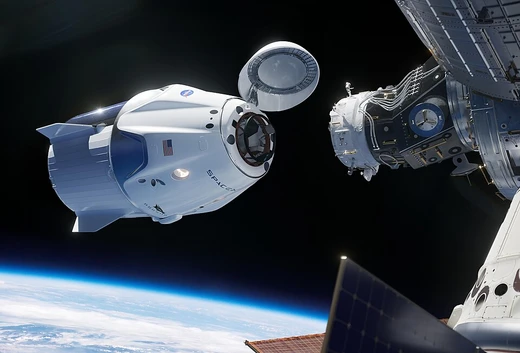
Axiom Mission 2
Second private Axiom mission to the International Space Station.

Axiom Mission 2 (Ax-2) was a private crewed spaceflight operated by Axiom Space, launched on May 21, 2023, aboard a SpaceX Falcon 9. It was the second Axiom mission after Axiom Mission 1 in April 2022 and the fourth private crewed SpaceX Dragon mission, following Crew Dragon Demo-2, Inspiration4, and Axiom Mission 1. The mission docked with the International Space Station (ISS) on May 22, 2023, and returned to Earth after eight days docked.
Quick Facts
- Names List
- Ax-2
- Mission Type
- Private spaceflight to the ISS
- Operator
- Axiom Space · SpaceX
- Spacecraft Type
- SpaceX Crew Dragon
- Manufacturer
- SpaceX
- Crew Size
- 4
- Crew Members
- Peggy Whitson · John Shoffner · Ali AlQarni · Rayyanah Barnawi
- Launch Rocket
- Falcon 9 Block 5 B1080-1
- Launch Site
- Kennedy, LC39A
- Recovery By
- Megan
Facts from the source article.
Lore & Background
Axiom Mission 2 was commanded by Axiom employee Peggy Whitson, a former NASA astronaut. John Shoffner, a space tourist, served as pilot. The Saudi Space Agency purchased two seats, sending astronauts Ali AlQarni and Rayyanah Barnawi as Mission Specialists; Barnawi became the first female Saudi astronaut in space. The mission launched from Kennedy Space Center's Launch Complex 39A on a Falcon 9 Block 5 rocket, with the first stage landing on the drone ship 'Just Read the Instructions' in the Atlantic Ocean. After docking with the ISS, the crew conducted public outreach and scientific research, including studies on microgravity's effects on stem cells. After eight days, Freedom undocked and splashed down in the Gulf of Mexico off Panama City, Florida, recovered by SpaceX's ship Megan.
Reader's Guide
Axiom Mission 2 marked a significant step in commercial spaceflight, being the second mission by Axiom Space and the third private crewed SpaceX Dragon mission. It demonstrated the growing role of private companies in operating crewed missions to the ISS, and highlighted international collaboration through the Saudi Space Agency's participation. The mission included the first female Saudi astronaut, Rayyanah Barnawi, and featured a novel landing of the Falcon 9 first stage on land rather than at sea. The crew's scientific work, including stem cell research, contributed to ongoing microgravity studies. The mission also continued Axiom's path toward eventual private space stations, building on the precedent set by Axiom Mission 1.
Did You Know?
- Axiom Mission 2 was the fourth private crewed SpaceX Dragon mission, after Crew Dragon Demo-2, Inspiration4, and Axiom Mission 1.
- The crew capsule Freedom splashed down in the Gulf of Mexico off the coast of Panama City, Florida.
- The first crewed SpaceX mission to land a booster on land was Crew-2, which touched down at Landing Zone 1.
A Crew Forged in Military Flight
All four crewmembers shared a common thread: military pilot backgrounds. Michael López-Alegría, working as an Axiom Space employee, took the commander's seat. Walter Villadei, representing the Italian Air Force, flew as mission pilot. The two mission specialists brought historic firsts to the table: Alper Gezeravcı became the first astronaut ever from Turkey to reach the International Space Station, while Marcus Wandt, a Swedish project astronaut, made history as the first ESA astronaut to be launched by a private space provider. Wandt was also the first member of the 2022 European Space Agency Astronaut Group to receive a spaceflight assignment. The combination of seasoned military aviation experience with groundbreaking national and institutional firsts made this crew a unique blend of proven skill and symbolic significance.
Muninn — A Raven's Name and a Scandinavian First
The Swedish element of Ax-3 carried the name Muninn, drawn from Norse mythology as one of Odin's two ravens. Together with Huginn — the name given to the mission that carried Danish astronaut Andreas Mogensen on SpaceX Crew-7 — the two ravens symbolize the human mind. This naming created a poetic thread connecting two Scandinavian spaceflights. More practically, it marked the first occasion on which two Scandinavians were simultaneously in orbit. Wandt's mission patch depicts Muninn gliding around Earth, carrying the knowledge he gathered during his time aboard the station. The design features a dark blue circle representing the planet, with lighter lines tracing the outline of Sweden. The mythological framing gave the flight a cultural resonance that extended well beyond the technical achievements of the mission itself.
Launch, Orbit, and Return
Axiom Mission 3 lifted off from Launch Complex 39A in Florida aboard a SpaceX Falcon 9 rocket, riding a Crew Dragon capsule to dock with the International Space Station. The booster, designated B1080, was a veteran vehicle that had previously carried the Axiom-2 crew among other high-profile missions. The crew had originally planned for roughly a two-week stay in orbit, but the mission ultimately stretched to 21 days. The flight concluded on February 9, 2024, with a splashdown in the Atlantic Ocean. Operated by Axiom Space, the mission represented the third in its series of private crewed flights to the station. The reuse of a proven booster and the reliance on SpaceX's well-established launch infrastructure underscored the growing maturity of commercial spaceflight operations by early 2024.
Science, Education, and the Mission Patch
During his 21 days aboard the station, Marcus Wandt carried out twenty distinct experiments and took part in five educational programs. The research spanned a wide range of topics, from investigating how space habitat design influences astronaut stress levels to examining changes in cellular structure and gene expression under microgravity conditions. These efforts reflected the broader scientific goals that private missions to the ISS have increasingly embraced. The mission's visual identity reinforced this narrative of knowledge-gathering: the patch shows the raven Muninn in flight around Earth, symbolizing the sharing of the information Wandt collected during his stay. The dark blue circle at the center represents the planet, with subtle lighter lines marking Sweden's geography. Together, the scientific program and the mission's symbolic design communicated a clear message — that even a privately funded flight could contribute meaningfully to both research and public education.
Frequently Asked Questions
Who commanded Axiom Mission 2 and who else flew on the crew?
Peggy Whitson served as mission commander for Ax-2. The crew also included Rayyanah Barnawi, who became the first female astronaut from Saudi Arabia to reach orbit.
When did Axiom Mission 2 launch and what vehicle carried the crew?
The mission lifted off on May 21, 2023, aboard a SpaceX Falcon 9 rocket carrying the Crew Dragon capsule named Freedom. It reached the International Space Station the next day.
What made Axiom Mission 2 historically notable?
It marked the first time a Saudi woman traveled to space aboard Rayyanah Barnawi. The flight also stood as the third privately operated crewed SpaceX Dragon mission to the station.
How long did the Ax-2 crew spend docked at the ISS?
The crew remained attached to the International Space Station for eight days before undocking and returning to Earth. The full mission from liftoff to splashdown spanned roughly ten days.
Where does Axiom Mission 2 sit in SpaceX's human spaceflight timeline?
It was the second Axiom Space–operated mission, following Ax-1 in April 2022. For SpaceX, it continued the growing pattern of third-party operators using Dragon capsules for commercial access to the station.
More in SpaceX human spaceflights 1-24
Spotted an error? Know more?
Reader corrections go straight into our review queue. Suggest an edit · How this site is sourced