Sântoaderi
Romanian folklore entities who kidnapped villagers and caused illness.

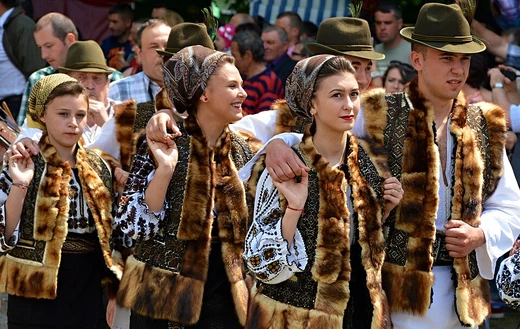
In Romanian folklore, the Sântoaderi were supernatural beings that appeared in villages as a group of either seven or nine young men. They were described as having long feet and hooves, and were often associated with specific footwear or attire related to Saint Theodore's feast. Their arrival was marked by singing and drumming, and they were believed to cause illness—either by wrapping people in chains, which led to rheumatism, or by stamping on their bodies. Hearing their music and the sound of hooves was a warning to stay indoors, as this was considered safe. Anyone who failed to take shelter risked being kidnapped and forced to join the procession. Some victims later returned healthy and bearing gifts, while others came back sick, dying, or insane.
The Sântoaderi share traits with Irish fairies. Romanian historian Mircea Eliade noted similarities between them and the zîne—the Romanian equivalent of fairy godmothers—as both were thought to travel through the night in a dancing procession. The name “Sântoader” comes from a regional name for Saint Theodore, and folklore held that the creatures were more likely to appear on his feast day.
- Type
- Supernatural entities
- Folklore origin
- Romanian
- Number
- Seven or nine
- Appearance
- Young men with long feet and hooves, often associated with specific footwear or attire related to Saint Theodore's feast
- Associated feast
- Saint Theodore's feast day
- Known for
- Causing illness, kidnapping villagers, and traveling in procession
Lore & Background
The Sântoaderi were believed to appear in a village, where they would sing, beat their drums, and cause illness for people—wrapping them up in chains to cause rheumatism or stamping on their bodies. Upon hearing their music and the sound of hooves, people were advised to stay indoors, which was considered safe. Those who did not retreat indoors could be kidnapped by the Sântoaderi and made part of the procession. Victims of such kidnappings would sometimes return in healthy condition and carrying gifts; other times, they would return sick, dying, or insane.
Reader's Guide
The Sântoaderi hold significance in Romanian folklore as a cautionary supernatural presence tied to Saint Theodore's feast day. Their behavior—causing illness, kidnapping, and traveling in a procession—parallels other European folkloric traditions, such as the Irish fairies and the Romanian zîne. The historian Mircea Eliade noted similarities between the Sântoaderi and the zîne, both believed to travel through the night in a procession of dancers. Additionally, there is a belief that on the 24th day after Easter, the zîne and Sântoaderi meet together to play, and offer them bouquets of flowers. The name 'Sântoader' derives from a regional name for Saint Theodore, with folklore suggesting that the creatures were more likely to appear on his feast day. Their legacy endures as part of the broader European Wild Hunt motif, and they are often compared to the Călușari, another Romanian ritual group.
Did You Know?
- The Sântoaderi were thought to be either seven or nine young men with long feet and hooves.
- They would cause rheumatism by wrapping people in chains or stamping on their bodies.
- Kidnapped victims sometimes returned healthy with gifts, other times sick, dying, or insane.
More in Romanian folklore 1-21
Spotted an error? Know more?
Reader corrections go straight into our review queue. Suggest an edit · How this site is sourced