Lapot
Legendary senicide practice among Timok Romanians.

Лапоть · CC0
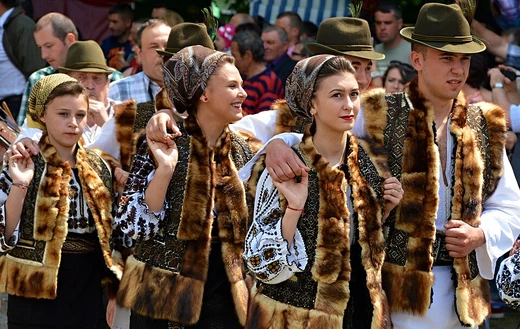
Lapot (Serbian: лапот, pronounced [lâpot]) refers to a legendary custom of senicide among the Timok Romanians in what is now eastern Serbia. The practice supposedly involved killing elderly parents or other older relatives once they became a financial strain on the household. Writing in 1918 about the highlands around Zaječar, T. R. Georgevitch (Đorđević) described the killing as being done with an axe or a club, with the whole village invited to watch. In some versions, corn mush was placed on the victim’s head to make it appear that the corn, rather than the family, was responsible for the death.
Georgevitch proposed that the legend might have roots in stories about Roman occupation of local forts. According to his account, the Romans were a warlike people whose leader ordered that all fort holders under forty serve as active fighters, those between forty and fifty act as fort guards, and anyone over fifty be killed for lacking military value. From that time, the killing of old men was said to have begun.
Anthropologist Senka Kovač, in a study on aging, notes that the name "lapot" is used for this custom of killing the elderly in eastern Serbia. In a 1999 study, Bojan Jovanović argued that earlier anthropologists like Trojanović, Georgevitch, and Čajkanović had confused myth with reality. He pointed to a well-known story about a grandson who hid his grandfather to protect him from lapot after a bad harvest, only to bring the old man back when his wisdom showed the village how to survive—a tale that helped establish the idea that the elderly should be valued for their knowledge and advice.
The tradition was the subject of a 1972 TV docudrama, *Legenda o lapotu* (The Legend of Lapot), directed by Goran Paskaljević, in which an elderly man unable to work was ritually killed after a poor harvest. Živojin Pavlović’s 1992 novel *Lapot* won the NIN Prize. In 2004, the Italian news agency ANSA reported from Belgrade that a Serbian government attempt to introduce a law limiting free lifesaving medicines to people over sixty had been called a case of "lapot" by the Serbian media.
- Field
- Folklore, Anthropology
- Region
- Eastern Serbia (Timok Romanians)
- Known for
- Legendary practice of senicide
- First documented by
- T. R. Georgevitch (Đorđević), 1918
- Related terms
- Ubasute, Ättestupa, Senicide
Lore & Background
Georgevitch suggests that this legend may have originated in tales surrounding the Roman occupation of local forts. According to the tale, the Romans were very bellicose people; their leader ordered all holders of the fort up to forty years of age to be active fighters, from forty to fifty to be guards, and after fifty to be killed because they had no military value. Since that period, the old men were killed.
Anthropologist Senka Kovač, in a study on aging, mentions that the name 'lapot' is given to this custom of killing the elderly in eastern Serbia. In a study published in 1999, Bojan Jovanović argues that earlier anthropologists such as Trojanović, Georgevitch, and Čajkanović had confused myth with reality. Jovanović notes that the well-known story of a grandson who had hidden his grandfather to protect him from lapot after a bad harvest, bringing him back when the old man's wisdom showed a way to survive, was the basis for establishing that the old should be respected for their knowledge and wise counsel.
Reader's Guide
Lapot is significant as a legendary practice that reflects cultural attitudes toward aging, burden, and survival in Eastern Serbian folklore. The tradition was the topic of the 1972 TV docudrama 'Legenda o lapotu' by Goran Paskaljević, in which after a bad harvest, an elderly man who could no longer work was ritually slain. The 1992 novel 'Lapot' by Živojin Pavlović received the NIN Prize. In 2004, Italian news agency ANSA reported from Belgrade that an attempt by the Serbian government to introduce a law restricting free dispensing of lifesaving medicines to the over 60s had been described by the Serb media as a case of 'lapot.' The legend's persistence in modern discourse shows its power as a metaphor for societal neglect of the elderly. The dispute among anthropologists—whether lapot was a real custom or a myth—remains unresolved, with Jovanović arguing that earlier scholars confused myth with reality.
Did You Know?
- The killing was carried out with an axe or stick, and the entire village was invited to attend.
- In some places, corn mush was put on the victim's head to make it seem as if the corn, not the family, was the killer.
- Georgevitch suggested the legend may have originated in tales about Roman occupation, where men over fifty were killed for having no military value.
The Practice and Its Ritual Dimensions
Lapot, a term rooted in the Serbian language and pronounced with a long 'a' sound, refers to a legendary custom of senicide associated with the Timok Romanians of what is now eastern Serbia. At its core, the practice involved the killing of parents or other elderly relatives once they could no longer contribute economically and instead became a drain on household resources. The most detailed early account comes from T. R. Georgevitch, who in 1918 described the custom as it supposedly persisted in the highland region around Zaječar. According to his observations, the act was performed using an axe or a heavy stick, and far from being a secretive family matter, the entire village was summoned to witness the event. Perhaps the most striking detail Georgevitch recorded was the placement of corn mush on the victim's head afterward, a theatrical gesture designed to create the appearance that the grain itself, rather than the family's hands, had delivered the fatal blow.
A Roman Military Origin
Georgevitch offered a striking etiological explanation for why such a custom might have taken root in the eastern Serbian highlands, tracing it back to the era of Roman military occupation. In his telling, the Romans—whom he characterized as an intensely warlike people—imposed a rigid age-based hierarchy on the garrisoned populations of local forts. Men under forty were conscripted as active combatants; those between forty and fifty were reassigned to guard duty; and anyone past fifty was ordered killed outright, on the grounds that they had lost all military utility. Georgevitch suggested that this brutal Roman policy left such a deep imprint on local memory that the killing of old men became normalized and was passed down through generations as an accepted custom. The implication is that what later appeared as a folk tradition of senicide was, in origin, a military directive that outlived the Roman presence and calcified into social practice among the communities of the region.
Myth, Reality, and the Scholarly Debate
The question of whether lapot was ever a lived reality or merely a narrative construct has generated significant academic disagreement. Anthropologist Senka Kovač, in her work on aging, acknowledged the term as the name given to this custom of elderly killing in eastern Serbia. However, Bojan Jovanović mounted a more pointed critique in a 1999 study, arguing that earlier scholars—including Trojanović, Georgevitch, and Čajkanović—had inadvertently blurred the boundary between myth and documented practice. Jovanović pointed to a widely known folk tale in which a grandson, after a devastating harvest, hides his grandfather to shield him from the lapot ritual, only to bring the old man back to the village once the elder's hard-won wisdom reveals a path to survival. For Jovanović, this story was not evidence of the custom's existence but rather the cultural mechanism through which communities articulated the principle that the elderly deserve respect precisely because of their accumulated knowledge and counsel.
Cultural Legacy and Modern Resonance
Though lapot exists primarily as a legendary and scholarly subject, it has left a persistent mark on Serbian cultural production and public discourse. In 1972, director Goran Paskaljević adapted the theme into the television docudrama Legenda o lapotu, which dramatized the ritual slaying of an elderly man who could no longer work, set against the backdrop of a failed harvest. Two decades later, writer Živojin Pavlović produced the novel Lapot, which earned the prestigious NIN Prize for literature in 1992, cementing the subject's place in modern Serbian letters. The term's power as a cultural shorthand endures well beyond literature: in 2004, the Italian news agency ANSA reported from Belgrade that when the Serbian government proposed legislation restricting the free distribution of life-saving medicines to citizens over sixty, domestic media outlets seized on the word 'lapot' to frame the policy as a form of institutionalized abandonment of the elderly, demonstrating how the legend continues to function as a potent moral metaphor.
Gallery


Frequently Asked Questions
What is Lapot?
Lapot is the name given to a now-legendary custom among the Timok Romanians in which elderly relatives who could no longer sustain themselves were put to death by their own family. The term survives today as a reference to that alleged practice of senicide.
Where and among whom was Lapot practiced?
The custom is tied to the Romanian-speaking communities of the Timok region in what is now eastern Serbia, especially the highland areas around Zaječar. It is not a pan-Romanian tradition but a localized one among that specific group.
How was the killing carried out, according to the surviving accounts?
The 1918 description says the victim was struck dead with an axe or a heavy wooden club. Notably, the whole village was called in to watch, suggesting the act was treated as a communal event rather than a private matter.
What was the corn-mush trick mentioned in some versions?
In certain tellings, a thick smear of corn porridge was laid over the deceased's head after the blow was delivered. The idea was that bystanders would see the grain on the skull and conclude the corn itself had killed the person, shielding the family from blame.
When and by whom was Lapot first documented in writing?
The earliest known scholarly record comes from T. R. Georgevitch (Đorđević), who described the custom in 1918 while writing about the Zaječar highlands. Before that account, the practice appears to have existed only in oral memory and local legend.
More in Romanian folklore 1-21
Spotted an error? Know more?
Reader corrections go straight into our review queue. Suggest an edit · How this site is sourced