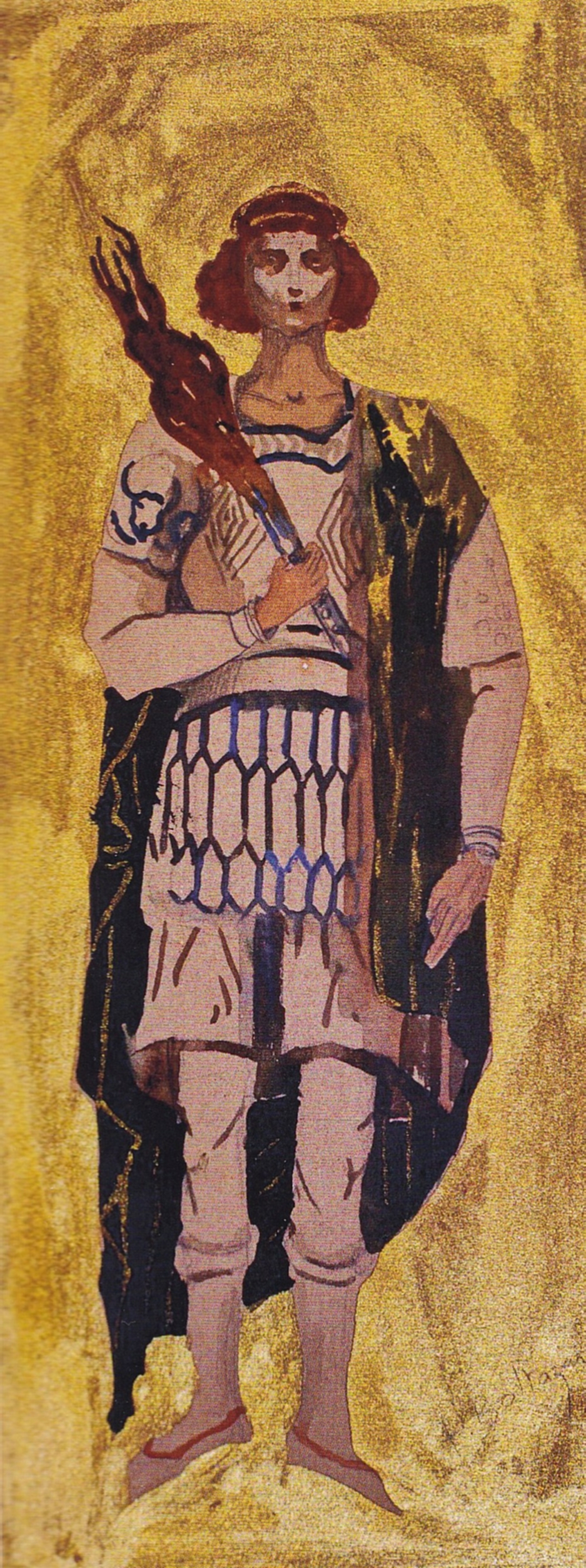
Făt-Frumos
Knight hero in Romanian folklore, akin to Prince Charming.

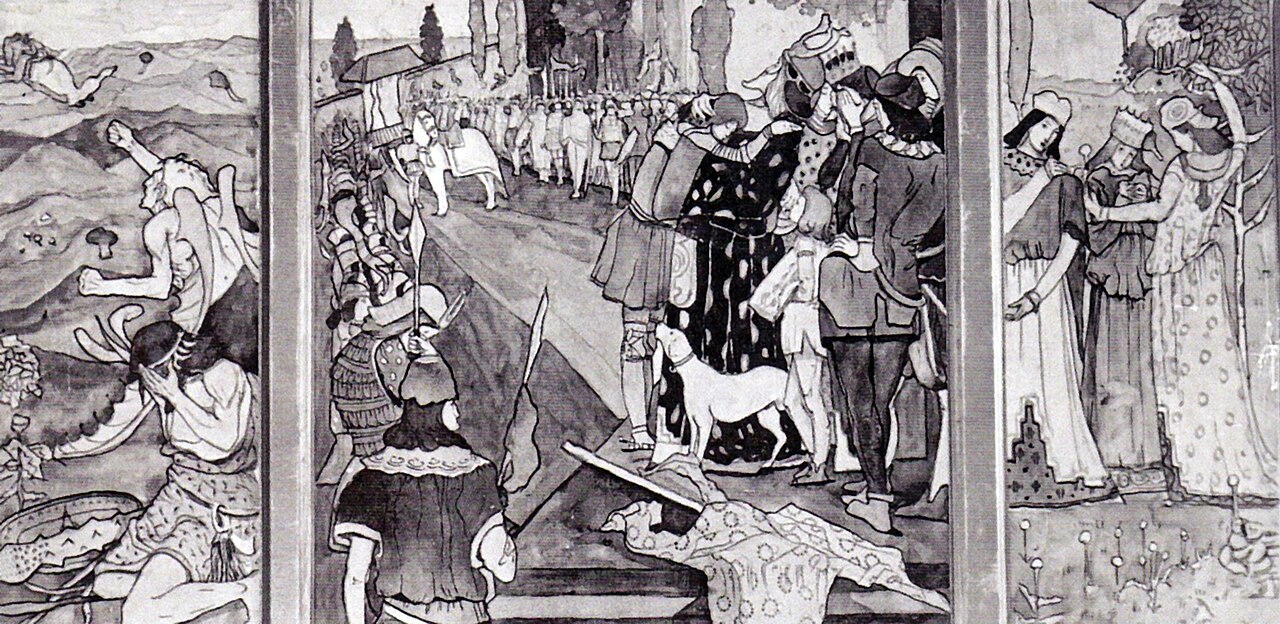
Apcar Baltazar · Public domain
Făt-Frumos, whose name combines the Romanian words for “boy” and “handsome,” is a knight hero from Romanian folklore, best known from the tale *Făt-Frumos with the Golden Hair*. He must face trials and obstacles beyond ordinary human strength, always resolving them with dignity. He battles demonic monsters and evil figures such as the zmeu, balaur, and Muma Pădurii. His travels take him through both “this land” and “the other land” (tarâmul celălalt), aided by his magical horse, the calul năzdrăvan, which also acts as his advisor.
Like Prince Charming, Făt-Frumos embodies courage, purity, justice, physical and spiritual strength, cleverness, passion, and unwavering love. He has minor miraculous abilities and shows total dedication to any task he promises, as well as to the king he serves. In some tales, he is so precocious that he weeps before birth. He is usually the youngest son of a king, and in many Romanian stories, all the king’s sons try to defeat the zmeu or balaur, but the older ones fail before the youngest succeeds.
At the story’s end, Făt-Frumos is paired with a fairy maiden such as Ileana Cosânzeana, Zâna Zânelor (the Fairy Queen), or Doamna Chiralina. During his journeys, he often faces a major dilemma about which route to take, forced to choose between two equally senseless options. When he asks an old woman for directions, she gives an obscure answer: “If you turn right, you will be in sorrow; if you turn left, you will be in sorrow as well.” According to scholar Victor Kernbach, this lose-lose situation reflects the historical condition of the Romanian people, whose homeland was constantly crossed and attacked by foreign powers, leaving them to decide between allying with enemies or fighting them.
Făt-Frumos is a common figure in Romanian culture and literature, appearing in works by writers such as Mihai Eminescu, Tudor Arghezi, and Nichita Stănescu. As a sign of Romanian self-irony, he also shows up in contemporary jokes, though less often than characters like Bulă or current political figures.
- Field
- Folklore and mythology
- Nationality
- Romanian
- Known for
- Knight hero in Romanian folklore; defeating demonic monsters; paired with heroine Ileana Cosânzeana
Lore & Background
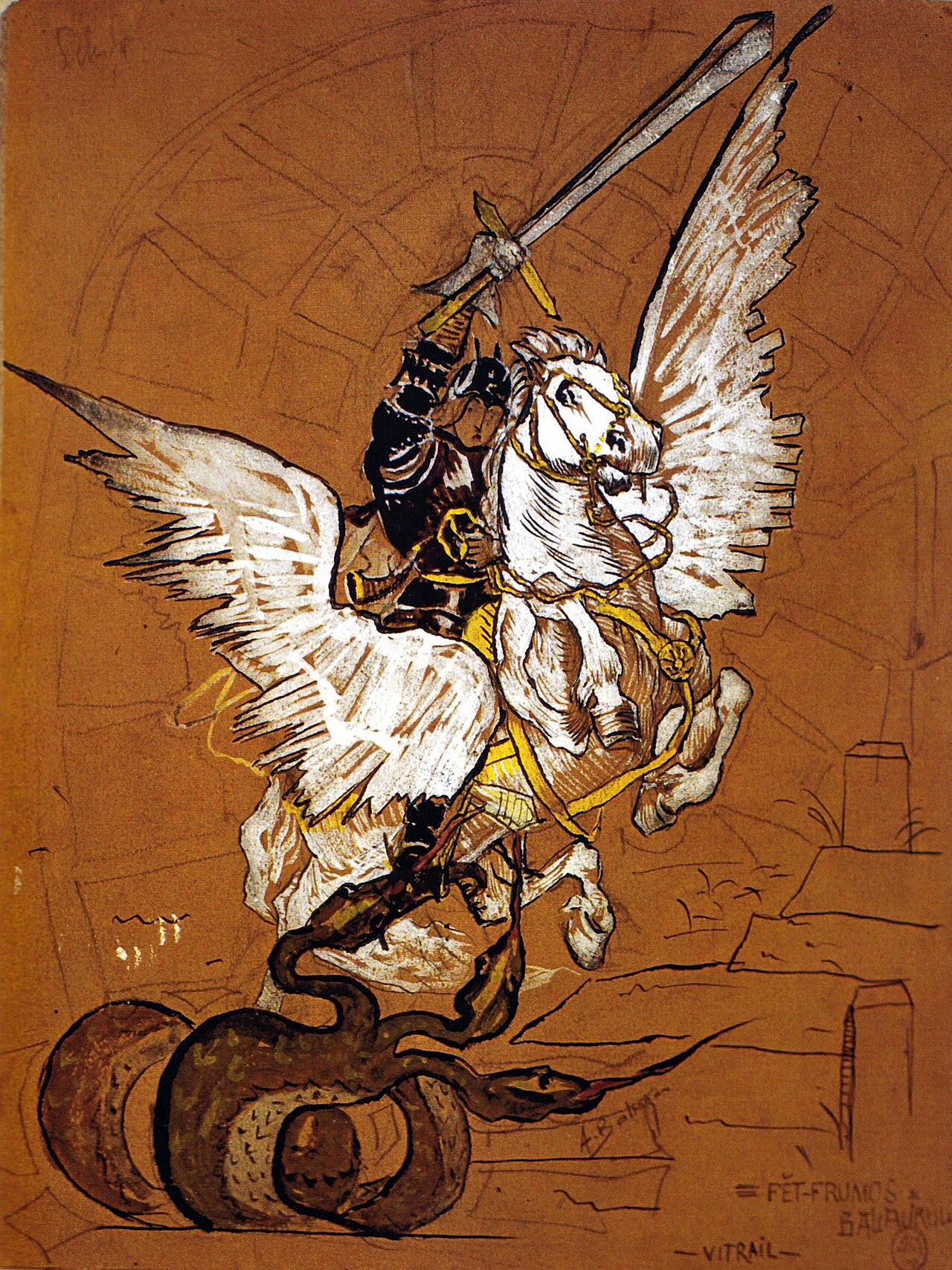
Făt-Frumos has to go through tests and obstacles that surpass ordinary men's power. With dignity, he always brings these to a positive resolution. He fights demonic monsters and malevolent characters (zmeu, balaur, Muma Pădurii, etc.). He travels in both 'this land' and 'the other land' (tarâmul celălalt) on the calul năzdrăvan ('magical horse'), who also serves as his counsellor.
Akin to Prince Charming, he possesses such essential attributes as courage, purity, justness, physical and spiritual strength, cleverness, passion, and unshakable love. Făt-Frumos also displays some minimal abilities in performing miracles, as well as total commitment to a task once his word is given and to the monarch he serves. In some tales, he is so precocious as to be able to weep before he is born. Făt-Frumos is usually the youngest son of a king. In the Romanian folk stories it is common that all the sons of a king try to defeat the Zmeu or the Balaur, the older sons failing before the younger one succeeds.
At the end of the fairy tale, Făt-Frumos is paired up with the heroine of the story, a fairy maiden: Ileana Cosânzeana, Zâna Zânelor (Fairy Queen) or Doamna Chiralina (Lady Chiralina). In his journeys, Făt-Frumos often has to overcome a major dilemma related to the correct route he is to follow, and is bound to decide between two equally nonsensical choices. Asked about the right way, an old woman gives Făt-Frumos an obscure answer: 'If you turn right, you will be in sorrow; if you turn left, you will be in sorrow as well'.
Reader's Guide
Făt-Frumos is a significant figure in Romanian folklore, embodying the ideal hero who overcomes impossible trials with dignity and moral strength. His character reflects core Romanian cultural values such as courage, purity, and commitment. According to Victor Kernbach, the lose-lose situation Făt-Frumos faces—having to choose between two equally sorrowful paths—evokes the historical condition of the Romanian people, whose homeland was constantly crossed and attacked by foreign powers, forcing them to decide between two equally unfortunate choices: ally with enemies or fight them. This interpretation links the folk hero to national identity and historical memory.
Beyond folklore, Făt-Frumos is a commonplace figure in Romanian culture and literature, appearing in works by famous writers such as Mihai Eminescu, Tudor Arghezi, or Nichita Stănescu. As a symptom of the Romanian people's self-irony, Făt-Frumos can be encountered even in contemporary Romanian jokes, yet less frequently than Bulă or the political personalities of the moment. His enduring presence across genres—from fairy tales to modern humor—demonstrates his lasting relevance as a cultural archetype.
The Trials and the Road Beyond
Făt-Frumos is defined by the extraordinary obstacles he must overcome—trials that exceed the capacity of ordinary men. Yet he meets each challenge with a steady dignity, always steering the situation toward a favorable outcome. His adversaries are drawn from the full panoply of Romanian mythic evil: the zmeu, the balaur, and the forest-dwelling Muma Pădurii, among others. His journeys carry him not only across familiar terrain, "this land," but also into the mysterious tarâmul celălalt, the other land, a realm beyond the ordinary world. His constant companion is the calul năzdrăvan, a magical horse that serves double duty as both mount and trusted counsellor, offering guidance when the path grows uncertain. Along the way, Făt-Frumos occasionally displays a small degree of miraculous power, though his true strength lies elsewhere: in an absolute, unbreakable commitment to any task he has pledged himself to, and in his unwavering loyalty to the sovereign who commands his service.
The Youngest Son and the Prince Archetype
In the standard narrative pattern of Romanian folk tales, Făt-Frumos is consistently the youngest son of a king. The older brothers set out first to slay the zmeu or the balaur, only to fail, and it falls to the youngest to succeed where his predecessors could not. This positioning mirrors the broader "Prince Charming" archetype found across European storytelling. His essential qualities form a constellation of virtues: courage, moral purity, a sense of justice, both physical and spiritual strength, sharp cleverness, deep passion, and an unshakable capacity for love. Some tales push his precocity to a remarkable extreme—he is described as weeping even before he is born. His name itself, drawn from the Romanian words for "boy" and "handsome," signals the idealized youth at the heart of the tradition. He is not merely a warrior; he is a figure of wholeness, combining martial prowess with emotional depth and an iron fidelity to his given word.
The Lose-Lose Dilemma and Historical Echo
One of the most haunting motifs in Făt-Frumos's journeys is the recurring dilemma of the correct path. At a critical crossroads, he is asked to choose between two routes, and an old woman delivers an answer that offers no comfort: turn right and sorrow awaits; turn left and sorrow awaits just the same. Both options are equally nonsensical, equally doomed. The scholar Victor Kernbach read this narrative structure as a direct reflection of the Romanian people's historical predicament. For centuries, the Romanian homeland was repeatedly crossed and ravaged by foreign powers, and the native population was perpetually forced into a choice between two equally catastrophic alternatives: submit to and ally with the enemy, or resist and face annihilation. Făt-Frumos's impossible fork in the road thus becomes a metaphor for a collective condition in which no decision leads to safety, yet the hero must still choose and press forward with dignity.
From Fairy Tale to National Meme
The story does not end in isolation. At the tale's close, Făt-Frumos is united with one of the tradition's great fairy maidens—most often Ileana Cosânzeana, but in other versions Zâna Zânelor, the Fairy Queen, or Doamna Chiralina. Beyond the original folk narratives, the character has become a staple of Romanian literary culture. He appears in the works of major writers including Mihai Eminescu, Tudor Arghezi, and Nichita Stănescu, each bringing their own voice to the figure. The hero has also seeped into everyday popular culture as a figure of gentle self-irony: he shows up in contemporary Romanian jokes, though less often than the stock character Bulă or the political figures of the moment. This dual presence—elevated in serious poetry and playfully deflated in a barroom quip—testifies to how deeply Făt-Frumos is woven into the national imagination, belonging simultaneously to high art and to the casual humor of daily life.
Gallery
Frequently Asked Questions
Who is Făt-Frumos?
Făt-Frumos is a knight hero from Romanian folklore whose name literally translates to 'handsome boy.' He is most famous for the tale *Făt-Frumos with the Golden Hair*, in which he undertakes heroic quests against supernatural foes.
What are Făt-Frumos's powers and abilities?
He possesses strength and resolve that far exceed ordinary human limits, enabling him to confront demonic figures such as the zmeu, balaur, and Muma Pădurii. His enchanted horse, the calul năzdrăvan, serves as both his steed and a talking advisor throughout his journeys.
Why is Făt-Frumos important to Romanian culture?
He functions as Romania's folkloric equivalent of Prince Charming, personifying courage, purity, and justice in the face of supernatural evil. His tales have been a cornerstone of Romanian oral tradition, shaping how the culture understands heroism and moral duty.
What is the calul năzdrăvan?
It is Făt-Frumos's magical horse that accompanies him through both the mortal land and the otherworld (tarâmul celălalt). Beyond serving as a mount, it acts as a wise counselor who helps the hero navigate and survive his trials.
More in Romanian folklore 1-21
Spotted an error? Know more?
Reader corrections go straight into our review queue. Suggest an edit · How this site is sourced