Folklore of Romania
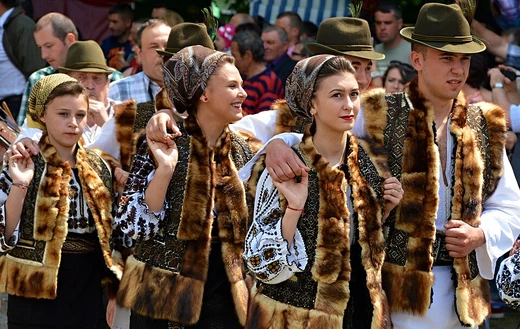
Romanian folklore blends rural traditions with learned culture and myth.

Britchi V.I.Iulia · CC BY-SA 4.0
Romanian and Moldovan folklore encompasses the traditional beliefs and practices of the Romanian people. A key aspect of this culture is how closely folk traditions interact with formal, learned culture. This bond arose from two main conditions: first, Romania’s deeply rural communities nurtured an especially lively and inventive folk tradition; second, for centuries, formal culture was shaped by the demands of courts, boyars, and monasteries, leaving folk creations as the primary literary form until the 1700s. These folk works not only inspired educated artists but also served as a structural template.
**Creation of the world** In many stories, God made the Earth with help from animals, while the Devil tried to foil him. Before land existed, a vast ocean called *Apa Sâmbetei* was home to God and the Devil, who are portrayed as master and servant rather than equals. The Devil, named *Nefârtatul*, appears as God’s adversary or servant, not a brother. These tales also appear in Aromanian, Slavic Macedonian, and Bulgarian folklore. When God decided to create the Earth, he sent the Devil to fetch a handful of clay from the ocean floor in God’s name. The Devil tried to bring it up in his own name but failed; only when he used God’s name did he succeed. The clay grew into the Earth, and as God lay down to sleep, the Devil tried to push him off the edge. But the expanding Earth blocked him each time—once in each cardinal direction—until the Devil fled from a cross he himself had drawn on the ground.
**Origin of evil** Other accounts, closer to the biblical version, say the Devil and his demons were once angels. When the Devil rebelled, God opened the heavens so he would fall to Earth. Fearing heaven would be emptied, the archangel Michael sealed the opening, freezing in place any demons that had not yet fallen. This idea connects to soul customs: every soul on its way to heaven is intercepted by these trapped demons, who force it into hell.
- Field
- Folklore and traditional culture
- Nationality
- Romanian (and Moldovan)
- Known for
- Rich folk traditions including the ballad Miorița, creation myths, and the myth of the Blajini
- Key elements
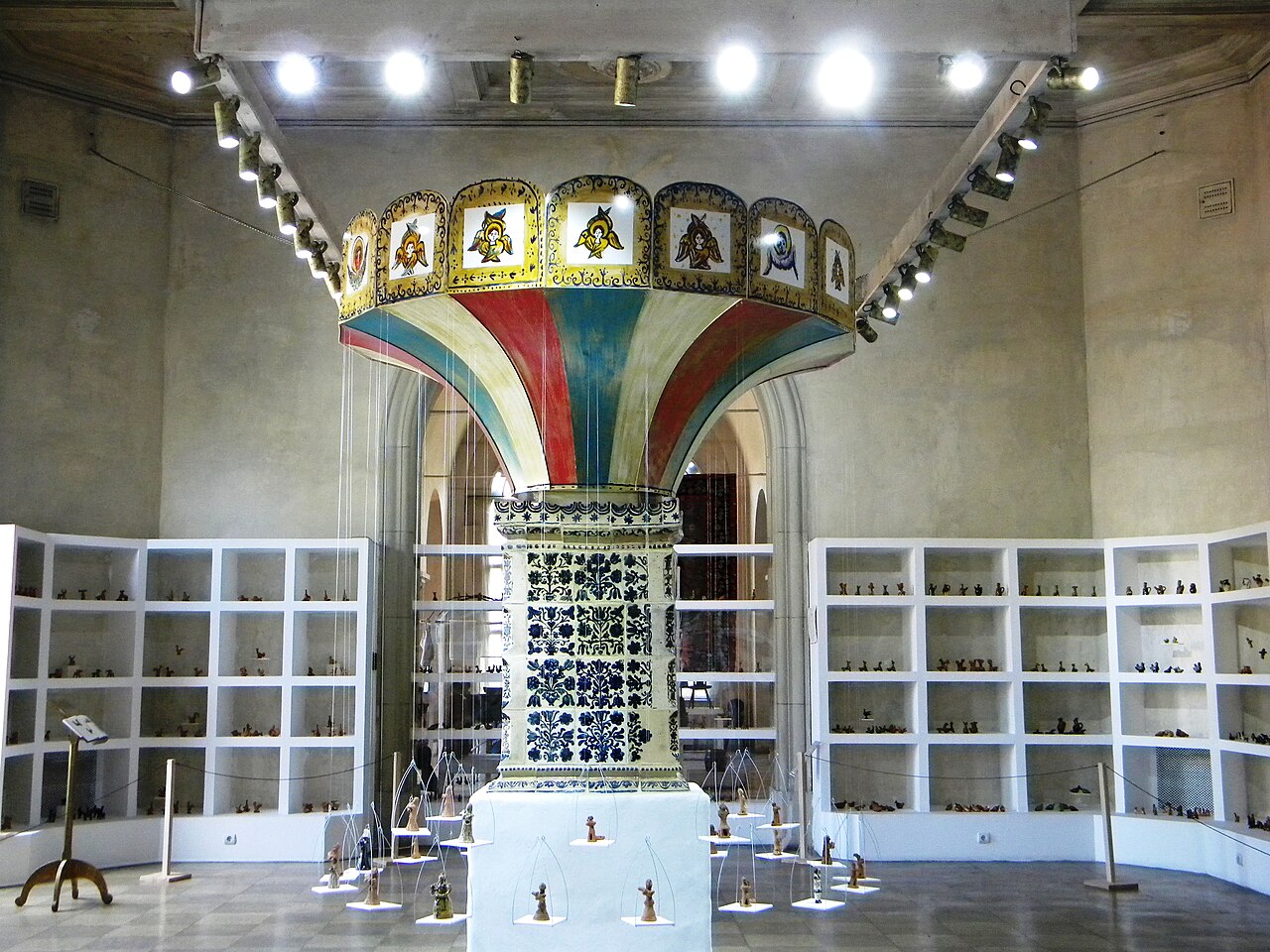
- Wood carving, ceramics, weaving, embroidery, dance, folk music
Lore & Background
Romanian folklore includes stories about the creation of the world, where God made the Earth with the help of animals while the Devil, called Nefârtatul, tried to thwart him. In these tales, before the earth existed, a boundless ocean called Apa Sâmbetei was the abode of God and the Devil, seen as master and servant. The Devil attempted to bring clay from the ocean floor in his own name but could only succeed in God's name. Other accounts, closer to the biblical one, suggest the Devil and his demons were once angels who rebelled, leading to the archangel Michael sealing heaven and freezing some demons in place. This gave rise to the saying 'before you reach God, the saints will eat you.'
Reader's Guide
Romanian folklore is significant for its deep integration with learned culture and its survival due to the rural character of Romanian communities. Folk creations, such as the ballad Miorița, were the main literary genre until the 18th century, serving as both inspiration and structural model for cultivated creators. The folklore includes a rich cosmology with creation myths, the origin of evil, and eschatological beliefs involving earthquakes, darkened sun, and the Last Judgement. Strong folk traditions have been nourished by many sources, some predating Roman occupation, and are preserved in institutions like the Museum of the Romanian Peasant and the Romanian Academy. Traditional folk arts include wood carving, ceramics, weaving, embroidery, dance, and folk music. The legacy of Romanian folklore lies in its ability to maintain a vital and creative traditional culture that continues to be studied and celebrated.
Did You Know?
- The Devil is called 'Nefârtatul' in Romanian folklore and is seen as God's adversary or 'un-friend,' not a brother.
- Romanian folklore does not include a Russian doll-type explanation for the origin of God with gods such as Sabaoth, Amon, and Apollo preceding the Creator God.
Folklore as the Backbone of Romanian Culture
Romanian folklore occupies a uniquely central position in the nation's cultural identity, shaped by the deeply rural character of Romanian communities. This rural foundation produced an exceptionally vital and creative traditional culture in which folk creations—most famously the ballad Miorița—served as the principal literary genre well into the eighteenth century. These oral works did more than entertain; they functioned as both a wellspring of inspiration and a structural template for later cultivated writers.
The learned culture that eventually emerged operated under very different conditions. For centuries it was directed by official and social mandates, flourishing primarily in the courts of princes and boyars and within monasteries rather than in village squares. This created a distinctive tension: the elite literary tradition drew its deepest creative energy from the very folk traditions it was meant to supersede. The result is a culture in which the boundary between the popular and the scholarly has always remained porous, with each constantly feeding and reshaping the other. This interdependence remains a defining feature of Romanian cultural life.
Cosmology: God, the Devil, and the Living Earth
Romanian cosmogonic tales paint a vivid picture of a world born from a boundless ocean called Apa Sâmbetei, where God and the Devil coexisted not as equals but as master and servant. In these narratives the Devil, known as Nefârtatul, is God's somewhat foolish brother. When God resolved to create the Earth, he sent the Devil to fetch a handful of clay from the ocean floor. The Devil attempted to raise it in his own name but failed; only by invoking God's name could the clay surface and grow into the world.
While God slept upon the newborn Earth, the Devil tried to shove him into the void, attempting all four cardinal directions before being stopped by a cross he had himself drawn in the ground. Mountains, in various regional accounts, arose either because God commanded the Earth to nurture all life and she shuddered in response, or because the planet was too vast to fit beneath the firmament and God compressed it. Beneath the surface, World Pillars hold the Earth aloft; the Devil perpetually gnaws at them, and earthquakes occur when the ground slips. God and his angels repair the pillars during periods of fasting.
The Blajini and the Mirror World Beneath
Romanian tradition long perceived the Earth as a flat disc, and on its far side lived the Blajini—creatures whose name derives from a Slavonic root meaning 'kind' or 'well-minding.' Described as short, anthropomorphic figures sometimes bearing the head of a rat, they occupy a morally ambiguous space: some accounts cast them as malicious, while others portray them as sinless beings who fast all year, serving humanity greatly.
Their origin is explained in multiple ways. Some trace them to the descendants of Seth, Adam's son. Others hold that they once lived alongside humans until Moses, witnessing his people's oppression, split the waters, allowed his followers to pass, and released the waters back upon the Blajini, driving them to their hidden abode near the Apa Sâmbetei.
The holiday Paștele Blajinilor, observed on the first Monday after St. Thomas Sunday in Banat, Transylvania, Bucovina, and Maramureș, is a gesture of gratitude. Since the Blajini live in isolation and cannot know when Easter arrives, Romanians eat dyed eggs and release the shells downstream, believing they will travel to the Apa Sâmbetei and reach their hidden kin. The word blajin also means a dead child who never received the benediction of the Holy Spirit.
Fallen Angels, Nested Gods, and the End of Days
Romanian eschatology and demonology intertwine in a deeply layered spiritual imagination. In one prominent account, the Devil and his demons were originally angels of God. When the Devil attempted to rebel, God opened the heavens to let him fall to Earth. Fearing that Heaven itself might be emptied, the archangel Michael re-sealed the gateway, freezing in place any demons that had not yet completed their descent. These trapped demons now intercept every soul on its journey to heaven, dragging it down to hell, as the Romanian saying puts it: before you reach God, the saints will eat you.
The question of God's own origin is answered in a nested, Russian-doll fashion. The Oltenians believed that before each god there stood another who created him: Sabaoth came first, followed by Amon, then Apollo, then the Creator God of the Bible, and finally Jesus Christ. This chain accounts for the many divine names in the Bible.
The End Times, in folk imagination, are heralded above all by earthquakes. Waters overflow and mountains collapse as the World Pillars crumble, a process accelerated by a lack of faith. The Devil's constant gnawing at those pillars, and the Earth's own living tremor, complete the picture.
Gallery
More in Romanian folklore 1-21
Spotted an error? Know more?
Reader corrections go straight into our review queue. Suggest an edit · How this site is sourced