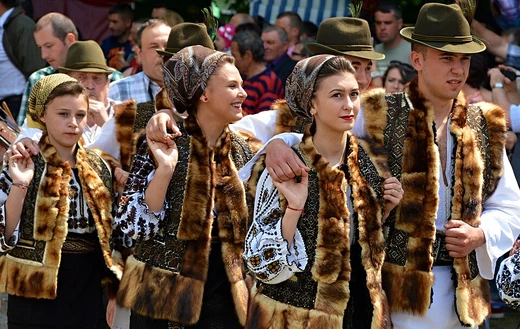
Kukeri
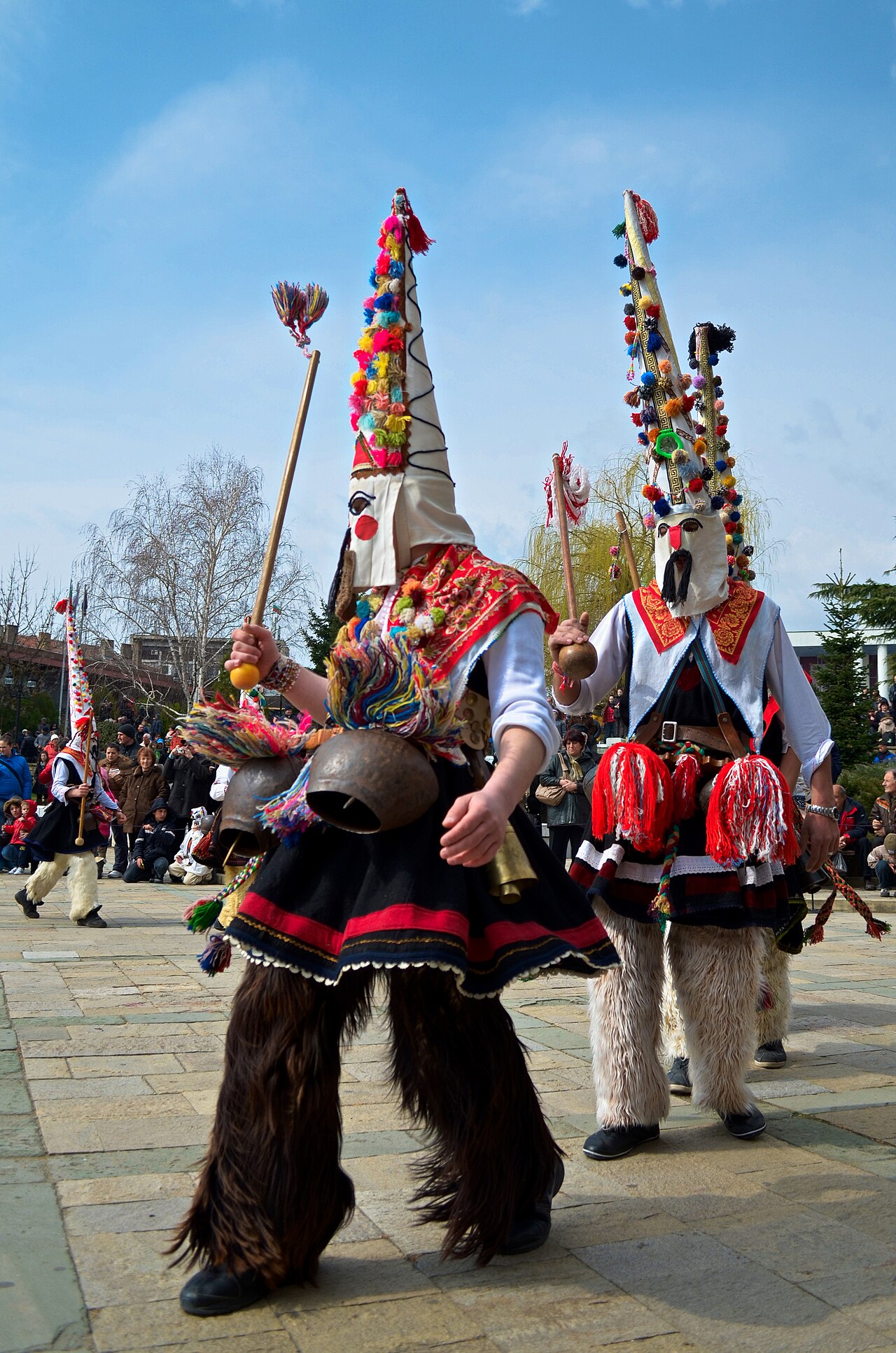
Bulgarian costumed men who perform rituals to scare evil spirits.

Teodora Koleva · CC BY-SA 4.0
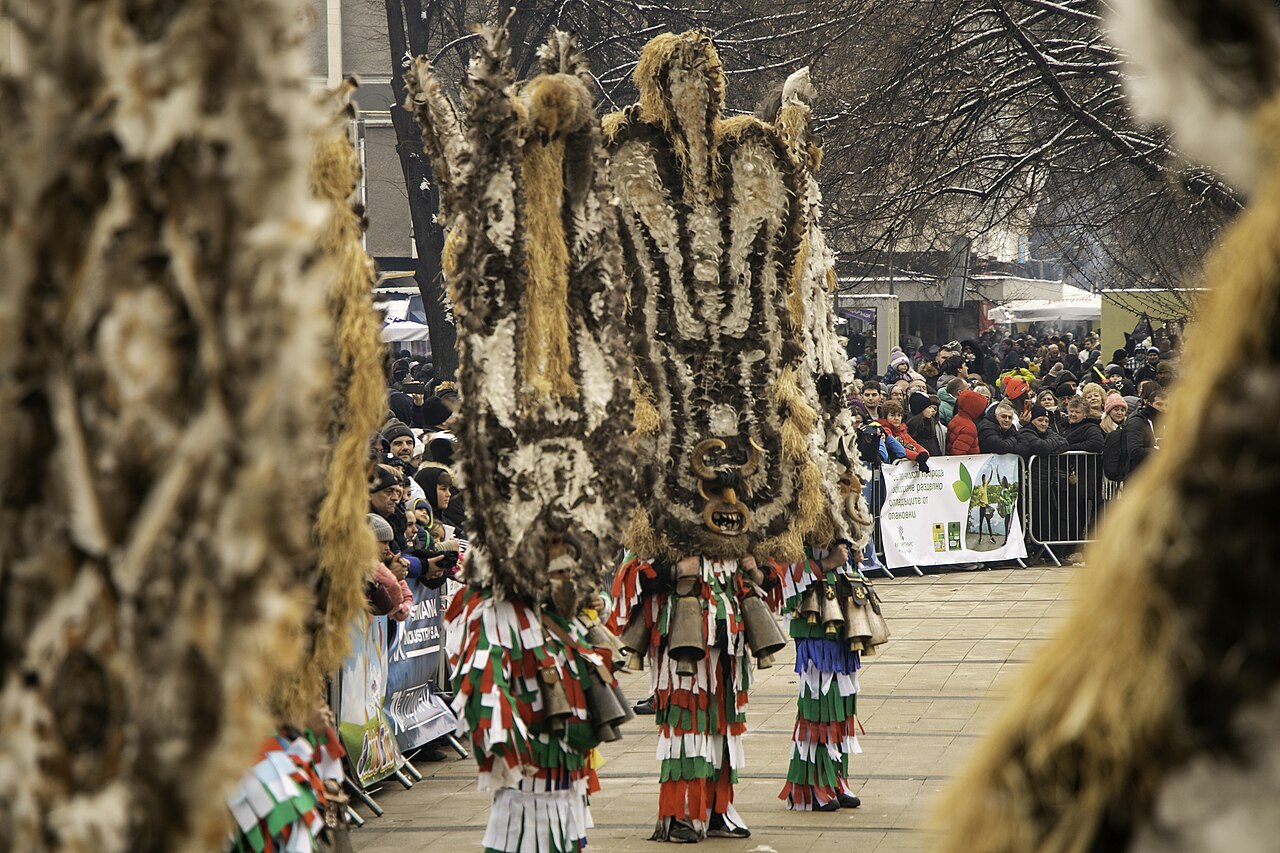
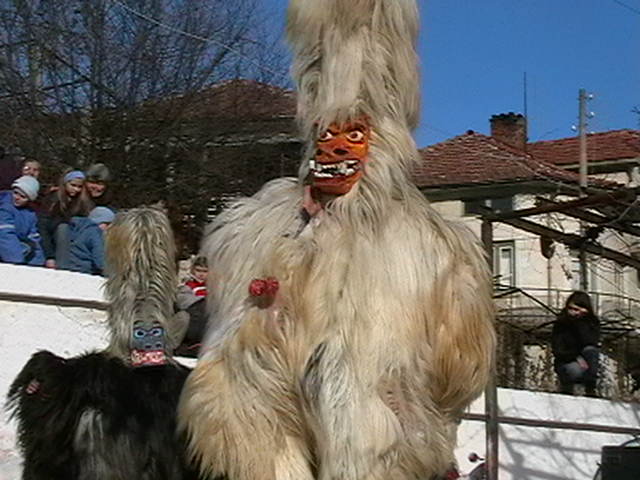
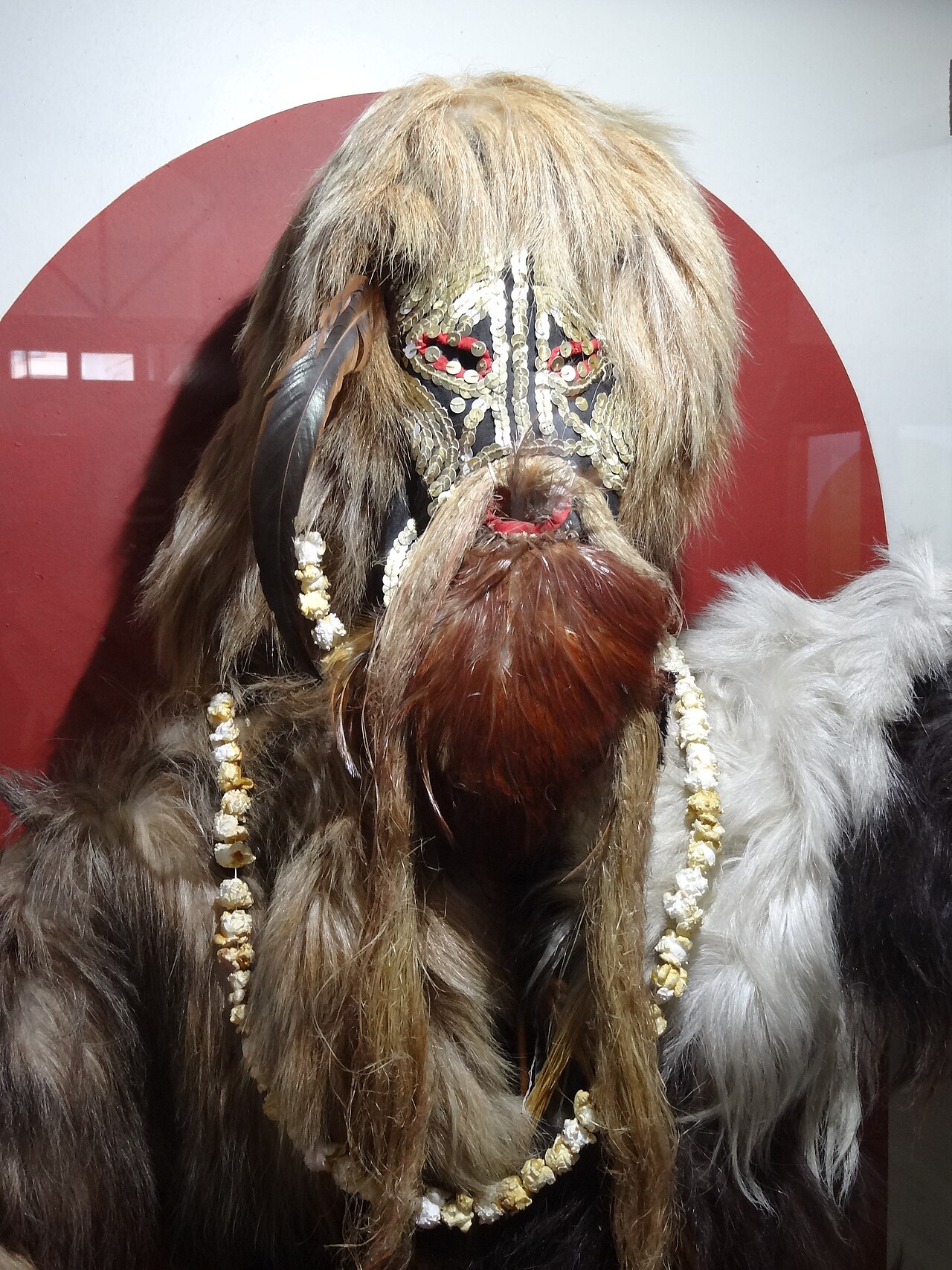
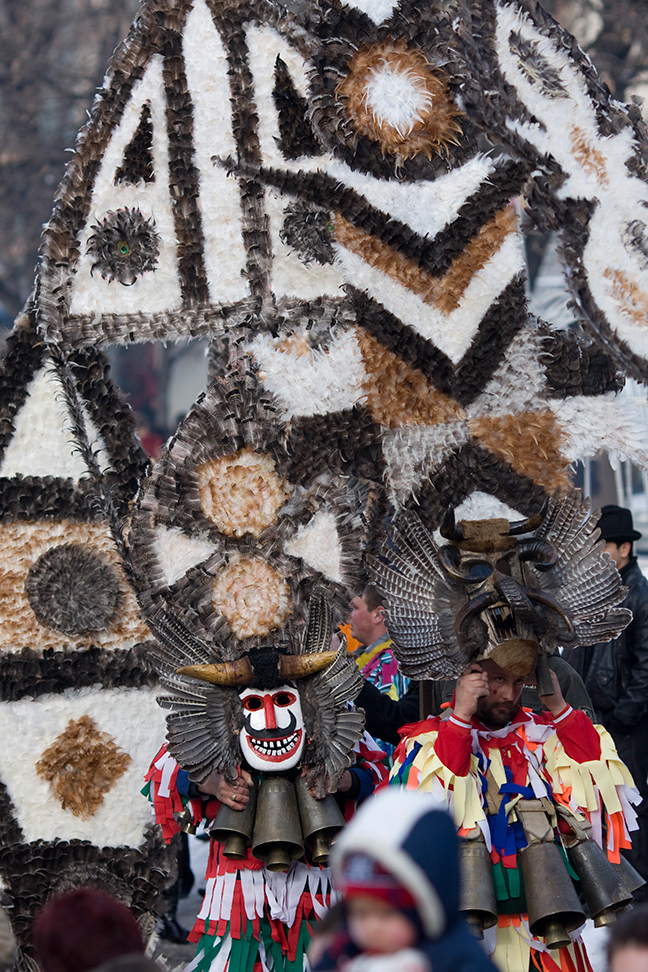
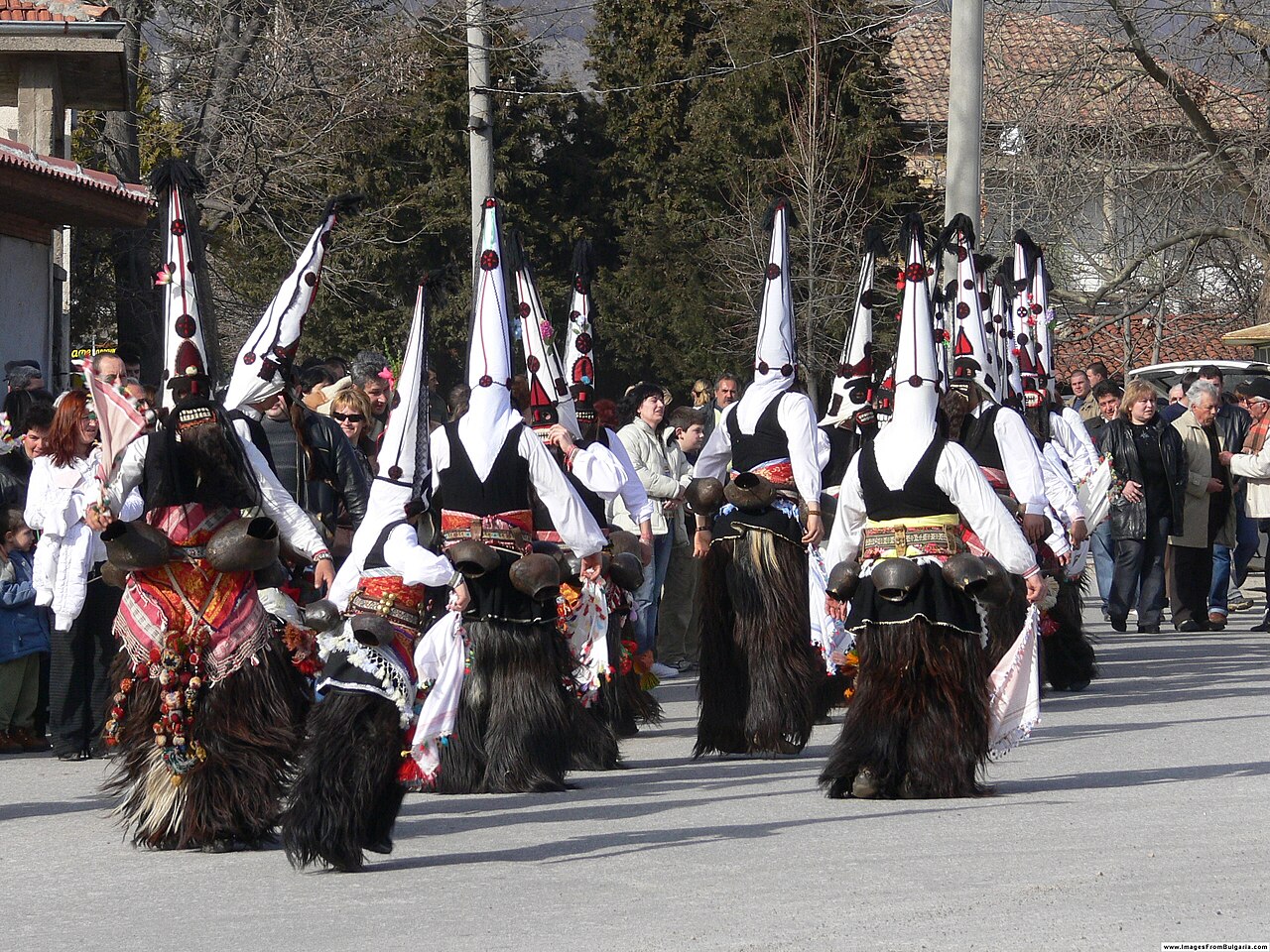
In Romania, the equivalent figure to the Bulgarian Kukeri is typically called 'Capra' or 'Turca.' These performers don elaborate costumes to take part in age-old rituals meant to drive away malevolent spirits. Similar customs appear across the Balkans and Greece, including Romania and the Pontus region. Their outfits cover nearly the entire body, featuring carved wooden animal masks—sometimes with two faces—and large bells fastened to the waist. Around New Year and during the period before Lent, these performers walk and dance through villages, using their striking attire and the clanging of bells to frighten evil forces. The rituals are also thought to bring a bountiful harvest, good health, and happiness to the community for the coming year. Traditionally, they visit homes at night so that "the sun would not catch them on the road." After processing through the village, they typically assemble in the central square to dance energetically and entertain onlookers. While the specifics of these rituals differ from one region to another, their core purpose remains consistent.
The word "Capra" means "goat" in Romanian, reflecting the animal mask often used. The term "Turca" refers to a similar figure. The word "Kukeri" has uncertain origins. It may come from the Proto-Slavic *kuka, meaning "evil spirit," combined with the agentive suffix *-ařь, essentially "chaser of evil spirits." Alternatively, it could derive from a pre-Slavic deity named Kuk. Another theory traces it to the Latin cuculla ("hood, cowl") or cucurum ("quiver," as in a container), though the practice itself predates Roman rule by centuries. In Greek-speaking Thrace, the equivalent figure is called Kalogeros ("monk" or "the good-old one"), also shortened to cuci. In former Yugoslavia, these performers are known as didi or didici; in Bulgaria, as kuker or babushar; in Pontic Anatolia, as momogeros; and in North Macedonia, as babari or mechkari ("bear-man"). In Romania, the figure often appears alongside a goat, referred to as capra, turca, or brezaia.
Kuker is also understood as a divinity representing fertility, sometimes treated as a plural deity in Bulgaria and Serbia. In Bulgaria, a spring carnival-like spectacle follows a folk theatre play, where a man dressed in a sheep or goat pelt, wearing a horned mask and a large wooden phallus, takes on the role of Kuker.
- Field
- Traditional ritual performance
- Nationality
- Romanian (equivalent to Bulgarian Kukeri)
- Known for
- Scaring away evil spirits with costumes and bells; believed to bring good harvest, health, and happiness
- Related traditions
- Balkans, Greece, Bulgaria, Pontus
- Etymology
- In Romanian, 'Capra' means 'goat'; 'Turca' is another name for the figure. The Bulgarian term 'Kukeri' possibly from Proto-Slavic *kuka ('evil spirit') or Latin cuculla ('hood, cowl')
Lore & Background
In Romania, the equivalent figure to the Bulgarian Kukeri is typically called 'Capra' or 'Turca.' These elaborately costumed performers take part in traditional rituals intended to scare away evil spirits. Their costumes cover most of the body and include decorated wooden masks of animals, sometimes double-faced, and large bells attached to the belt. Around New Year and before Lent, they walk and dance through villages to scare away evil spirits with their costumes and the sound of their bells. They are also believed to provide a good harvest, health, and happiness to the village for the year ahead.
Reader's Guide
The Kukeri tradition is significant as a living folk practice that embodies community protection and seasonal renewal. While 19th-century scholars considered the Kukeri to have a pre-Christian Thracian origin and theorised that they were a remnant of a Thracian cult of the god Dionysus—a view encouraged by Bulgarian nationalists and folklorists who wished to lend Bulgarian cultural practices prestige via association with the classical world—modern scholarship generally rejects that view. Kukeri are now considered to be part of a general Balkan mumming tradition that emerged sometime in the early modern period, influenced by Greek, Slavic, Albanian, and Turkish practices. The legacy of Kukeri persists in contemporary Bulgaria as a vibrant, regionally varied custom that continues to be performed around New Year and before Lent, maintaining its core function of warding off evil and promoting communal well-being.
Did You Know?
- The word 'Kukeri' may derive from Proto-Slavic *kuka ('evil spirit') or from Latin cuculla ('hood, cowl').
- Modern scholarship considers Kukeri part of a general Balkan mumming tradition that emerged in the early modern period.
- In Romania, the Kukeri-like figure often appears together with a goat known as capra, turca, or brezaia.
The Nocturnal Procession and Its Costumes
The Kukeri present a striking visual spectacle: men whose bodies are almost entirely concealed beneath elaborate costumes, their faces hidden behind decorated wooden masks carved to resemble animals—occasionally fashioned with two faces. A belt of large bells clanks with every step, producing a thunderous soundtrack that accompanies their procession. Their primary purpose is to drive evil spirits from the community, and they are also credited with securing a bountiful harvest, good health, and general happiness for the village in the coming year. Performances cluster around New Year and the period before Lent. By tradition, the Kukeri make their rounds through the village at night, a practice explained by the belief that the sun must not catch them on the road. After their nocturnal visits to individual households, they converge on the village square, where they dance with wild abandon to the delight of onlookers. While specific details shift from one region to another, the essential character of the rite—costumed figures, animal masks, bell noise, and the goal of warding off malevolent forces—remains remarkably consistent across Bulgaria.
A Tradition That Crosses Borders
The Kukeri phenomenon does not exist in isolation. Closely related mumming traditions stretch across the Balkans and into Greece, Romania, and the Pontus region, suggesting a shared cultural substrate rather than a single national practice. The figure itself goes by many names depending on where you look. In Greek-speaking Thrace it is called Kalogeros, literally "the good-old one," or shortened to cuci. In former Yugoslavia the equivalent appears as didi or didici. Within Bulgaria the terms kuker and babushar are both in use. Pontic Anatolian communities know the figure as momogeros, while in North Macedonia the names babari and mechkari—the latter meaning "bear-man"—are common. In Romania the tradition often features a goat companion called capra, turca, or brezaia. The word "Kukeri" itself resists a single explanation: it may derive from Proto-Slavic *kuka, meaning "evil spirit," with an agentive suffix making it a "chaser of evil spirits," or from a pre-Slavic deity named Kuk. A Latin etymology linking it to cuculla (hood) or cucurum (quiver) has also been proposed, though the practice clearly predates Roman rule by several centuries.
From Thracian Myth to Balkan Syncretism
For much of the nineteenth century, the dominant scholarly narrative placed the Kukeri in an ancient Thracian context. Researchers of that era argued the tradition was a surviving fragment of a pre-Christian cult devoted to the god Dionysus, and this interpretation was actively championed by Bulgarian nationalists and folklorists who saw value in anchoring their country's folk customs to the prestige of the classical world. The association with Thracian antiquity gave the practice a sense of deep historical roots that served a broader cultural-political agenda. However, modern scholarship has largely dismantled this framework. Contemporary researchers now view the Kukeri as part of a broader Balkan mumming tradition that crystallized during the early modern period, shaped by the interplay of Greek, Slavic, Albanian, and Turkish cultural practices. This revised understanding positions the tradition not as a fossilized relic of antiquity but as a living, syncretic phenomenon born from centuries of cross-cultural exchange across the region.
Kuker as Fertility Deity and the Spring Rite
Beyond the village procession, the Kukeri tradition carries a deeper mythological layer in which Kuker is understood as a divinity embodying fecundity. In both Bulgaria and Serbia the figure can function as a plural deity. In Bulgaria specifically, a spring ritual spectacle—described as a kind of Carnival—follows a folk theatre performance. A man dressed in a sheep- or goat-pelt, wearing a horned mask and girded with a large wooden phallus, takes on the role of Kuker. The rite involves various physical acts, including a symbolic sexual act representing the god's sacred marriage. A figure playing the symbolic wife appears pregnant and mimes the pains of childbirth. This entire performance serves to inaugurate the agricultural labors of the year—ploughing and sowing—and is populated by numerous allegorical personages, among them an emperor and his entourage. The spectacle thus weaves together fertility, sacred union, and the renewal of the agricultural cycle into a single dramatic act.
Gallery
Frequently Asked Questions
What is Kukeri in Romanian folklore?
In Romania, the tradition parallel to the Bulgarian Kukeri is called Capra (literally 'goat') or Turca. It is a traditional ritual performance in which costumed figures parade through villages to frighten away malevolent spirits.
What do Capra/Kukeri performers wear?
The performers cover nearly their entire body in elaborate outfits and wear carved wooden animal masks, sometimes with two faces. Large bells fastened at the waist produce a loud clanging that is central to the ritual's intimidating effect.
When do the Kukeri/Capra rituals take place?
These performances are traditionally carried out around New Year and during the stretch of time before Lent. The timing aligns the ritual with seasonal turning points and the agricultural calendar.
What is the purpose of the Kukeri/Capra ritual?
The core belief is that the fearsome combination of costumes and bell noise drives evil spirits out of the community. Participants also hold that the rite secures a bountiful harvest, good health, and general happiness for the year ahead.
Where does the name 'Kukeri' come from?
The Bulgarian term may derive from Proto-Slavic *kuka, meaning 'evil spirit,' or from the Latin word cuculla, referring to a hood or cowl. In Romanian usage, the figure is instead called Capra or Turca, though the underlying custom is shared across the Balkans, Greece, and the Pontus region.
More in Romanian folklore 1-21
Spotted an error? Know more?
Reader corrections go straight into our review queue. Suggest an edit · How this site is sourced