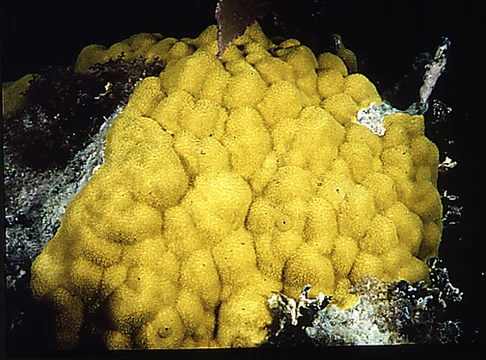
Goniopora
A challenging colonial stony coral with daisy-like polyps.

Diego Delso · CC BY-SA 4.0
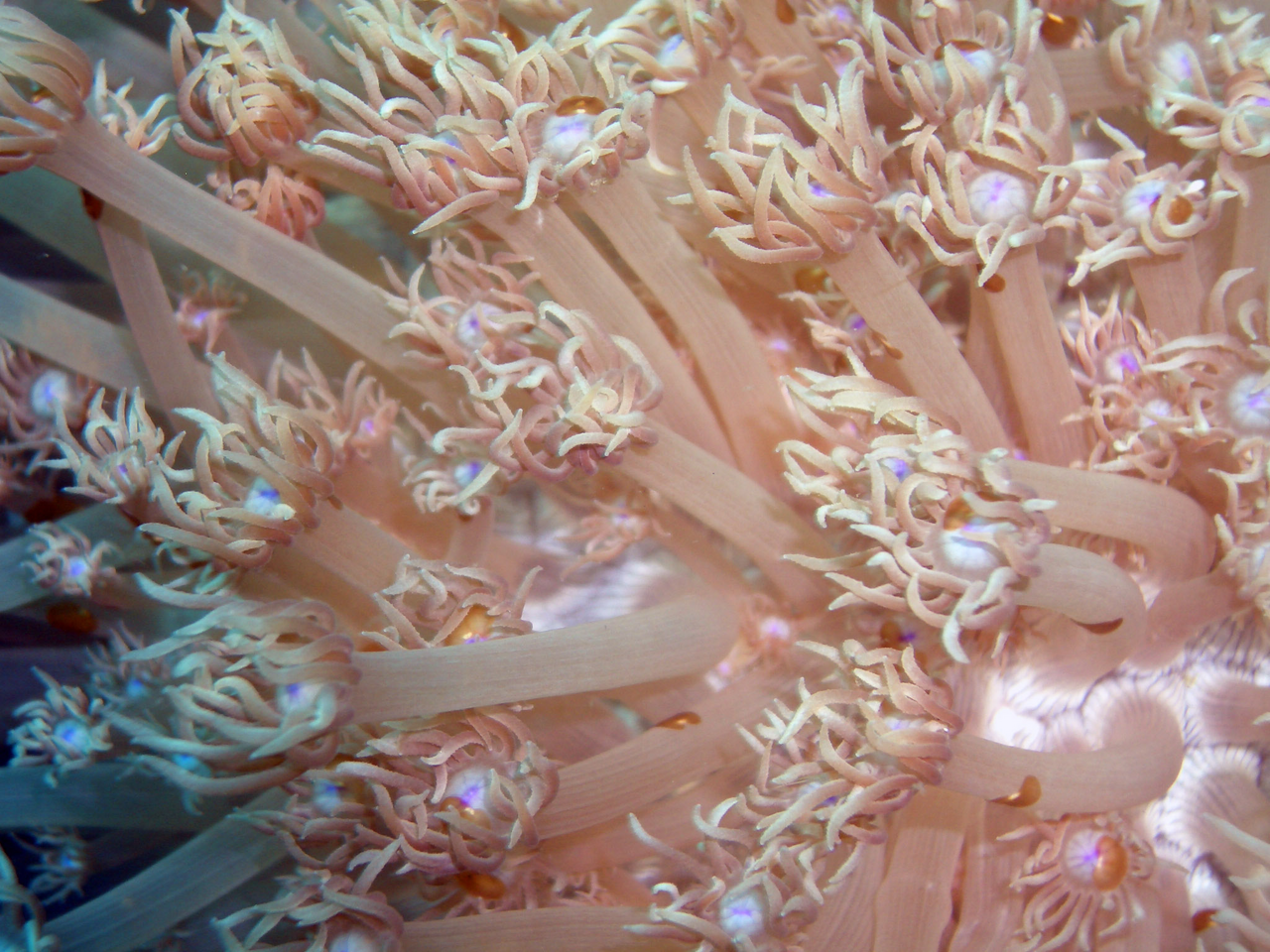
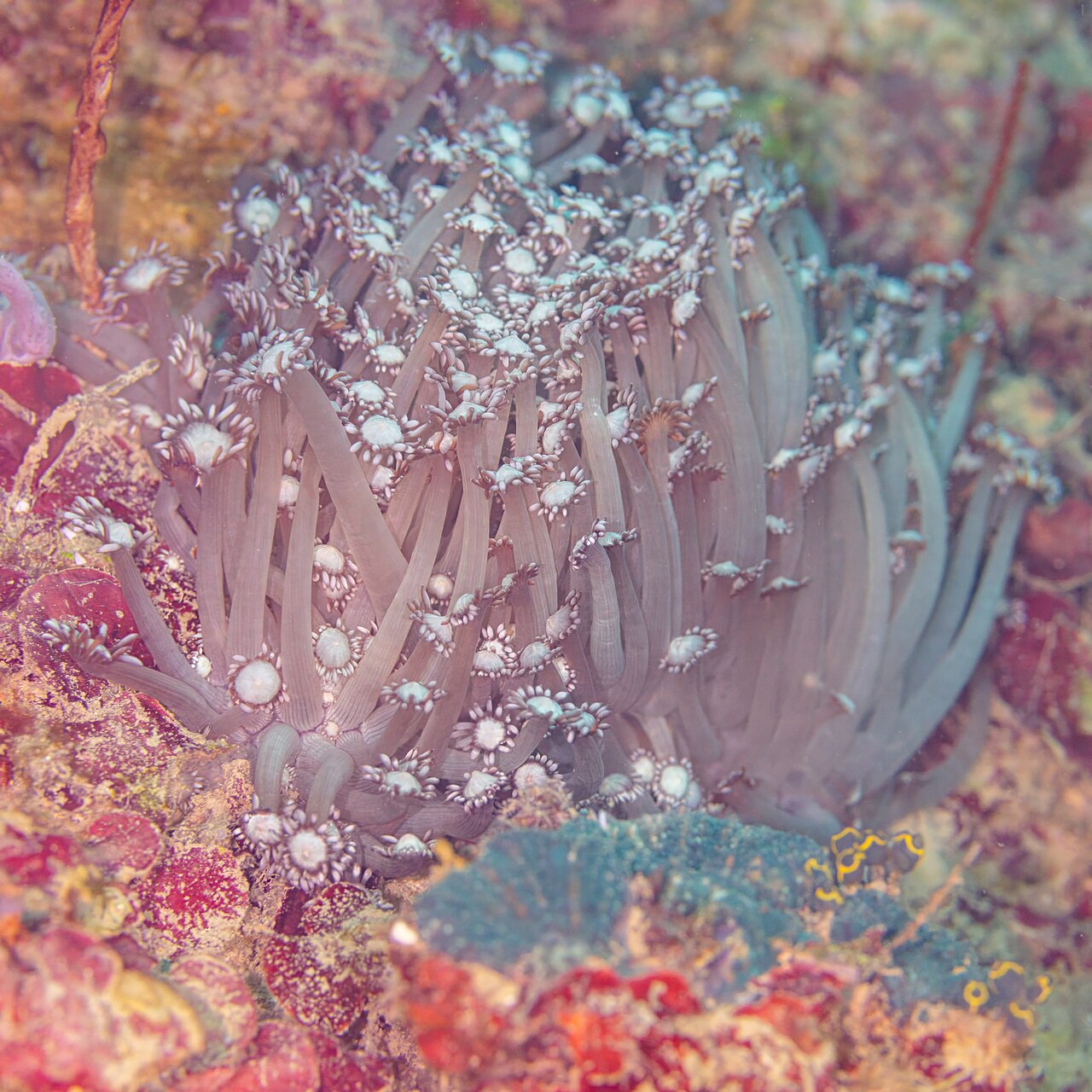
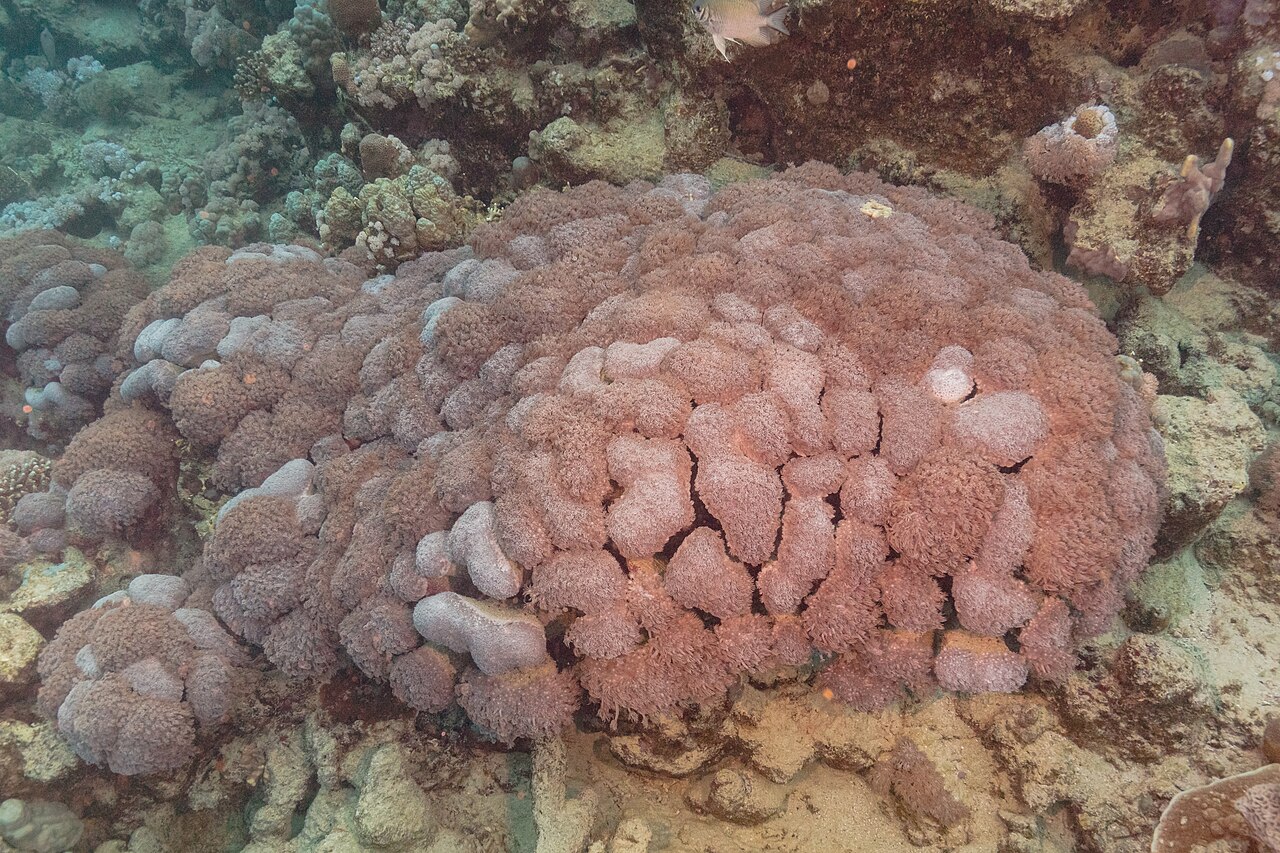
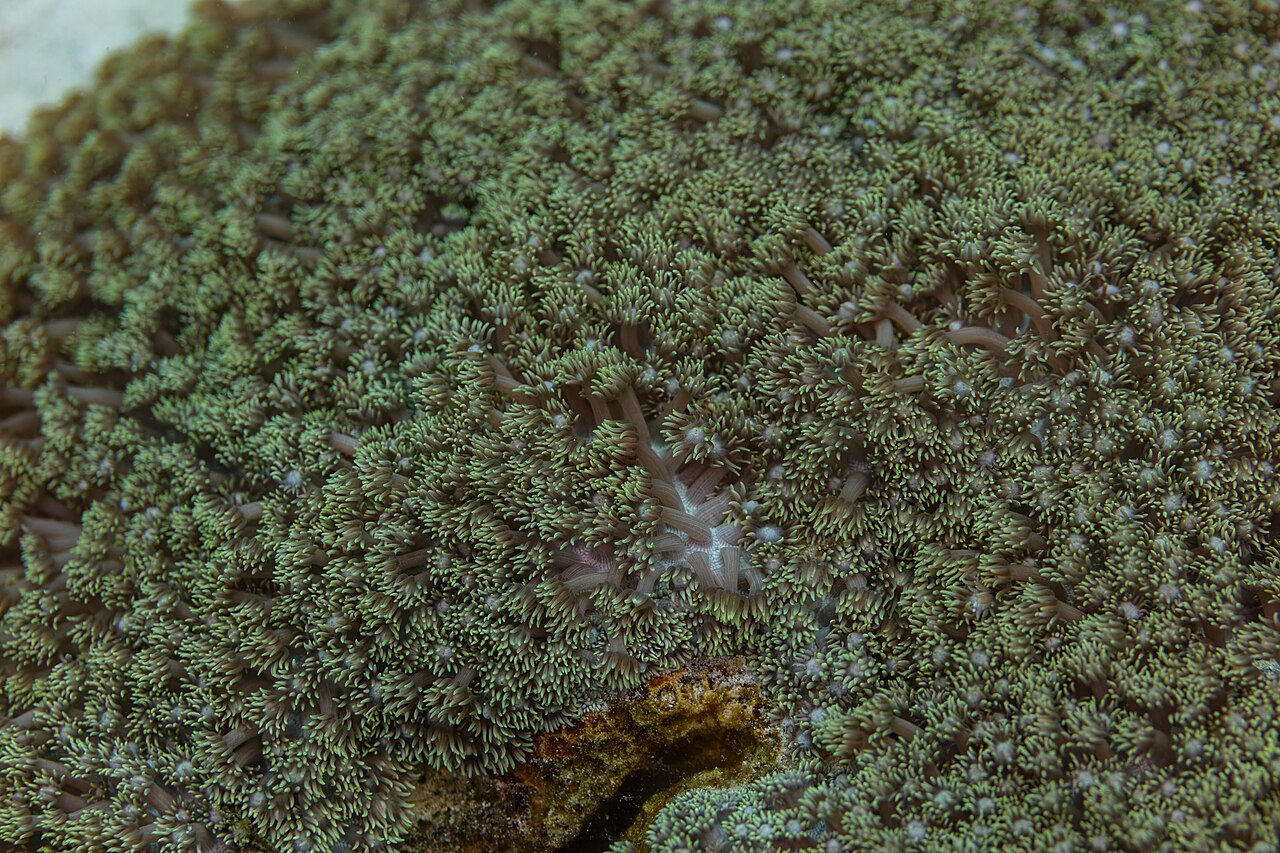
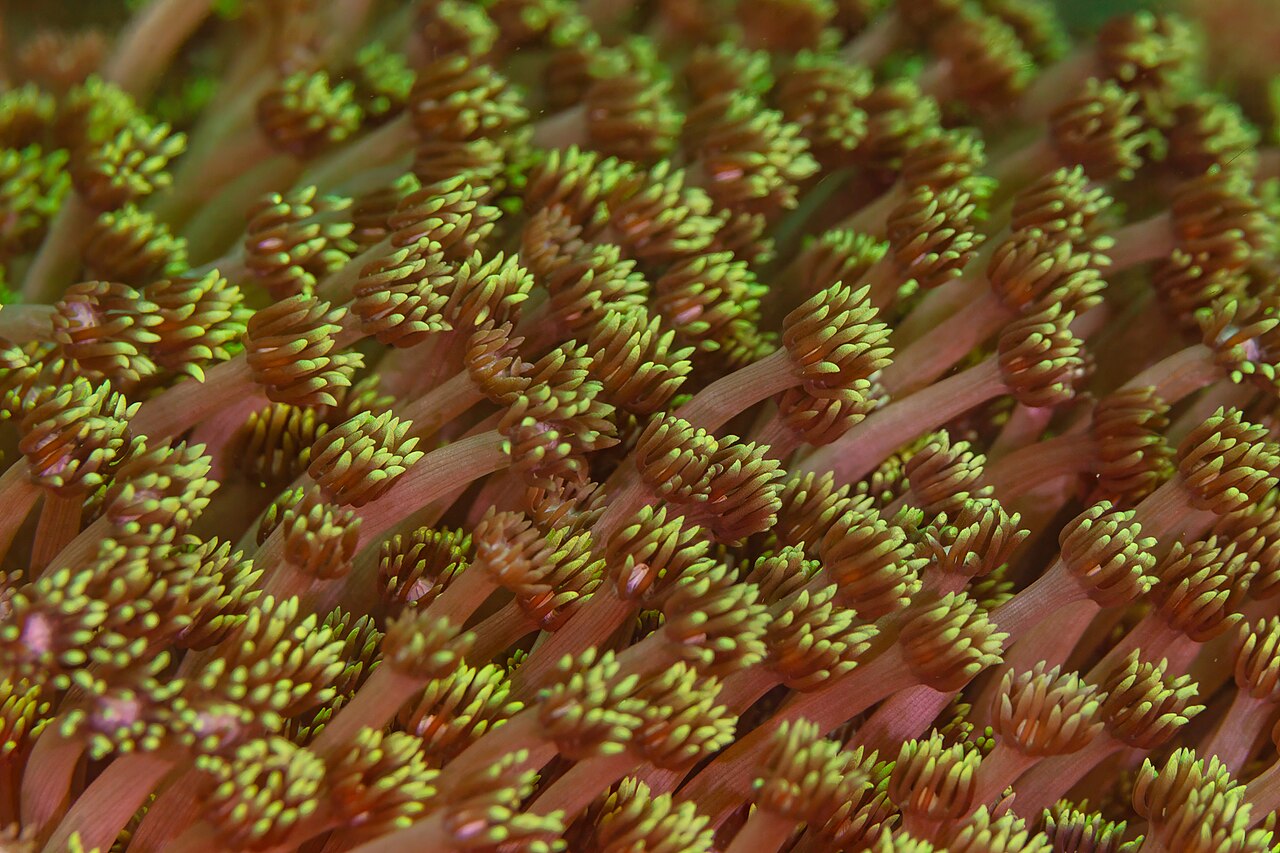
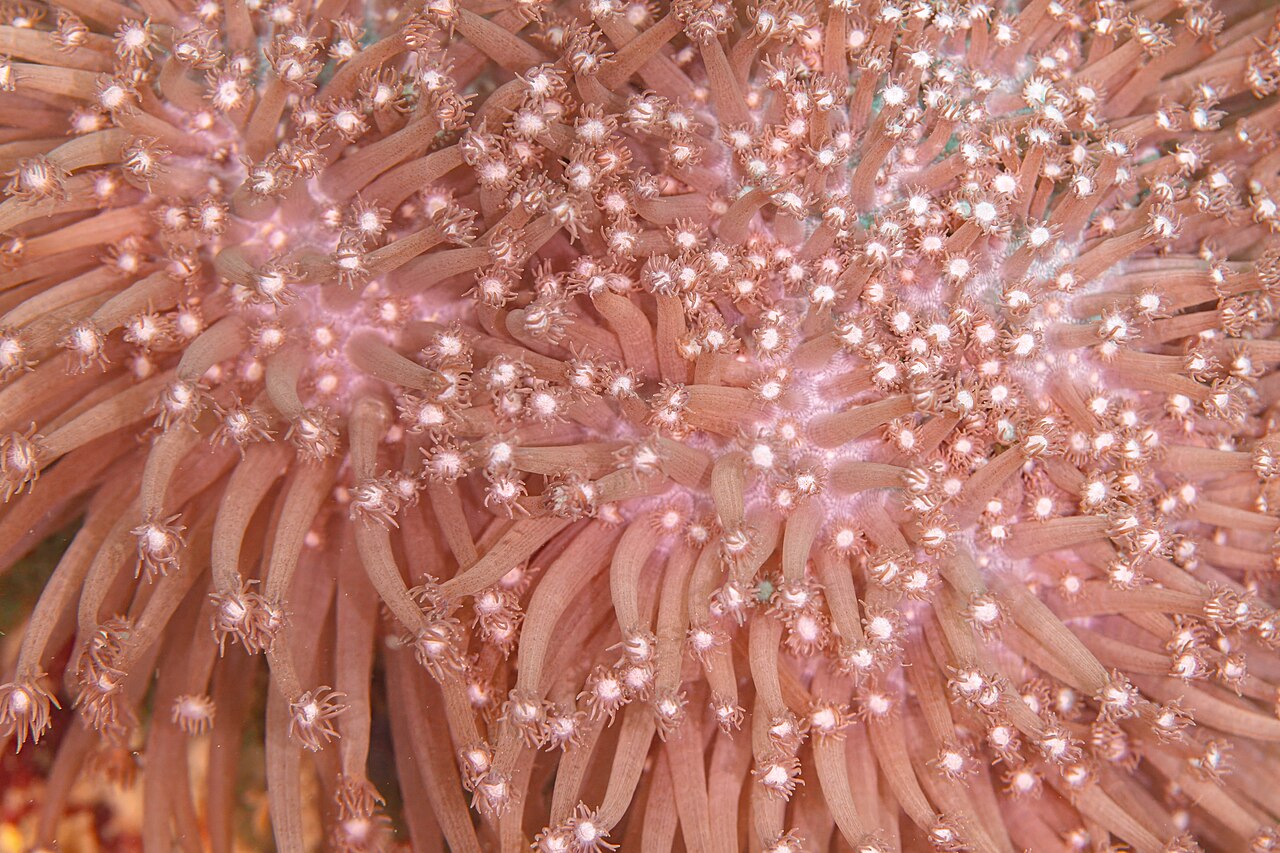
Goniopora, also known as flowerpot or daisy coral, is a type of colonial stony coral that typically inhabits lagoons and areas with murky water. Its most distinctive feature is the many daisy-like polyps that extend from a shared base; each polyp has 24 stinging tentacles arranged around a central mouth.
This genus is found in the Persian Gulf, the Indian Ocean, and across various tropical and subtropical parts of the Pacific Ocean. Some species live as far north as Hong Kong, where they are the dominant colonial coral that does not build reefs, and also off the coast of southern Japan. During the Miocene Epoch, Goniopora lived in the Caribbean, but they have since become locally extinct there.
Keeping Goniopora in an aquarium is very challenging and not suitable for beginners. The short, greenish species are more sensitive than pink or purple ones. Depending on the species, they need moderate to high lighting, along with some water movement to allow their polyps to sway freely—though the flow should not be directed straight at the polyps, as it may be too strong. These corals are sensitive and will retract when disturbed. Water temperature must stay between 77 and 84 °F (25–29 °C), and the tank must have sufficient calcium and iron for skeletal growth. Placement is critical: they need a sturdy rock to prevent falls, enough space to grow and extend their tentacles, and should be watched for shriveling after being moved to a new tank to ensure they get enough light.
Goniopora are eager feeders and can die from nutritional deficiencies. They can be fed gently with a syringe, by broadcast feeding, or most effectively through direct feeding. Alternatively, plankton can be added with all filtration turned off for one to two hours so the food isn’t swept away; filters should then be restarted to keep the tank clean. Their diet must be rich in manganese and iron.
These corals reproduce asexually through fragmentation, producing daughter cells. After a daughter coral breaks off, the mother coral’s wound typically heals in about two weeks. The daughter corals grow roughly 1 millimeter per month. Some scientists believe the daughter Goniopora develop inside cells of the mother coral before emerging to grow independently.
Several issues come with keeping Goniopora. They are hard to find and purchase, especially the red species.
Quick Facts
- Taxon
- Goniopora
Facts from the source article.
Lore & Background
Species of Goniopora can be found in the Persian Gulf, the Indian Ocean, and various tropical and subtropical areas of the Pacific Ocean. Various species live as far north as Hong Kong, where they are the dominant colonial non-reef-building coral, and off the coast of southern Japan. Goniopora were present in the Caribbean during the Miocene Epoch, although they have since gone locally extinct there.
Goniopora grow daughter cells in a type of asexual reproduction called fragmentation or fragging. The mother corals have wounds from the daughter corals that usually heal up in about two weeks. The daughter corals grow about 1 millimeter a month. Some scientists suggest that the daughter Goniopora live inside cells of the mother coral before breaking out and growing on their own.
Goniopora are avid feeders and are susceptible to death from nutritional deficiencies. They need foods high in manganese and iron. There are many different ways to feed them, including gentle feeding with a syringe, broadcast feeding, or placing plankton in the tank with all filtration systems off for one to two hours.
Reader's Guide
Goniopora are a very difficult coral to keep alive and are not recommended for a novice reef aquarium hobbyist. The short, greenish-colored species are more sensitive than the pink or purple species. They require moderate to high lighting, depending on species, and must have some water movement so their polyps can move freely, though the movement should not be directed at the polyps. The water temperature must remain between 77 and 84 °F (25 and 29 °C), and adequate amounts of calcium and iron are needed in the tank to help skeletal development. Placement is crucial: they must be well positioned on a sturdy rock to avoid damaging falls, with enough room to grow and move their tentacles. Goniopora should be monitored for shriveling after being moved to a new tank to ensure they are getting enough sunlight. There are many issues that go along with keeping Goniopora, including difficulty locating and buying them, especially the red species. Because different species have such different requirements, it adds to the challenge of keeping them alive.
Did You Know?
- Each Goniopora polyp is tipped with 24 stinging tentacles.
- Daughter Goniopora grow about 1 millimeter per month after fragmentation.
Taxonomic Origins and Systematic Placement
The genus Goniopora was first formally described by the French naturalist de Blainville back in 1830, giving it a long history in coral taxonomy. It is classified within the family Poritidae, a group of stony corals that the World Register of Marine Species recognizes as containing four genera: Bernardpora, Goniopora, Porites, and Stylaraea. However, the very placement of Goniopora within this family has been questioned. The prominent coral taxonomist J.E.N. Veron has argued that Poritidae does not represent a true natural assemblage. Instead, he views it as essentially a catch-all category, a miscellaneous gathering of genera that simply do not fit comfortably into any other recognized family. This taxonomic ambiguity means that Goniopora's exact evolutionary relationships remain somewhat uncertain, and its grouping with Porites and the other members is more a matter of convenience than a reflection of deep shared ancestry. The family's composition continues to evolve as new genera like Bernardpora, described by Kitano and Fukami in 2014, are added to the roster.
Skeletal Architecture and Growth Forms
Goniopora belongs to a family of stony corals whose members display remarkable variety in both size and overall shape. While the family as a whole is described as variable, the most common growth patterns include massive, laminar, and ramose forms, alongside branching and encrusting morphologies. At the level of individual skeletal units, the corallites—the small cup-like structures that house each polyp—are notably compact. One of the defining structural features is that very little coenosteum, the shared skeletal tissue between corallites, covers the skeleton, giving the colony a densely packed appearance. The walls of the corallites themselves, along with the internal septa, are characterized by a porous texture. This porosity is a consistent morphological trait across the family. As colonial organisms, Goniopora polyps build their skeletons in concert, creating complex three-dimensional structures that can take on any of the aforementioned growth forms depending on environmental conditions and species.
Species Richness and Polyp Anatomy
Within the genus Goniopora, taxonomists have recognized 29 distinct species, making it one of the more diverse genera in the Poritidae family. A particularly notable anatomical feature of Goniopora polyps is that they possess exactly 24 tentacles, a specific count that helps distinguish them from other coral groups. This species count places Goniopora in the middle of its family's diversity spectrum. Porites, the largest genus in Poritidae, encompasses 77 species, while Stylaraea is the opposite extreme, being monotypic with only a single known species, Stylaraea punctata. The family also includes Bernardpora, a genus described more recently by Kitano and Fukami in 2014. Together, these four genera represent the full breadth of Poritidae as currently recognized by the World Register of Marine Species. The variation in species numbers across the family—from one to seventy-seven—highlights the considerable evolutionary radiation that has occurred within this group of stony corals, with Goniopora occupying a substantial but not dominant position.
Reef-Building Role and Colonial Ecology
As members of the family Poritidae, Goniopora corals are classified as hermatypic, meaning they are true reef-builders that actively contribute to the construction of coral reef structures. Their colonial growth habit means that individual polyps work collectively, depositing calcium carbonate skeletons that accumulate over time to form the hard, three-dimensional frameworks characteristic of tropical reefs. The variety of growth forms available to the family—massive, laminar, ramose, branching, and encrusting—means that Goniopora colonies can occupy a wide range of ecological niches within a reef community. Massive forms provide structural bulk and habitat complexity, while encrusting and branching forms can colonize existing surfaces and extend into open water. As stony corals, they form the foundational architecture upon which countless other reef organisms depend. Their porous skeletal walls and compact corallite arrangement reflect an efficient use of calcium carbonate, allowing the colony to build robust structures while maintaining the internal architecture needed to house each polyp.
Gallery
Frequently Asked Questions
What is Goniopora?
Goniopora is a colonial stony coral often nicknamed flowerpot or daisy coral because its many daisy-shaped polyps radiate outward from a shared base. It typically settles in lagoon habitats and waters with higher turbidity rather than on open reef crests.
How many tentacles does a single Goniopora polyp have?
Each polyp on a Goniopora colony carries exactly 24 stinging tentacles arranged in a ring around its central mouth. This even, daisy-like arrangement is the feature that gives the genus its common name.
Where can Goniopora be found in the wild?
The genus spans the Persian Gulf, the Indian Ocean, and the tropical-to-subtropical Pacific, with some populations reaching as far north as Hong Kong and the waters off southern Japan. Fossil evidence also places it in the Caribbean during the Miocene, though it is now locally extinct there.
How fast does a new Goniopora colony grow, and how quickly does the parent heal?
A daughter colony adds roughly one millimeter of new tissue per month. The mother colony, by comparison, can close up a wound in about two weeks.
Why do reef hobbyists label Goniopora as a challenging coral?
Goniopora is considered challenging because it is a non-reef-building colonial species that prefers lagoon and murkier conditions, and it thrives only within a narrow temperature window of 77 to 84 °F (25 to 29 °C). These needs set it apart from the more commonly kept, reef-building poritids.
More in Porites and Poritid Corals 1-17
Spotted an error? Know more?
Reader corrections go straight into our review queue. Suggest an edit · How this site is sourced