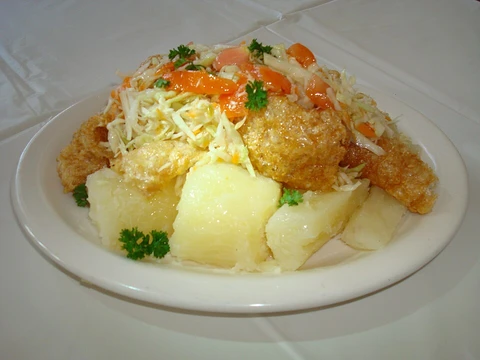
Tocino
Pork preparation with diverse regional interpretations.

Tocino is a term for pork preparations found in several cuisines, with variations in ingredients and methods across Spain, the Philippines, the Caribbean, and Central America. In Spain, tocino refers to the layer of fat under a pig's skin, often salted and cut into cubes, used in traditional dishes such as cocido. In the Philippines, tocino is sweetened and cured pork belly, commonly served as part of the breakfast combination tosilog. In Caribbean countries like Puerto Rico and Cuba, tocino is made from pork fatback, fried until crunchy, and added to recipes such as mofongo and arroz blanco con tocino.
- Field
- Culinary preparation
- Known for
- Varied pork-based dishes across multiple cuisines
- Region
- Spain, Philippines, Caribbean, Central America, United States
Lore & Background
In Spain, tocino is the layer of fat under a pig's skin, almost pure fat, often salted and cut into cubes, and consumed in traditional recipes like cocido. In Venezuela, the word for bacon is 'tocineta.' In the Philippines, tocino is made by slicing pork belly into thin strips, then curing them with a mixture of anise wine, annatto, water, sugar, and salt, or alternatively with salt, sugar, and saltpetre, sometimes with pineapple juice. The meat is refrigerated for three days, then boiled, fried, or cooked until the fat renders. Tocino is often served as tosilog, a portmanteau of tocino, sinangág (garlic rice), and itlóg (egg).
Reader's Guide
In the Caribbean, tocino is cut into small squares and fried until crunchy, then added to recipes like mofongo and arroz blanco con tocino. In Cuba, it can be added to soft bread. In Nicaragua, tocino is marinated in achiote, naranja agria, and vinegar, then added to the nacatamal, where it cooks via vapor. In the United States, the Hormel Foods Corporation makes a Filipino tocino-flavored version of their SPAM product for sale in supermarkets. The term tocino thus encompasses a range of pork preparations, from the pure fat used in Spanish stews to the sweet cured meat of the Philippines and the crunchy fatback of the Caribbean. Its significance lies in its adaptability across cultures, serving as a key ingredient in traditional dishes and as a flavor profile adapted by modern food companies.
More in Nicaraguan cuisine 1-24
Spotted an error? Know more?
Reader corrections go straight into our review queue. Suggest an edit · How this site is sourced