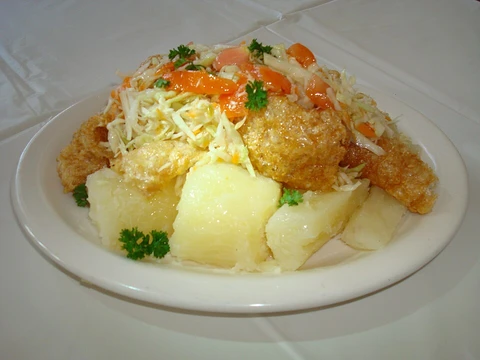
Nacatamal
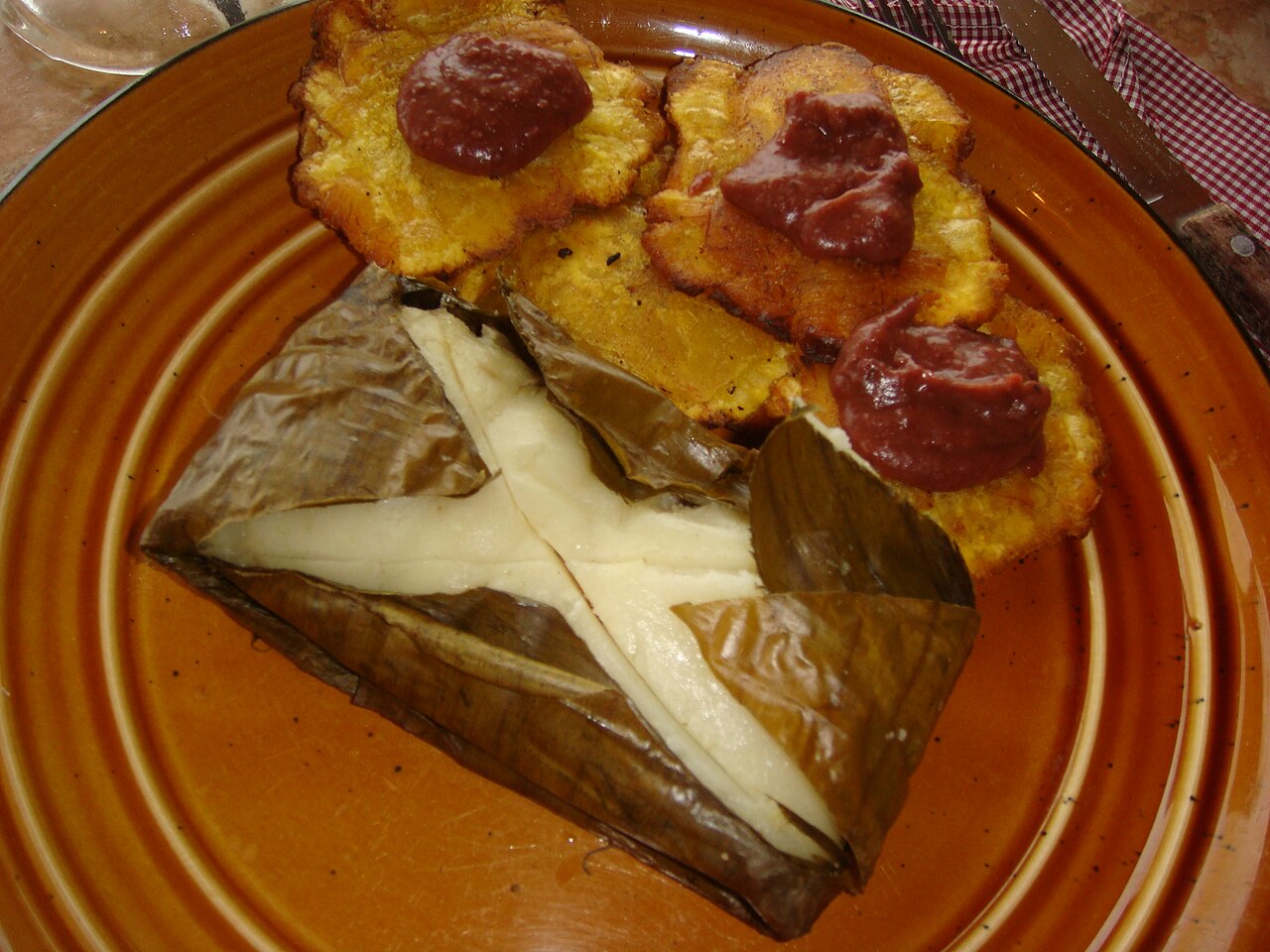
Traditional Nicaraguan meat tamale with Mesoamerican roots.

Joroman2k · CC BY-SA 4.0
The nacatamal is a traditional Nicaraguan dish similar to the tamal and hallaca, with Mesoamerican roots originating from the Nicarao tribes who inhabited western Nicaragua. Its name comes from the Nawat language and translates to 'meat tamale'. It is perhaps the most produced dish within traditional Nicaraguan cuisine, typically eaten on weekends, for dinner, or for breakfast, often with white bread and a caffeinated drink.
Quick Facts
- Country
- Nicaragua
- Main Ingredient
- Corn (maize) masa, tomatoes, achiote, chilis, potatoes, banana leaves, Corn husks / Fillings; rice and meat (e.g. pork, turkey and chicken)
Facts from the source article.
Lore & Background
In the pre-Columbian era, the Nicarao used meats like deer, turkey, and iguana with ingredients such as tomatoes, chilis, achiote, and herbs to season and increase the nacatamal's flavor before wrapping in corn husks and steaming. After Spanish conquest, nacatamales were made with introduced meats like pork and chicken, and evolved to include onions and other Old World ingredients. Banana leaves, also introduced by Europeans, became an alternative wrapping but did not replace corn husks, which remain common. Raisins can be added but are optional.
Reader's Guide
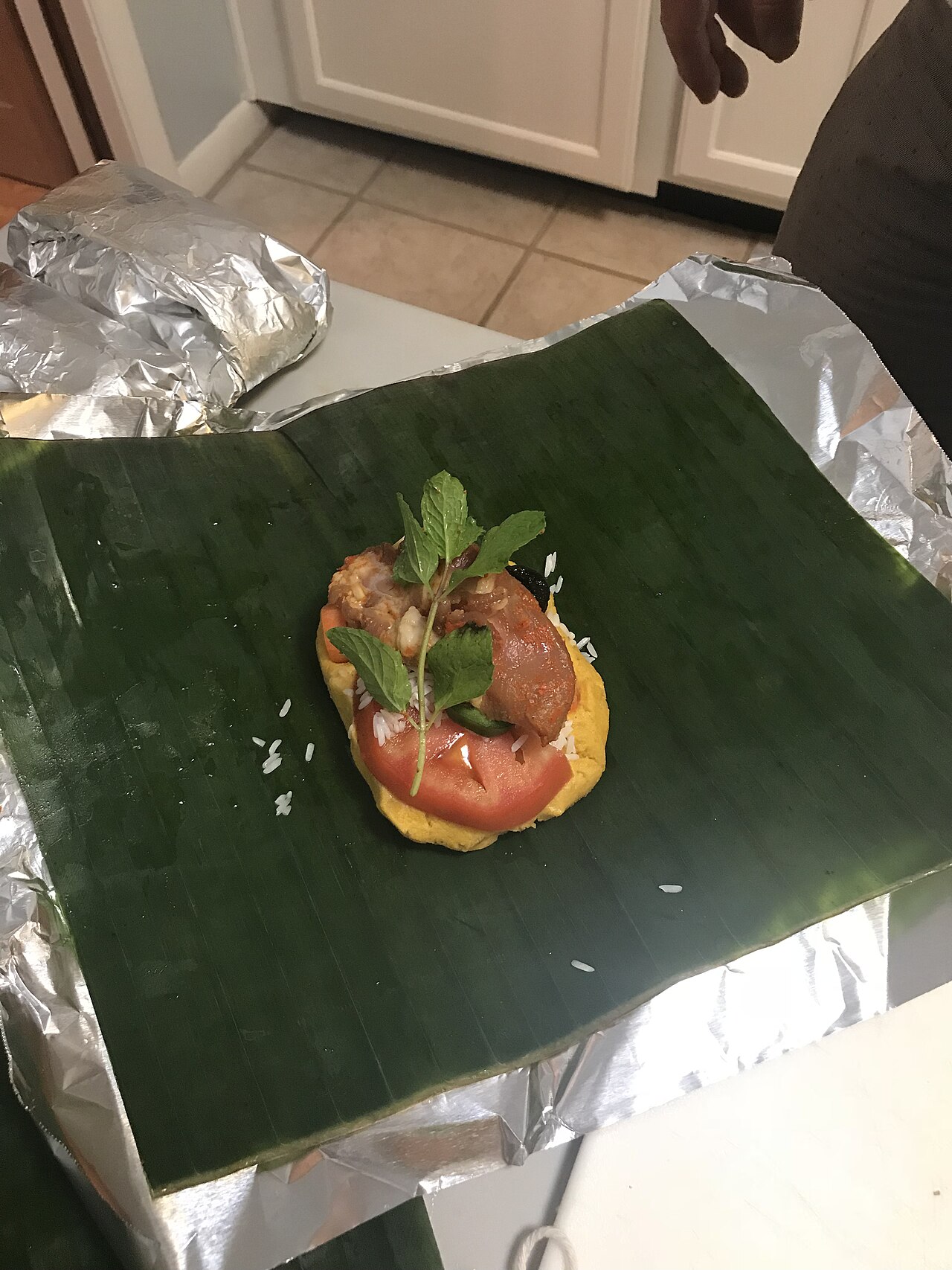
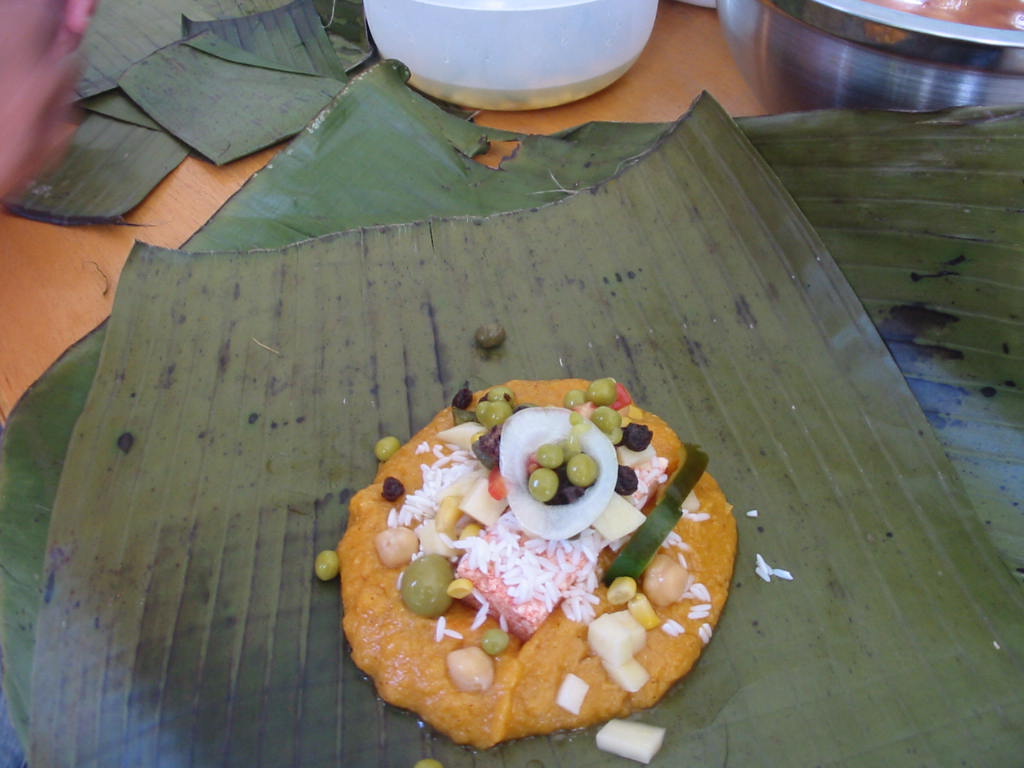
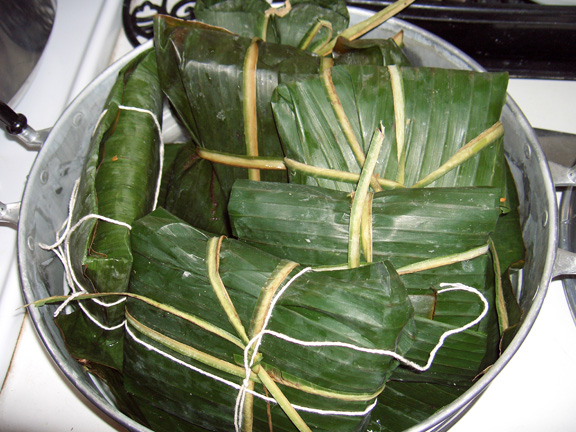
The nacatamal is a cornerstone of Nicaraguan cuisine, representing a labor-intensive dish that often requires two days of preparation and the involvement of the whole family. Its significance lies in its deep cultural roots, tracing back to the Nicarao tribes, and its evolution after Spanish contact, incorporating new meats and ingredients. The dish is central to social gatherings, especially on weekends and special occasions, where it is shared with extended family and neighbors. The process begins with nixtamalized corn masa and lard, seasoned with salt and achiote, cooked over a wood fire. This base is ladled onto plantain leaves, filled with annatto-seasoned pork, rice, potatoes, bell peppers, tomatoes, onions, olives, spearmint, and chile congo, then wrapped into pillow-shaped bundles and steamed or pressure-cooked for hours. Today, wrapping in both banana leaf and aluminum foil is common, and cooking can take up to five hours, with turning at the midway point for even cooking. The nacatamal's enduring popularity underscores its role as a symbol of Nicaraguan identity and communal tradition.
Did You Know?
- Pre-Columbian Nicarao used meats like deer, turkey, and iguana in nacatamales.
- After Spanish conquest, pork and chicken were introduced as fillings; banana leaves, also introduced by Europeans, became an alternative wrap but corn husks remained common.
- Nacatamales are typically eaten with white bread and a caffeinated drink such as black coffee, Coca-Cola, or Pepsi.
Roots in the Nicarao World
The nacatamal carries a name that speaks directly to its identity. In the Nahuat language, it is called Nakatamal, a compound of Nakat meaning "meat" and tamal meaning "tamale." The Nahuatl equivalent, Nacatamal, follows the same logic with Nacatl and tamalli. Both render the dish simply as a "meat tamale," a description that has remained accurate across centuries. The dish's lineage stretches deep into Mesoamerican culinary tradition, and its specific origin is traced to the Nicarao peoples who inhabited western Nicaragua. In the pre-Columbian period, these communities prepared the dish using locally available game—deer, turkey, and iguana—alongside native ingredients like tomatoes, potatoes, chilis, achiote, and various herbs to build up the flavor before wrapping the mixture in corn husks and steaming it. The nacatamal also shares a broader family resemblance with other stuffed maize dishes across the region, including the tamal and the hallaca, underscoring a shared tradition of wrapping seasoned fillings in leaf or husk that spans multiple Mesoamerican cultures.
A Dish Reshaped by Conquest and Time
The arrival of Spanish colonizers transformed the nacatamal in ways that persist to this day. Where the Nicarao had relied on deer, turkey, and iguana, the post-conquest kitchen introduced pork and chicken as the primary proteins. New aromatics followed in the same wave: onions became a standard seasoning, and banana leaves gradually supplanted the original corn husks as the wrapping material. Raisins entered the recipe as an optional addition, though they remain a matter of personal preference rather than a requirement. In modern kitchens, the wrapping has evolved further, with many cooks now layering both banana leaf and aluminum foil around each bundle before steaming. Despite these layered additions, the core identity of the dish—nixtamalized corn masa seasoned with achiote and lard, filled with meat and vegetables, then steamed for hours—remains essentially unchanged from the pre-Columbian template. The nacatamal thus stands as a living document of cultural exchange, carrying indigenous technique forward while absorbing the ingredients and materials that centuries of contact introduced to Nicaraguan kitchens.
The Two-Day Labor of Making
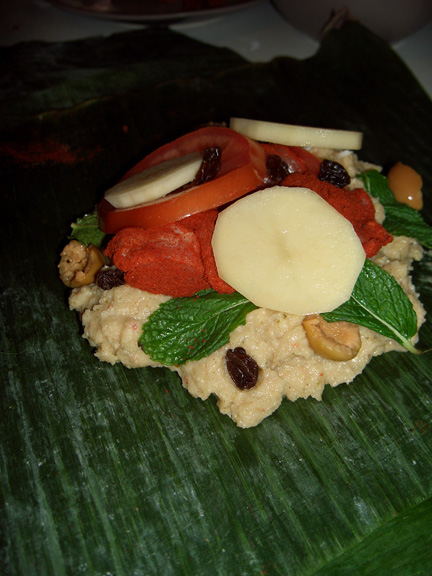
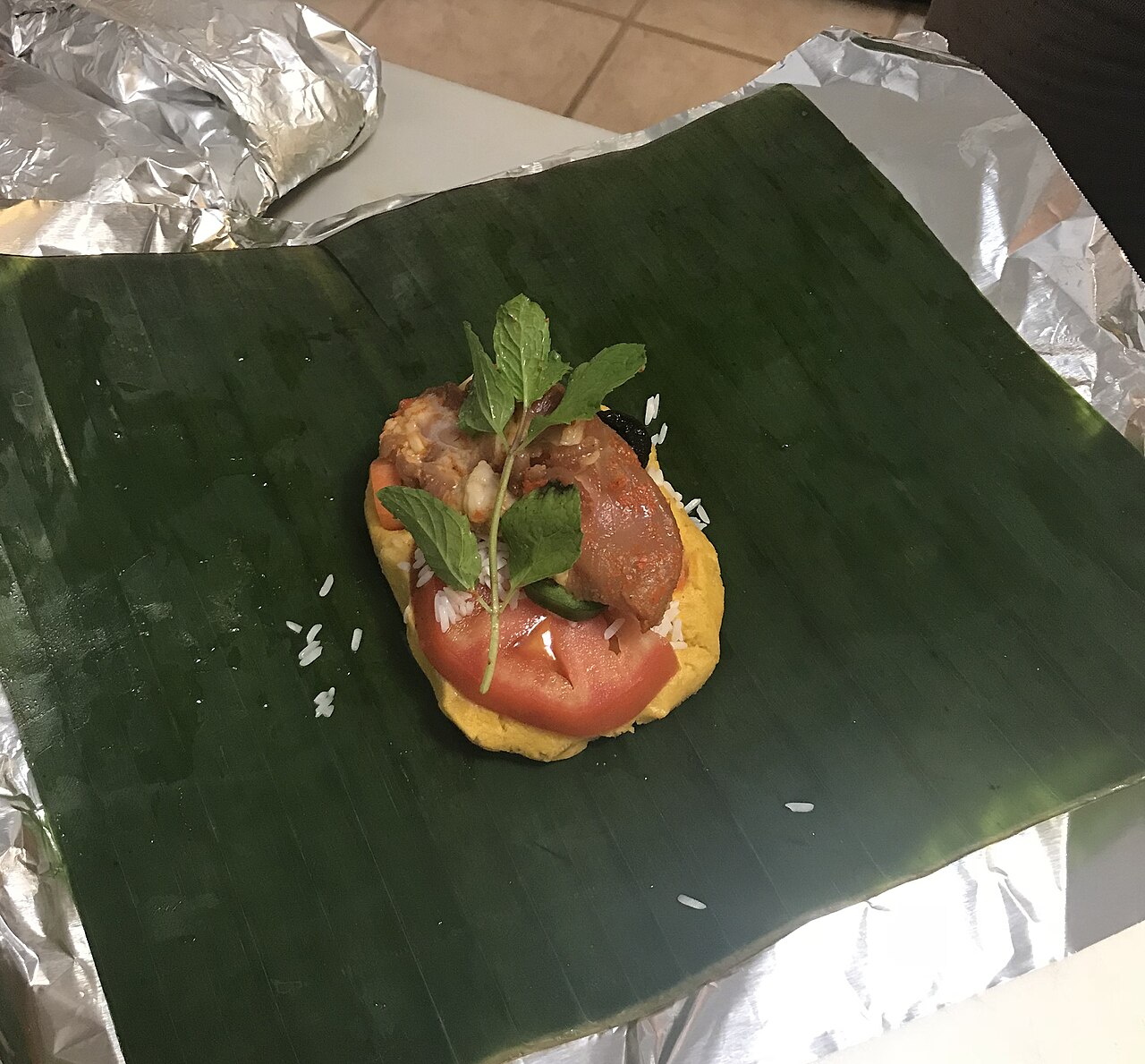
Preparing a batch of nacatamales is an undertaking that can consume an entire family over two full days. The process begins with nixtamalized corn masa, produced through a traditional method called nizquezar, combined with lard, salt, and achiote, then cooked in a large batch over a wood fire. Once the masa is ready, it is ladled onto separately prepared plantain leaves. The filling is assembled next: annatto-seasoned pork, rice, sliced potatoes, bell peppers, tomatoes, onions, olives, sprigs of spearmint, and the small egg-shaped chile congo native to Nicaragua. Prunes, raisins, or capers may be added at the cook's discretion. Each portion is then wrapped in the leaves, secured with string into a pillow-shaped bundle, and steamed or pressure-cooked for up to five hours, with the bundles turned over at the halfway mark to ensure even heat distribution. The sheer volume of work—preparing the masa, seasoning the meat, cutting vegetables, wrapping dozens of bundles—often makes it necessary to involve every member of the household, turning the preparation itself into a communal act.
A Table for Family and Neighbors
Within traditional Nicaraguan cuisine, the nacatamal holds a position of prominence as perhaps the most widely produced dish. It anchors weekend meals and appears at both dinner and breakfast, typically accompanied by a slice of white bread and a caffeinated drink—black coffee, Coca-Cola, or Pepsi. Beyond the routine, nacatamales take on a ceremonial quality during special occasions, when households extend invitations to extended family members and neighbors to gather and partake. The social dimension of the dish is inseparable from its preparation: because the two-day, labor-intensive process often demands the participation of the whole family, the act of making nacatamales becomes as much a bonding ritual as the meal itself. Sharing the finished bundles with a wider circle of relatives and community members reinforces ties that extend beyond the immediate household. In this way, the nacatamal functions not merely as sustenance but as a recurring occasion for collective identity, hospitality, and the reaffirmation of Nicaraguan culinary heritage across generations.
Gallery
More in Nicaraguan cuisine 1-24
Spotted an error? Know more?
Reader corrections go straight into our review queue. Suggest an edit · How this site is sourced