Quesillo
A term for different cheeses and desserts across multiple countries.

Quesillo is a term used across Latin America, Spain, and the Philippines to refer to various foods or dishes, ranging from fresh cheeses to desserts. Its meaning depends entirely on the country, reflecting a diverse culinary heritage that blends European, indigenous, and local traditions.
- Earliest reference
- 18th century in Venezuela (earliest verifiable date); Spanish conquest-era origins in Argentina are too vague to specify a single date
- Common ingredients
- Milk (cow, goat, carabao), eggs, condensed milk, sugar, vinegar, citrus juices (varies by country; pepsin is not common in Nicaraguan or Venezuelan quesillos)
Lore & Background
In Argentina, quesillo is a hand-made cheese from the Calchaquíes and Lerma valleys, produced through a 'filado' or spinning process using cow or goat milk, combining European and Creole recipes from the Spanish conquest. In Bolivia, it is a small fresh cheese from the Cochabamba valley, made from raw cow milk with pepsin and acid coagulation, dry-salted, and hand-formed into palm-size molds, ready to eat after two or three hours.
In the Canary Islands of Spain, quesillo is a dessert flan made with whole eggs and sweetened condensed milk, firmer than traditional flan. Colombia's quesillo is a double cream cheese wrapped in plantain leaf, originally from the Tolima Department, with the town of Guamo most known for it. In Mexico, quesillo is a popular string cheese sold in balls, also known as 'queso Oaxaca'.
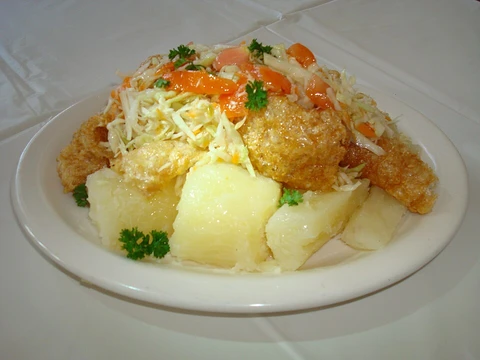
Nicaragua's quesillo is a dish of a thick corn tortilla wrapped around soft cheese, pickled onions, and a sauce of sour cream or liquid cheese and vinegar, originally from the León Department, with a dispute between Nagarote and La Paz Centro over its invention. In Peru, quesillo refers to small patties of fresh cheese common in Andean regions, used in stews and soups. The Philippines has various soft, white, unaged cheeses called quesillo, made from carabao or goat milk, known regionally as kesong puti, kesilyo, or queseo. Venezuela's quesillo is a dessert similar to crème caramel, made with eggs, condensed milk, and caramelized sugar, with an original 18th-century recipe using milk and sugar.
Reader's Guide
Quesillo demonstrates how a single word can encompass vastly different culinary traditions across multiple countries and continents. From fresh cheeses in Argentina, Bolivia, Colombia, Mexico, Peru, and the Philippines to dessert flans in the Canary Islands, Dominican Republic, and Venezuela, the term reflects local ingredients, techniques, and cultural influences. The Nicaraguan version is a complete street-food dish, while the Colombian quesillo is wrapped in plantain leaves, showing adaptation to local packaging. The Venezuelan and Canary Island desserts share similarities with French crème caramel, indicating cross-Atlantic culinary exchange. The Philippine versions use carabao milk and vinegar, highlighting local resourcefulness. The term's flexibility—spanning cheese, dessert, and a wrapped snack—illustrates how language evolves with migration and trade. The disputes over origin in Nicaragua and the variety of spellings in the Philippines underscore the living, contested nature of food traditions. Quesillo's significance lies in its ability to unite diverse food cultures under a single name while preserving distinct identities.
Did You Know?
- In Nicaragua, quesillo is often sold on roadsides by women called quesilleras, and a popular pun alters 'claro que si' into 'claro quesillos'.
- Colombian quesillo is a double cream cheese originally wrapped in a plantain leaf, with the town of Guamo most known for it.
- The Venezuelan quesillo dessert dates back to an 18th-century recipe using four cups of milk to one pound of sugar, without condensed milk.
- In the Philippines, quesillo is known as kesong puti in Tagalog and queseo or kiseyo in Cebu.
Origins and the Question of a Name
The story of this white, semihard, low-fat cheese begins in the southern Mexican state of Oaxaca, where it was first produced. The technique behind its distinctive stringy character did not emerge organically from local dairy tradition; rather, it was introduced by Dominican friars who settled in the region and brought with them the string cheese process that would define the product. For generations, locals simply called it "quesillo," a name rooted in the very soil where it was made. Over time, the broader designation "Oaxaca cheese" gained currency, and today both labels coexist in everyday usage. In practice, the two names point to the same dairy product—the distinction is largely one of geography, reflecting where the cheese was produced or where a buyer encountered it. Yet a lively debate persists among enthusiasts and producers. Some argue that anchoring the name firmly to Oaxaca would elevate the state's international profile in the way that "manchego" or "gouda" have done for their respective regions, turning a place name into a mark of quality and origin. Others feel the older, more intimate term "quesillo" better honors the cheese's humble beginnings.
The Craft of Stretching
Producing this cheese is no simple task. The process, known as pasta filata, demands that the curd be stretched repeatedly into long, delicate ribbons before being coiled and rolled into shapes that resemble a ball of yarn. While mozzarella curd shares this foundational stretching technique, the final handling of Oaxaca cheese diverges, bearing a closer resemblance to the methods used for braided cheeses. The result is a product with a texture that evokes string cheese or fresh mozzarella, yet with its own particular character. The cheese is available in several different shapes, reflecting the artisanal flexibility of the process. In 2020, Mexican producers manufactured just under thirty thousand metric tonnes of this cheese, with a substantial share originating from the state of Oaxaca itself. The scale of production underscores how deeply this craft is woven into the region's agricultural and economic life, even as the hands-on, labor-intensive nature of the stretching and rolling ensures that each batch carries the fingerprint of its maker.
A Staple of the Mexican Table
In kitchens across Mexico, this cheese has become an indispensable ingredient, prized for the way it melts and stretches when heated. It features prominently in quesadillas and empanadas, where it is melted alongside a variety of fillings that range from the earthy, corn-based huitlacoche to the delicate sweetness of squash flowers. Perhaps no dish illustrates its centrality to regional identity more vividly than the tlayuda, a classic Oaxacan antojito in which the cheese plays a starring role. The cheese's semihard structure and low-fat profile make it versatile enough to complement bold, savory ingredients without overwhelming them, while its stringy, pull-apart texture adds a satisfying visual and tactile element to the finished plate. Its similarity to unaged Monterey Jack in flavor, combined with a mouthfeel closer to fresh mozzarella, gives it a unique position in the cheese world—one that straddles the familiar and the distinctly Mexican.
Crossing Borders, Keeping a Name
Outside Mexico, this cheese travels under different names and faces a persistent case of identity confusion. In the northern state of Chihuahua, a cheese called asadero (or queso asadero) is frequently mistaken for it. The two share a comparable texture, but their production methods differ, and the Oaxaca-origin cheese tends to be noticeably moister. In Central America and parts of South America, the name "quesillo" survives in Nicaragua, Honduras, Colombia, and El Salvador, preserving the original local term. Costa Rica offers a particularly evocative alternative: there, the cheese is called queso palmito, a name inspired by the stringy, fibrous consistency of heart of palm. Local production in Costa Rica is concentrated in the San Carlos and Zarcero cantons of Alajuela Province. These varied names and regional adaptations highlight how a single cheese can acquire multiple identities as it crosses borders, even as advocates back home push for the Oaxaca designation to become the recognized, place-anchored name on the world stage.
More in Nicaraguan cuisine 1-24
Spotted an error? Know more?
Reader corrections go straight into our review queue. Suggest an edit · How this site is sourced