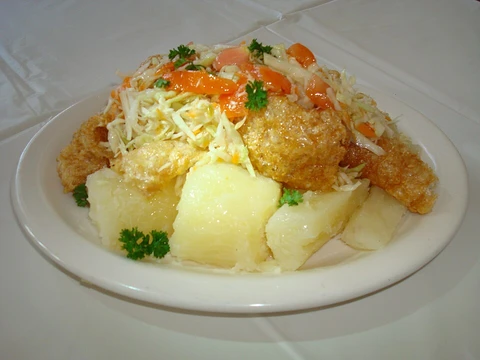
Chayote
Edible gourd fruit from Mesoamerica, spread globally via Columbian Exchange.

Jeangagnon · CC BY-SA 4.0
Chayote (Sechium edule), also known as christophine, mirliton, güisquil, and choko, is an edible plant belonging to the gourd family, Cucurbitaceae. It was first cultivated in Mesoamerica between southern Mexico and Honduras, with the most genetic diversity available in both Mexico and Guatemala. It is one among dozens of foods introduced to the Old World during the Columbian Exchange, particularly the galleon trades in Spanish Manila, and later spread to other parts of the Americas, becoming integrated into the cuisine of many Latin American nations.
Quick Facts
- Genus
- Sicyos
- Species
- edulis
Facts from the source article.
Lore & Background
The plant was first recorded by modern botanists in P. Browne's 1756 work, the Civil and Natural History of Jamaica. Swartz placed it in the genus Sechium in 1800, and it remains there today. The genus name Sechium is derived from an indigenous term, while the species name edulis means 'edible'. The fruit goes by many English-language names around the world; 'chayote' derives from the Spanish word chayote, a derivative of the Nahuatl word chayohtli.
Reader's Guide
Chayote is significant as a food plant that traveled from its Mesoamerican origins to become a global ingredient, especially through the Columbian Exchange. It is one of dozens of foods introduced to the Old World via Spanish Manila galleon trades, and it spread to other parts of the Americas, becoming integrated into the cuisine of many Latin American nations. The fruit is usually handled like summer squash when cooked, and raw chayote may be added to salads or salsas. Although most people consider only the fruit edible, the root, stem, seeds, and leaves are also edible. The tubers are eaten like potatoes, and shoots and leaves are consumed in salads and stir-fries, especially in Asia. In some cuisines, chayote is incorporated into soups and stews, where it absorbs surrounding flavors while maintaining a mild taste. It is also used in both savory and, less commonly, sweet dishes depending on regional culinary traditions. The plant requires humus-rich, well-drained soils and is not frost-tolerant, but adapts to a wide range of climatic conditions.
Did You Know?
- The fruit is known as 'mirliton' in Louisiana and Haiti, and 'christophine' in the eastern Caribbean, United Kingdom, and Ireland.
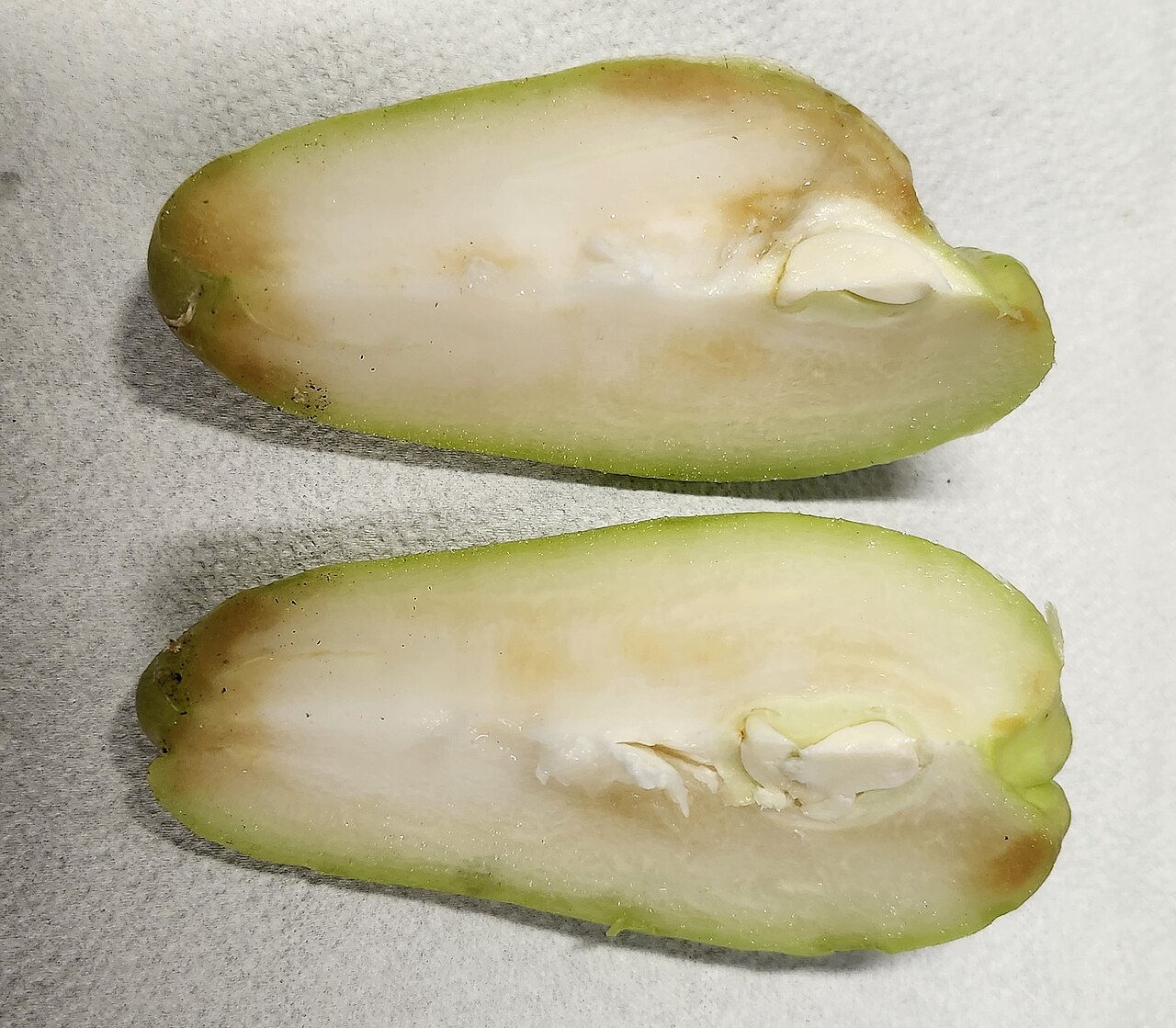
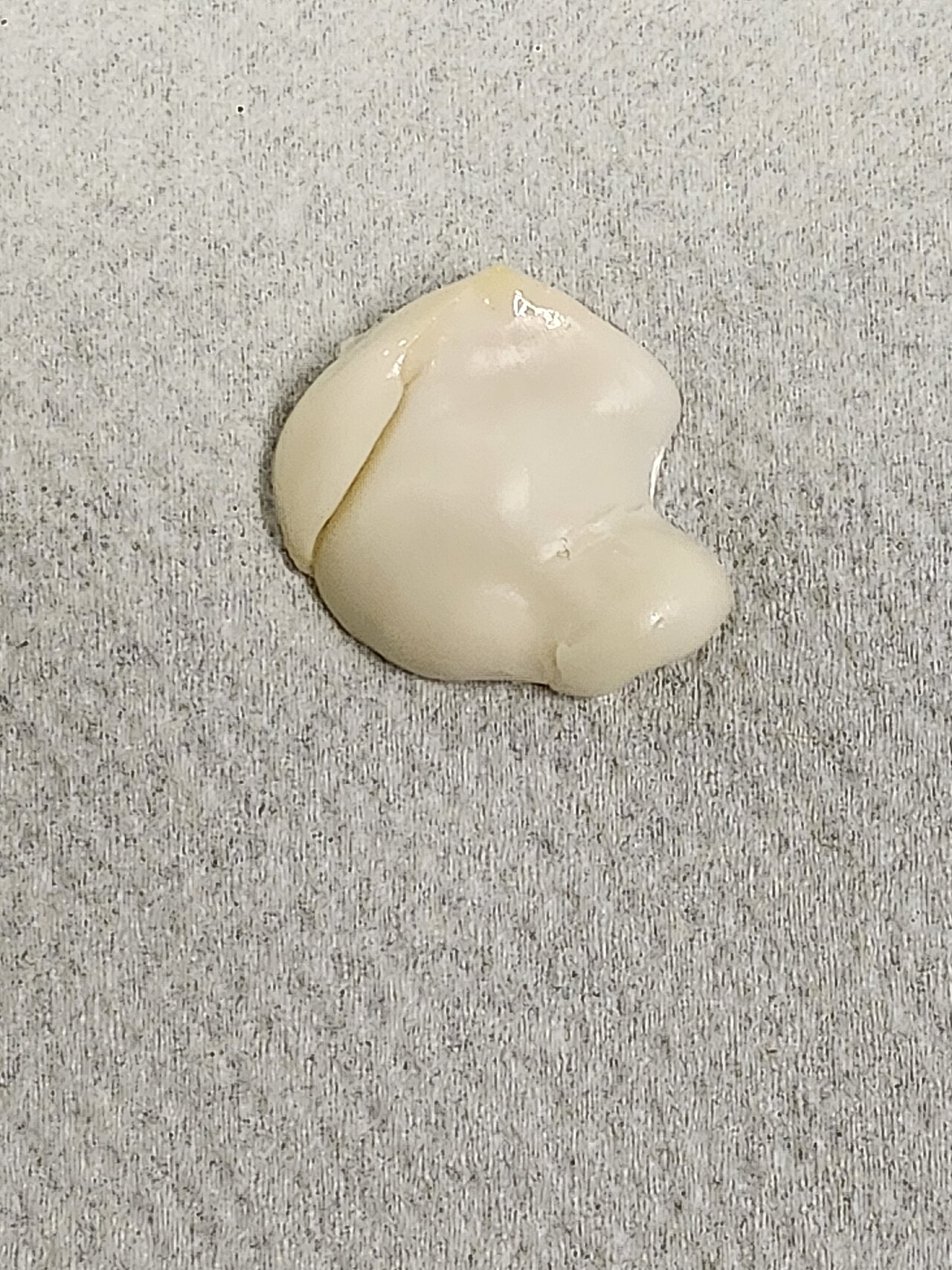
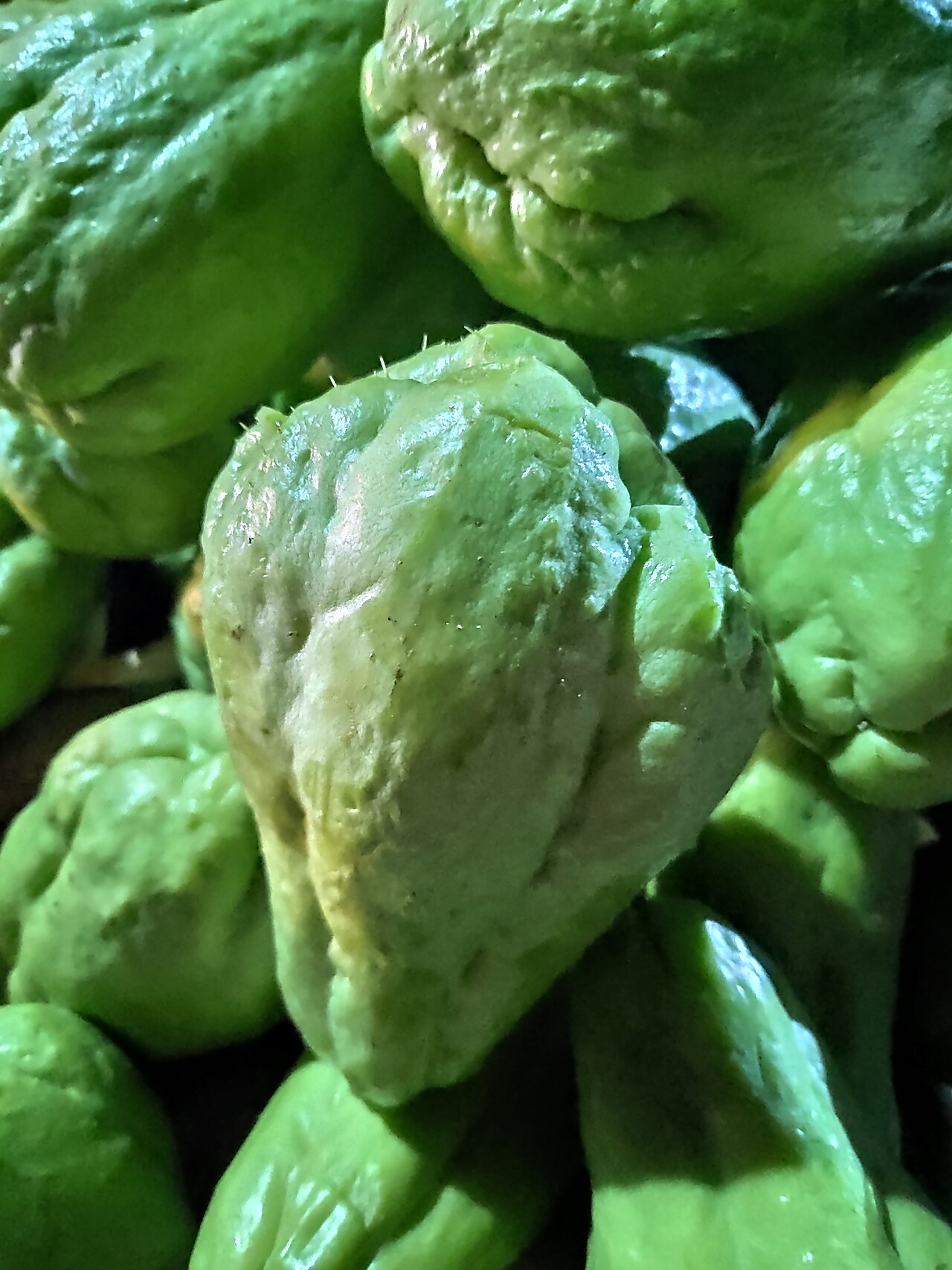
- The seed or stone can be up to 10 cm long by 7 cm wide, and some varieties have spiny fruits.
- In Nepal, chayote is known as 'Es-kus'.
Mesoamerican Roots and a Global Journey
Chayote traces its earliest cultivation to the Mesoamerican corridor stretching from southern Mexico down through Honduras, with the richest pools of genetic variation still found in Mexico and Guatemala. The fruit's journey beyond that region was tied to the sweeping agricultural exchanges that followed European contact with the Americas. Spanish galleon trade routes, particularly those linking Manila, carried the plant into the Old World, while simultaneously it radiated outward across the Americas, becoming woven into the daily cooking of numerous Latin American countries. In southern Italy, specifically the Campania region, chayote appeared in the early 1500s after Spain's 1503 conquest of the Kingdom of Naples folded that territory into broader colonial trade networks. There it took on local nicknames referencing thorny aubergines and even a name, masciusce, that echoes Brazilian and Kimbundu terms for a small thorny maroon cucumber. Today, Neapolitans are only beginning to rediscover this long-forgotten fruit, and its colonial-era origins remain largely unknown to the general public.
A Kitchen Workhorse from Root to Leaf
Far beyond the familiar pear-shaped fruit, chayote offers an unusually wide range of edible parts. The tubers can be prepared much like potatoes and other root vegetables, while the young shoots and leaves find their way into salads and stir-fries, a practice especially common across Asian kitchens. The fruit itself is typically treated the way a cook would handle summer squash: lightly cooked so it keeps a pleasant crispness. In its raw state, it appears in salads and salsas, often dressed with a squeeze of lemon or lime, and whether eaten fresh or heated, it delivers a solid dose of Vitamin C. In soups and stews the flesh acts as a quiet sponge, soaking up the flavors of its broth while contributing only a gentle, mild note of its own. Depending on the regional tradition, chayote shows up in both savory preparations and, less frequently, sweet dishes. In Indonesia, the leaves are a particularly popular vegetable alongside the fruit, and the plant's many local names there—labu siam, labu Jepang, manisah—reflect how deeply it has settled into everyday cooking.
One Fruit, a Dozen Names
Few vegetables carry as many regional labels as chayote. In most of the United States outside Louisiana, the name comes through Spanish from the Nahuatl chayohtli, and that Nahuatl root survives in the Philippines as sayote or tsayote. Guatemala and El Salvador call it güisquil, Honduras uses pataste, and Louisiana and Haiti know it as mirliton, with the r often silent in Cajun speech. The eastern Caribbean, Britain, and Ireland favor christophine, a French-derived nod to Columbus. Across the Indian Ocean and South Asia, variants like chouchou in Mauritius, chow-chow in India and Sri Lanka, chuchu in Brazil, and chocho in Jamaica likely trace back to a Pidgin English rendering of the original word. In Nepal it is Es-kus. Chinese immigrants arriving in Australia and New Zealand in the late 1800s brought the Cantonese-derived term choko, which stuck in those countries and Singapore. The scientific binomial Sicyos edulis simply translates the Greek for "edible cucumber," a modest descriptor for a fruit that has accumulated so many cultural identities along the way.
Vine, Fruit, and the Art of Growing It
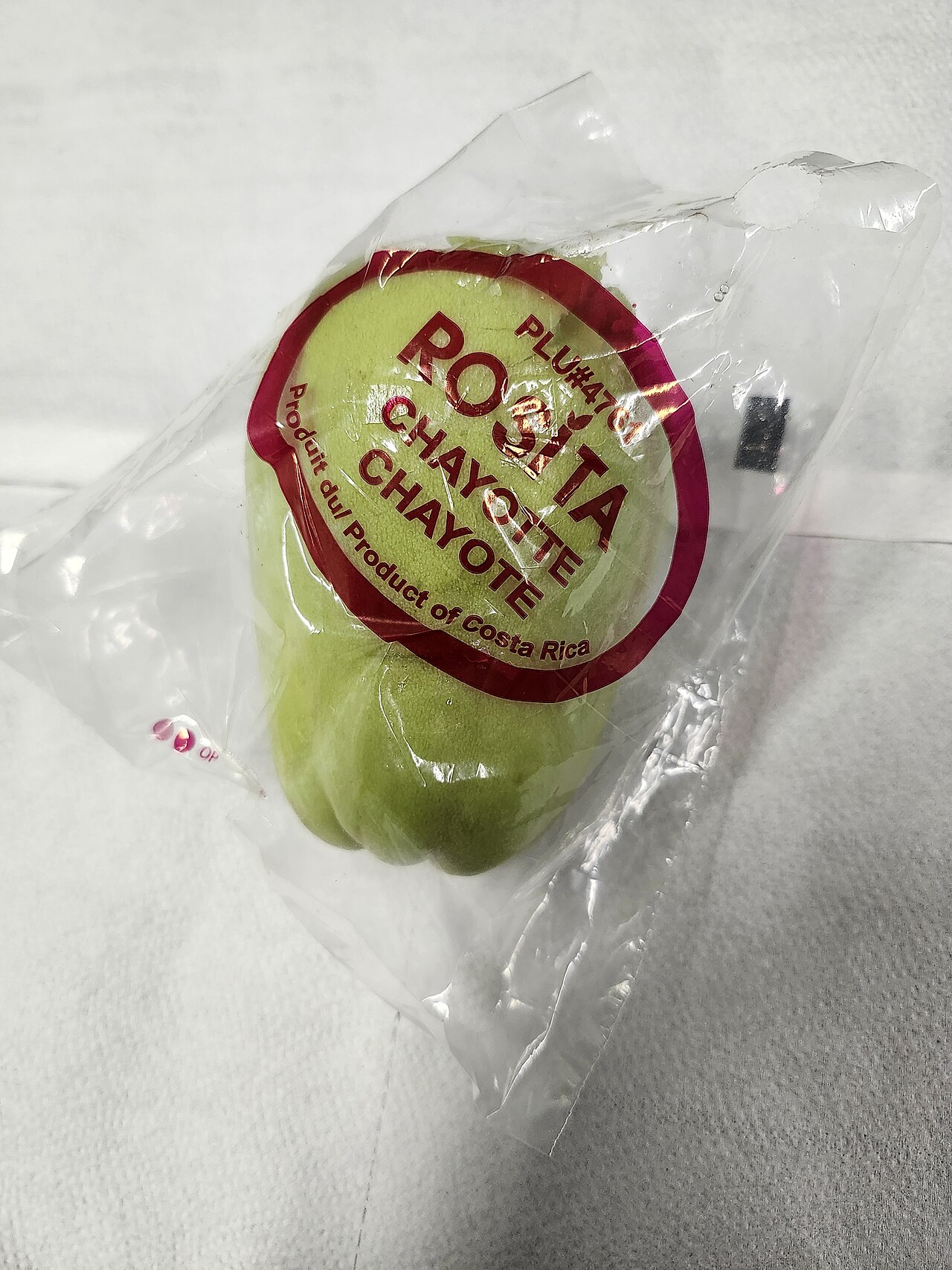
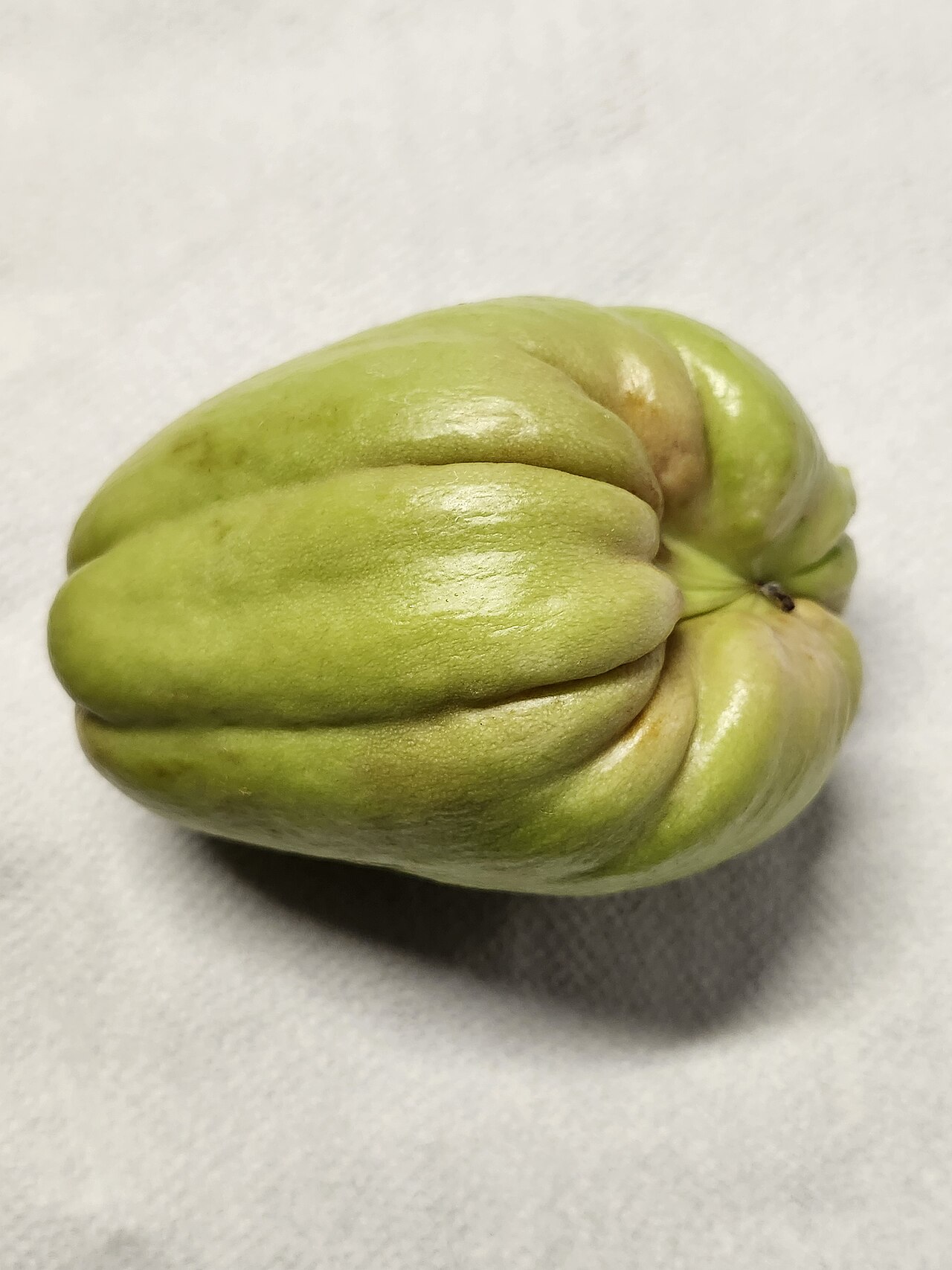
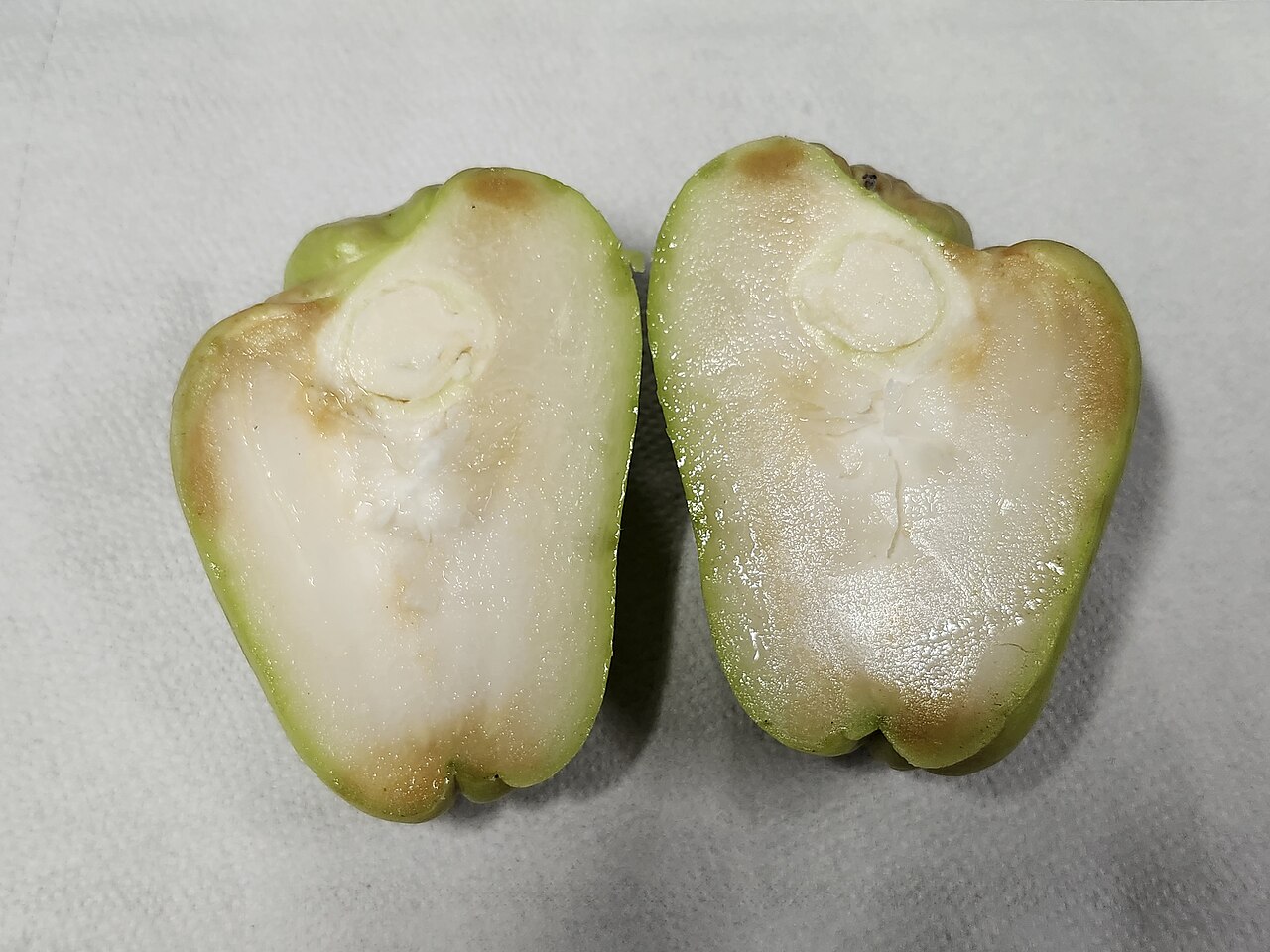
Botanically, chayote belongs to the gourd family and was first formally described in modern botanical literature by P. Browne in his 1756 natural history of Jamaica, before Swartz placed it in the genus Sechium in 1800. The plant is a vigorous climber that can scale support structures to roughly twelve meters, bearing heart-shaped leaves up to twenty-five centimeters wide and trailing tendrils along its stems. Male flowers appear in clusters while female flowers bloom singly. The most common fruit is a flattened, wrinkled, pear-shaped green pod ten to twenty-five centimeters long, housing a single large flattened seed that can measure up to ten by seven centimeters. Individual fruits may weigh as much as 1.2 kilograms, and some varieties bear spiny skins that locals consider more flavorful. Cultivation demands humus-rich, well-drained soil with a slightly acidic pH between 4.5 and 6.5; heavy clay invites fungal trouble. The vine thrives in temperatures around 13 to 21 degrees Celsius with 1,500 to 2,000 millimeters of rain, is not frost-tolerant, and yields anywhere from 10 to 115 tonnes per hectare depending on variety and region.
Gallery
More in Nicaraguan cuisine 1-24
Spotted an error? Know more?
Reader corrections go straight into our review queue. Suggest an edit · How this site is sourced