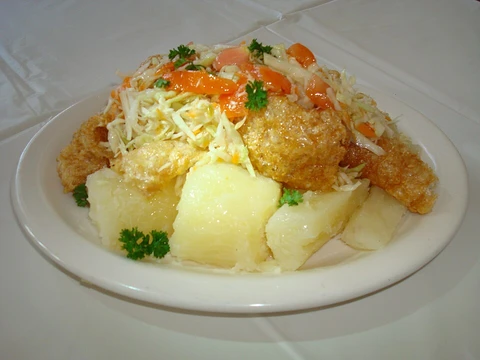
Sopa de mondongo
A tripe soup from Latin America, popular in former Spanish colonies.

Sopa de mondongo is a slow-cooked soup with roots in Latin America, built around diced tripe from a cow or pig. The tripe simmers with a mix of vegetables that can include bell peppers, onions, carrots, cabbage, celery, tomatoes, cilantro, garlic, or root vegetables. You’ll find it most often in places that were once Spanish colonies, stretching across Latin America, the Caribbean, and the Philippines.
There are plenty of regional twists. Some cooks add rice or maize near the end of cooking. Others might use bone marrow or hoof jelly for richness. Before cooking, the tripe sometimes gets a soak in citrus juice or a paste of sodium bicarbonate. The exact vegetables and spices shift depending on what’s available. In Argentina, people simply call it mondongo. In the Dominican Republic, it’s a familiar restaurant staple. There, beef tripe is typically washed in lime or lemon. Onions, garlic, bell peppers, tomatoes, carrots, and celery are first sautéed in vegetable oil, then boiled with the tripe and potatoes, seasoned with salt, pepper, and Dominican oregano (lippia micromera). A thicker version, mondongo guisado, swaps fresh tomatoes for tomato paste and adds plantains, squash, olives, capers, green bananas, and cassava instead of potatoes. Both soups are served with chopped cilantro, avocado, rice, and a hot sauce made from garlic, Dominican oregano, and chilies fermented in bitter orange juice, called agrio de naranja.
Quick Facts
- Region
- Latin America, the Caribbean, Maritime Southeast Asia
- Main Ingredient
- Tripe, vegetables (bell peppers, onions, carrots, cabbage, celery, tomatoes) or root vegetables, cilantro (coriander), garlic
Facts from the source article.
Lore & Background
Sopa de mondongo is a soup that originally came from Latin America. It is made from diced tripe slow-cooked with vegetables such as bell peppers, onions, carrots, cabbage, celery, tomatoes, cilantro, garlic or root vegetables. The dish is generally prepared in former Spanish colonies in Latin America, the Caribbean and in the Philippines. Many variations exist. Some add rice or maize late in the process. Bone marrow or hoof jelly may be used. The tripe may be soaked in citrus juice or a paste of sodium bicarbonate before cooking. The vegetables and spices used vary with availability. In Argentina, it is also referred to as mondongo. In the Dominican Republic, sopa de mondongo is a familiar restaurant staple. Beef tripe is typically washed in lime or lemon. Onions, garlic, bell peppers, tomatoes, carrots and celery are cooked in vegetable oil before boiling. Tripe is then added with potatoes and seasoned with salt, pepper, and lippia micromera (locally known as Dominican orégano). Another version is mondongo guisado. This is a thicker version that uses tomato paste instead of fresh tomatoes and also adding plantains, squash, olives, capers, green bananas, and replacing potatoes with cassava. Both soups are served with chopped cilantro, avocado, rice and hot sauce made with garlic, Dominican orégano, and chilies fermented in bitter orange juice called agrio de naranja.
Reader's Guide
Sopa de mondongo represents a culinary tradition that spans Latin America, the Caribbean, and the Philippines, reflecting the shared heritage of former Spanish colonies. Its significance lies in its adaptability: the basic framework of slow-cooked tripe and vegetables allows for regional variations based on local ingredients and preferences. In the Dominican Republic, it is one of the most popular dishes on the island, with specific preparations such as washing tripe in lime or lemon and using Dominican orégano. The existence of a thicker version, mondongo guisado, demonstrates how a single dish can evolve into distinct forms within one country. The use of techniques like soaking tripe in citrus juice or sodium bicarbonate paste shows practical knowledge of tenderizing tough cuts. The dish's legacy is its role as a comfort food that transforms inexpensive ingredients into a hearty meal, and its widespread presence across multiple continents underscores the lasting influence of colonial foodways.
Did You Know?
- Sopa de mondongo is made from diced tripe, the stomach of a cow or pig.
- In the Dominican Republic, a thicker version called mondongo guisado uses tomato paste and adds plantains, squash, olives, capers, and green bananas.
More in Nicaraguan cuisine 1-24
Spotted an error? Know more?
Reader corrections go straight into our review queue. Suggest an edit · How this site is sourced