Yakana
Central Andean dark constellation embodying the protective spirit of llamas.

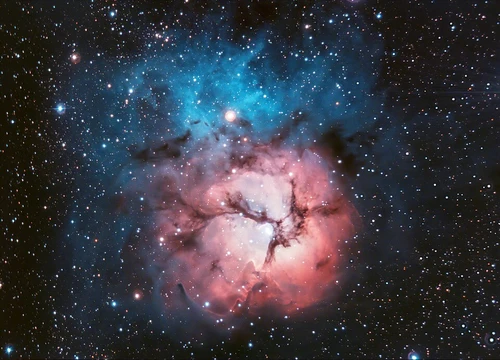
The Yakana (also known as Qatachillay) is the central and largest Andean dark constellation in Inca mythology, representing a silhouette carved out of the molecular clouds and interstellar dust lanes of the Milky Way, which the Quechua call the Mayu, or Celestial River. Rather than being formed by a cluster of stars, it is a dark nebula that embodies the cosmic essence and protective spirit (camac) of terrestrial llamas and camelid herds.
- Alternative name
- Qatachillay
- Type
- Andean dark constellation (Quechua: 'black cloud')
- Location in western sky
- Southern sky, stretching across dark dust lanes between Crux, Centaurus, and Scorpius
- Eye stars
- Alpha Centauri and Beta Centauri (called Llaman Ñawin or Ñawicuna)
- Associated star names 2026
- Yaqana assigned to Epsilon Normae; Uñallamacha assigned to HD 155985 (HIP 84556)
- Mythological source
- Chapter 29 of the Huarochirí Manuscript, compiled by priest Francisco de Ávila
Lore & Background
According to Chapter 29 of the Huarochirí Manuscript, a fundamental 16th-century Quechua codex compiled by the priest Francisco de Ávila, the Yakana is described as a living creature walking through the center of the celestial river. The myth states that the Yakana animates and gives life-force to earthly llamas, appearing with a long neck and two bright stars for eyes.
A central aspect of the myth holds that at midnight, unnoticed by anyone, the Yakana descends to Earth to drink water from the oceans and springs. This act revitalizes the celestial river with water from the earthly plane, sustaining a closed, bidirectional cosmological hydrological cycle, and by consuming excess terrestrial waters, it prevents the world from being destroyed by a catastrophic global flood.
The Huarochirí Manuscript also records a popular legend: if a lucky person—usually a poor shepherd—is sleeping on the high plateaus (puna) at night and the Yakana lands directly on top of him, the man will experience a supernatural encounter. While the creature breathes on him, the man must pull a wool fiber from its chest. If he manages to do so and subsequently sleeps, he will wake up to find wool of varying colors (blue, white, black, and brown). If the shepherd then purchases a couple of llamas and breeds them while preserving that sacred wool, his herd will multiply by the thousands as a blessing from the celestial llama.
Reader's Guide
The Yakana holds significance as the central and largest Andean dark constellation, uniquely combining a dark nebula body with bright stellar markers—its eyes formed by Alpha Centauri and Beta Centauri. This mixed nature underscores the integration of celestial observation and mythology in Inca astronomy. The myth's description of a closed hydrological cycle, where the Yakana descends at midnight to drink from Earth's waters and replenish the celestial river, reflects a sophisticated cosmological understanding of water circulation. The legend of the shepherd's favor illustrates the belief in direct supernatural interaction between the celestial llama and humans, with the reward of sacred wool that can multiply herds. In 2026, the IAU Working Group on Star Names assigned the name Yaqana to the star Epsilon Normae and Uñallamacha to HD 155985, formalizing the constellation's legacy within modern astronomy. The Yakana's location in the southern sky, stretching between Crux, Centaurus, and Scorpius, and its association with the Milky Way as the Celestial River, make it a notable example of how indigenous cultures mapped the night sky using dark nebulae rather than stars alone.
Did You Know?
- The Yakana's eyes are formed by Alpha Centauri and Beta Centauri, two of the brightest stars in the southern hemisphere.
- At midnight, the Yakana descends to Earth to drink water from oceans and springs, preventing a global flood.
- A shepherd who pulls a wool fiber from the Yakana's chest while it breathes on him will wake to find wool of blue, white, black, and brown colors.
More in Nebulae, Part 2 1-24
Spotted an error? Know more?
Reader corrections go straight into our review queue. Suggest an edit · How this site is sourced