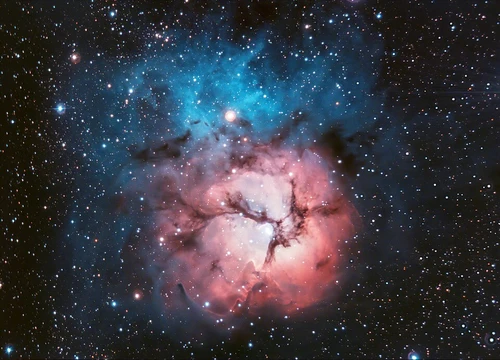
Coalsack Nebula
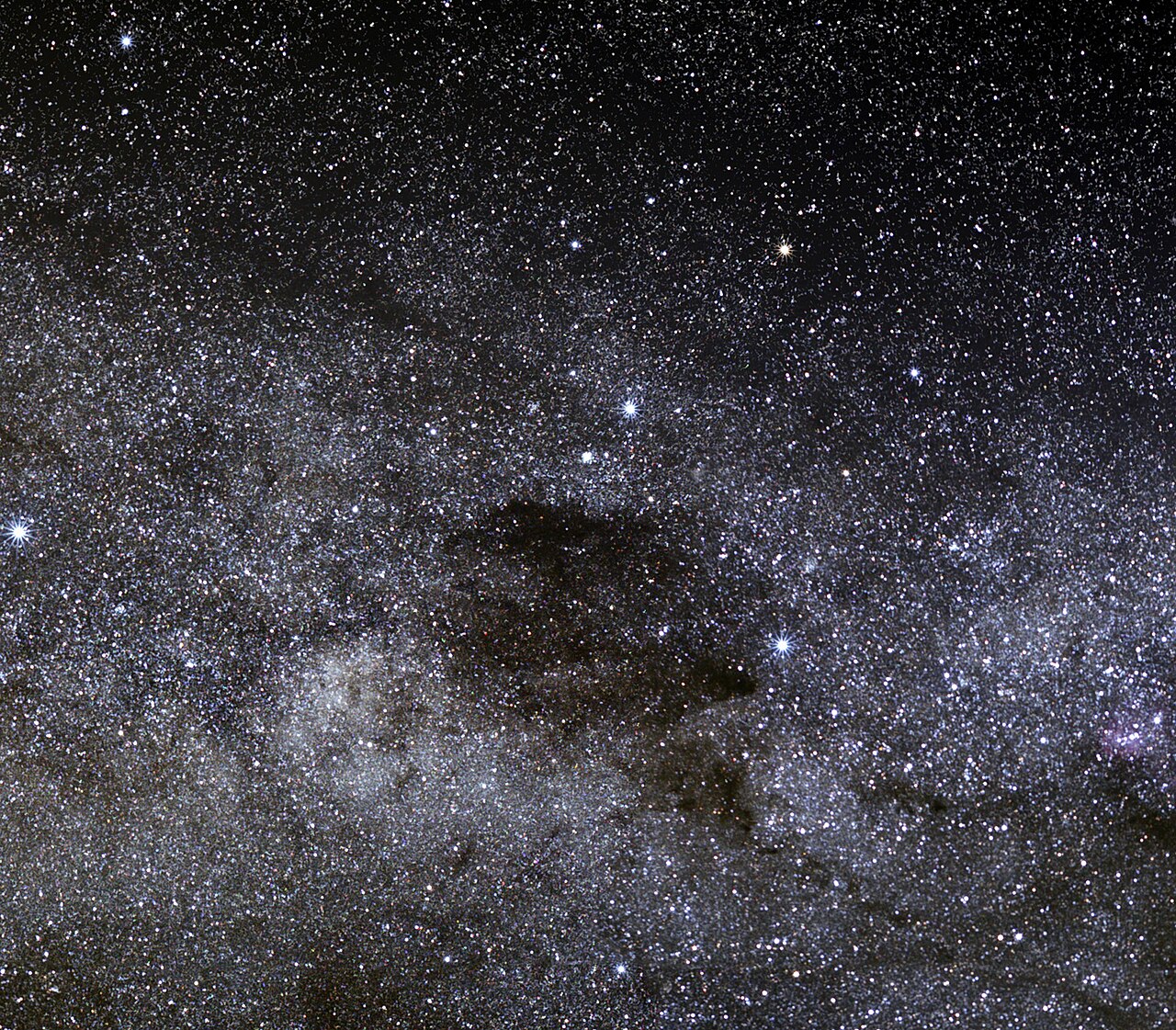
A dark nebula visible as a patch in the Milky Way.

ESO/ S. Brunier · CC BY 4.0
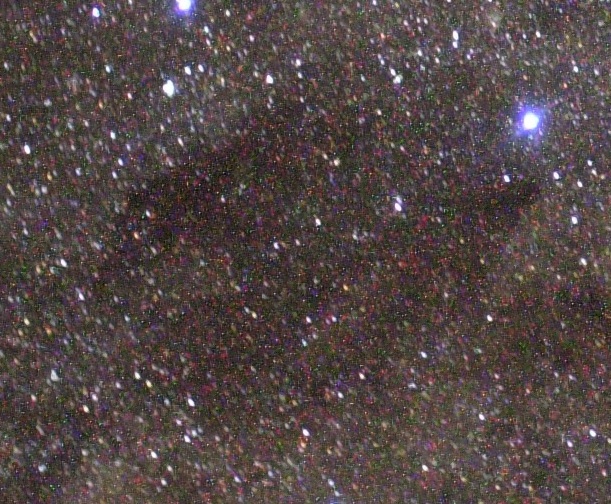
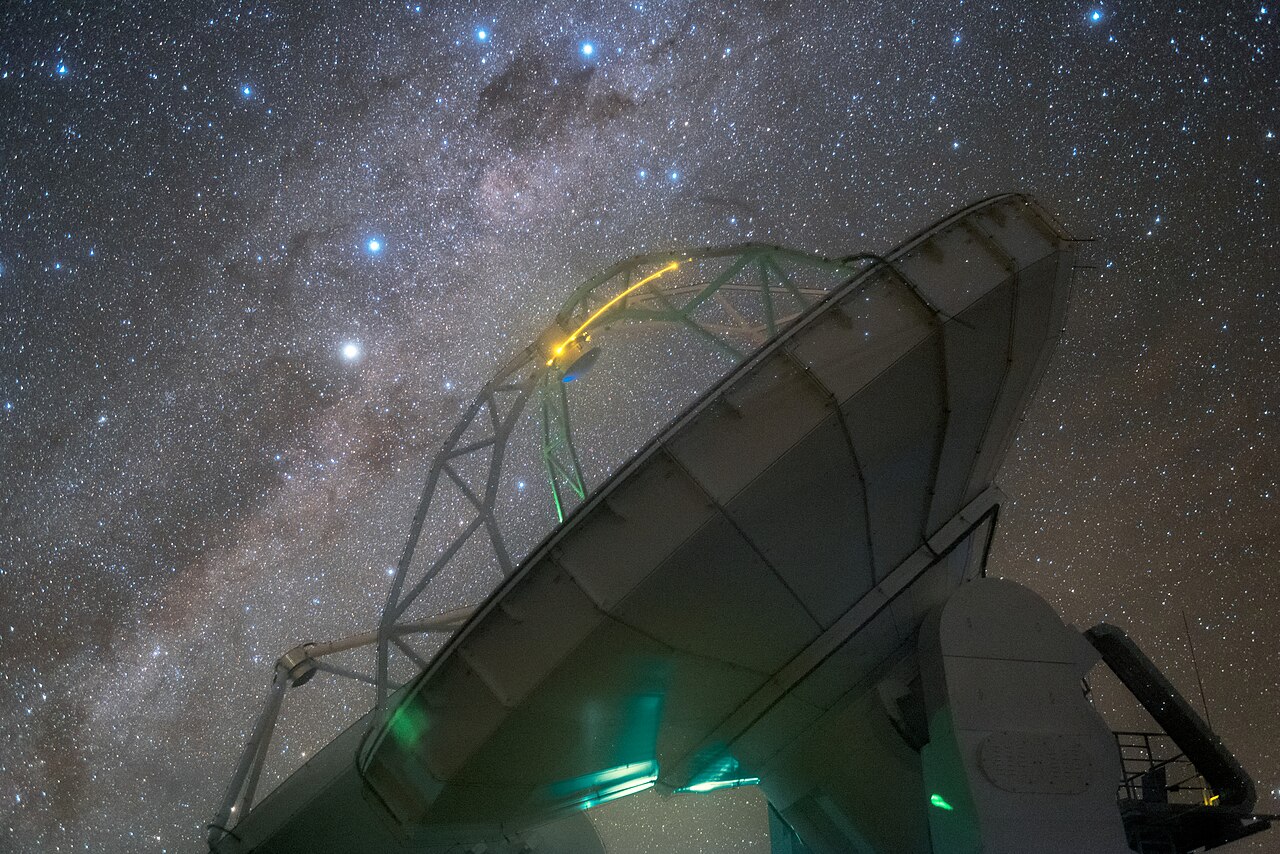
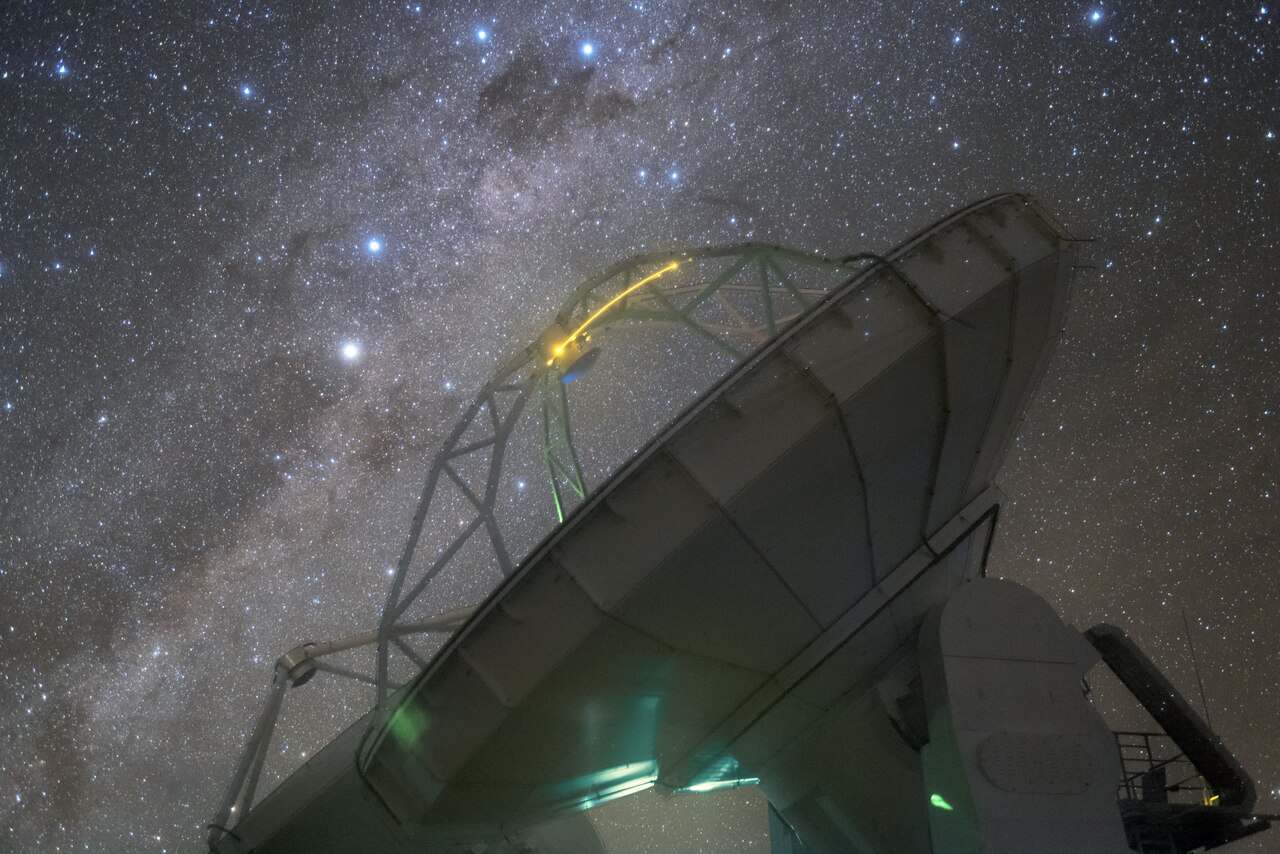
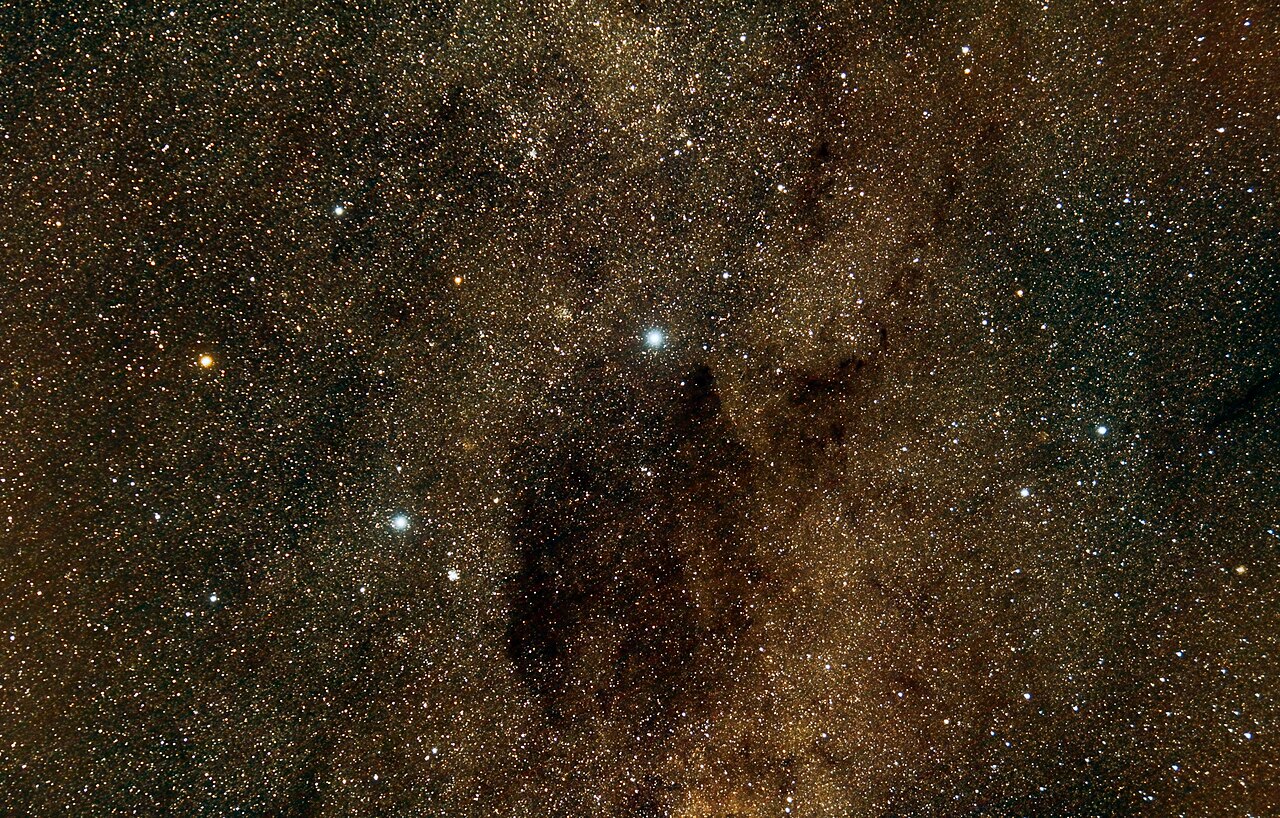
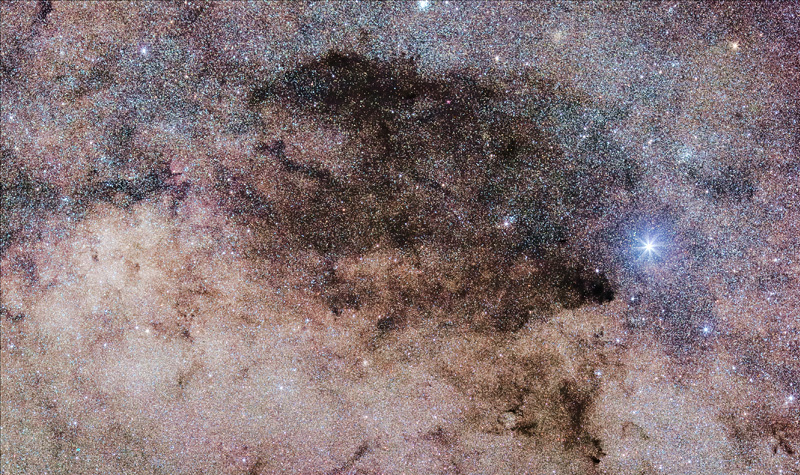
The Coalsack Nebula, also called the Southern Coalsack or simply the Coalsack, is a dark nebula. It appears to the unaided eye as a dark blotch that blocks part of the Milky Way, located east of the star Acrux (Alpha Crucis) in the constellation Crux. Spanning roughly 7° by 5°, it stretches into the neighboring constellations Centaurus and Musca.
Historically, any dark cloud in the night sky was referred to as a coalsack. In 1899, Richard Hinckley Allen created a contrast by naming a separate object the Northern Coalsack Nebula. The Coalsack Nebula was first reported by Vicente Yáñez Pinzón in 1499. Amerigo Vespucci called it "il Canopo fosco" (the dark Canopus), and it was also known as "Macula Magellani" (Magellan's Spot) or the "Black Magellanic Cloud," in contrast to the Magellanic Clouds.
In Australian Aboriginal astronomy, the Coalsack forms the head of the emu in the sky for several cultures. Among the Wardaman people, it represents the head and shoulders of a law-man who watches over people to ensure they follow traditional law. A legend recorded by W. E. Harney says this being is named Utdjungon, and only strict adherence to tribal law by surviving tribe members could prevent him from destroying the world with a fiery star. Gaiarbau (1880) also noted that the coalsacks replicate bora rings on Earth; these astronomical sites allowed spirits to continue ceremonies like their human counterparts. Since bora grounds generally align north–south, the southern coal sack indicates the ceremonial ring. In Inca astronomy, this nebula was called Yutu, after a partridge-like South American bird, or tinamou.
In popular culture, the Coalsack Nebula appears in Kenji Miyazawa’s story *Night on the Galactic Railroad*. The protagonist, Giovanni, experiences his friend Campanella departing to a personal afterlife called "True Heaven," where he sees his dead mother. Giovanni cannot see True Heaven and is instead represented by the empty, black Coalsack. The Coalsack Nebula and its surrounding galactic area also play a large role in Jerry Pournelle’s CoDominium Universe, especially *The Mote in God’s Eye* and its sequel *The Gripping Hand*, both co-authored with Larry Niven. In these novels, a human-colonized system, New Caledonia, lies on the opposite side of the Coalsack from Earth.
Quick Facts
- Epoch
- J2000.0
- Ra
- 12 / h / 50 / m
- Dec
- −62° 30′
- Dist Pc
- 180
- Constellation
- Crux
- Radius Ly
- 30–35
- Names
- Caldwell 99
Facts from the source article.
Lore & Background
Historically any other dark cloud in the night sky was called coalsack. The Coalsack Nebula was juxtaposed in 1899 by Richard Hinckley Allen through naming the Northern Coalsack Nebula. The first observation was reported by Vicente Yáñez Pinzón in 1499. It was named 'il Canopo fosco' (the dark Canopus) by Amerigo Vespucci and was also called 'Macula Magellani' (Magellan's Spot) or 'Black Magellanic Cloud' in opposition to the Magellanic Clouds.
In Australian Aboriginal astronomy, the Coalsack forms the head of the emu in the sky in several Aboriginal cultures. Amongst the Wardaman people, it is said to be the head and shoulders of a law-man watching the people to ensure they do not break traditional law. According to a legend reported by W. E. Harney, this being is called Utdjungon and only adherence to the tribal law by surviving tribe members could prevent him from destroying the world with a fiery star. There is also a reference by Gaiarbau (1880) regarding the coalsacks replicating bora rings on Earth. These astronomical sites allowed the spirits to continue ceremony similar to their human counterparts on Earth. As bora grounds are generally located on the compass points north–south, the southern coal sack indicates the ceremonial ring.
In Inca astronomy this nebula was called Yutu, after a partridge-like South American bird, or Tinamou.
Reader's Guide
The Coalsack Nebula holds significance both as a prominent dark nebula and as a cultural symbol. Historically, any dark cloud in the night sky was called coalsack, and the Coalsack Nebula was juxtaposed in 1899 by Richard Hinckley Allen through naming the Northern Coalsack Nebula. Its first observation was reported by Vicente Yáñez Pinzón in 1499, and it received names from Amerigo Vespucci ('il Canopo fosco') and was also called 'Macula Magellani' or 'Black Magellanic Cloud' in opposition to the Magellanic Clouds. In Australian Aboriginal astronomy, it forms the head of the emu in the sky; among the Wardaman people, it is the head and shoulders of a law-man, and a legend reported by W. E. Harney calls this being Utdjungon, whose wrath could be prevented only by adherence to tribal law. Gaiarbau (1880) referenced the coalsacks replicating bora rings on Earth, allowing spirits to continue ceremony. In Inca astronomy, it was called Yutu, after a partridge-like bird. In popular culture, it appeared in Kenji Miyazawa's story Night on the Galactic Railroad, where the protagonist Giovanni is represented as the empty, black Coalsack. It also played a large role in Jerry Pournelle's CoDominium Universe, particularly The Mote in God's Eye and The Gripping Hand, co-authored with Larry Niven, where a human-colonized system, New Caledonia, is on the opposite side of the Coalsack from Earth, and a red supergiant and a yellow F6 star known as 'The Mote in God's Eye' are set against it.
Discovery & the Layering of a Name
The Coalsack Nebula carries a long, multilingual history of identification. Its first recorded sighting belongs to the explorer Vicente Yáñez Pinzón, who noted the dark patch in the southern sky in 1499. Amerigo Vespucci subsequently bestowed the Italian name "il Canopo fosco," meaning the dark Canopus, while other European observers called it "Macula Magellani" or the "Black Magellanic Cloud," a label that deliberately set it in opposition to the brighter Magellanic Clouds. For centuries the word "coalsack" was used loosely to describe any dark cloud silhouetted against the Milky Way. The southern object's identity was not firmly fixed until 1899, when Richard Hinckley Allen drew a formal distinction by designating a separate dark region the "Northern Coalsack Nebula." That act of juxtaposition locked in the southern cloud's identity as simply the Coalsack, a convention that endures in modern usage, where it is also called the Southern Coalsack.
A Silhouette Against the Galactic Plane
The Coalsack Nebula is a dark nebula, meaning it does not generate its own light but instead absorbs and blocks the starlight passing behind it. To the unaided eye it presents as a striking black patch cutting through the luminous band of the Milky Way, positioned just east of Acrux, the brilliant star Alpha Crucis, within the compact constellation of Crux. Its angular footprint is considerable: nearly seven degrees by five degrees, making it one of the most extensive dark nebulae visible from Earth. The cloud does not respect the boundaries of Crux; its outer edges spill into the neighboring constellations of Centaurus and Musca. Because it is a region of absorption rather than emission, the Coalsack is best appreciated for what it conceals rather than what it reveals — a vast silhouette of interstellar dust set against the dense starlight of the galactic plane, visible even without optical aid.
The Emu, the Law-Man, and the Tinamou
Long before European telescopes, the Coalsack held profound meaning in Indigenous astronomical traditions. In several Australian Aboriginal cultures the dark patch forms the head of the Emu in the Sky, a major figure in the night. Among the Wardaman people it represents the head and shoulders of Utdjungon, a law-man who watches over the people to ensure they uphold traditional law. A legend recorded by W. E. Harney holds that only strict adherence to tribal law by surviving members could prevent Utdjungon from destroying the world with a fiery star. The 1880 reference by Gaiarbau added another dimension, suggesting the coalsacks mirrored bora rings on Earth — ceremonial grounds where spirits continued rituals analogous to those of their human counterparts, with the southern coal sack marking the ceremonial ring along the north-south axis. In Inca astronomy the nebula was called Yutu, named after a partridge-like South American bird known as the Tinamou.
A Void in Literature and a Stage for Starlight
The Coalsack's stark, empty appearance has made it a powerful symbol in storytelling. In Kenji Miyazawa's beloved tale Night on the Galactic Railroad, the protagonist Giovanni watches his friend Campanella depart toward "True Heaven," where Campanella's deceased mother waits. Giovanni himself cannot perceive that heaven; it manifests to him instead as the empty, black Coalsack — a void where light should be. In science fiction, the nebula and its surrounding galactic region anchor Jerry Pournelle's CoDominium Universe, co-authored with Larry Niven. In The Mote in God's Eye and its sequel The Gripping Hand, a human-colonized system called New Caledonia sits on the far side of the Coalsack from Earth. The narrative places a red supergiant against the nebula's backdrop, with a yellow F6-type star — poetically dubbed "The Mote in God's Eye" — positioned between the supergiant and the colony, giving the dark cloud a central stage in interstellar fiction.
Gallery
Frequently Asked Questions
What is the Coalsack Nebula and what makes it different from emission nebulae?
It is a dark nebula, meaning it is a dense cloud of interstellar dust that absorbs and blocks starlight rather than glowing on its own. To the naked eye it shows up as a dark patch cutting through the otherwise bright band of the Milky Way.
Where exactly is the Coalsack Nebula located in the night sky?
You can find it just east of Acrux (Alpha Crucis) within the Southern Cross, and its broad shape spills over into the neighboring constellations Centaurus and Musca.
Who first recorded the Coalsack Nebula and when?
The Spanish navigator Vicente Yáñez Pinzón was the first person to document the dark patch, noting it during a voyage in 1499.
How big does the Coalsack Nebula look from Earth?
It covers an angular area of roughly 7 degrees by 5 degrees, which makes it one of the most prominent dark nebulae visible without any optical aid.
What alternative names has the Coalsack Nebula been known by throughout history?
Over the centuries it has gone by several labels, including the Southern Coalsack, Macula Magellani, il Canopo fosco, and the Black Magellanic Cloud. The name 'Coalsack' itself originally referred generically to any dark cloud in the sky before Richard Hinckley Allen coined 'Northern Coalsack' in 1899 to distinguish the two.
More in Nebulae, Part 2 1-24
Spotted an error? Know more?
Reader corrections go straight into our review queue. Suggest an edit · How this site is sourced