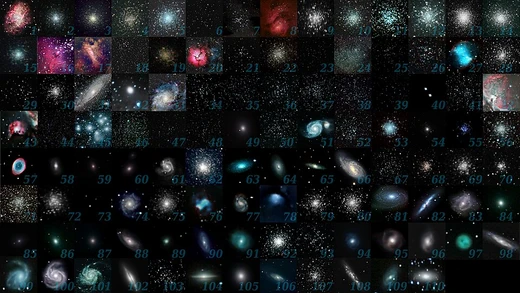
Messier 92
An ancient globular cluster often overshadowed by its brighter neighbor M13.

Sloan Digital Sky Survey · CC BY 4.0
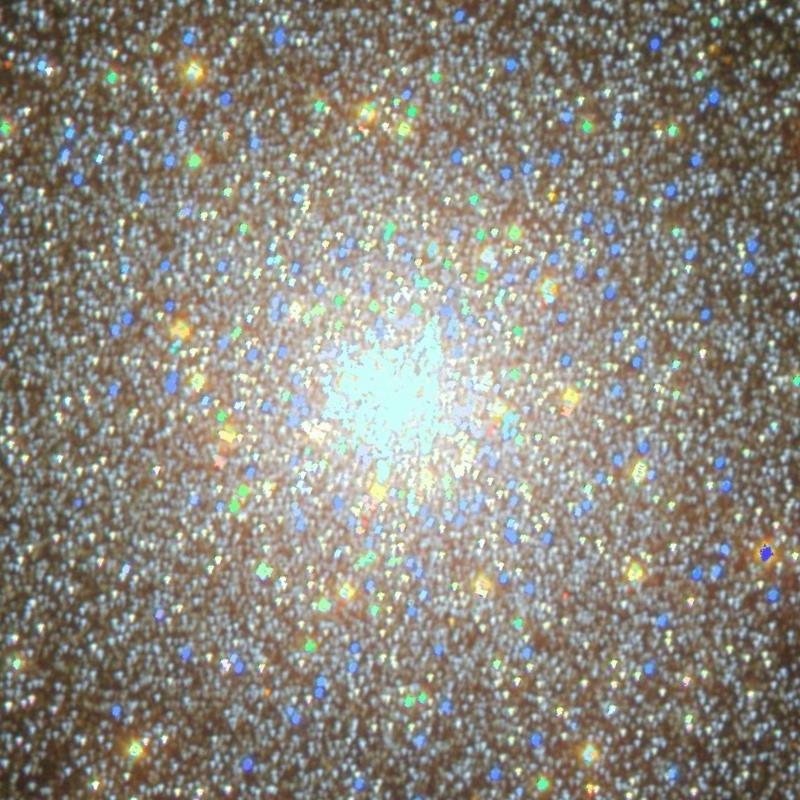
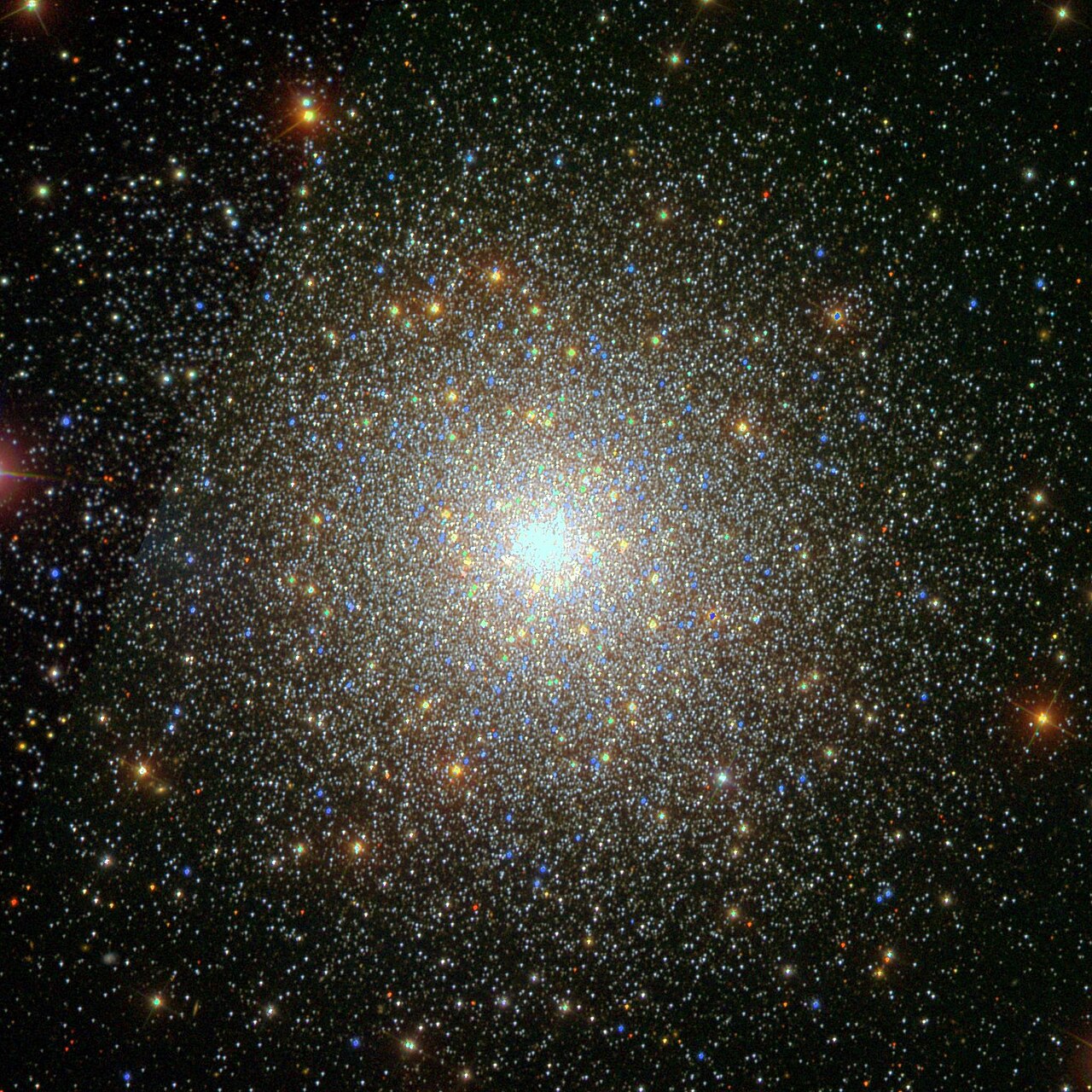
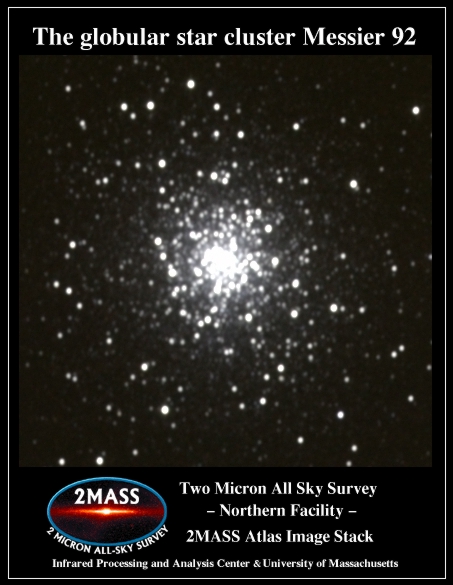
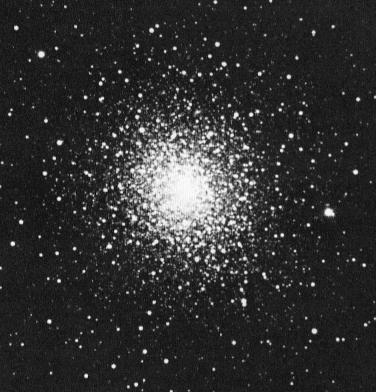
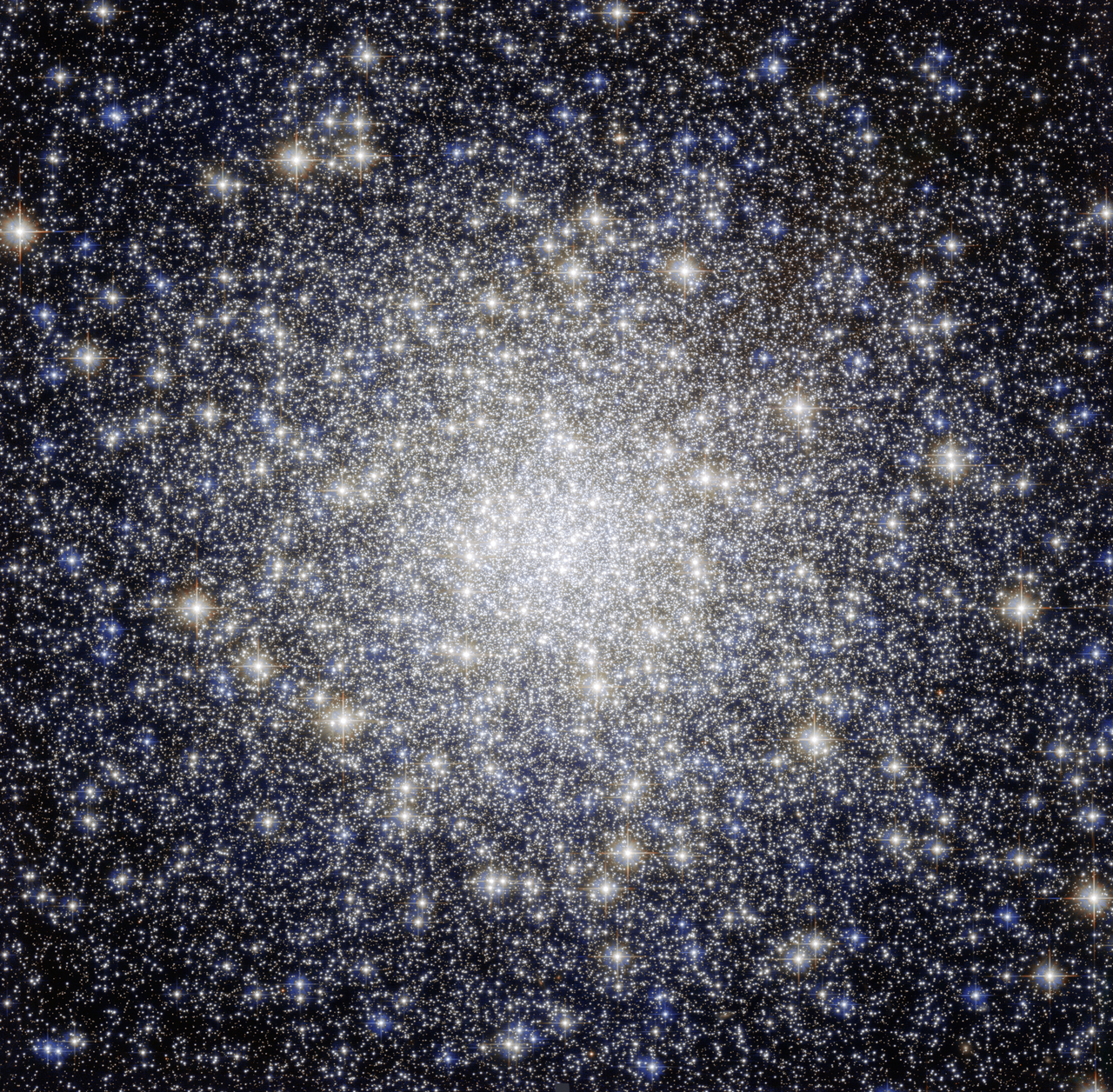
Messier 92 (also cataloged as M92, M 92, or NGC 6341) is a globular cluster located in the northern constellation Hercules. It ranks among the brighter globular clusters visible from the northern hemisphere and is also one of the oldest known in the galaxy, yet amateur stargazers frequently pass it over because it lies close in the sky to the more prominent Messier 13.
Johann Elert Bode first spotted the cluster on December 27, 1777, and his discovery appeared in the *Berliner Astronomisches Jahrbuch* in 1779. Charles Messier independently found it on March 18, 1781, and listed it as the 92nd object in his catalog. William Herschel became the first to separate it into individual stars in 1783.
Under excellent conditions, M92 can be seen without optical aid. Even in heavily light-polluted skies, a small telescope reveals it as a fuzzy patch, and darker skies allow further resolution into stars. Though only slightly less bright than M13, it appears about one-third smaller in extent.
The cluster lies roughly 26,700 light-years from the Solar System, about 33,000 light-years from the Galactic Center, and some 16,000 light-years above or below the galactic plane. Its half-light radius spans 1.09 arcminutes, while its tidal radius extends to 15.17 arcminutes. The cluster appears only mildly flattened, with its minor axis measuring about 89% ± 3% of its major axis.
Like most globulars, M92 contains very little of elements heavier than hydrogen and helium—astronomers describe this as low metallicity. Its iron abundance relative to the Sun is [Fe/H] = –2.32 dex, meaning it holds only about 0.5% of the Sun’s iron content on that logarithmic scale. This places its estimated age at 11 ± 1.5 billion years. The cluster’s true diameter is 108 light-years, and its mass may equal roughly 330,000 Suns.
M92 has not yet undergone core collapse and is not guaranteed to do so; its core radius measures about 2 arcseconds. It is classified as an Oosterhoff type II (OoII) globular, a group of metal-poor clusters with longer-period RR Lyrae variable stars. The 1997 catalog of variable stars in globular clusters listed 28 candidate variables here, though only 20 have been confirmed. As of 2001, 17 RR Lyrae variables are known in M92. Ten X-ray sources have been detected within its half-mass radius (1.02 arcminutes), half of which are likely cataclysmic variable stars.
Quick Facts
- Epoch
- J2000
- Class
- IV
- Constellation
- Hercules
- Ra
- 17 · 17 · 07.39
- Dec
- +43 · 08 · 09.4
- Dist Ly
- 26.7 e3ly
- Appmag V
- 6.4
- Radius Ly
- 54 ly
- Metal Fe
- –2.32
- Names
- M92, NGC 6341, GCl 59
Facts from the source article.
Lore & Background
Messier 92 was discovered by Johann Elert Bode on December 27, 1777, and published in the Berliner Astronomisches Jahrbuch during 1779. It was inadvertently rediscovered by Charles Messier on March 18, 1781, and added as the 92nd entry in his catalogue. William Herschel first resolved individual stars in 1783.
The cluster is about 26,700 light-years from the Solar System, 33,000 light-years from the Galactic Center, and lies around 16,000 light-years above or below the galactic plane. Its half-light radius is 1.09 arcminutes, and its tidal radius is 15.17 arcminutes. It appears only slightly flattened, with its minor axis about 89% ± 3% of the major. The cluster has low metallicity, with an iron abundance of [Fe/H] = –2.32 dex, or 0.5% of the solar value, and an estimated age of 11 ± 1.5 billion years. Its true diameter is 108 light-years, and its mass may correspond to 330,000 suns. The cluster is not yet in core collapse, and its core radius is about 2 arcseconds. It is an Oosterhoff type II globular cluster, meaning it belongs to the group of metal-poor clusters with longer period RR Lyrae variable stars. As of 2001, there are 17 known RR Lyrae variables in Messier 92, and 10 X-ray sources have been detected within its half-mass radius, half of which are candidate cataclysmic variable stars.
M92 is approaching us at 112 km/sec. Due to precession of Earth's axis, the North Celestial Pole periodically passes less than one degree from this cluster, making it a 'Polarissima Borealis' about 12,000 years ago (10,000 BC) and again in about 14,000 years (16,000 AD). The cluster hosts at least two stellar generations (1G and 2G), with two distinct groups of 2G stars (2GA and 2GB) having higher helium abundances than the 1G stars.
Reader's Guide
Messier 92 is notable as one of the brighter globular clusters in the northern hemisphere and one of the galaxy's oldest, yet it is often overlooked by amateur astronomers because it lies only about 20% closer in angular distance to the bright cluster Messier 13. Though when compared to M13, M92 is only slightly less bright, but about one-third less extended. It is visible to the naked eye under very good viewing conditions, and with a small telescope it can be seen as a nebulous smudge even in severely light-polluted skies, and can be further resolved in darker conditions. Its significance in astronomical study includes its low metallicity and great age, which place it among the oldest known clusters, and its multiple stellar populations that reveal at least two generations of stars. The cluster's variable stars, including 17 known RR Lyrae variables, and its X-ray sources, half of which are candidate cataclysmic variables, make it a target for studies of stellar evolution and dynamics. Its historical role as a 'Polarissima Borealis' due to precession adds to its interest, as does its discovery by Bode and independent rediscovery by Messier.
Did You Know?
- It is one of the galaxy's oldest clusters, with an estimated age of 11 ± 1.5 billion years.
- The cluster has an iron abundance of only 0.5% of the solar value, making it very metal-poor.
- About 12,000 years ago (10,000 BC), M92 was a 'Polarissima Borealis' because the North Celestial Pole passed less than one degree from it.
Gallery
Frequently Asked Questions
Who is Messier 92?
Messier 92 (also listed as M92 or NGC 6341) is a globular cluster residing in the northern constellation Hercules, about 26,700 light-years from our Solar System. It counts as one of the brighter and most ancient globular clusters visible from the northern hemisphere.
Where in the sky can I find Messier 92?
M92 sits in Hercules, in the northern sky, positioned fairly close to the famous Messier 13. That proximity to a much more conspicuous neighbor is exactly what makes it easy to accidentally skip while scanning the region.
How old is Messier 92 compared to other clusters?
M92 is regarded as one of the oldest known globular clusters in the Milky Way, with its stars having formed during the very early epochs of galactic history. Its age makes it a valuable reference point for understanding how stellar populations evolve over billions of years.
Why do amateur astronomers keep missing Messier 92?
Because it lies so near the far more celebrated Messier 13, observers often lock onto M13 and never notice the cluster just nearby. Despite ranking among the brighter northern globulars, M92 simply gets buried in the shadow of its neighbor's reputation.
Who first discovered Messier 92 and when?
Johann Elert Bode first observed the cluster on December 27, 1777, and his finding was published in the Berliner Astronomisches Jahrbuch in 1779. Charles Messier independently rediscovered it on March 18, 1781, and recorded it as the 92nd entry in his catalogue.
More in Messier Objects, Part 3 1-24
Spotted an error? Know more?
Reader corrections go straight into our review queue. Suggest an edit · How this site is sourced