Messier 89
Elliptical galaxy in Virgo, possibly spherical, with past outbursts.

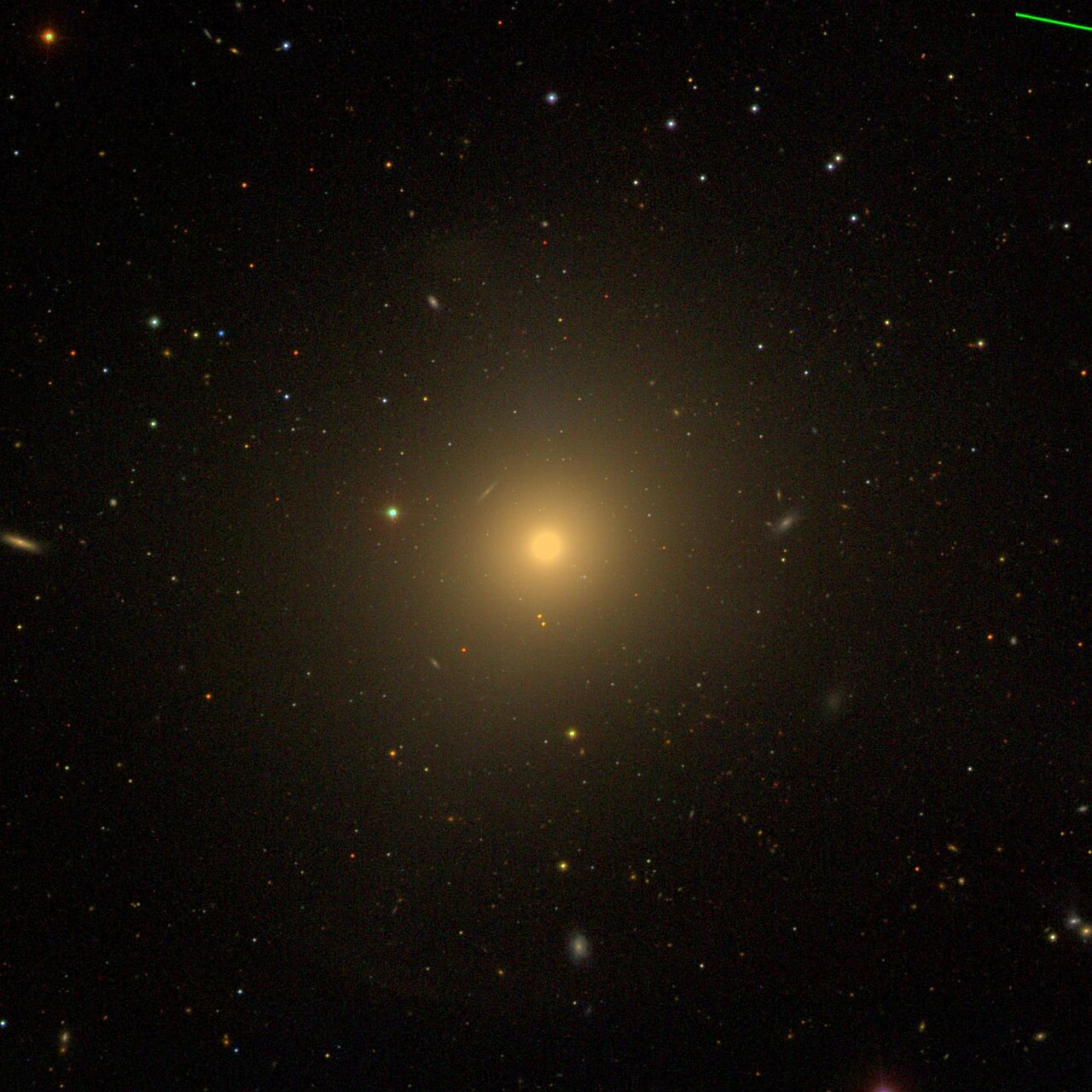
Sloan Digital Sky Survey · CC BY 4.0
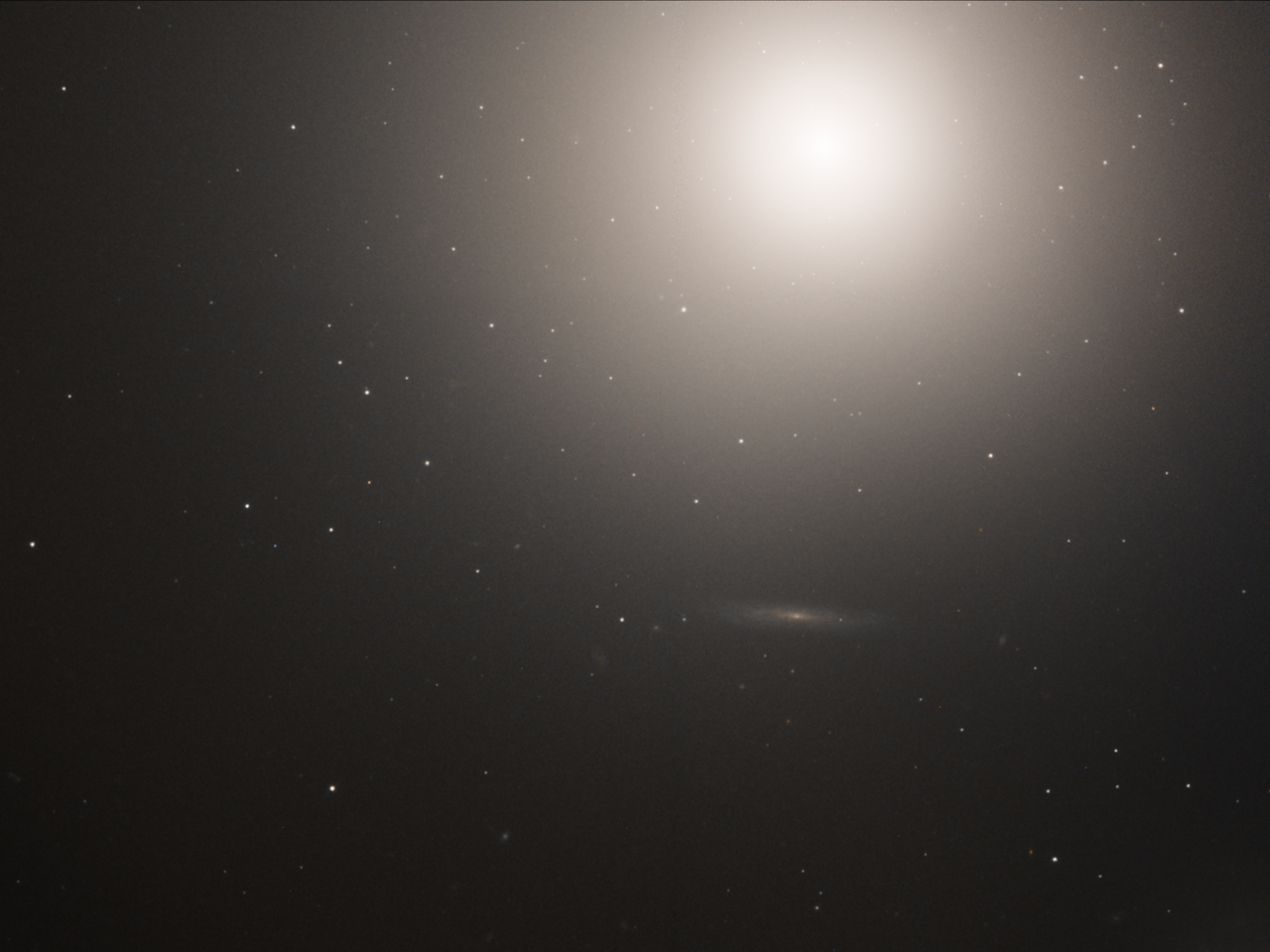
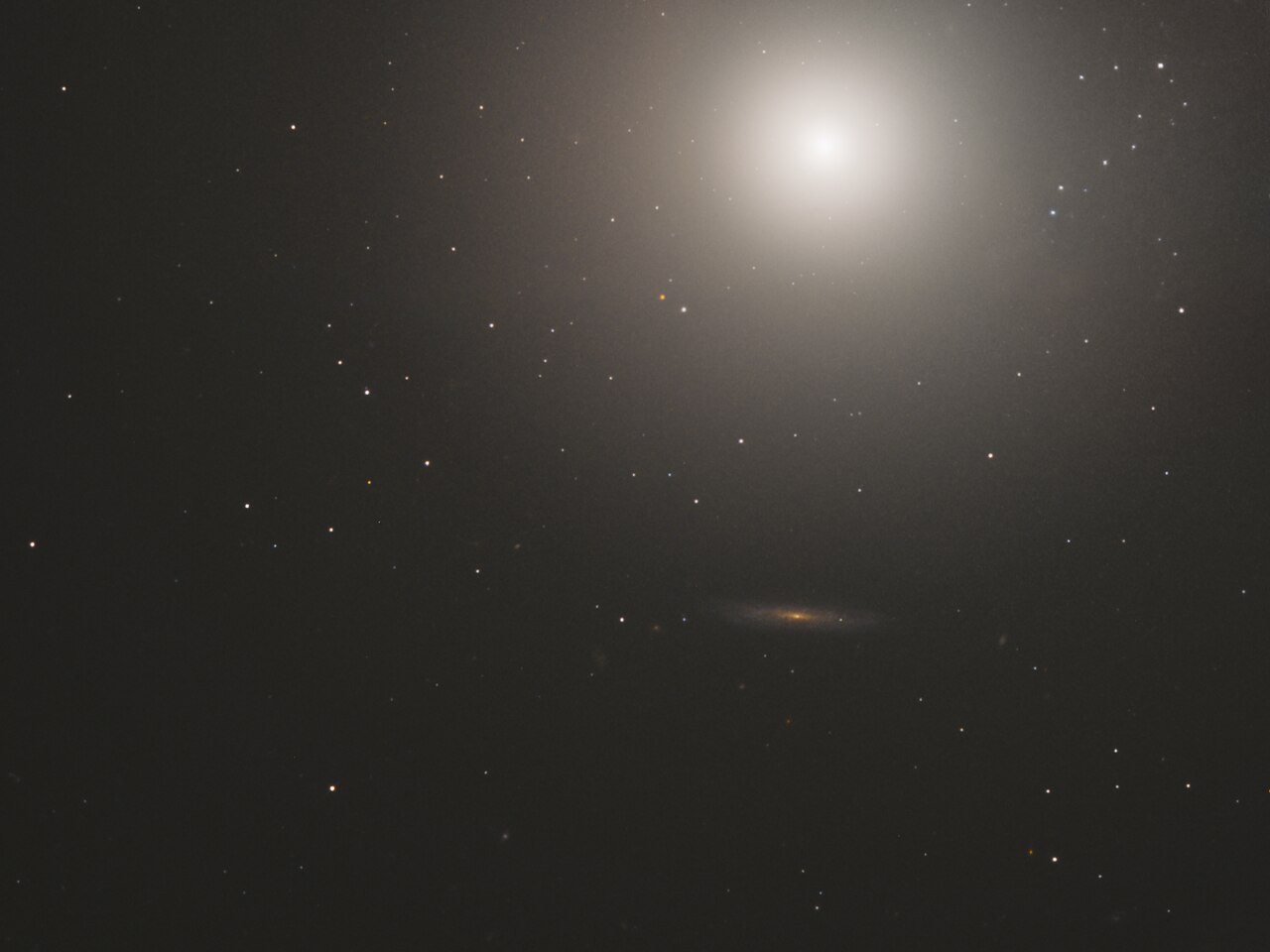
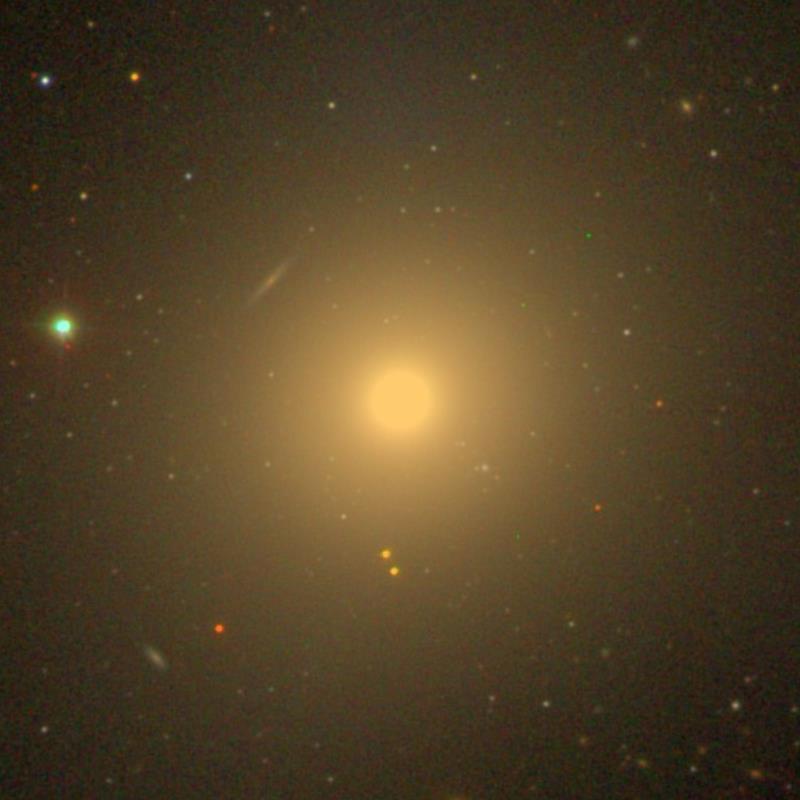
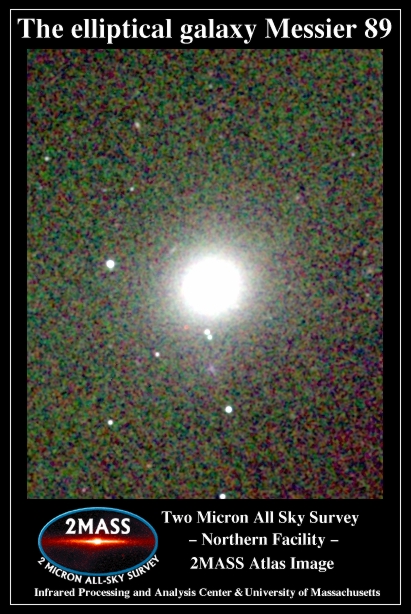
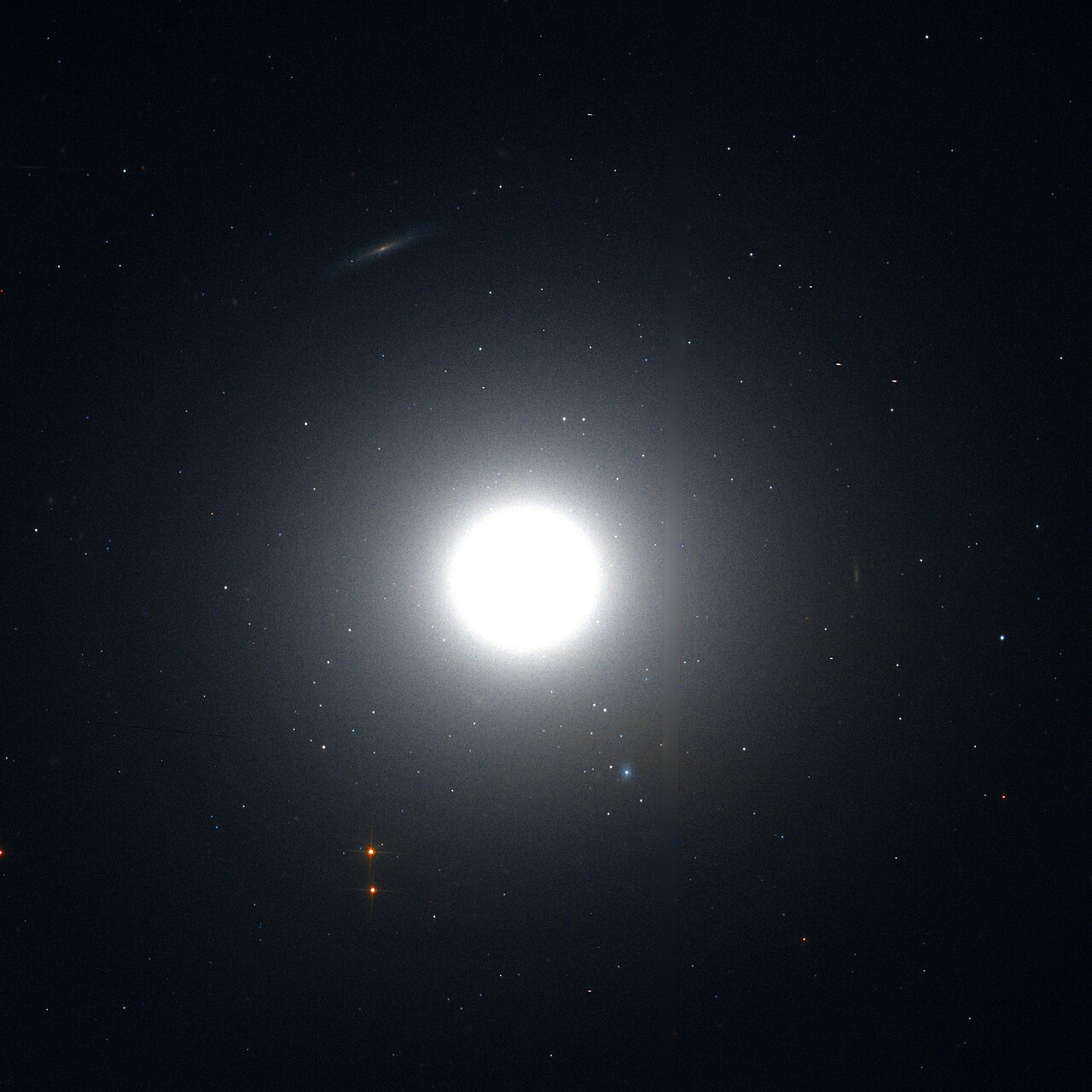
Messier 89 (M89, also known as NGC 4552) is an elliptical galaxy in the constellation Virgo, discovered by Charles Messier on March 18, 1781. It is a member of the Virgo Cluster of galaxies and is notable for its nearly spherical appearance, which may be either intrinsic or due to its orientation relative to Earth.
Quick Facts
- Epoch
- J2000
- Constellation Name
- Virgo
- Ra
- 12 · 35 · 39.8ned
- Dec
- +12 · 33 · 23
- Appmag V
- 9.8SEDS
- Z
- 0.001134 · 0.000014
- Dist Ly
- 50 ±
- Names
- NGC 4552, UGC 7760, PGC 41968
Facts from the source article.
Lore & Background
Messier 89 was discovered by Charles Messier on March 18, 1781, and is a member of the Virgo Cluster of galaxies. Current observations allow the possibility that M89 may be nearly perfectly spherical, though distinct flattening as ellipsoids is found in all easily measurable comparators up to a few times its distance; the alternative explanation is that it is an ellipsoid oriented so that it appears spherical to an observer on Earth.
The galaxy features a surrounding structure of gas and dust extending up to 150,000 light-years and jets of heated particles up to two-thirds of that, indicating it may have once been an active quasar or radio galaxy. M89 has an extensive and complex system of surrounding shells and plumes, suggesting one or several notable mergers. Chandra studies in X-rays show two ring-like structures of hot gas in M89's nucleus, indicating an outburst there 1 to 2 million years ago as well as ram-pressure stripping acting on the galaxy as it moves through Virgo's intracluster medium. The supermassive black hole at the core has a mass of (4.8±0.8)×10^8 M☉. M89 also has a large array of globular clusters; a 2006 survey estimates 2,000 ± 700 within 25′, compared to 150 to 200 thought to surround the Milky Way.
Reader's Guide
Messier 89's significance lies in its potential spherical shape, which challenges the typical ellipsoidal form of elliptical galaxies, and in the evidence of past violent activity. The surrounding gas and dust structure extending 150,000 light-years, along with jets of heated particles, suggests it may have once been an active quasar or radio galaxy. The complex system of shells and plumes indicates notable mergers in its history. X-ray studies revealing two ring-like structures of hot gas in its nucleus point to an outburst 1 to 2 million years ago, and ram-pressure stripping is acting on the galaxy as it moves through the Virgo intracluster medium. Its supermassive black hole mass is measured at (4.8±0.8)×10^8 M☉. The large number of globular clusters—2,000 ± 700 within 25′—far exceeds the Milky Way's 150 to 200, highlighting M89's rich cluster system. These features make M89 a key object for studying galaxy evolution, mergers, and nuclear activity within a dense cluster environment.
Did You Know?
- M89 may be nearly perfectly spherical, or an ellipsoid oriented to appear spherical from Earth.
- A 2006 survey estimates M89 hosts 2,000 ± 700 globular clusters within 25′, far more than the Milky Way's 150 to 200.
Born from a Comet Hunter's Frustration
The Messier catalogue, of which M89 is a member, did not spring from a desire to survey the heavens systematically. Charles Messier, a French astronomer working in Paris, was primarily obsessed with tracking comets. The bright, diffuse smudges of deep-sky objects kept derailing his searches, so he began jotting down their positions so he could skip past them in future nights of observation. Working alongside his assistant Pierre Méchain, Messier compiled what would become one of the most celebrated lists in all of astronomy. M89 is one of the 110 entries that ultimately made it onto that list. The catalogue's very existence is a happy accident of irritation: without Messier's frustration at mistaking nebulae and clusters for comets, we would never have had a ready-made tour of the most striking deep-sky targets visible from the Northern Hemisphere. The objects were not chosen for their scientific importance or beauty; they were chosen because they got in the way of a different job entirely.
A List That Kept Growing
The catalogue that houses M89 was never a single, fixed document. A preliminary version appeared in 1774 in the Memoirs of the French Academy of Sciences, listing 45 unnumbered objects. By 1780 the count had climbed to 70, and the final edition Messier himself published in 1781 contained 103 entries. Yet the story did not end there. Marginal notes in Messier's and Méchain's texts hinted at additional objects they had known about but never formally included. Nicolas Camille Flammarion added M104 in 1921 after spotting such a note in a copy of the 1781 edition. Helen Sawyer Hogg contributed M105 through M107 in 1947, Owen Gingerich added M108 and M109 in 1960, and Kenneth Glyn Jones appended M110 in 1967. The long-standing confusion over M102—once thought to be a genuine entry but later identified by Méchain himself as a re-observation of M101—further complicated the count. M89, sitting comfortably within the original 103, was never subject to this kind of revisionist debate, yet its very numbering is a product of this layered, multi-decade editorial history.
Visible from Paris, Studied from Everywhere
Messier conducted his observations from the Hôtel de Cluny in Paris, and the catalogue he assembled reflects the slice of sky accessible from that northern vantage point, spanning from the north celestial pole down to roughly minus 35.7 degrees in celestial latitude. M89 falls within that observable band, which is why it made the list at all. Because these objects were bright enough to be resolved through the modest roughly 100-millimetre refracting telescope Messier used from downtown Paris, they represent some of the most luminous deep-sky targets available to Earth-based observers. That same brightness makes them prime subjects for professional instruments today, which can tease out fine structural detail invisible to the naked eye or small telescopes. For amateur astronomers, M89 and its catalogue siblings remain accessible and rewarding: a modest modern telescope with a larger aperture than Messier's can reveal features that would have been beyond his reach. The objects also feature in Messier marathons, informal gatherings in early spring when enthusiasts attempt to view every entry in a single night.
A Number That Outlived Its Maker
More than two centuries after Messier and Méchain first jotted down their observations, the catalogue retains an almost canonical status in astronomy. Objects are still routinely identified by their Messier designations in research papers, star charts, and public outreach materials. The list spans an impressive diversity of deep-sky phenomena, including diffuse nebulae, planetary nebulae, open clusters, globular clusters, and galaxies, making it a compact survey of the universe's most visually compelling structures. M89 carries its number as a shorthand that instantly communicates its place in that broader family. The catalogue's enduring popularity is reinforced by its practical utility: it gathers nearly all of the most spectacular examples of each deep-sky class visible from European latitudes into a single, manageable list. Whether an observer is sketching a galaxy through a backyard telescope or a research team is resolving fine detail with a professional instrument, the Messier number remains the fastest way to say exactly which object is meant. M89 is one of those objects whose identity is inseparable from the catalogue that gave it a name.
Gallery
Frequently Asked Questions
What is Messier 89?
Messier 89, also catalogued as NGC 4552, is an elliptical galaxy residing in the constellation Virgo. It earned its place in Charles Messier's 18th-century catalog of deep-sky objects.
Who discovered Messier 89 and when?
French astronomer Charles Messier recorded this galaxy on March 18, 1781, while systematically logging nebulae and star clusters. It became entry number 89 in his well-known list.
What type of galaxy is Messier 89?
M89 is classified as an elliptical galaxy, showing a smooth, featureless glow rather than the spiral structure of disk galaxies. Its strikingly round profile may reflect a genuinely spherical shape or simply a face-on viewing angle from Earth.
Where is Messier 89 located in the sky?
It sits within the constellation Virgo and is a member of the Virgo Cluster, a dense grouping of hundreds of galaxies. Its cluster membership makes it a favored target for observers exploring that region.
What makes Messier 89 interesting to astronomers?
Beyond its near-perfect circular appearance, M89 shows signs of past energetic outbursts, likely tied to activity around its central supermassive black hole. Its geometry and history make it a useful case study for understanding how elliptical galaxies form and evolve over time.
More in Messier Objects, Part 3 1-24
Spotted an error? Know more?
Reader corrections go straight into our review queue. Suggest an edit · How this site is sourced