Messier 88
An unbarred spiral galaxy in the Virgo Cluster.

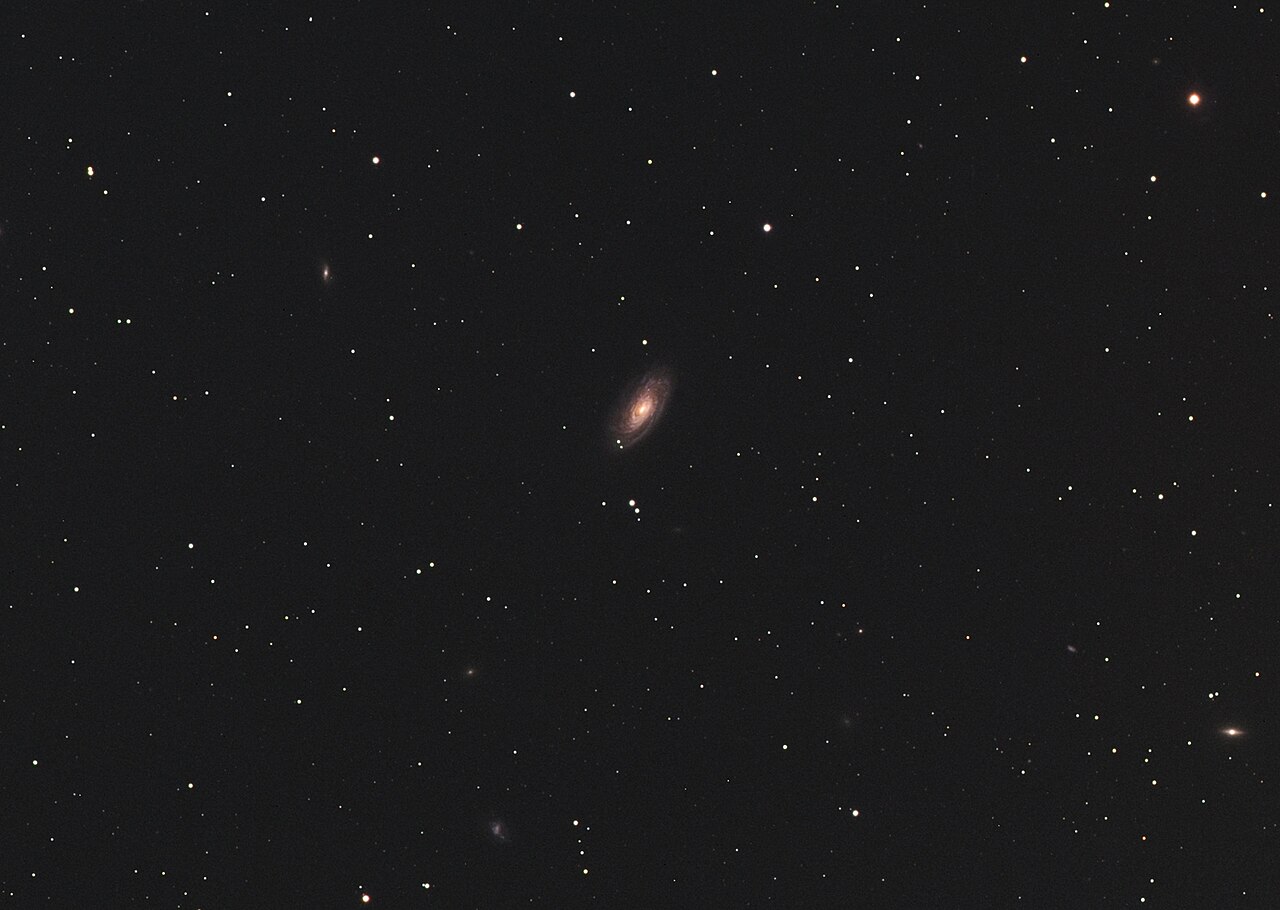
Adam Block/Mount Lemmon SkyCenter/University of Arizona · CC BY-SA 3.0
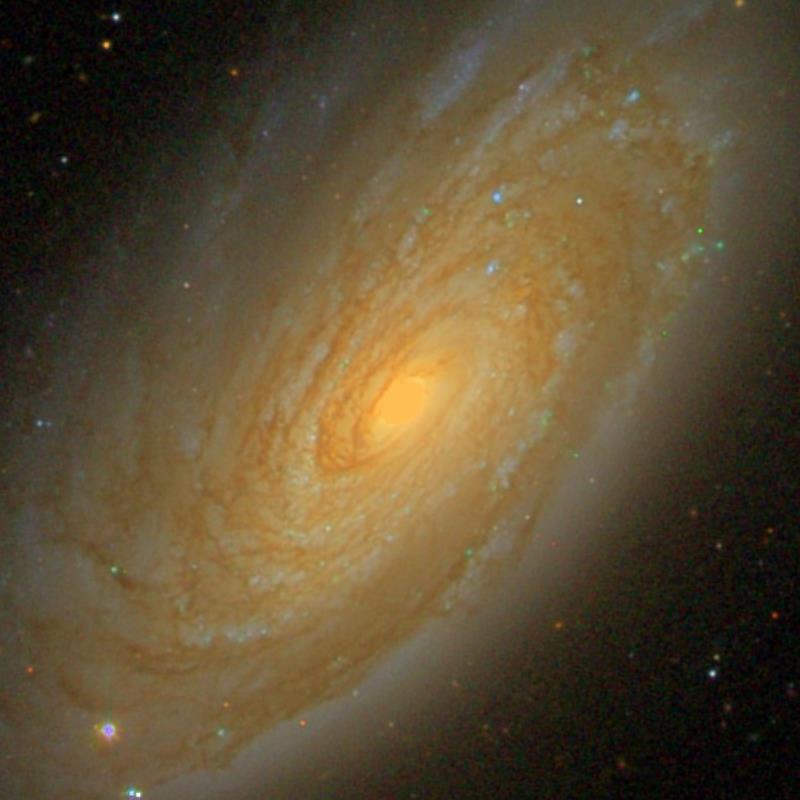
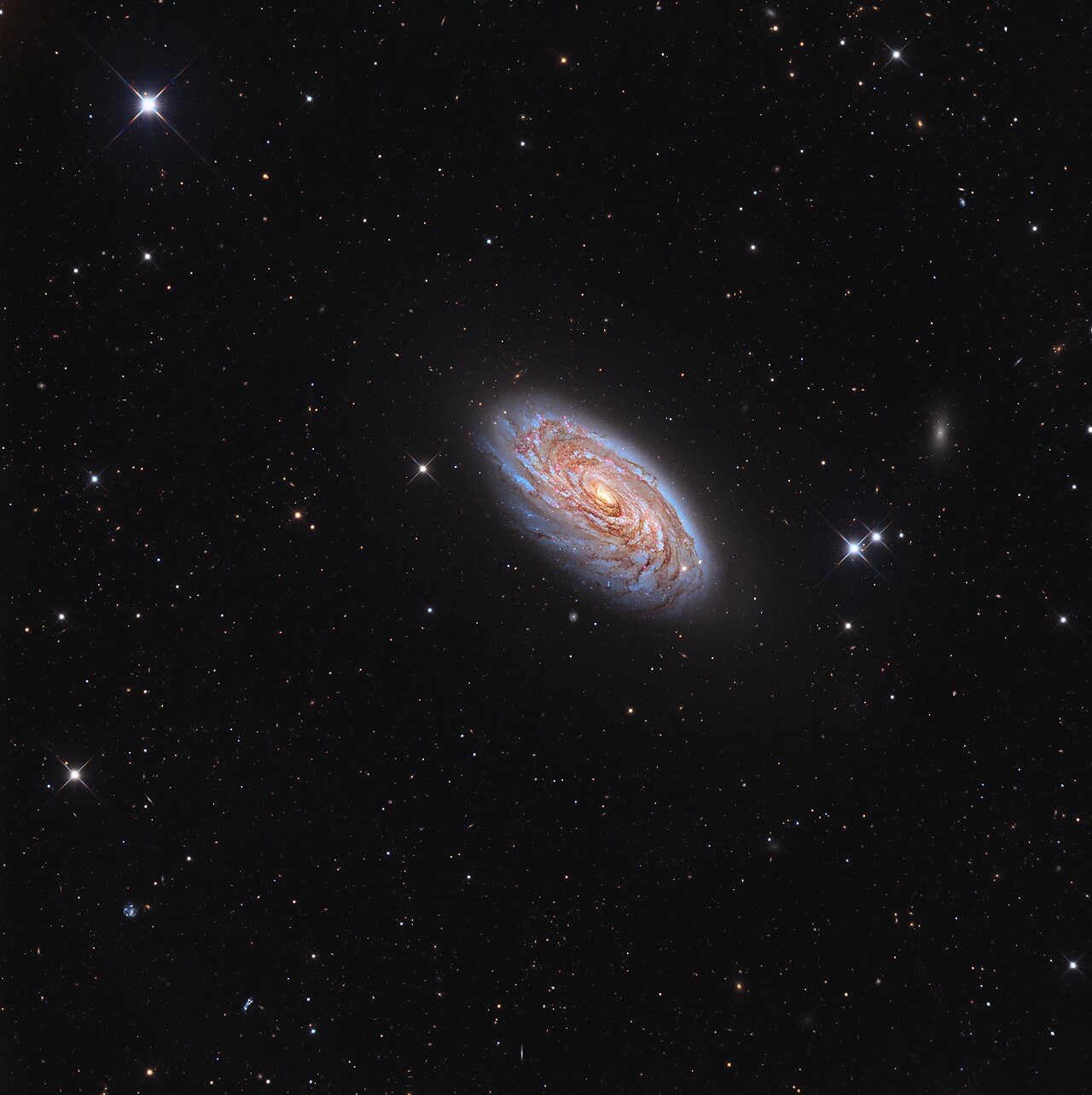
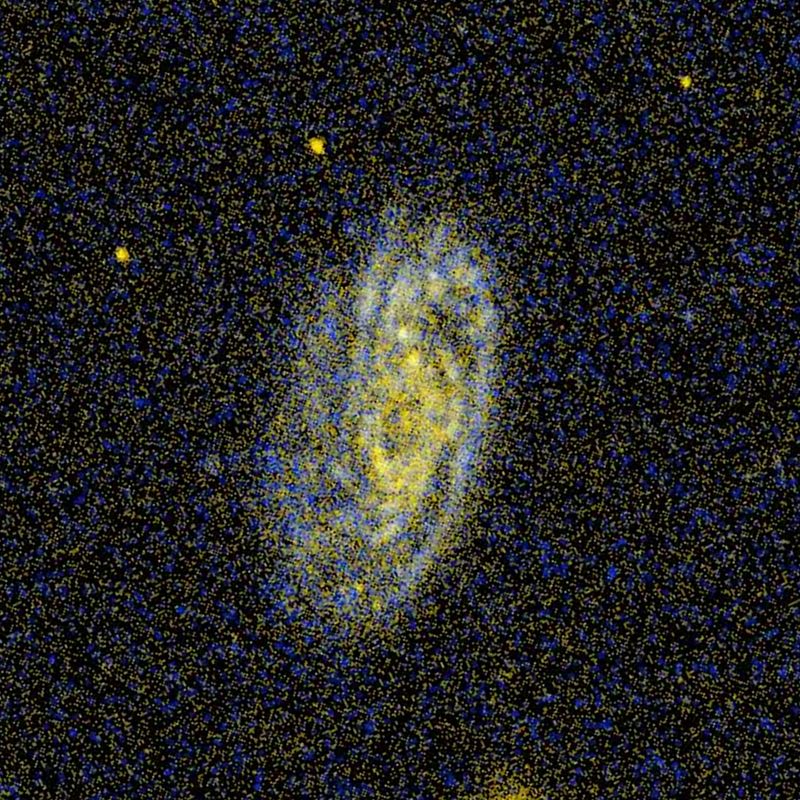
Messier 88 (M88, NGC 4501) is an unbarred spiral galaxy located in the constellation Coma Berenices, roughly 50 to 60 million light-years from Earth. Charles Messier first spotted it in 1781.
This galaxy is one of fifteen Messier objects in the Virgo Cluster, where it is cataloged as VCC 1401 among 2,096 candidate members. M88 follows a highly elliptical orbit and is currently heading toward the cluster’s center, dominated by the giant elliptical galaxy M87. It now lies between 0.3 and 0.48 million parsecs from the core and will make its closest approach in about 200 to 300 million years. As it moves through the cluster’s intergalactic medium, ram pressure is stripping neutral hydrogen from its outer regions, a process detected along the western, leading edge.
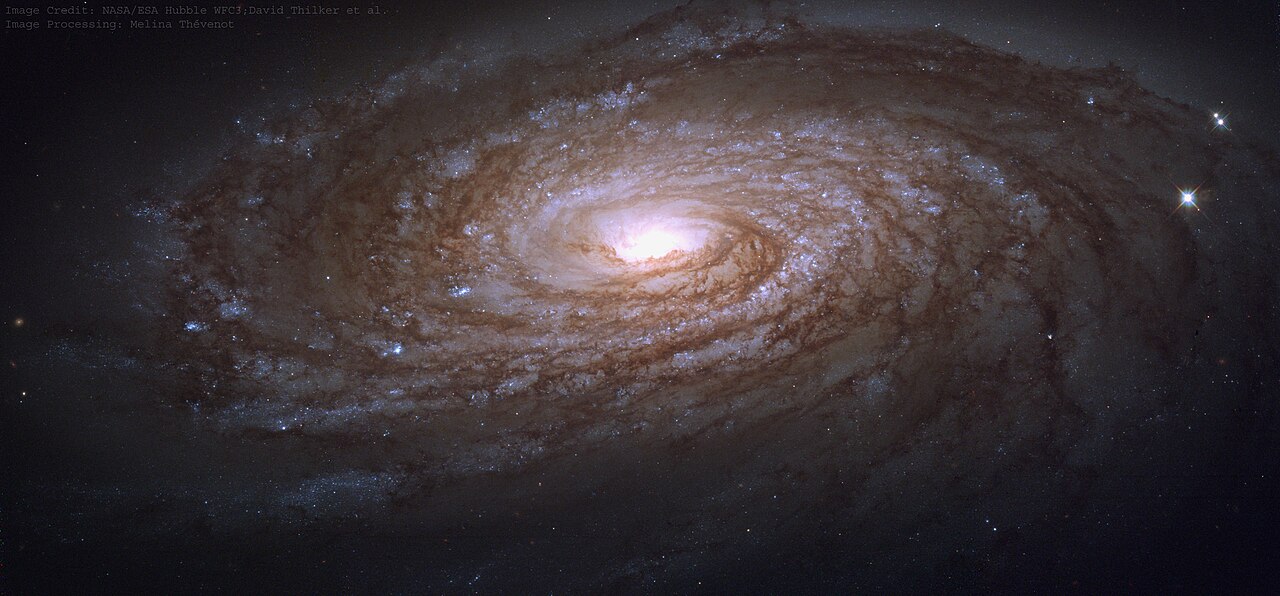
The galaxy is tilted 64° to our line of sight and classified as an Sbc spiral—intermediate between medium-wound (Sb) and loosely wound (Sc) arms. Its spiral arms are very regular and trace all the way to the core. The gas rotates at a maximum velocity of 241.6 ± 4.5 km/s.
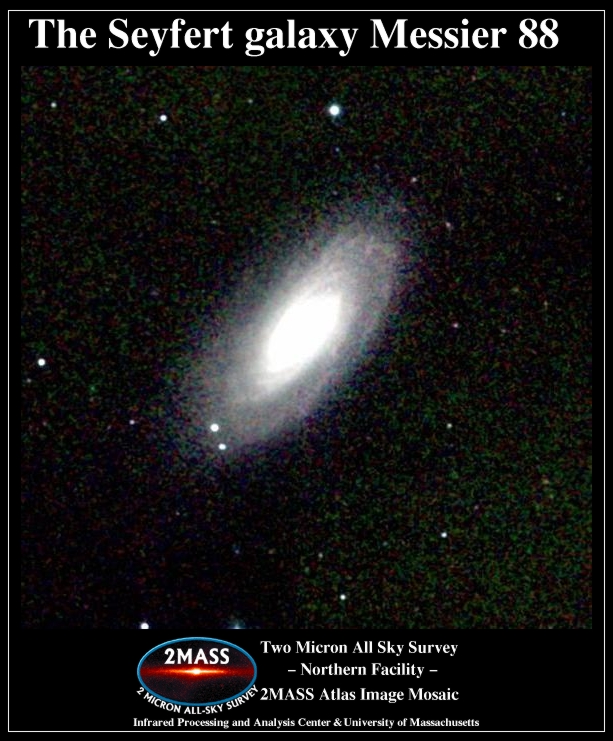
M88 is a type 2 Seyfert galaxy, meaning its nucleus emits narrow spectral lines from highly ionized gas. At its center lies a condensation 230 parsecs across, with two concentration peaks, fed by inflow from the spiral arms. The supermassive black hole at the core has a mass of about 80 million solar masses (10^7.9 M☉).
One supernova has been observed in M88: SN 1999cl, a Type Ia event reaching magnitude 16.4, discovered by the Lick Observatory Supernova Search on 29 May 1999.
Quick Facts
- Epoch
- J2000
- Constellation Name
- Coma Berenices
- Ra
- 12 · 31 · 59.1691ned
- Dec
- +14 · 25 · 12.974
- Z
- 0.007619 · 0.00000500ned
- Dist Ly
- 17.984 ± 0.690 Mpcned
- Group Cluster
- Virgo Cluster
- Stars
- 400 billion
- Appmag V
- 9.6seds
Facts from the source article.
Lore & Background
M88 is one of the fifteen Messier objects that belong to the nearby Virgo Cluster of galaxies. It is galaxy number 1401 in the Virgo Cluster Catalogue (VCC) of 2096 galaxies that are candidate members of the cluster. M88 appears to be on or ending a highly elliptical orbit, currently on an approximate or direct course toward the cluster center, which is occupied by the giant elliptical galaxy M87. It is currently 0.3 to 0.48 million parsecs from the center and will come closest to the core in about 200 to 300 million years. Its motion through the intergalactic medium of its cluster is creating ram pressure that is stripping away the outer region of neutral hydrogen, detected along the western, leading edge of the galaxy.
This galaxy is inclined to the line of sight by 64°. It is classified as an Sbc spiral, a status between Sb (medium-wound) and Sc (loosely wound) spiral arms. The spiralling arms are very regular and can be followed down to the galactic core. The maximum rotation velocity of the gas is 241.6 ± 4.5 km/s. M88 is classified as a type 2 Seyfert galaxy, which means it produces narrow spectral line emission from highly ionized gas in the nucleus. In the core region there is a central condensation with a 230 parsec diameter, which has two concentration peaks. This condensation is being fed by inflow from the spiral arms. The supermassive black hole at the core of this galaxy has 107.9 solar masses, or about 80 million solar masses.
Reader's Guide
Messier 88 is notable as one of the fifteen Messier objects in the Virgo Cluster, providing a key example of a galaxy undergoing ram-pressure stripping as it moves toward the cluster center. Its highly elliptical orbit and projected course toward M87 offer insights into galaxy evolution within dense cluster environments. The galaxy's classification as an Sbc spiral with very regular arms and a type 2 Seyfert nucleus highlights its active galactic nucleus, powered by a supermassive black hole of about 80 million solar masses. The detection of neutral hydrogen stripping along its western edge demonstrates ongoing interaction with the intergalactic medium. One supernova, SN 1999cl (Type Ia, magnitude 16.4), was observed in M88, discovered by the Lick Observatory Supernova Search on 29 May 1999. M88's well-documented properties make it a valuable object for studying spiral structure, nuclear activity, and cluster dynamics.
Did You Know?
- M88 is one of fifteen Messier objects belonging to the Virgo Cluster.
- It is classified as a type 2 Seyfert galaxy, producing narrow spectral line emission from highly ionized gas in its nucleus.
- The supermassive black hole at its core has a mass of about 80 million solar masses.
- One supernova, SN 1999cl (Type Ia), was observed in M88 in 1999.
A Place Among the One Hundred and Ten
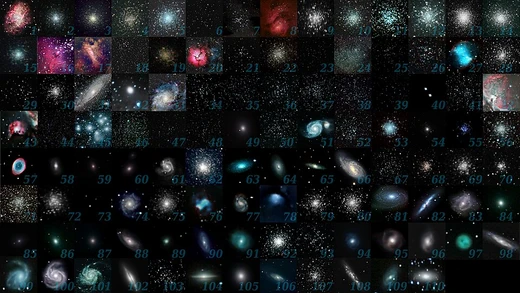
M88 holds its place as one of 110 deep-sky objects recorded in what is arguably the most celebrated catalogue in both amateur and professional astronomy. Compiled by the French astronomer Charles Messier together with his assistant Pierre Méchain, the list spans a remarkable diversity of celestial phenomena—diffuse nebulae, planetary nebulae, open and globular clusters, and galaxies. While the catalogue's final edition, published in 1781 within the Connaissance des Temps for the year 1784, contained 103 entries, later scholars working from marginal notes in Messier's and Méchain's own texts added seven more objects, bringing the total to 110. M88, like its catalogue neighbours, belongs to a collection that was never intended as a grand survey of the sky but rather as a practical working tool. Yet it has endured for over two and a half centuries, and its members are still routinely identified by their Messier designations in both popular writing and research literature.
A List Born of Frustration
The Messier catalogue, of which M88 is a member, did not originate from a desire to map the heavens. Charles Messier was, above all, a comet hunter, and his true purpose in assembling the list was to catalogue the fixed, non-comet objects that repeatedly confused and frustrated his search for new comets. By writing down the nebulae and star clusters that looked like fuzzy smudges—objects a comet-hunter might mistake for a newly discovered visitor—he created a reference that would let him and future observers quickly rule out false positives. The preliminary version appeared in 1774 in the Memoirs of the French Academy of Sciences, listing 45 unnumbered objects, eighteen of which Messier himself had discovered. By 1780 the count had grown to 70, and the definitive 103-object edition followed in 1781. M88, like every other entry, is a direct product of this pragmatic, almost grudging motivation: a list of things that are not comets, compiled so that the real comets could be found more efficiently.
A Backyard Target with Professional Pedigree
Because Messier compiled his list from the Hôtel de Cluny in Paris, using a modest refracting telescope of roughly 100 mm aperture, every object in the catalogue—including M88—is among the brightest and most visually striking deep-sky targets available to observers in the Northern Hemisphere. The catalogue covers the sky from the north celestial pole down to a celestial latitude of about −35.7°, deliberately excluding southern-sky wonders such as the Magellanic Clouds. This constraint means that M88 and its catalogue siblings are not only bright but also relatively close to Earth within their respective classes, making them prime subjects for professional instruments that can resolve fine structural detail. For the modern amateur, however, they remain perfectly accessible: a backyard telescope can reveal them clearly, and in early spring, dedicated observers gather for so-called Messier marathons, attempting to view all 110 objects in a single night. M88's inclusion in this list guarantees its place as a perennial favourite of both visual stargazing and astrophotography.
A Catalogue That Kept Growing
Although Messier's final published edition contained 103 objects, the story of the catalogue did not end with his 1781 publication. Marginal annotations in copies of the text, left by Messier and Méchain, hinted at additional objects they had known about but never formally listed. Nicolas Camille Flammarion was the first to act on these clues in 1921, adding M104 after spotting a note in a copy of the 1781 edition. Helen Sawyer Hogg contributed M105 through M107 in 1947, Owen Gingerich added M108 and M109 in 1960, and Kenneth Glyn Jones included M110 in 1967. The thorniest addition was M102, originally observed by Méchain and communicated to Messier; Méchain later concluded it was simply a re-observation of M101, though some modern sources identify it with the galaxy NGC 5866. M88, sitting comfortably within the original 103, was never subject to such controversy, yet its catalogue number carries the weight of a list that grew organically across more than a century of astronomical scholarship.
Gallery
Frequently Asked Questions
What is Messier 88?
Messier 88 is a spiral galaxy with no central bar, classified as type Sbc. It is also known as NGC 4501 and holds the catalog number VCC 1401 among the Virgo Cluster's candidate members.
Where can I find Messier 88 in the sky?
M88 sits within the constellation Coma Berenices, making it a target for northern-hemisphere stargazers. It is one of fifteen Messier-designated galaxies that are part of the Virgo Cluster.
How far away is Messier 88?
The galaxy is roughly 50 to 60 million light-years from Earth, meaning the photons reaching your eyepiece tonight embarked on their journey tens of millions of years ago.
What is Messier 88's orbit like within the Virgo Cluster?
M88 follows a highly elliptical path around the cluster core, which is dominated by the giant elliptical galaxy M87. It currently sits 0.3 to 0.48 million parsecs from that center and is expected to make its closest approach in about 200 to 300 million years.
Who discovered Messier 88 and when?
Charles Messier first recorded the galaxy in 1781 while compiling his catalog of nebulous objects. It has carried his entry number, 88, ever since.
More in Messier Objects, Part 3 1-24
Spotted an error? Know more?
Reader corrections go straight into our review queue. Suggest an edit · How this site is sourced