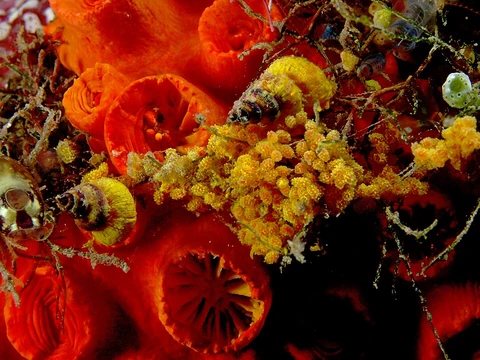
Ethaliella
A genus of small, umbilicate marine snails in the family Trochidae.

Ethaliella is a genus of marine gastropod mollusks, specifically sea snails, belonging to the family Trochidae, commonly known as top snails. The shell is small, measuring less than 10 mm in diameter, and has a lenticular to trochoid-turbiniform shape with an umbilicus. Its surface is smooth or features fine, closely spaced spiral cords, while axial sculpturing is faint. The rim of the umbilicus is thickened, often with radial folds, and may include a tongue-like lobe of the parietal callus; there is no umbilical funicle. The operculum is horny and multispiral, with relatively broad outer whorls, a narrow, radially striate peripheral fringe, and spiral microsculpture. The radula has thin base plates on the rachidian and lateral teeth that are broadly expanded and extensively overlapping, with only a vestige of a shaft on the anterior edge. The inner marginal tooth is transitional, and marginal teeth 3–8 have the largest, somewhat palmate cusps; the central denticle is rounded and not markedly larger than others, while the outer margin denticles are long and pointed.
The shell is depressed, openly umbilicated, and fairly smooth. The peristome is blunt, and the columellar margin is dilated, partly arching over the umbilicus, which is radially grooved inside and has a very low, wide, rounded marginal cord. Species in this genus are related to *Monilea*, *Ethalia*, and *Isanda*, but differ in features of the columellar lip and umbilicus. The genera *Minolia* and its boreal relative *Solariella* are distinguished by having an almost or completely unexpanded columellar margin.
This marine genus is found off Japan, the Philippines, and in the East China Sea. Species within *Ethaliella* include: *Ethaliella capillata* (Gould, 1862), *Ethaliella floccata* (Sowerby III, 1903), *Ethaliella pulchella* (A. Adams, 1855), *Ethaliella rhodomphala* (homonym) (E.A. Smith, 1903) (accepted as an unreplaced junior homonym), and *Ethaliella rhodomphala* (Souverbie, 1875).
Quick Facts
- Taxon
- Ethaliella
- Type Species
- Ethaliella floccata
- Type Species Authority
- Sowerby, G.B. III, 1903
Facts from the source article.
Lore & Background
The genus Ethaliella is characterized by a depressed, openly umbilicated, smoothish shell. The peristome is obtuse, and the columellar margin is dilated, partly vaulting over the umbilicus, which is radially sulcate within and has a very low, wide and rounded marginal cord. The shell is smooth or bears fine, close‑set spiral cords, with weak axial sculpture. The umbilical rim is thickened, often radially plicate, and sometimes carries a tongue‑like parietal callus lobe; an umbilical funicle is absent.
The operculum is corneous and multispiral, with the outer whorls relatively broad. The peripheral fringe is narrow and radially striate, and spiral microsculpture is present. The radula has thin base‑plates on the rachidian and lateral teeth that are broadly expanded laterally and extensively overlapping, with the anterior edge bearing only a vestige of a shaft. The inner marginal tooth is transitional, and the cusps of marginal teeth 3–8 are the largest and somewhat palmate; the central denticle is rounded and not markedly larger than the others, while the denticles on the outer margin are long and pointed.
This genus comprises species related to Monilea, Ethalia and Isanda, but with features of the columellar lip and umbilicus unlike either. Minolia and its boreal ally Solariella differ by the almost or quite unexpanded columellar margin. This marine genus occurs off Japan, the Philippines and in the East China Sea.
Reader's Guide
Ethaliella holds significance as a genus within the Trochidae family, distinguished by its small, umbilicate shell and unique columellar and umbilical features that set it apart from related genera such as Monilea, Ethalia, and Isanda. The article emphasizes that while it shares affinities with these groups, its columellar lip and umbilicus are unlike either, and it is further differentiated from Minolia and Solariella by the expanded columellar margin. The genus is documented from the waters off Japan, the Philippines, and the East China Sea, indicating a specific geographic range. Its legacy lies in the detailed anatomical descriptions provided, including the operculum, radula, and shell morphology, which contribute to the taxonomic understanding of trochid snails. The species listed—Ethaliella capillata, Ethaliella floccata, Ethaliella pulchella, and two homonymic entries for Ethaliella rhodomphala—reflect the genus's diversity and the taxonomic challenges noted in the source, such as the unreplaced junior homonym status of one species. These details underscore the genus's role in marine biodiversity studies and molluscan systematics.
Did You Know?
- The shell diameter of Ethaliella is less than 10 mm.
- The umbilical funicle is absent in this genus.
More in Marine Snails 1-24
Spotted an error? Know more?
Reader corrections go straight into our review queue. Suggest an edit · How this site is sourced