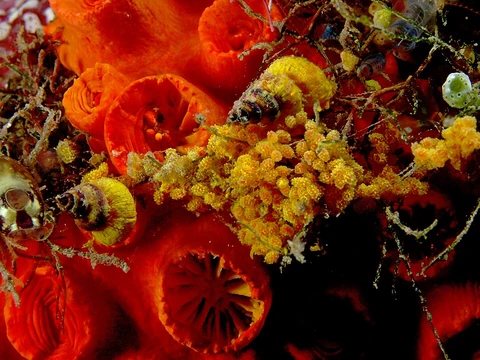
Cantharidinae
Subfamily of marine snails in the family Trochidae.

Ryan Hodnett · CC BY-SA 4.0
The Cantharidinae are a subfamily of sea snails, marine gastropod molluscs belonging to the family Trochidae, commonly called top snails. Their sizes range from very small to large. Originally classified as a tribe within the Trochinae in the 2005 Bouchet & Rocroi taxonomy of gastropods, they were later raised to subfamily status based on the work of Williams and colleagues.
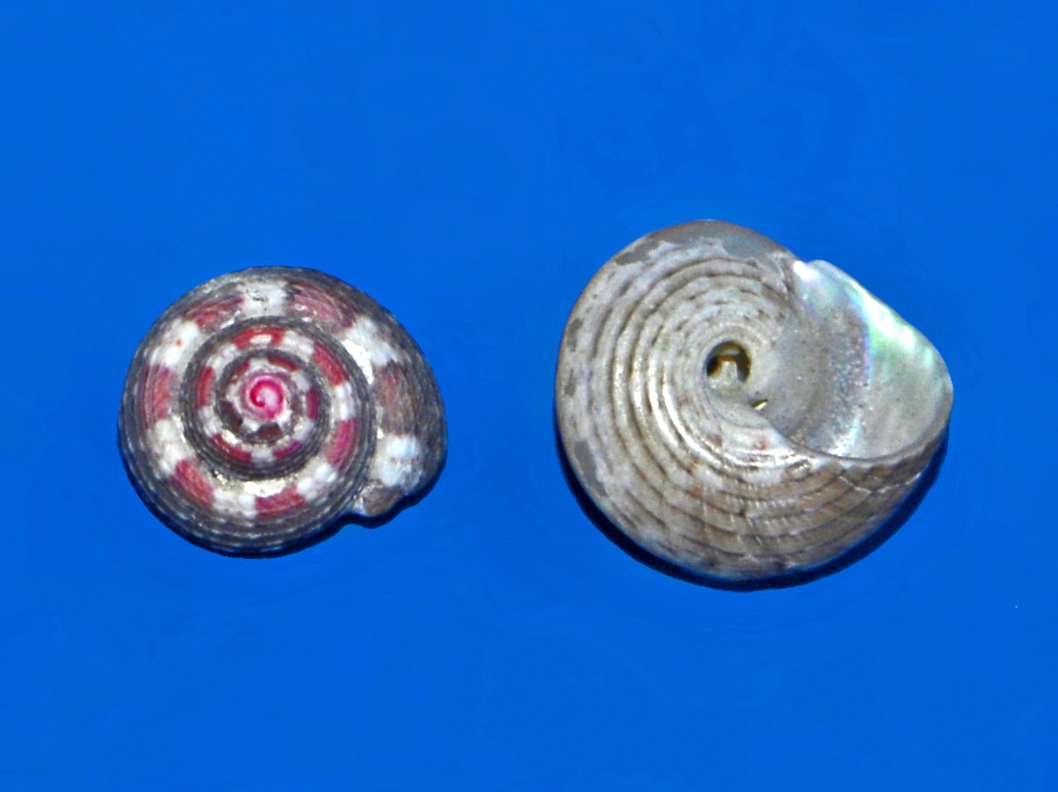
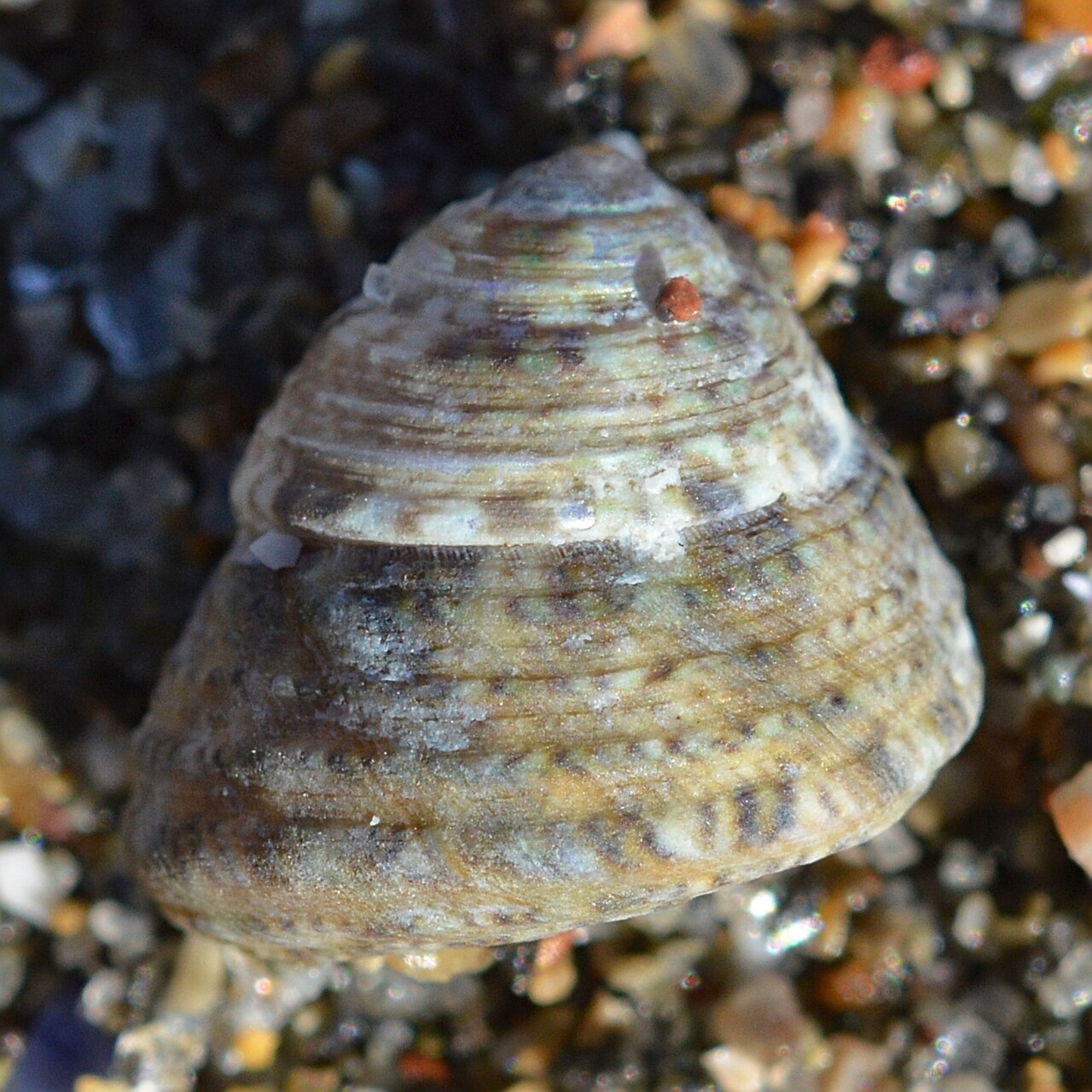
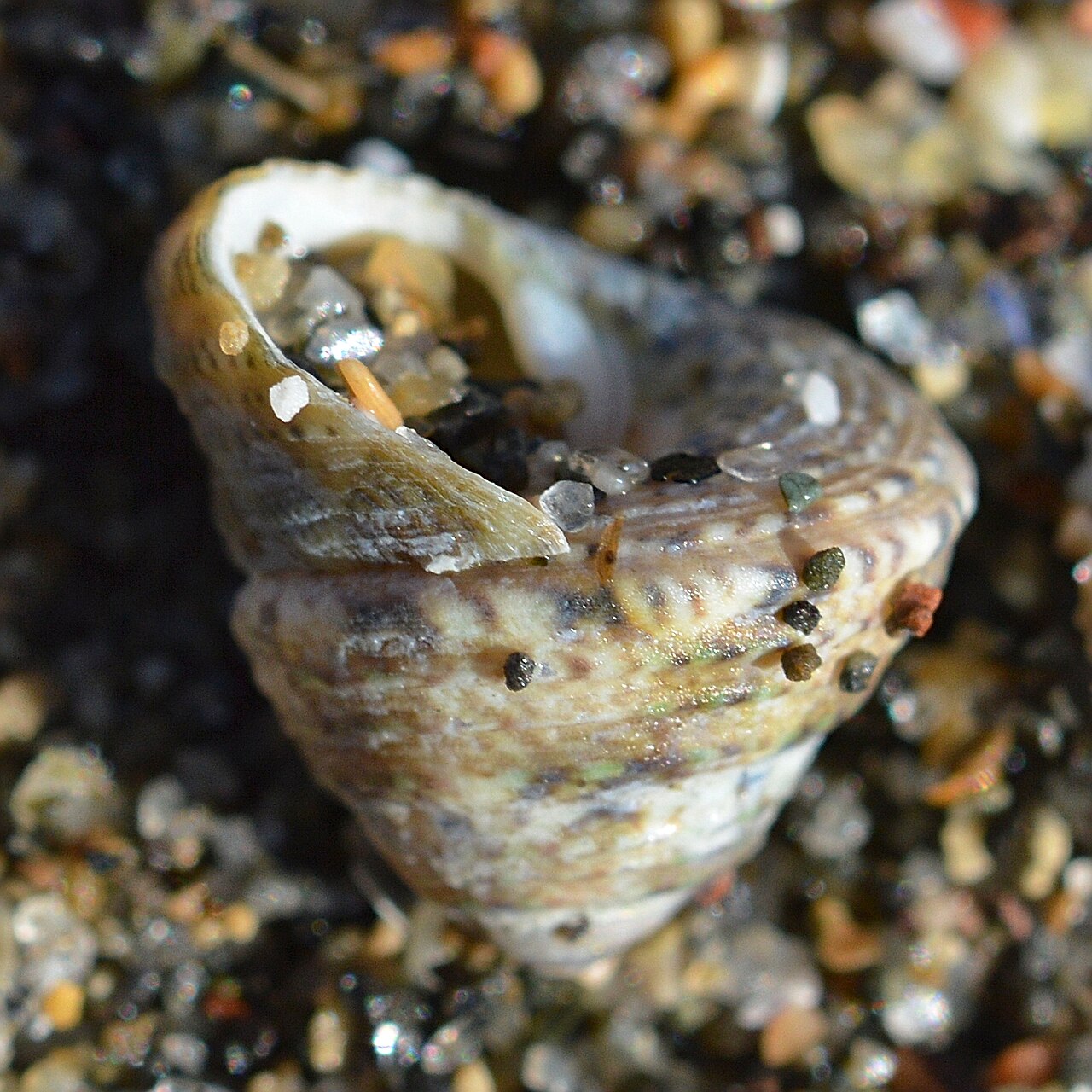
The shell is subturreted, smooth, and polished, with a sub-ovate and rather elongate aperture. The whorls are laterally compressed, and the nacreous inner layer has a greenish tint. The axis is imperforate.
Genera in this subfamily include: Agagus, †Amonilea, †Anceps, Calthalotia, Cantharidoscops, Cantharidus, Clelandella, Gibbula, †Gibbuliculus, Iwakawatrochus, Jujubinus, Kanekotrochus, †Kishinewia, Komaitrochus, †Lesperonia, Micrelenchus, Nanula, Odontotrochus, Oxystele, Pagodatrochus, †Paroxystele, Phasianotrochus, †Phorculus, Phorcus, Pictodiloma, Priotrochus, Prothalotia, Pseudotalopia, †Rollandiana, Roseaplagis, †Sarmatigibbula, †Sinzowia, Steromphala, Thalotia, †Timisia, and Tosatrochus.
Several genera are now considered synonyms: Aphanotrochus (synonym of Priotrochus), Elenchus (synonym of Cantharidus), Korenia (synonym of Gibbula), Limax (synonym of Cantharidus), Mawhero (synonym of Cantharidus), Osilinus (synonym of Phorcus), Plumbelenchus (synonym of Cantharidus), Scrobiculinus (synonym of Gibbula), Steromphala (synonym of Gibbula), Strigosella (synonym of Scrobiculinus), Trochinella (synonym of Calliotrochus), and Trochocochlea (synonym of Phorcus).
Quick Facts
- Taxon
- Cantharidinae
Facts from the source article.
Lore & Background
The Cantharidinae were originally described in Latin. Their shell is subturreted, smooth, and polished; the aperture is sub-ovate and rather elongate; the whorls are laterally compressed; the pearly layer (nacreous coat) is greenish; and the axis is imperforate. The subfamily includes numerous genera, both extant and fossil, such as Cantharidus, Gibbula, Jujubinus, and Phorcus, among others. Several genera have been brought into synonymy, including Elenchus and Osilinus.
Reader's Guide
The Cantharidinae are notable as a subfamily within the Trochidae, originally classified as a tribe but later elevated based on molecular work by Williams et al. Their shell characteristics—smooth, polished, with a greenish nacreous layer and imperforate axis—distinguish them within the top snails. The subfamily contains a diverse array of genera, both living and fossil, spanning from very small to large sizes. The taxonomic history reflects ongoing refinement in gastropod classification, with many genera synonymized over time. The subfamily's significance lies in its contribution to understanding the evolutionary relationships within Trochidae, as the elevation to subfamily status resolved earlier uncertainties in the group's hierarchy.
Did You Know?
- The Cantharidinae were originally ranked as a tribe of the Trochinae in the 2005 taxonomy by Bouchet & Rocroi.
- The shell of Cantharidinae is described as subturreted, smooth, polished, and with a greenish nacreous coat.
- The subfamily includes both extant and fossil genera, such as †Amonilea and †Anceps.
- Several genera, including Elenchus and Osilinus, have been brought into synonymy within the subfamily.
Taxonomic Elevation and Classification
The Cantharidinae constitute a subfamily of marine gastropod molluscs within the family Trochidae, a group better known by their common name, top snails. These snails exhibit a wide size range, from very small to large specimens. The taxonomic history of this group tells an interesting story of reclassification. In the influential 2005 gastropod taxonomy authored by Bouchet and Rocroi, the Cantharidinae were ranked only as a tribe, nested within the larger Trochinae. That status changed when Williams, Donald, Spencer, and Nakano published their molecular systematics study in 2010 in the journal Molecular Phylogenetics and Evolution. Their work, which examined DNA-based relationships across the families Trochidae and Calliostomatidae within the superfamily Trochoidea, provided the phylogenetic justification to elevate this group to full subfamily rank. This reclassification marked a significant shift in how trochid diversity is organized, moving the field away from purely morphology-driven hierarchy toward evidence-based molecular phylogenetics.
Shell Morphology and Structure
The shells of Cantharidinae species display a distinctive and consistent suite of morphological traits that set them apart within the Trochidae. The overall form is subturreted, giving the shell a low, somewhat tower-like profile rather than a tall spire. The surface is smooth and polished, lending these snails a refined, almost glassy appearance. The aperture, the opening through which the soft body extends, is sub-ovate and rather elongate in shape. The individual whorls are laterally compressed, making the shell appear flattened when viewed from side to side. One of the most visually striking features is the nacreous coat, or pearly layer, which takes on a characteristic greenish hue. Additionally, the axis of the shell is imperforate, meaning the central column is solid rather than pierced by a hole. These characteristics, originally described in Latin taxonomic literature, collectively distinguish Cantharidinae shells from those of other trochid subfamilies and provided the morphological foundation upon which early taxonomists built their classifications before molecular methods became available.
Genera and Evolutionary Depth
The Cantharidinae encompass a remarkable array of genera, with descriptions spanning more than two centuries of malacological research. The earliest genus in the recognized list is Cantharidus, described by Montfort in 1810, while the most recent addition is Gibbuliculus, named by Harzhauser in 2021. This temporal spread underscores the continuous discovery and revision of diversity within this subfamily. Notably, several genera are designated as extinct, including Amonilea (Cossmann, 1920), Anceps (Kolesnikov, 1939), Gibbuliculus (Harzhauser, 2021), Kishinewia (Kolesnikov, 1935), Lesperonia (Tournouër, 1874), Paroxystele (O. Schultz, 1970), Phorculus (Cossmann, 1888), Rollandiana (Kolesnikov, 1939), Sarmatigibbula (Sladkovskaya, 2017), Sinzowia (Kolesnikov, 1935), and Timisia (Jekelius, 1944). The coexistence of fossil genera alongside living ones such as Gibbula (Risso, 1826), Phorcus (Risso, 1826), and Steromphala (Gray, 1847) highlights the deep evolutionary history embedded in this group, stretching back through multiple geological periods.
Synonymy and Taxonomic Consolidation
A significant portion of Cantharidinae taxonomy involves the ongoing process of synonymy, where previously recognized genera are absorbed into established names. This consolidation reflects the refinement of species boundaries and the recognition that many original descriptions were based on limited material or incomplete understanding. For instance, Elenchus (Swainson, 1840) and Limax (Martyn, 1784) have both been synonymized under Cantharidus (Montfort, 1810), as have Mawhero (Marshall, 1998) and Plumbelenchus (Finlay, 1926). Similarly, Korenia (Friele, 1877) and Scrobiculinus (Monterosato, 1889) were folded into Gibbula (Risso, 1826), while Osilinus (Philippi, 1847) and Trochocochlea (Mörch, 1852) were merged into Phorcus (Risso, 1826). Aphanotrochus (Martens, 1880) became a synonym of Priotrochus (P. Fischer, 1879), and Trochinella (Iredale, 1937) was synonymized under Calliotrochus (P. Fischer, 1879). Strigosella (Sacco, 1896) was also absorbed into Scrobiculinus. These decisions illustrate how taxonomic nomenclature in the Trochidae remains a dynamic, actively revised field where names continue to be consolidated as understanding deepens.
Gallery
Frequently Asked Questions
What is Cantharidinae?
Cantharidinae is a subfamily of marine gastropod molluscs within the family Trochidae, the group commonly called top snails. It unites several genera of sea snails that share a distinctive shell morphology.
What does a Cantharidinae shell look like?
Their shells are subturreted, smooth, and polished, featuring a sub-ovate, elongate aperture with laterally compressed whorls. The inner nacreous layer shows a greenish tint, and the axis is imperforate.
How did Cantharidinae go from tribe to subfamily?
In the 2005 Bouchet & Rocroi classification, Cantharidinae was treated as a tribe nested within Trochinae. It was later promoted to full subfamily status based on the work of Williams and colleagues.
What family do Cantharidinae snails belong to?
They are placed in the family Trochidae, the top snail family. This positions them among the well-known marine gastropods of that lineage.
How large are Cantharidinae species?
Members of this subfamily span a wide size range, from very small individuals up to quite large ones. This broad size variation sets them apart from some more uniform trochid groups.
More in Marine Snails 1-24
Spotted an error? Know more?
Reader corrections go straight into our review queue. Suggest an edit · How this site is sourced